
Reviewed · SPLIT FOOD TOURS
Split: Historical & Gastro Treasures Tour with Green Market
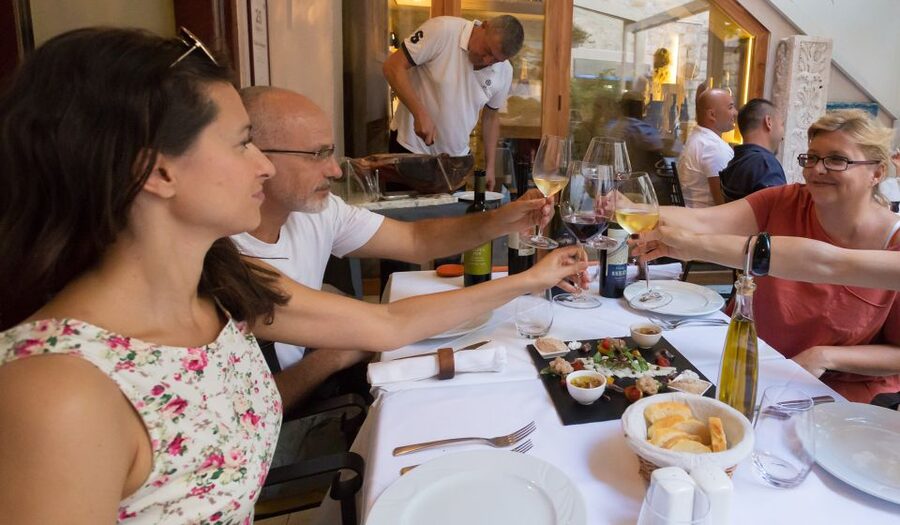
Split’s food tour starts where locals actually snack. You combine Split’s Green Market with guided history inside Diocletian’s Palace, then you get handed generous tastings that run from Croatian brunch classics to a proper lunch with wine. If you like learning while you eat, this 3-hour setup keeps both parts moving at a steady, fun pace.
What I like most is how the guide connects the dots. You’re not just shown sights like Peristil square, Golden Gate, and Pjaca. You also get the food context that makes Dalmatian flavors feel like they belong here, not like museum samples. The other big win is the sheer amount of food: prosciutto, cheese, soparnik pie, pasta, and the famous black risotto all land in one tour.
One catch to plan for: you should come ready to eat, and alcohol is part of the flow (wines and grappa are included in the described tastings). If you don’t drink, or you have strict food needs, you’ll want to flag diet and allergies clearly before you go so the guide can adjust as much as possible.
In This Review
- Key things to know before you book
- How the 3-hour Split history-and-food plan actually flows
- Green Market brunch: prosciutto, soparnik pie, pecka bread, and grappa
- Diocletian’s Palace highlights: Peristil, Golden Gate, and Pjaca
- The konoba lunch: seafood, pasta, and black risotto with Brač wine
- Dessert at the end: gelato or something traditional
- Price and value: is $135 fair for what you get?
- Who should do this tour (and who should skip it)
- Small logistics that can make or break your experience
- Should you book Split’s Historical and Gastro Treasures tour?
- FAQ
- How long is the tour?
- Where does the tour start?
- Does this tour include the Green Market?
- What do you eat at the Green Market stop?
- What historic sights are included in Diocletian’s Palace?
- What do you eat for lunch in a konoba?
- Is dessert included?
- Are food and wine included in the price?
- Do I need to arrange hotel pickup?
- What languages is the tour offered in?
Key things to know before you book
- Green Market tastings first: prosciutto, cheese, pecka bread, soparnik pie, and grappa kick off the tour
- UNESCO Diocletian’s Palace stops: Peristil square, Golden Gate, and Pjaca, with history explained in plain language
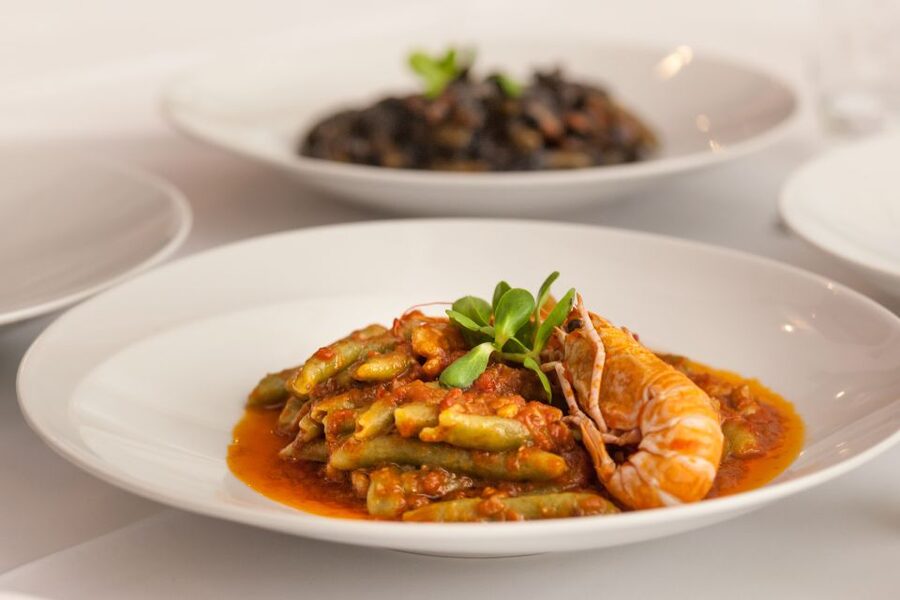
- A real konoba lunch: seafood starter, two types of pasta, and black risotto with local red wine from Brač island
- Dessert varies by season: gelato in some seasons, traditional dessert in others
- Afternoon option skips the Green Market: because the market doesn’t run in the afternoon, you’ll get similar foods at the tavern
Dalmatian plates: more food tours in Split
- Split History and Gastro Small-Group Tour with Food and Drinks★ 5.0 · 375 reviews
- All-inclusive Gastro Blue Cave Tour from Split★ 5.0 · 317 reviews
- Split: Historical & Gastro Treasures Tour with Green Market★ 4.9 · 144 reviews
- Split Cooking Class★ 5.0 · 142 reviews
How the 3-hour Split history-and-food plan actually flows
This is a walking tour that mixes two strengths: city stories and Croatia’s everyday eating habits. You meet your licensed local guide at the start point (for the standard morning-style route, it’s Hrvojeva 1 street), then you’re off for the tastings and the palace walk in one smooth circuit.
The timing matters because you’re fed early and often. The first big food stop is the Green Market brunch, then you shift gears into Diocletian’s Palace highlights. After the walking and history, the tour lands at a tavern-style restaurant (a konoba) for a seafood-and-pasta meal that feels like an actual lunch, not a snack parade.
If you do the afternoon option, the rhythm changes slightly. You still get a similar overall eating experience, but you miss the Green Market visit since it doesn’t operate in the afternoon hours.
Green Market brunch: prosciutto, soparnik pie, pecka bread, and grappa
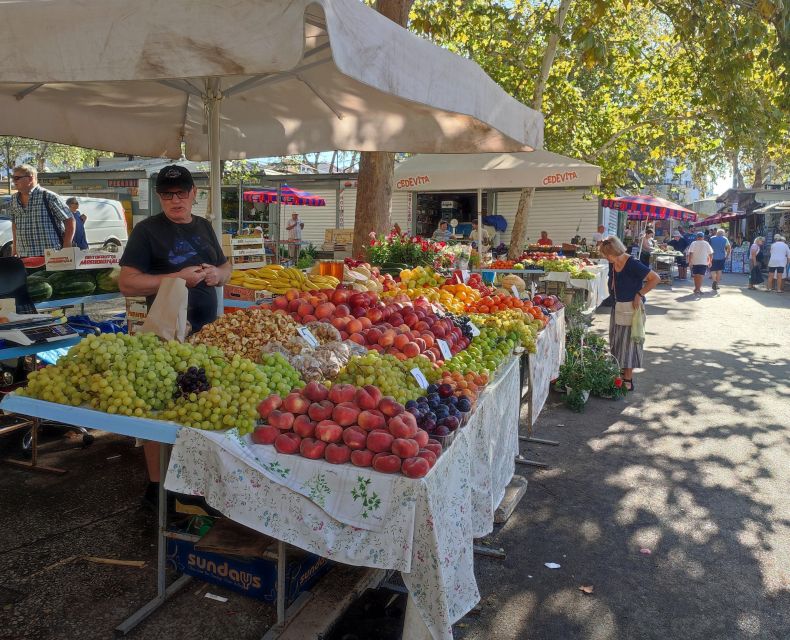
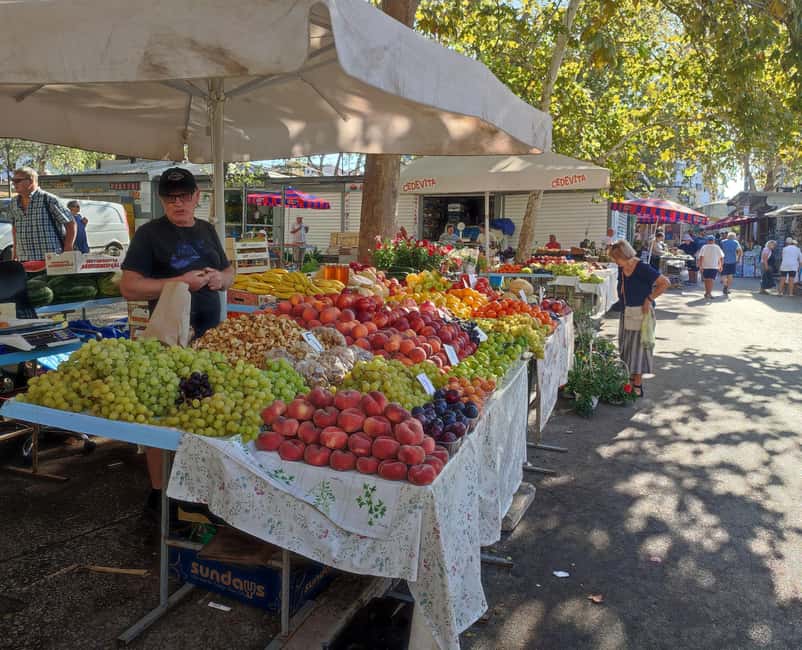
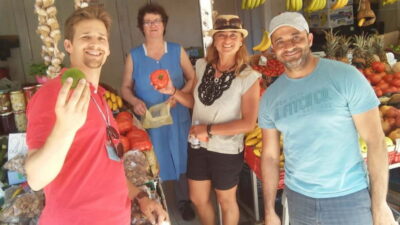
The Green Market is the tour’s gas pedal. It’s where you start tasting before you hit the major monuments, and that’s a smart order. Food comes first, so the later palace history lands with more meaning, not less.
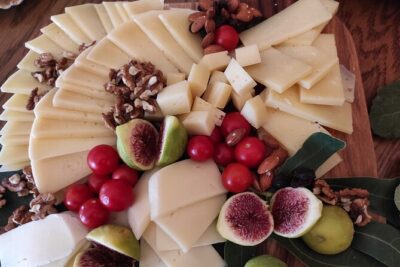
You begin with a local Mediterranean brunch that includes prosciutto and cheese, plus traditional pecka bread and soparnik pie. Soparnik is one of those Dalmatian staples that makes locals look at newcomers with a smile and a little dare. It’s savory and comforting, built for sharing, and it tastes like the region’s everyday cooking rather than a fancy performance.
Then there’s grappa. It’s not optional on this tour’s described flow, and it’s part of the classic pairing logic in Dalmatia: savory bites, strong spirits, and conversation that doesn’t stop after the first round. If you don’t drink alcohol, you’ll want to tell your guide upfront so you’re not stuck feeling out of sync with the group.
This market segment is also where the guide’s personality shows. In feedback, guides such as Hani, Christian, and Olga are praised for making the tasting feel social, with explanations that connect each ingredient to local habits. Expect plenty of moments to ask questions, plus the kind of “try this first” encouragement that helps you taste things you might skip on your own.
Diocletian’s Palace highlights: Peristil, Golden Gate, and Pjaca
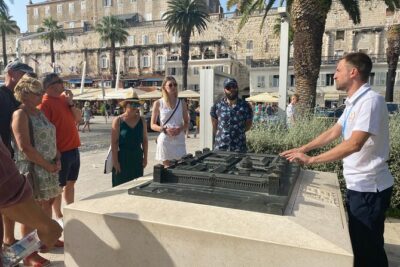
After you’ve fueled up, you head into Diocletian’s Palace, a UNESCO-listed complex that shaped what Split looks like today. The biggest value here is not just seeing stones—it’s understanding how Roman power turned into a living neighborhood.
You’ll walk key points including Peristil square, the Golden Gate, and Pjaca, which is described as a medieval Venetian square. Those names sound like a brochure list, but the guide’s job is to give you the why: how the palace was originally built, what changed over the centuries, and how it’s used now.
A highlight for me is how the palace tour usually includes small “life in Split” details. Some guides are described as adding extra color—like catching local music during the walk—so the space doesn’t feel frozen in time. When the guide explains origins and the palace’s evolution into today’s city use, it clicks faster. You stop thinking, This is just a monument, and start thinking, This is where daily life grew around ancient walls.
Practical note: the palace area involves walking on old-city surfaces. If you’re visiting in warmer weather, plan for a bit of sun and keep water in mind, especially since the tour is already a food-heavy day.
The konoba lunch: seafood, pasta, and black risotto with Brač wine
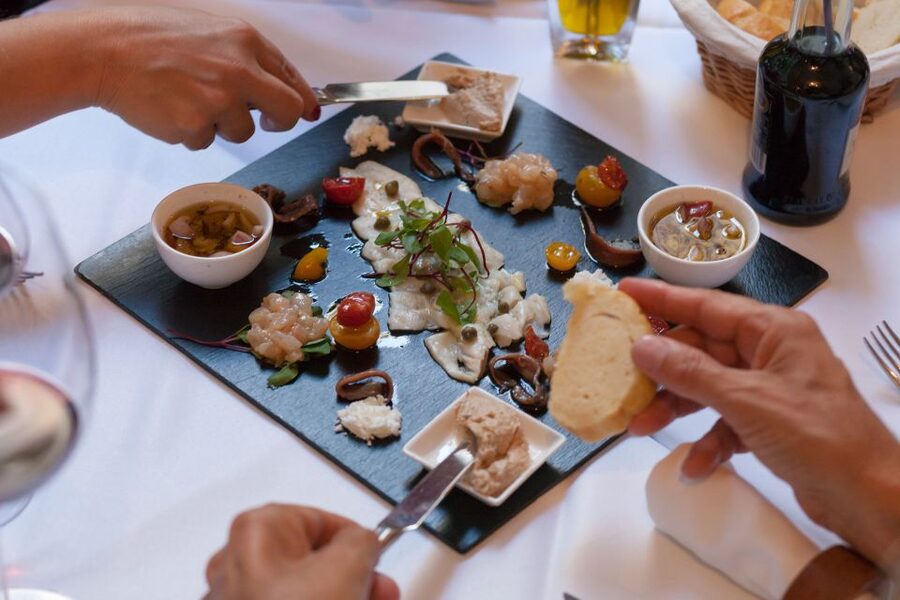
Once you’re done with the palace scenes, the tour makes its best case for why food tours are worth doing. You go to a konoba style restaurant, and the meal is built like a real course sequence.
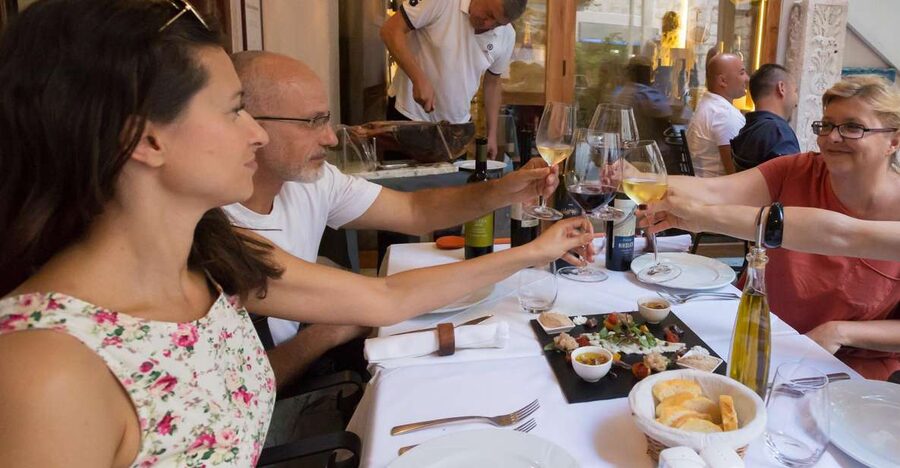
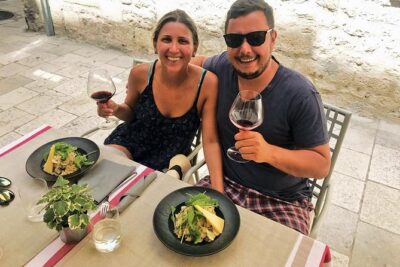
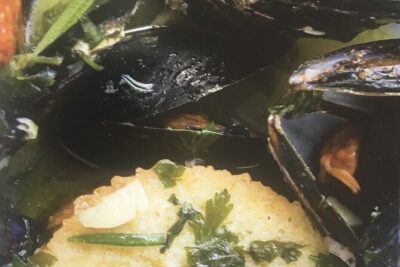
You start with a traditional seafood starter, paired with white wine. Then the tour moves to the main courses: you get two types of traditional pasta and the famous black risotto. That risotto comes with local red wine from Brač island, which adds a regional “this is why you’re here” flavor detail.
Why does this lunch land so well? Because the tour doesn’t only give you “popular” dishes. It mixes the classic with the signature. Prosciutto and cheese are familiar enough to let you calibrate, then seafood and risotto pull you into the local identity. By the time you reach black risotto, you’re not tasting randomly. You’ve already learned the basic language of Dalmatian meals, and the guide’s explanations make the flavors feel less mysterious.
Food tours can sometimes be rushed. Here, the pace is described as relaxed in feedback, with time to talk and ask about preparation processes. Guides like Ana, Maria, Ella, and Lucija are praised for keeping the mood friendly while still packing in facts. You’ll also see repeated mentions of generous portions, so the lunch is not a polite sampling.
One more useful reality check: since wine is part of the described tastings, the price value depends on your comfort level with alcohol. A reviewer noted the tour felt a bit high for a non-drinker. If that’s you, tell the guide your preferences; you may still enjoy the food, but the drink portion is baked into the overall experience.
A few more Split boat days and tours worth a second look
Dessert at the end: gelato or something traditional
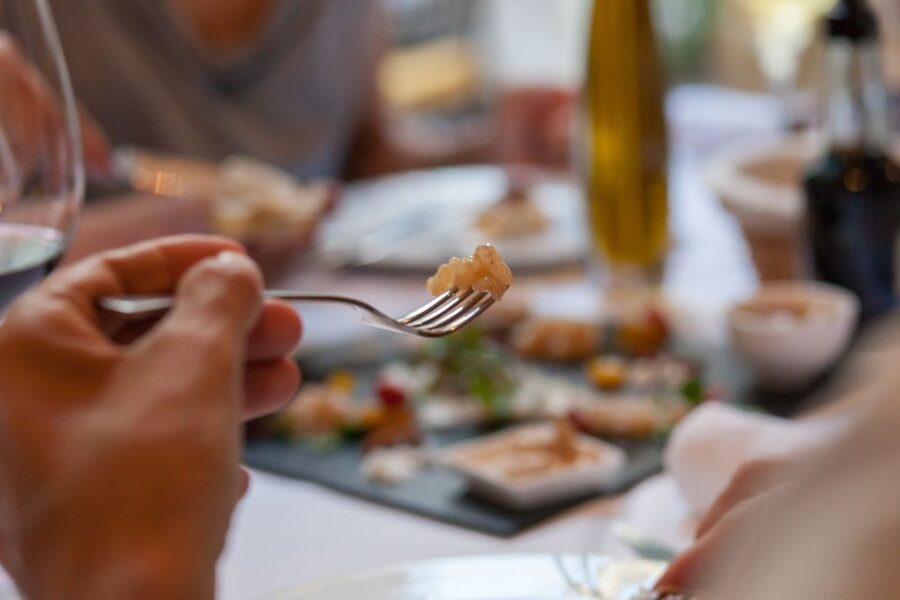
After the main meal, the tour doesn’t end with a tiny checkbox. You finish with light gelato or a traditional dessert, depending on the season (spring/summer/autumn). That season-based swap matters if you’re trying to line up your dessert cravings with your travel dates.
I like ending this way because it doesn’t feel like a sugar sprint. It’s a lighter finish after the heavy hitters like pasta and black risotto. And it helps you leave with a sense of closure, not the feeling that you still need to hunt for one more treat on your own.
Some guides are also praised for thoughtful pacing around the final stop, so the group doesn’t feel chopped up into separate conversations. You get a clean ending, then you’re set to explore Split with actual food recommendations.
Price and value: is $135 fair for what you get?
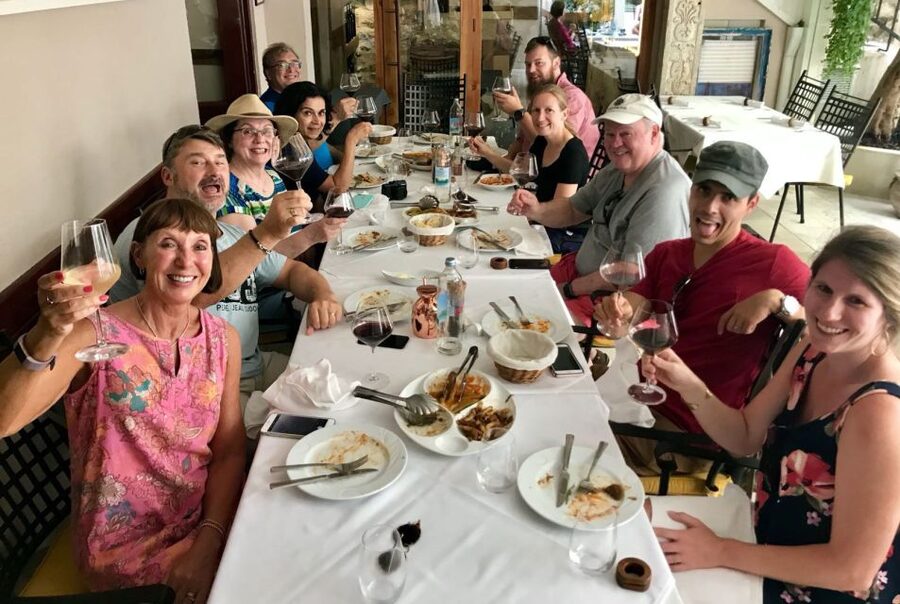
At $135 per person, this isn’t a budget snack tour. You’re paying for two things at once: guided history inside one of Split’s top sights and multiple, substantial food stops with wine included.
Here’s the value breakdown in plain terms:
- Food and wine are included across the tastings and the full lunch course flow.
- You also get a licensed local guide, and that matters because the palace visit is better when someone explains why it matters.
- The tour is built around several recognizable anchors: Green Market brunch, Diocletian’s Palace highlights, then a sit-down konoba meal with seafood, pasta, and black risotto.
If you drink, the price likely feels more balanced because wine and grappa are part of the planned experience. If you don’t drink, you may feel you’re paying for something you won’t fully use. Still, the core of the experience is the food variety and the palace context, so even as a non-drinker you’re not just getting a tour that happens to include food.
My suggestion: think of this as a guided, multi-stop meal with history built in. If that’s your style, $135 can feel like good value. If you prefer a short tasting only, or you want to control every bite and sip, you might choose a different format.
Who should do this tour (and who should skip it)
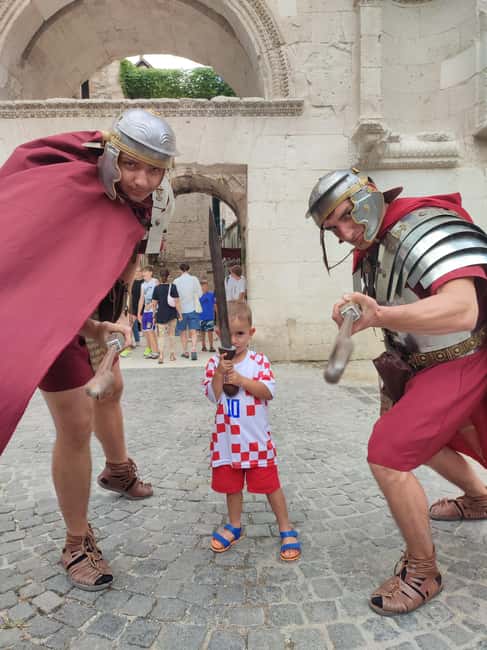
This tour is a good match if you:
- Want Split’s landmarks and local flavors in one 3-hour block
- Like learning through food: tasting first, then seeing the historical context behind what you’re walking through
- Enjoy friendly group energy and don’t mind that the pace includes multiple stops and courses
- Appreciate guides who bring both facts and a sense of humor, like the named guide experiences (Hani, Christian, Ana, Maria, Darko, Olga, Vicky, and others)
You might skip it if:
- You have very strict dietary needs and need tightly controlled meals, since the described experience includes wine and set food items at several stops
- You don’t want alcohol involved at all, especially because grappa and wines are specifically part of the described flow
- You’re not up for walking through the market and palace areas while eating across multiple courses
If you do book, the best move is to communicate dietary restrictions and allergies clearly when you reserve. The tour info explicitly asks you to indicate food allergies or diet restrictions, and feedback includes stories of guide adjustments for vegetarian needs, which is a promising sign.
Small logistics that can make or break your experience
No hotel pickup is included. That’s normal for a city tour, but it means you’ll need to plan how you get to the meeting point.
For the start, the tour info says meeting point may vary by option. In practice, the standard route starts at Hrvojeva 1 street. If you’re choosing the afternoon option, remember the Green Market part is not included, since the market doesn’t work in afternoons.
Also, be honest with yourself about hunger. The tour is designed so you don’t leave hungry. Prosciutto, cheese, soparnik pie, pasta dishes, black risotto, and dessert add up fast. If you show up lightly snacked, you’ll enjoy it more.
Should you book Split’s Historical and Gastro Treasures tour?
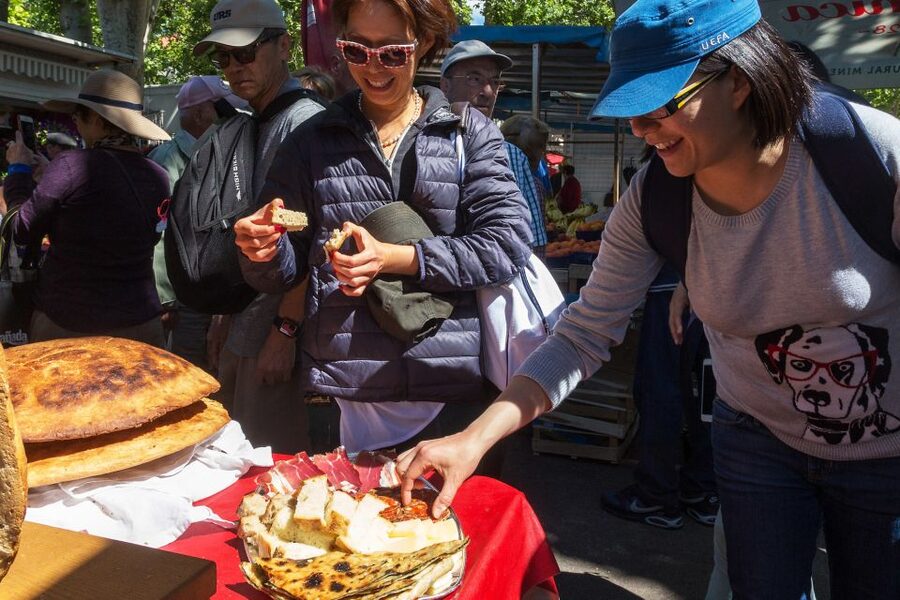
I’d book it if you’re landing in Split and want a quick win: start with local market food, then walk inside Diocletian’s Palace with explanations that help you read the place, then finish with a full konoba lunch featuring black risotto and Brač wine. It’s not just tasting. It’s taste plus meaning.
I’d think twice if you’re avoiding alcohol completely or you’re traveling with strict food needs that require zero substitutions. In that case, message the operator with your details early and ask how they handle your situation.
If your goal is to get your bearings fast and eat like a local in Dalmatia, this is one of the most efficient ways to do it in a single half-day.
FAQ
How long is the tour?
It runs for about 3 hours.
Where does the tour start?
The start meeting point can vary depending on the option booked, but one described start is Hrvojeva 1 street.
Does this tour include the Green Market?
Yes, the standard version includes the Green Market. The afternoon option does not include it.
What do you eat at the Green Market stop?
You’ll try a local Mediterranean brunch made of prosciutto, cheese, traditional pecka bread, soparnik pie, and grappa.
What historic sights are included in Diocletian’s Palace?
You’ll visit Peristil square, Golden Gate, and the medieval Venetian square Pjaca.
What do you eat for lunch in a konoba?
You’ll have a seafood starter with white wine, then two types of traditional pasta and black risotto with local red wine from Brač island.
Is dessert included?
Yes. You’ll finish with light gelato or a traditional dessert depending on the season (spring/summer/autumn).
Are food and wine included in the price?
Yes. The cost of all food and wine is included, along with a licensed local guide.
Do I need to arrange hotel pickup?
No. Hotel pickup and drop-off are not included.
What languages is the tour offered in?
The tour is offered in English.
More Tours in Split
- From Split: Krka Waterfalls, Food & Wine Tasting Tour
★ 5.0 · 9,326 reviews - Blue cave, Mamma Mia and Hvar, 5 islands speedboat tour
★ 5.0 · 7,150 reviews - From Split: Krka Waterfalls, Food & Wine Tasting Tour
★ 4.9 · 6,598 reviews - Split/Trogir: Blue Cave, Mamma Mia, Hvar and 5 Island Tour
★ 4.6 · 6,320 reviews - Blue Cave and Hvar Tour – 5 Islands Tour from Split and Trogir
★ 5.0 · 4,815 reviews
More Tour Reviews in Split
- Split: Krka Waterfalls Trip with Boat Cruise and Swimming
★ 4.8 · 10,519 reviews - From Split: Krka Waterfalls, Food & Wine Tasting Tour
★ 5.0 · 9,326 reviews - Blue cave, Mamma Mia and Hvar, 5 islands speedboat tour
★ 5.0 · 7,150 reviews - From Split: Krka Waterfalls, Food & Wine Tasting Tour
★ 4.9 · 6,598 reviews - Split/Trogir: Blue Cave, Mamma Mia, Hvar and 5 Island Tour
★ 4.6 · 6,320 reviews
Where Split Eats
- Split Food Tour: Discover Split One Bite At A Time
★ 5.0 · 433 reviews - Split History and Gastro Small-Group Tour with Food and Drinks
★ 5.0 · 375 reviews - All-inclusive Gastro Blue Cave Tour from Split
★ 5.0 · 317 reviews - Split Cooking Class
★ 5.0 · 142 reviews - Split: Small Group Food Tour with Private Option
★ 4.8 · 116 reviews
Still deciding? More Split trips we have been out and reviewed
Split Food Tours, compared.
 ★ 5.0Discover Split One Bite At A TimeFrom $145433 reviews
 ★ 5.0Split History and Gastro Small-Group Tour with Food and DrinksFrom $139375 reviews
 ★ 5.0All-inclusive Gastro Blue Cave Tour from SplitFrom $247317 reviews
 ★ 5.0Split Cooking ClassFrom $211142 reviews
 ★ 4.8Small Group Food Tour with Private OptionFrom $58116 reviews
 ★ 5.04-Hour Dalmatian Food and Wine flavors Experience in Split PatioFrom $14597 reviews
 ★ 5.0Culinary Experience – Cooking Class & Walking Tour SplitFrom $33642 reviews
 ★ 5.0Zinfandel Wine Tasting & Storytelling with Dalmatian FoodFrom $17820 reviews
Browse the lists this tour appears in