
Reviewed · SPLIT OLD TOWN WALKING TOURS
Walking Tour of Split with a ‘Magister’ of History
Diocletian’s Palace turns a walk into a story. With Toni Šare, you get a smart route through Split’s Roman core and the eras layered on top, helped by 3D reconstructions that make the stone easier to read. I especially like how starting at the Brass Gate (Porta Aenea) gets you oriented fast.
Second, I love the stop-by-stop focus on the small things most people miss, like the Peristyle layout and how the Cathedral of Saint Domnius connects to Diocletian’s mausoleum. You’ll also get context for the medieval and early modern city that grew right into the Roman footprint.
One caution: this tour is outdoors and depends on good weather, so plan for sun and heat. Also, a couple of major stops list tickets as not included, even though you won’t be entering them as part of this experience.
In This Review
- Key highlights that make this tour worth it
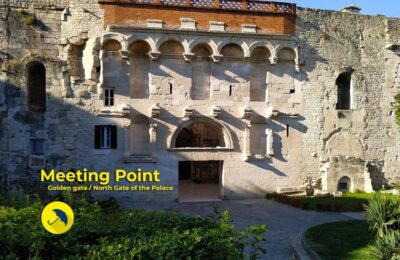
- Why this Split tour starts at the Brass Gate (Porta Aenea)
- Toni Šare’s 3D reconstructions make the palace readable
- Riva Harbor to the Peristyle: the quickest way to understand the palace
- Cathedral of Saint Domnius: from mausoleum to a church you can still use
- Temple of Jupiter: why people call it that, and what to notice outside
- Gates, walls, and reuse: the Golden Gate and Silver Gate lessons
- Grgur Ninski Statue: a landmark tied to Croatian language and identity
- Vestibulum and noble palaces: seeing Diocletian’s private side
- Game of Thrones filming locations (plus a fan shop pass-by)
- City Museum courtyard and Old Town Hall: how the tour ends cleanly
- Price, timing, and value (what $34.83 buys you)
- Who should book this tour
- Should you book this Split history walk?
- FAQ
- How long is the walking tour?
- Where do I meet, and where does it end?
- Is the tour in English?
- Do I need tickets for museums or paid sites during the tour?
- Will we enter the Cathedral of Saint Domnius?
- Will we enter the Temple of Jupiter?
- How big is the group?
- Can I cancel and get a full refund?
- What if the weather is bad?
- Is the tour suitable for most people?
Key highlights that make this tour worth it
- Small group (up to 18): easier questions and a more conversational pace
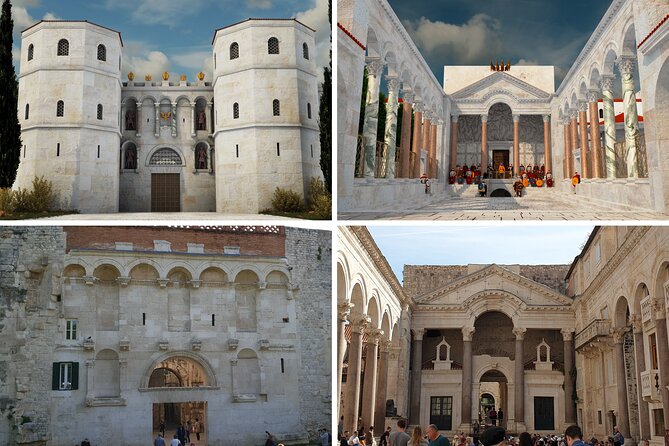
- Toni Šare’s 3D reconstructions: you’ll see what the palace looked like in Roman glory
- Gate-to-gate walking: Brass Gate, Golden Gate, and the Silver Gate give you a real sense of the layout
- Roman-to-Christian and Roman-to-medieval change: Saint Domnius and reused defenses show how Split evolved
- No museum pileups: you see courtyards and key spaces without paying for full interiors
- Optional Game of Thrones context: filming locations and a fan shop pass by if your group is interested
Prefer to walk it? More guided strolls through Split
- Split: Old Town and Diocletian Palace Walking Tour★ 4.9 · 4,727 reviews
- Walking Tour of Split and Diocletian’s Palace★ 5.0 · 2,588 reviews
- Krka Waterfalls tour with Trogir Walking tour and Krka panoramic boat cruise★ 5.0 · 1,659 reviews
- Split & Diocletian’s Palace Walking Tour★ 5.0 · 1,125 reviews
Why this Split tour starts at the Brass Gate (Porta Aenea)
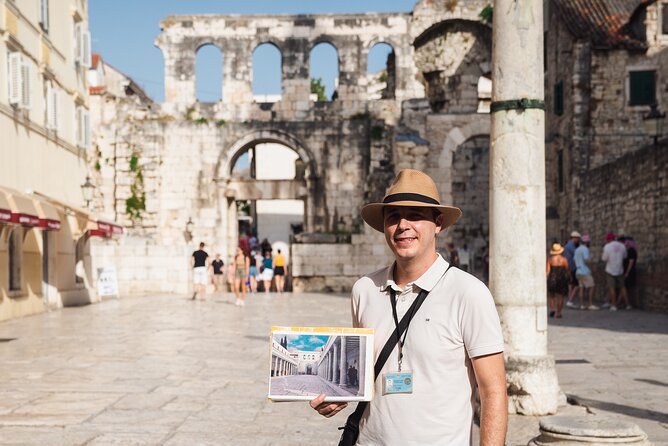
Split can feel like a maze at first. The streets curve, the stone looks old everywhere, and it’s easy to lose the bigger picture. This is exactly why the start point matters: meeting at the Brass Gate (Porta Aenea) places you at a major threshold of Diocletian’s Palace, so your brain clicks into place early.
From there, you’re not just wandering old streets. You’re walking a planned route through the palace’s Roman skeleton and the later life of the city that grew over it. And because the tour ends at Narodni trg (Piazza/Pjaca), it’s simple to keep exploring after you finish—either by heading to another must-see site or by just wandering with better instincts.
Toni Šare’s 3D reconstructions make the palace readable
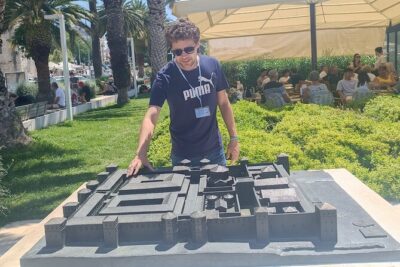
A lot of heritage tours stop at what you can see. This one helps you go a step further. Toni Šare uses 3D reconstructions to show how key parts of Diocletian’s Palace likely looked during different moments in its life.
That matters because Roman architecture can look “mysteriously ruined” unless someone gives you a mental model. With the reconstructions, you start matching today’s surviving walls and fragments to a fuller, original layout. The result is that you’re not just taking photos—you’re actually learning how spaces were meant to work.
You’ll also hear modern history woven into the ancient setting in a practical way. One highlight in the guide’s approach is how he uses visual recreations to explain how the palace’s purpose and use changed over time—so it doesn’t feel like a museum piece frozen in time.
Riva Harbor to the Peristyle: the quickest way to understand the palace
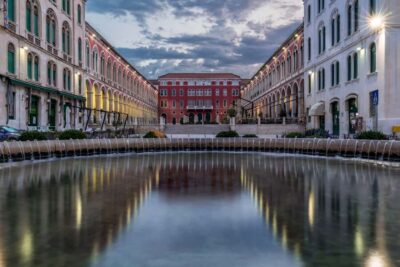
The route begins at Riva Harbor, which is a surprisingly strong starting lesson. It’s presented as Split’s Riviera and a place tied to local life, but it also gives you a clean sightline to important palace features—especially the southern wall of Diocletian’s Palace.
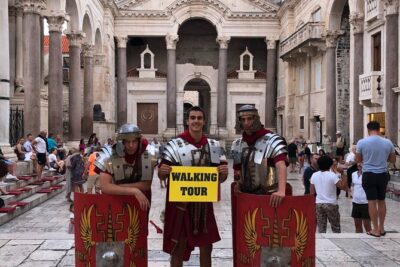
Then the walk moves into the palace’s main civic heart: the Peristyle. This is the central square of Diocletian’s Palace and still one of the most important spaces in modern Split. What you gain here is orientation. You see the scale of the Roman layout, and you get explanations tied to what’s preserved and what’s changed.
If you’ve ever stood in a big historic square and thought, I know I should understand this—this is the kind of stop that fixes that problem. The guide points out preserved Roman structures and uses the 3D models to help you picture the decorative and building elements that aren’t fully standing today.
Cathedral of Saint Domnius: from mausoleum to a church you can still use
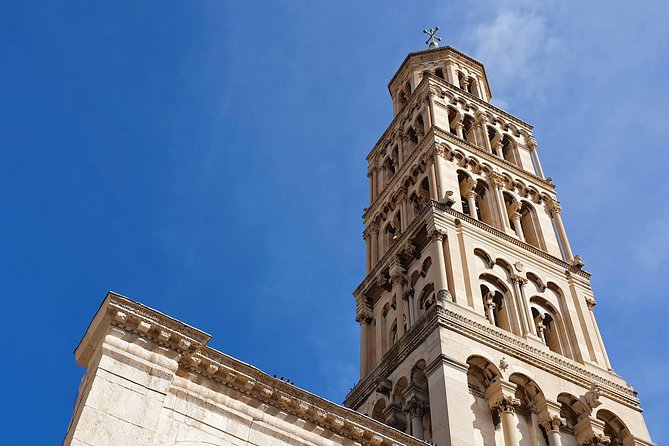
Next up is the Cathedral of Saint Domnius, also connected to the mausoleum of Emperor Diocletian. This is one of the best-preserved Roman structures in Split, and it’s still actively used, which makes the story feel less like “then and there.”
Here’s what to expect: you won’t be going inside. The focus is on the big picture—what the structure originally was, what you should notice (like the bell tower), and how it was converted from an imperial burial site into a Christian cathedral.
Why that conversion matters: it’s not only about religion. It’s about how communities reuse powerful buildings when their world changes. Standing outside with context is a good balance here, especially if you want to keep your schedule tight and avoid paying extra admission during the tour itself.
A few more Split boat days and tours worth a second look



Temple of Jupiter: why people call it that, and what to notice outside

The stop at the Temple of Jupiter, as commonly labeled, highlights another key method of this tour: looking carefully at details and questioning assumptions. You won’t enter, but you’ll learn what to pay attention to from the outside.
The guide points out “anomalies and mistakes” that Romans made while constructing it. That sounds odd until you remember how construction works: building in stages, solving engineering problems on the fly, and relying on the best plans available at the time. The result is a stop that feels more grounded than myth-heavy sightseeing.
This is a good moment to slow down. Even without entering, you’ll learn how to read the building’s shape and features as evidence—not just as decoration.
Gates, walls, and reuse: the Golden Gate and Silver Gate lessons
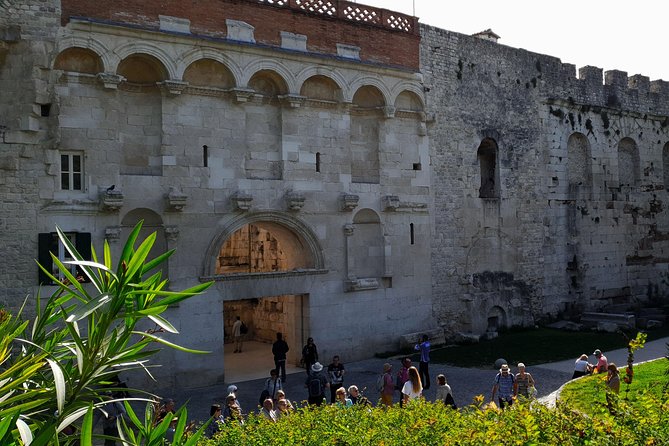
No palace survives without gates, and Split makes that point in a very visual way. The route includes the Eastern (Silver) Gate, where you get one of the best views of the palace—seeing the cathedral/mausoleum on one side, the Silver Gate on the other, and even underneath you the only preserved segment of the original road.
Then comes the Golden Gate, described as the main entrance and also the most preserved and decorated of the palace entrances. From here, you can clearly see the northern wall and how the medieval city used Roman-made structures for defense. It’s the kind of view that makes the city’s continuity click: Roman walls become medieval protections, and the same stone keeps doing work long after the original builders are gone.
This whole gates-and-walls segment is where you start to feel the “logic” of the palace. You stop thinking of it as a jumble of ruins and start seeing it as a system.
Grgur Ninski Statue: a landmark tied to Croatian language and identity
One of the more culturally specific stops is the Grgur Ninski Statue. It’s a recognizable landmark, and the tour explains what it represents and why it matters for Croatian culture—particularly in the early medieval era.
This is worth keeping on your route even if you’re mostly there for Roman architecture. The statue reminds you that Split’s identity isn’t only Roman layers. It’s also medieval choices, language, and local pride expressed through public monuments.
If you like history that connects to the modern city’s voice, this is one of the stops that will stick.
Vestibulum and noble palaces: seeing Diocletian’s private side
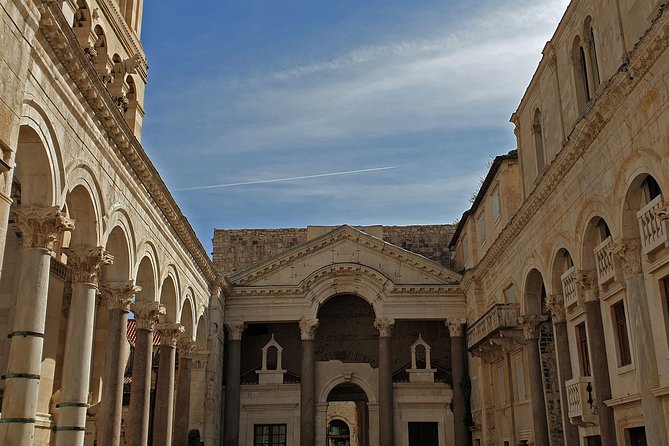
At the Vestibulum of Diocletian’s Palace, you’ll get to see the ancient entrance to Diocletian’s private residence. The guide then leads you around the remains of Diocletian’s personal space—an area that helps you understand that the palace wasn’t only about public ceremonies.
From there, the walk continues through areas that highlight noble palaces along the way. Even though Split is famous for Roman remains, the city itself holds medieval, Renaissance, and early modern traces too. That’s one of the best benefits of doing the walk with someone who connects eras; the streets stop feeling random.
This portion is a nice “bridge.” It keeps Roman sites from becoming an isolated museum experience by tying them to how wealthy residents shaped the later city.
Game of Thrones filming locations (plus a fan shop pass-by)
If your group is interested, Toni includes Game of Thrones filming locations in Split and points out where the group passes a fan shop. This doesn’t replace the historical teaching. It’s more like a bonus lens for people who want a pop-culture way to anchor memory.
Just treat it as optional context, not the main attraction. The real payoff stays the same: you’ll learn why the buildings are where they are, and why the story people tell about Split keeps changing with each era.
City Museum courtyard and Old Town Hall: how the tour ends cleanly
A smart part of the design: you don’t rush into museum interiors. The tour mentions the City Museum of Split, set inside one of the city’s best-preserved Renaissance noble palaces. But during this walk, you only see the courtyard area, not the museum itself.
That courtyard stop still gives you something real: a sense of how Renaissance palace design worked, and a bit of Venetian influence, since this style of palace was tied to that broader historical wave. Even without paying for full museum entry, you get the visual and cultural cue.
Finally, you end at Old Town Hall on Piazza/Pjaca, the city’s main square since medieval times. The 14th-century town hall and neighboring structures give you a natural finishing point where it’s easy to orient yourself.
Price, timing, and value (what $34.83 buys you)
The tour costs $34.83 per person and runs about 1 hour 40 minutes to 1 hour 50 minutes. For that price, you’re paying for more than a walking route. You’re paying for:
- a guided explanation built around the palace layout
- 3D reconstructions that turn ruins into a readable plan
- a structured pace that hits the main gates, squares, and culturally important landmarks
- a small group limit of 18 travelers, which keeps questions possible
Also, most stops are admission free, and the experience does not involve entering museums or paid sites. Two major stops list admission as not included (Saint Domnius and the Temple of Jupiter), but the tour says you won’t be entering inside as part of this experience. So you can keep moving without building extra time into your day for ticket lines.
One more practical note: this tour is booked about 31 days in advance on average, so if you’re traveling in peak summer weeks, plan to reserve early.
Who should book this tour
This works especially well if you:
- want a first-day introduction to Split’s layout before you start choosing what to see longer
- like Roman architecture, but also want the medieval and later layers explained clearly
- appreciate visual aids like 3D reconstructions rather than only verbal descriptions
- prefer a small group pace where you can ask questions
If you’re the type who hates walking, this might feel like a lot. But the duration stays under two hours, and the stops are structured so you’re rarely stuck with nothing happening.
Should you book this Split history walk?
If you want the quickest path to understanding what you’re looking at in Split, this is a strong pick. The biggest value is the way it connects palace geometry to real buildings you can still see, then adds cultural context so the city feels like one connected story rather than disconnected sights.
I’d especially recommend it if you’re visiting Roman sites in multiple cities and you want your notes and photos to match a coherent plan. And if you’re worried about language or confusion on your own, having a local guide like Toni Šare with visual reconstructions is a big confidence boost.
If you’re only interested in one or two big attractions and nothing else, you might feel it’s too many stops for your style. But for most people, the short duration plus the structured highlights make it a solid use of time.
FAQ
How long is the walking tour?
It lasts about 1 hour 40 minutes to 1 hour 50 minutes.
Where do I meet, and where does it end?
You meet at the Brass Gate (Porta Aenea) on Obala Hrvatskog narodnog preporoda 22, Split. The tour ends at Narodni trg (Pjaca) in Split.
Is the tour in English?
Yes, it’s offered in English.
Do I need tickets for museums or paid sites during the tour?
The tour does not enter any museums or paid sites. Many stops are free, but admission tickets for the Cathedral of Saint Domnius and the Temple of Jupiter are listed as not included.
Will we enter the Cathedral of Saint Domnius?
No. The tour explains what you need to know, but it does not include entering inside.
Will we enter the Temple of Jupiter?
No. You’ll learn from the outside.
How big is the group?
The tour has a maximum of 18 travelers.
Can I cancel and get a full refund?
Yes. Free cancellation is available if you cancel at least 24 hours in advance for a full refund.
What if the weather is bad?
The experience requires good weather. If it’s canceled due to poor weather, you’ll be offered a different date or a full refund.
Is the tour suitable for most people?
The information states that most travelers can participate, and service animals are allowed. It’s also near public transportation.
More Tours in Split
- From Split: Krka Waterfalls, Food & Wine Tasting Tour
★ 5.0 · 9,326 reviews - Blue cave, Mamma Mia and Hvar, 5 islands speedboat tour
★ 5.0 · 7,150 reviews - From Split: Krka Waterfalls, Food & Wine Tasting Tour
★ 4.9 · 6,598 reviews - Split/Trogir: Blue Cave, Mamma Mia, Hvar and 5 Island Tour
★ 4.6 · 6,320 reviews - Blue Cave and Hvar Tour – 5 Islands Tour from Split and Trogir
★ 5.0 · 4,815 reviews
More Tour Reviews in Split
- Split: Krka Waterfalls Trip with Boat Cruise and Swimming
★ 4.8 · 10,519 reviews - From Split: Krka Waterfalls, Food & Wine Tasting Tour
★ 5.0 · 9,326 reviews - Blue cave, Mamma Mia and Hvar, 5 islands speedboat tour
★ 5.0 · 7,150 reviews - From Split: Krka Waterfalls, Food & Wine Tasting Tour
★ 4.9 · 6,598 reviews - Split/Trogir: Blue Cave, Mamma Mia, Hvar and 5 Island Tour
★ 4.6 · 6,320 reviews
Walk Split a Different Way
- Split: Old Town and Diocletian Palace Walking Tour
★ 4.9 · 4,727 reviews - Walking Tour of Split and Diocletian’s Palace
★ 5.0 · 2,588 reviews - Krka Waterfalls tour with Trogir Walking tour and Krka panoramic boat cruise
★ 5.0 · 1,659 reviews - Split & Diocletian’s Palace Walking Tour
★ 5.0 · 1,125 reviews - Split Walking Tour with Professor of History
★ 5.0 · 926 reviews
Still deciding? More Split trips we have been out and reviewed


Split Old Town Walking Tours, compared.
 ★ 4.9Old Town and Diocletian Palace Walking TourFrom $174,727 reviews
 ★ 5.0Walking Tour of Split and Diocletian’s PalaceFrom $482,588 reviews
 ★ 5.0Krka Waterfalls tour with Trogir Walking tour and Krka panoramic boat cruiseFrom $481,659 reviews
 ★ 5.0Split & Diocletian’s Palace Walking TourFrom $211,125 reviews
 ★ 5.0Split Walking Tour with Professor of HistoryFrom $24926 reviews
 ★ 4.7Diocletian Palace & Old Town Guided Walking TourFrom $17882 reviews
 ★ 4.7Krka Waterfalls Cruise & Trogir Walking TourFrom $47681 reviews
 ★ 4.9History and Heritage Walking TourFrom $18650 reviews
Browse the lists this tour appears in