
Reviewed · DIOCLETIAN'S PALACE & OLD TOWN
Split: Private Walking Tour and Diocletian’s Palace
Split’s old stones come with a story. I love the Diocletian’s Cellars stop and the way the palace feels like a city-within-a-city. I also love the walk through Split’s squares and the Riva, so you see the classic postcard spots and the everyday old-town flow in one go.
This is a private group tour, and that matters in Split. You get a live guide in Spanish or English, plus an audio guide in both languages, which is a nice safety net if you miss a detail while you’re looking up at stonework.
One thing to consider: it’s not suitable for people with mobility impairments because you’ll be walking through historic streets and palace areas on uneven ground.
In This Review
- Key highlights to look for
- The short version: what this tour is really for
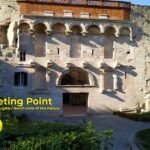
- Getting oriented fast at the South Tours meeting point
- Golden Gate to the Game of Thrones Museum: where the modern and ancient meet
- People’s Square and Fruit Square: the center of daily life
- Riva promenade: taking in Split at street level
- Diocletian’s Cellars: the stop with real wow-factor
- Peristil: the palace’s central square
- Cathedral of Saint Domnius: the living layer on top of the ancient
- Vestibul and photo stop: a quick close to the palace loop
- What you’re paying for: value in a private, short format
- Who this tour suits best (and who should skip it)
- A few practical tips to make it smoother
- Should you book this private walking tour of Split and Diocletian’s Palace?
- FAQ
- How long is the Split private walking tour?
- Where does the tour start?
- What’s included in the price?
- Is food or drinks included?
- What languages are available during the tour?
- What should I bring?
- Is the tour private?
- Is the tour suitable for people with mobility impairments?
- How does cancellation work?
Key highlights to look for
- Diocletian’s Cellars entry included so you’re not stuck outside wondering what’s under the palace
- Golden Gate and the old-town orientation early on, which helps everything make sense as you walk
- Split’s main squares on one route, including Fruit Square and People’s Square
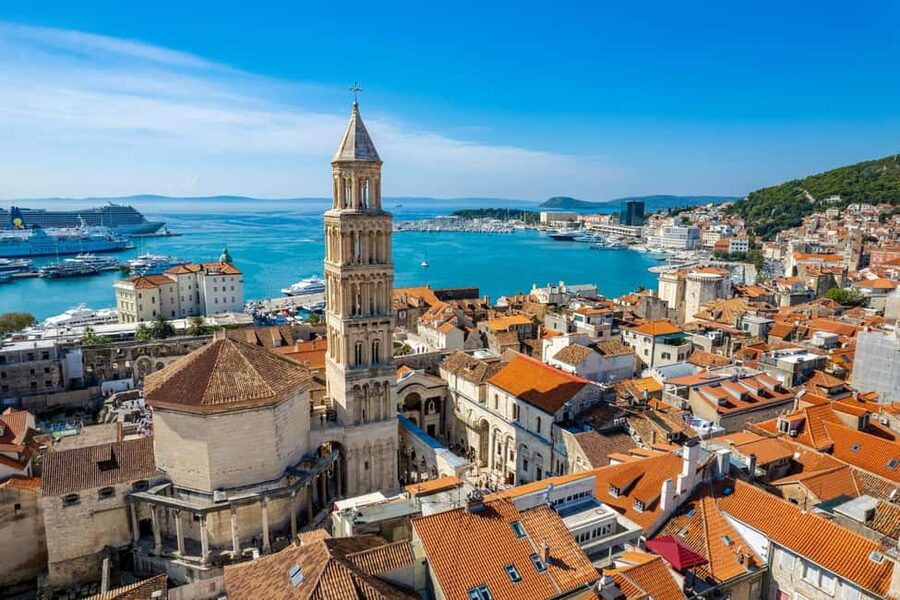
- Peristil and Saint Domnius bring you into the palace’s ceremonial center
- Riva promenade time to balance big history with sea-level views
- Guide quality is a standout, with Ana repeatedly praised for being attentive and easy to follow
On your own schedule: more private tours in Split
- SPLIT-PRIVATE Walking Tour of Diocletian’s Palace & Old Town★ 5.0 · 467 reviews
- Private Krka Waterfalls tour with 30min Boat Cruse★ 4.0 · 458 reviews
- Split by Private Electric Rickshaw – Palace & Hidden Gems★ 5.0 · 412 reviews
- Private Blue cave, Mamma Mia and Hvar, 5 islands tour from Split★ 5.0 · 387 reviews
The short version: what this tour is really for
If you want Split to click fast, this tour is built for that. You’re covering the core geography—gate, squares, waterfront, and the palace—so you don’t spend your first day wandering like it’s all one long maze.
The big win is that Diocletian’s Palace isn’t treated like a single landmark you pass by. Instead, it’s shown as an organized space: entry points, ceremonial areas, and preserved underground areas. That structure is what turns a pile of ancient stone into an actual story you can walk through.
Getting oriented fast at the South Tours meeting point
You start at the South Tours office at Mrčelina 1. Plan to arrive about 15 minutes early. That buffer is genuinely useful in Split, where the old streets and curving routes can make a “quick check-in” feel like a mini side quest.
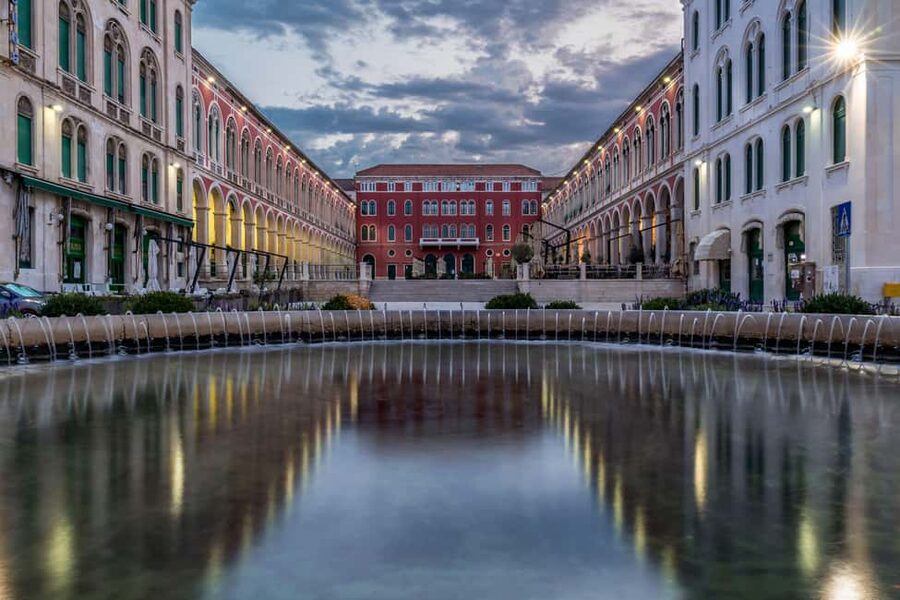
From the start, the tour is designed to help you read the city. You begin at Golden Gate, then move into the palace and historic center areas. That order matters: it’s easier to understand where you are and why the main sites are placed the way they are once you’ve got that initial map-in-your-head moment.
Also note the pacing. It’s listed as 90 minutes, so you’ll cover a lot of ground without long breaks. That’s ideal if you want the highlights, but it helps to wear comfortable shoes.
Golden Gate to the Game of Thrones Museum: where the modern and ancient meet
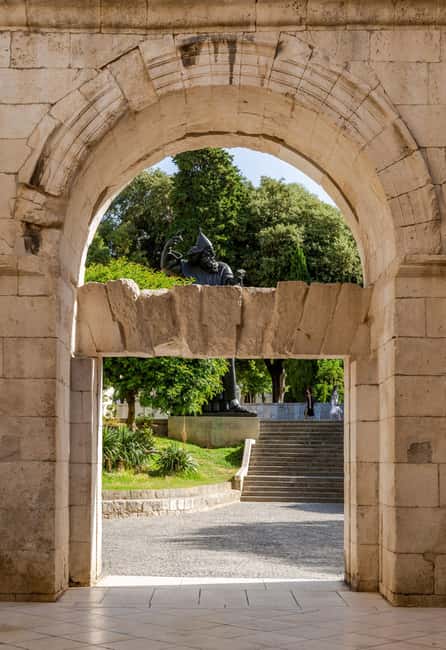
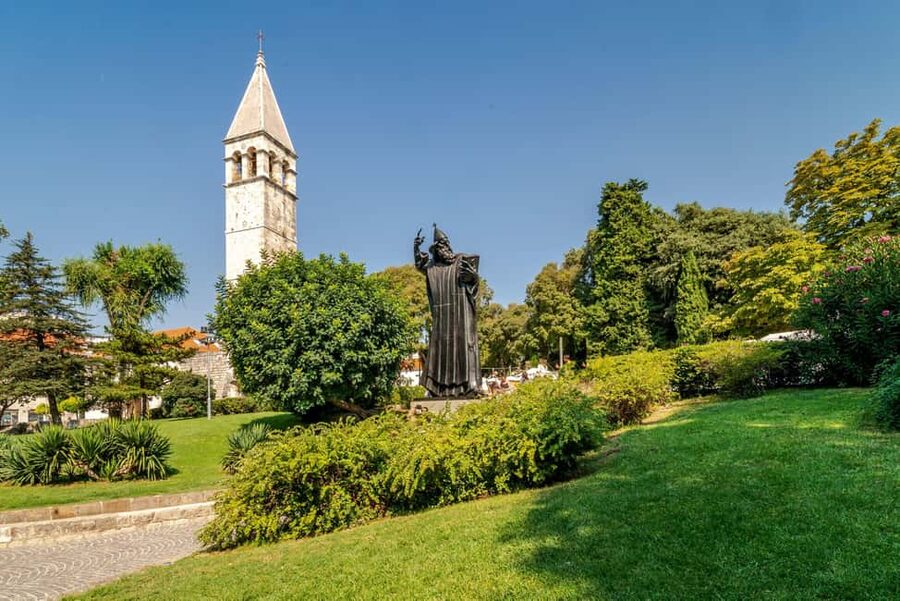
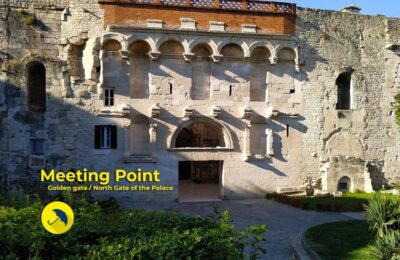
The tour kicks off with Golden Gate. Even if you don’t think you care about gates, this is the kind of stop that helps you understand how the old city worked—how people entered, moved, and flowed into the built environment of the palace and beyond.
Then you get a quick pause for the Game of Thrones Museum. The key here is not the show content. The value is that Split is a living city, and modern references often sit right beside ancient walls. A brief stop like this can help you connect what you see today with the stone behind it, without turning your walk into a detour marathon.
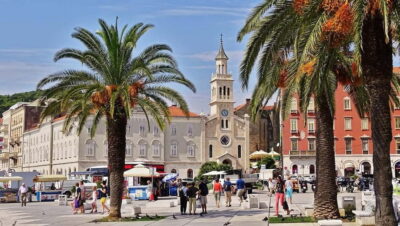
People’s Square and Fruit Square: the center of daily life
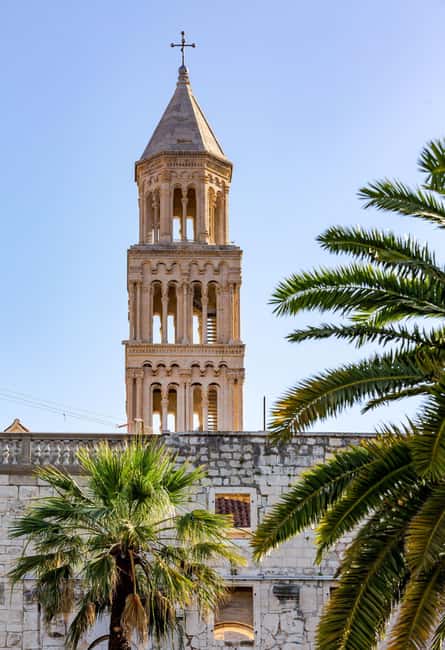
Next come the urban heartbeats: People’s Square and Fruit Square. These are the kinds of places where locals and visitors both pass through, but with a good guide, they stop being generic “squares” and start becoming functional stops in the city’s story.
Here’s what I like about this style of routing: you’re not just staring at monuments. You’re moving through spaces that show how a city actually lives—market-adjacent areas, public gathering points, and crossroads where different parts of the old town feel connected.
This is also a nice moment to adjust your expectations. Split’s beauty isn’t only in the big, famous sites. It’s in how the city’s layout guides movement—street to square, square to promenade, then toward the palace core.
Prefer to walk it? More guided strolls through Split



Riva promenade: taking in Split at street level
You’ll also get time along the Riva, Split’s famous promenade. This is the part where you can slow down just a notch and let your senses do their job: sea air, boats, and the open feel that contrasts with palace stone.
I like including the Riva mid-tour because it gives you a visual reset. After squares and architectural stops, the promenade makes the walk feel less like a history lecture and more like actually being in Split.
It’s also a practical break. If you’ve been walking in sun or wind, you’ll appreciate having a strip of space where you can stand for a second and re-check your bearings.
Diocletian’s Cellars: the stop with real wow-factor

The centerpiece for many people is Diocletian’s Cellars, and you get in because the tour includes the entry ticket. This matters because the cellars are part of what makes the palace feel truly functional, not just ceremonial.
You’re walking into preserved underground space that connects to the palace above. That contrast—surface life versus underground structure—is exactly why a guided visit helps. You don’t just see an old space. You’re shown what it’s for and how it fits into the palace design.
If you’re the type who likes seeing the “behind the curtain” version of famous places, this is your moment. The cellars give you scale, structure, and a stronger sense of how Diocletian’s palace worked in practice.
Peristil: the palace’s central square
Then you move into Peristil, the central square of Diocletian’s Palace. This is where the palace stops feeling like a fortress and starts feeling like a stage for ceremony and everyday movement.
Even without getting lost in architectural jargon, Peristil is easy to read once you understand that the palace wasn’t built like a random ruin. It was built as a planned environment, and the center points you toward the other major areas.
This stop is also where you can take your time visually. Look around and notice how spaces relate to each other. That’s the main lesson this part offers: Diocletian’s Palace isn’t just about one building. It’s about relationships between spaces.
Cathedral of Saint Domnius: the living layer on top of the ancient
Next is the Cathedral of Saint Domnius. This is one of those “historic layers” moments that makes old places feel less frozen in time.
You’re not only walking through Roman-era space. You’re seeing how later eras shaped the same city footprint. The cathedral stop helps you connect the palace story to the ongoing story of Split as a religious and civic center.
It’s also a great reminder that ancient cities don’t stay as museum pieces forever. People keep using them, adapting them, and building on what’s already there.
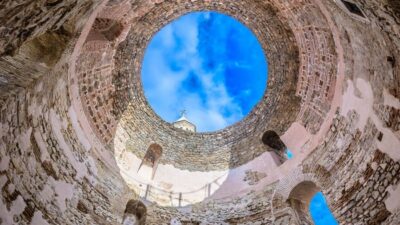
Vestibul and photo stop: a quick close to the palace loop
You finish with the Vestibul, which includes a photo stop and walk. The nice thing about ending with a vestibule-type area is that it often helps you frame what you just experienced: movement through thresholds and transitions from open palace space to the tighter, more human-scaled areas.
Even if you’re not a photographer, this is a good moment to pause. Your brain has taken in gates, squares, courtyards, and underground space. A short photo stop is a practical way to land the tour and decide what you want to revisit on your own.
What you’re paying for: value in a private, short format
At $117 per person, this isn’t a budget activity. But the value comes from what’s included and the pacing.
You get:
- a live guide
- sightseeing through Split
- entry to the cellars (so you’re not paying separately or losing time later)
- a private group format
- audio guide support in Spanish and English
For me, the biggest value is not the number of stops. It’s the fact that you’re getting a guided thread across the city’s major anchors. In a place like Split, where everything is close but meanings can be confusing, a guide helps you avoid that feeling of seeing a lot without understanding much.
Also, the 90-minute length is a plus if you have limited time or you’re juggling other plans in Dalmatia. You can fit this into a day without it swallowing your entire schedule.
Who this tour suits best (and who should skip it)
This fits well if:
- you want Split’s landmarks connected in a clear route
- you like walking but don’t want a half-day commitment
- you want both palace areas and central old-town squares in one package
- you appreciate a guide who keeps things organized and easy to follow
It’s less ideal if:
- you need accessibility support for mobility limitations, since it’s not suitable for people with mobility impairments
- you want lots of rest breaks or a slow museum-style pace (this is a walking tour)
A few practical tips to make it smoother
- Bring comfortable shoes. Old town surfaces can be uneven, and you’ll be on your feet.
- Wear sun protection if you’re doing this in summer. The Riva and plaza spaces can get exposed.
- If you’re visiting around a busy period, arrive early. Check-in time matters when you’re starting at a specific office address.
- Plan to eat after. Food and drinks aren’t included, so you’ll want to schedule a meal break yourself.
Should you book this private walking tour of Split and Diocletian’s Palace?
I’d book it if your goal is to get your bearings fast and see Diocletian’s Palace in a way that feels coherent. The cellars entry included is a strong reason by itself. Add in the route through Golden Gate, key squares, and the Riva, and you get a practical blend of “big history” and real city life.
One last reason to feel confident: the guide experience is consistently praised, including Ana, who comes across as attentive and well-prepared. In a short tour, that kind of guide makes the difference between seeing sights and actually understanding why they matter.
If you’re sensitive to long walks or need accessibility accommodations, skip this one and look for a more suitable format.
FAQ
How long is the Split private walking tour?
The tour is listed as 90 minutes.
Where does the tour start?
The meeting point is the South Tours office, Mrčelina 1, Split.
What’s included in the price?
You get a live guide, sightseeing of Split, and an entry ticket to the cellars of Diocletian’s Palace.
Is food or drinks included?
No. Food and drinks are not included.
What languages are available during the tour?
The live guide is available in Spanish and English, and an audio guide is also included in Spanish and English.
What should I bring?
Wear comfortable shoes.
Is the tour private?
Yes. It’s a private group tour.
Is the tour suitable for people with mobility impairments?
No. It is not suitable for people with mobility impairments.
How does cancellation work?
There’s free cancellation up to 24 hours in advance for a full refund.
Deeper Into the Palace, Split
- Split: Old Town and Diocletian Palace Walking Tour
★ 4.9 · 4,727 reviews - Walking Tour of Split and Diocletian’s Palace
★ 5.0 · 2,588 reviews - Split & Diocletian’s Palace Walking Tour
★ 5.0 · 1,125 reviews - Split: Diocletian Palace & Old Town Guided Walking Tour
★ 4.7 · 882 reviews - Split Old Town and Diocletian’s Palace Tour
★ 4.8 · 716 reviews
Walk Split a Different Way
- Split: Old Town and Diocletian Palace Walking Tour
★ 4.9 · 4,727 reviews - Walking Tour of Split and Diocletian’s Palace
★ 5.0 · 2,588 reviews - Krka Waterfalls tour with Trogir Walking tour and Krka panoramic boat cruise
★ 5.0 · 1,659 reviews - Split & Diocletian’s Palace Walking Tour
★ 5.0 · 1,125 reviews - Walking Tour of Split with a ‘Magister’ of History
★ 5.0 · 1,122 reviews
Just Your Group in Split
- SPLIT-PRIVATE Walking Tour of Diocletian’s Palace & Old Town
★ 5.0 · 467 reviews - Private Krka Waterfalls tour with 30min Boat Cruse
★ 4.0 · 458 reviews - Split by Private Electric Rickshaw – Palace & Hidden Gems
★ 5.0 · 412 reviews - Private Blue cave, Mamma Mia and Hvar, 5 islands tour from Split
★ 5.0 · 387 reviews - The Best of Split Private Tour
★ 5.0 · 338 reviews
Still deciding? More Split trips we have been out and reviewed


Diocletian's Palace & Old Town, compared.
 ★ 4.9Old Town and Diocletian Palace Walking TourFrom $174,727 reviews
 ★ 5.0Walking Tour of Split and Diocletian’s PalaceFrom $482,588 reviews
 ★ 5.0Split & Diocletian’s Palace Walking TourFrom $211,125 reviews
 ★ 4.7Diocletian Palace & Old Town Guided Walking TourFrom $17882 reviews
 ★ 4.8Split Old Town and Diocletian’s Palace TourFrom $17716 reviews
 ★ 4.8Game of Thrones Tour with Diocletian’s Palace CellarFrom $41545 reviews
 ★ 5.0Diocletian’s Palace and Old Town SMALL GROUP Walking TourFrom $16502 reviews
 ★ 5.0SPLIT-PRIVATE Walking Tour of Diocletian’s Palace & Old TownFrom $240467 reviews
Browse the lists this tour appears in