
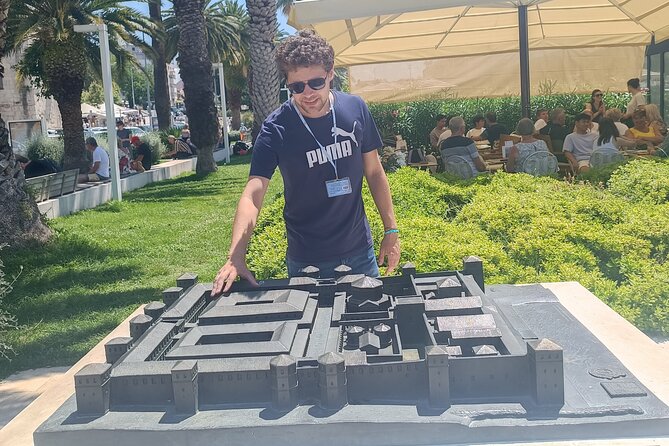
Reviewed · SPLIT OLD TOWN WALKING TOURS
Split Walking Tour with Professor of History
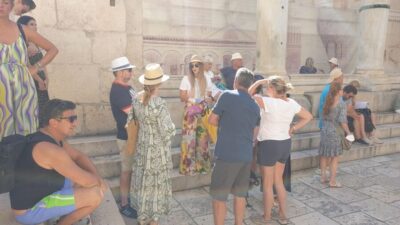
History is right under your feet. In Split, this small-group walking tour led by a history professor turns the old city into something you can picture, not just skim. You start on the harbor promenade, then walk through the core of Diocletian’s Palace—UNESCO-listed—while your guide links Roman power, later Christian change, and everyday local life.
I especially love how the tour focuses on the places that still look like they belong to the past: the substructures and the Peristyle make the scale of Diocletian’s world click fast. And I like the guide style—often with humor and myth-busting energy (you may hear stories told by guides like Mario or Anita), plus practical pointers after the tour about what to see next.
One thing to plan for: even though it’s listed at about 2 hours 20 minutes, it can run closer to around 3 hours if the guide keeps the stories coming and gives extra context.
In This Review
- Key Things to Know Before You Go
- Price and Timing: Is It Good Value?
- Meet at the Brass Gate and Start on Real Split Time
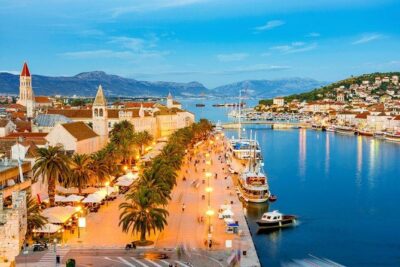
- Riva Harbor: Where the Story Becomes Human
- Diocletian’s Palace Substructures: The Best-Preserved Shock
- The Peristyle: The Imperial Square You Can Still Feel
- Vestibul (Rotonda): The First Imperial Corridor
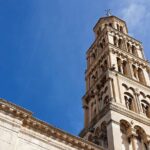
- Saint Domnius Cathedral: Outside Views, Inside Context
- Temple of Jupiter and Let Me Pass Street
- Golden Gate: The Emperor’s Main Entrance
- Grgur Ninski Statue: A Myth You Can Touch
- Marmontova Ulica and Prokurative: Streets Named for Power
- Fruit’s Square (Trg Brace Radic): Where History Meets Food
- Group Size, Guide Style, and What You’ll Actually Get From It
- What’s Included vs. What You Might Pay Later
- How Long to Budget and How to Survive the Walking
- Private Upgrade: When It’s Worth Paying More
- Weather and What Happens If It Turns
- Quick Practical Notes Before You Go
- Should You Book This Split Walking Tour?
Key Things to Know Before You Go

- Professor-led storytelling: you’re not just walking points on a map; you’re learning how Roman and later eras overlap in Split.
- A tight group (max 17): you’ll get more back-and-forth, not just a lecture from the front.
- UNESCO core of Diocletian’s Palace: the route hits the most important sections, especially the best-preserved parts.
- Most stops are outside: Saint Domnius and the Temple of Jupiter are explained with outside viewpoints, with optional follow-up if you want to enter later.
- Mobile ticket, English guide: easy check-in, and the tour is offered in English.
Prefer to walk it? More guided strolls through Split
- Split: Old Town and Diocletian Palace Walking Tour★ 4.9 · 4,727 reviews
- Walking Tour of Split and Diocletian’s Palace★ 5.0 · 2,588 reviews
- Krka Waterfalls tour with Trogir Walking tour and Krka panoramic boat cruise★ 5.0 · 1,659 reviews
- Split & Diocletian’s Palace Walking Tour★ 5.0 · 1,125 reviews
Price and Timing: Is It Good Value?
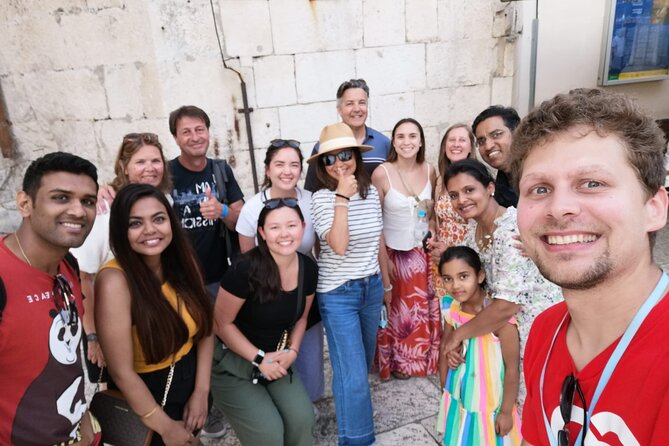
At $24.19 per person for roughly 2 hours 20 minutes, this tour is priced like a solid “first-day” experience—especially if you like history but don’t want to research every stop on your own. The value comes from three things:
First, you get an order to the chaos of Split’s old streets. Without that structure, Diocletian’s Palace can feel like a pile of stone with a lot of signs. With a professor guiding you, the same spaces start to tell a story.
Second, you’re in a small group (up to 17). That matters here because Split’s historic center is walkable but crowded at times. Smaller groups also make it easier for your guide to slow down when questions pop up.
Third, the tour hits both “big” icons and the in-between details that usually get skipped—like walking routes between Roman and medieval layers.
Planning tip: the average booking window is about 33 days ahead, so if you’re traveling in peak season, it’s smart to reserve early rather than waiting.
Meet at the Brass Gate and Start on Real Split Time
You meet at the Brass Gate (Porta Aenea), right by the water at Obala Hrvatskog narodnog preporoda 22. From there, the tour begins on the Riva area—Split’s famous Riva promenade.
This first stretch is more than just a warm-up. Your guide uses it to set the scene: Riva is where locals spend time—coffee, sun, and everyday public life. That contrast helps the Roman ruins later feel less like museum pieces and more like something that still sits inside a living city.
If you arrive early, that’s a great moment to take a slow look around. You’ll notice how the harbor’s rhythm pulls the city together—then you’ll step straight into the imperial architecture.
Riva Harbor: Where the Story Becomes Human
At Stop 1, you spend about 15 minutes around the Riva promenade. Your guide points out how public life gathers here, then you connect that to the idea of Split as a city built over older systems.
This is a small time block, but it’s a helpful trick: instead of starting with architecture jargon, the tour starts with street-level reality. It makes the next stops land harder.
Admission ticket here is free, and the timing is short enough that it doesn’t drag.
Diocletian’s Palace Substructures: The Best-Preserved Shock
Stop 2 is one of the main reasons to take this tour: the substructures of Diocletian’s Palace. These are the basement halls under the palace complex, and they’re described as one of the world’s best-preserved from classical antiquity.
Why this stop matters: most visitors see the visible façade and exterior walls and assume they know what Diocletian’s Palace is. Then you look down into the substructures and realize the palace wasn’t just decorative power—it was a whole built machine. That’s also a big reason Split’s historic center earned UNESCO World Heritage status in 1979.
Expect a 15-minute pause where your guide breaks down what you’re looking at and why it’s so rare.
A few more Split boat days and tours worth a second look



The Peristyle: The Imperial Square You Can Still Feel
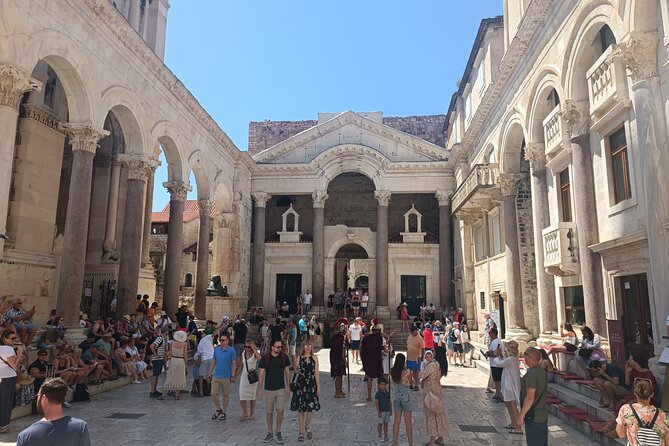
Stop 3 takes you to the Peristyle, the central square inside Diocletian’s Palace. This space was meant for the Emperor Diocletian to appear as a living figure tied to Jupiter. Your guide explains how people would approach, kneel, and present themselves in a ritual setting.
This stop is only about 10 minutes, but it’s a quick way to understand how ceremony worked in Roman power. Standing in the Peristyle changes your perspective: you start to see the palace as a stage where authority was performed, not just a residence.
Admission here is free.
Vestibul (Rotonda): The First Imperial Corridor
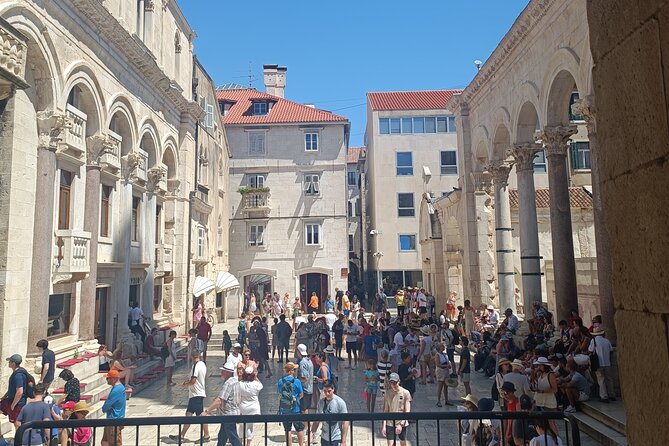
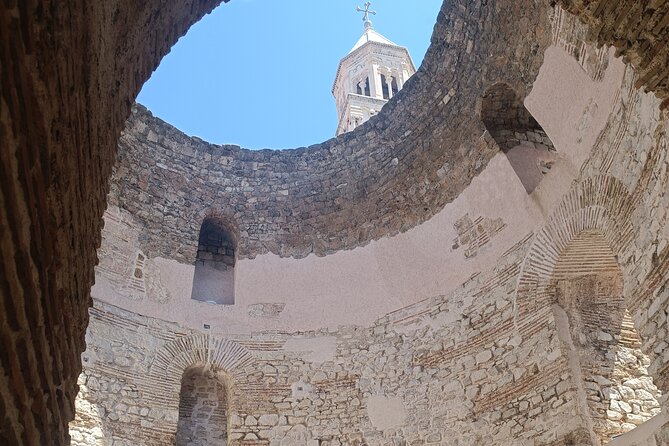
Stop 4 is the Vestibule, also called the Rotonda, described as part of the imperial corridor system that led from the Peristyle into the imperial apartments.
This is your “how people moved” stop. Your guide walks you through how grand spaces were used for select audiences like ambassadors. It’s a circular hall, once topped with a dome, and the guide shares details about size and function.
Again, 10 minutes and free entry—perfect for keeping momentum without turning the tour into a queue.
Saint Domnius Cathedral: Outside Views, Inside Context
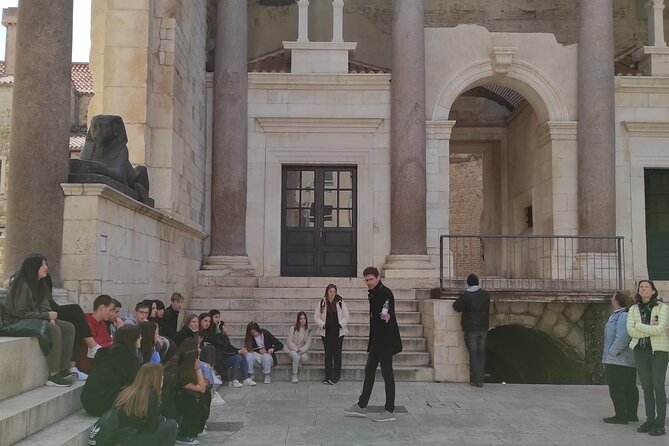
Stop 5 is the Cathedral of Saint Domnius. Here you visit from the outside only, because the entrance isn’t included. You’ll still get detailed information, and if you want to go inside afterward, your guide can point you toward what makes it worth the extra time.
Think of this as a “pre-sight” stop. Your guide helps you know what you’re about to see before you ever pay entry later. That way, the building doesn’t blur into a generic church shape.
This stop is about 20 minutes. Plan extra time only if you decide to return for interior access later.
Temple of Jupiter and Let Me Pass Street
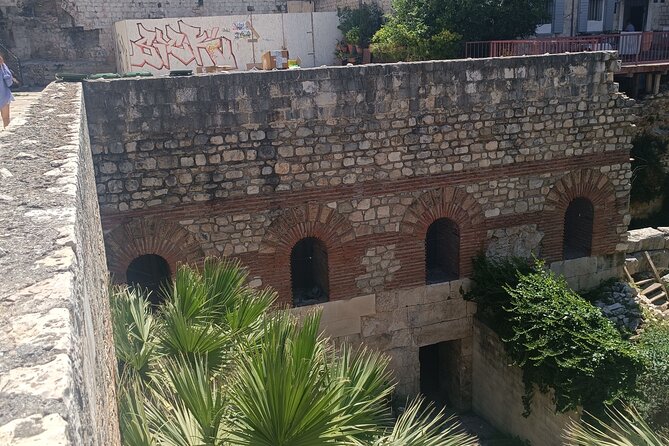
Stop 6 covers the Temple of Jupiter. The key detail here: over time, the temple was converted into a baptistery dedicated to St. John the Baptist. You visit from the outside, with explanation provided.
Then you get a fun walk-through connection on the way to the next location: a small street known as Let me pass street, described as the narrowest street in the world by local belief. It sits between the ancient temple and medieval buildings.
This is one of those moments where the tour becomes enjoyable even if you’re not chasing every fact. You go from a massive Roman religious space to a tight medieval connector street, and the contrast explains how old and newer layers squeezed into the same city footprint.
Admission here is not included for this stop (outside viewing is included).
Golden Gate: The Emperor’s Main Entrance
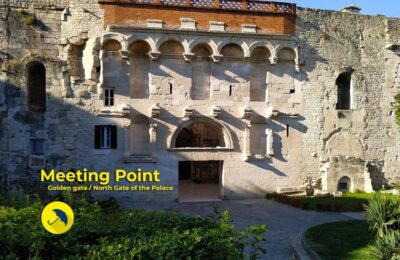
Stop 7 is the Golden Gate (also called the Northern Gate). This is one of the four principal Roman gates into Split’s old town, built as part of Diocletian’s Palace.
Your guide explains how it served as the main gate for the Emperor and how it was decorated to show status. Over the Middle Ages it was sealed off and lost columns and statuary, then later reopened and repaired for modern visitors.
Time here is about 15 minutes, and admission is free. This is also a good spot for quick photos and for understanding how the palace complex interacted with the city beyond its walls.
Grgur Ninski Statue: A Myth You Can Touch
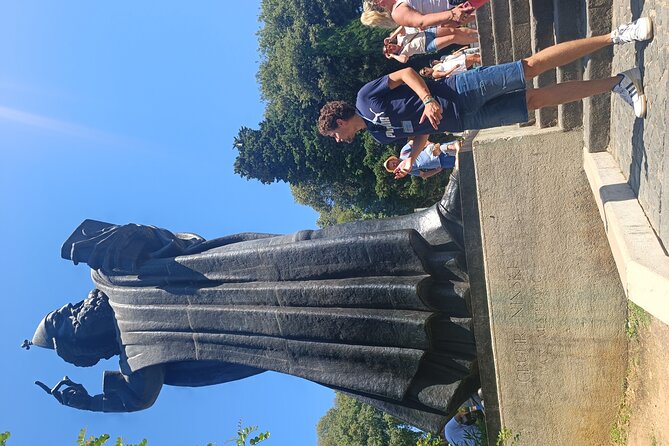
Stop 8 is the Grgur Ninski statue by Ivan Meštrović. The famous detail is the toe rubbing tradition: the toe is worn shiny because people rub it for good luck.
This stop is about 10 minutes, and it’s free. It’s not just a cute tradition either—it gives your guide a chance to connect faith, legend, and local behavior in a way that feels more like culture than tourist checklist.
Even if you don’t believe the toe-rubbing ritual, it’s a great example of how Split stays playful with its past.
Marmontova Ulica and Prokurative: Streets Named for Power
Stop 9 moves to Marmontova Ulica, the street named after Napoleon’s marshal Marmont. The story here is a cultural twist: despite being a conqueror, he’s credited with urbanization efforts in Dalmatian cities, and locals named their most beautiful street after him.
This is about 10 minutes—a quick stop, but a memorable one. Your guide uses it to show how history in Split isn’t only Roman. It jumps through time and keeps leaving names behind.
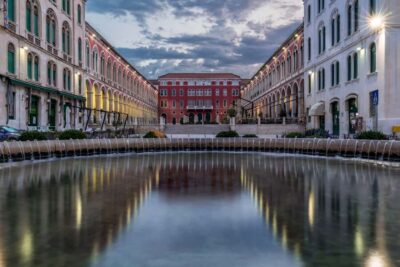
Stop 10 lands at Prokurative, the open Republic Square area surrounded on three sides by neo-Renaissance buildings. Around 10 minutes here, and it’s another place where the guide helps you see what you’d otherwise consider just “pretty buildings.” The square becomes a frame for the stories you’ve already learned.
Admission at these stops is free.
Fruit’s Square (Trg Brace Radic): Where History Meets Food
Stop 11 is the end point: Fruit’s Square (Trg Brace Radic), a small, beautiful square. Your guide explains that it used to be a place where ladies sold fruit, and it’s also tied to major cultural figures like the statue of Marko Marulić, described as the father of Croatian literature.
Time here is about 15 minutes, and it’s a great closing stop because it shifts from stone-and-dates into daily life. Your guide can tie in Croatian history with gastronomy—so after your walking tour, you’re not stuck thinking only in ruins. You’re thinking about what to eat and where the culture is still visible.
Admission is free.
Group Size, Guide Style, and What You’ll Actually Get From It
The tour caps at 17 travelers, and that’s meaningful in Split’s old town. You’ll likely get more attention during the key moments inside Diocletian’s Palace spaces, and your guide can keep the group moving without losing the thread of the story.
You may also notice a guide’s personality. Based on what’s been shared by people who’ve taken it, guides like Mario can mix history with humor and even cover practical current issues along the way. Anita is described as thoughtful and attentive with caring group management, especially for first-time visitors to Split.
If you want a tour where you can ask questions and get answers tied directly to what you’re seeing, the small-group format makes that easier.
What’s Included vs. What You Might Pay Later
The tour includes all fees and taxes. Some stops include free viewing, and you don’t need to buy entrance for many of them.
But there’s an important detail: at Saint Domnius and the Temple of Jupiter, you only see them from the outside. Entrance isn’t included for those sights. Your guide gives details during the tour, and you can decide afterward if you want to pay for entry on your own.
Also, alcoholic beverages are not included.
How Long to Budget and How to Survive the Walking
The tour is about 2 hours 20 minutes on paper, but you should budget around 3 hours if you want to be stress-free. A longer time usually comes from a guide spending extra seconds clarifying details or giving more local context.
Wear comfortable shoes. Split’s old streets are walkable, but you’ll be on foot for most of the time, moving between harbor viewpoints and stone-heavy palace areas.
If you care about photos, bring a full battery plan. You’ll want pictures at the Peristyle, Golden Gate, and the Ninski statue toe.
Private Upgrade: When It’s Worth Paying More
The tour offers an upgrade to a private tour if you want a more customized pace. A private setup can be smart when:
- you’re traveling as a small party that wants more time on the parts you care about most
- you have questions that benefit from one-on-one explanations
- you prefer a slower pace for older legs or careful photo stops
If you’re the type who wants control over the day, this upgrade helps.
Weather and What Happens If It Turns
This experience requires good weather. If weather forces a cancellation, you’ll be offered a different date or a full refund. The tour is mostly outdoors and between street-level and open palace spaces, so conditions matter.
Quick Practical Notes Before You Go
- You’ll get a mobile ticket.
- It’s offered in English.
- It runs near public transportation.
- Service animals are allowed.
- Most travelers can participate.
- The meeting point is Brass Gate (Porta Aenea), and the tour ends back there.
If you’re flexible with your schedule, free cancellation up to 24 hours in advance is a nice safety net.
Should You Book This Split Walking Tour?
Book it if you want the fastest path to understanding Split’s most important layer: Diocletian’s Palace and how it shaped the city you walk through today. This is also a great first tour because it gives you an organized route, plus practical sights you can return to later for entrances.
Skip it (or consider a shorter self-guided approach) if you hate guided history lectures and prefer to wander without structure. Also, if you only want inside cathedral and baptistery spaces, note that key major stops are outside-only on this walk.
If you’re curious, enjoy stories, and want your first day in Split to feel anchored in real context, this professor-led route is a strong pick.
More Tours in Split
- From Split: Krka Waterfalls, Food & Wine Tasting Tour
★ 5.0 · 9,326 reviews - Blue cave, Mamma Mia and Hvar, 5 islands speedboat tour
★ 5.0 · 7,150 reviews - From Split: Krka Waterfalls, Food & Wine Tasting Tour
★ 4.9 · 6,598 reviews - Split/Trogir: Blue Cave, Mamma Mia, Hvar and 5 Island Tour
★ 4.6 · 6,320 reviews - Blue Cave and Hvar Tour – 5 Islands Tour from Split and Trogir
★ 5.0 · 4,815 reviews
More Tour Reviews in Split
- Split: Krka Waterfalls Trip with Boat Cruise and Swimming
★ 4.8 · 10,519 reviews - From Split: Krka Waterfalls, Food & Wine Tasting Tour
★ 5.0 · 9,326 reviews - Blue cave, Mamma Mia and Hvar, 5 islands speedboat tour
★ 5.0 · 7,150 reviews - From Split: Krka Waterfalls, Food & Wine Tasting Tour
★ 4.9 · 6,598 reviews - Split/Trogir: Blue Cave, Mamma Mia, Hvar and 5 Island Tour
★ 4.6 · 6,320 reviews
Walk Split a Different Way
- Split: Old Town and Diocletian Palace Walking Tour
★ 4.9 · 4,727 reviews - Walking Tour of Split and Diocletian’s Palace
★ 5.0 · 2,588 reviews - Krka Waterfalls tour with Trogir Walking tour and Krka panoramic boat cruise
★ 5.0 · 1,659 reviews - Split & Diocletian’s Palace Walking Tour
★ 5.0 · 1,125 reviews - Walking Tour of Split with a ‘Magister’ of History
★ 5.0 · 1,122 reviews
Still deciding? More Split trips we have been out and reviewed

Split Old Town Walking Tours, compared.
 ★ 4.9Old Town and Diocletian Palace Walking TourFrom $174,727 reviews
 ★ 5.0Walking Tour of Split and Diocletian’s PalaceFrom $482,588 reviews
 ★ 5.0Krka Waterfalls tour with Trogir Walking tour and Krka panoramic boat cruiseFrom $481,659 reviews
 ★ 5.0Split & Diocletian’s Palace Walking TourFrom $211,125 reviews
 ★ 5.0Walking Tour of Split with a ‘Magister’ of HistoryFrom $341,122 reviews
 ★ 4.7Diocletian Palace & Old Town Guided Walking TourFrom $17882 reviews
 ★ 4.7Krka Waterfalls Cruise & Trogir Walking TourFrom $47681 reviews
 ★ 4.9History and Heritage Walking TourFrom $18650 reviews
Browse the lists this tour appears in