
Reviewed · SPLIT OLD TOWN WALKING TOURS
SPLIT-PREMIUM Emperor’s Walking Tour for History Lovers + Museum
Roman stones, medieval streets—one smart loop. This Split Old Town walk is built around the UNESCO heart of town: Diocletian’s Palace, plus the squares and viewpoints that show how Split grew. It’s timed for a full sense of place in about two hours, guided by a licensed local who can explain what you’re actually seeing.
I especially like the small-group feel. On tours run with only a handful of people, guides like Joško and Daniela can keep the pace human, add personal context, and even help with practical stuff like photos and restaurant ideas after you finish.
The one drawback to plan for: not everything is free. You’ll see several exterior sights, and you may want optional paid add-ons like the Museum of Diocletian’s Cellars (€10) and certain palace substructure access.
In This Review
- Key things I’d circle before you go
- Diocletian’s Palace and Old Split: why this works in 2 hours
- Meeting at the waterfront and pacing your walk around the palace
- Stop-by-stop: palace gates, emperor squares, and Split’s key monuments
- 1) Palazzo di Diocleziano (Diocletian’s Palace proper)
- 2) Old Split (medieval lanes, city layers)
- 3) Cathedral of Saint Domnius (seen from outside)
- 4) Riva Harbor (waterfront start/finish energy)
- 5) The Peristyle (Emperor’s Square / heart and soul)
- 6) Grgur Ninski statue (key Croatian historical figure)
- 7) Fruit’s Square / Trg Brace Radic (Marul statue)
- 8) Narodni Trg (People’s Square)
- 9) Temple of Jupiter (outside first, optional inside)
- 10) City Clock (a 24-hour clock with age)
- 11) The Golden Gate (main entrance into the palace)
- 12) Diocletian Palace Substructures (best preserved section, with possible paid entry)
- 13) Vestibulum (main entrance to the private residence)
- Small group size and licensed local guides: the real value
- Price check: $30 is fair, but know the optional tickets
- Is this a history tour or Game of Thrones sightseeing?
- Who should book this Split walking tour?
- My verdict: should you book it?
- FAQ
- How long is the Split Emperor’s walking tour?
- What language is the tour offered in?
- What is the group size limit?
- Is this tour adults-only?
- Where do you meet for the tour?
- Is there a starting and ending point on the waterfront?
- Is the Museum of Diocletian’s Cellars included?
- Is the Cathedral of Saint Domnius part of the tour entry?
- Is the Temple of Jupiter interior visit included?
- What if the weather is bad?
Key things I’d circle before you go
- UNESCO at the center: You spend real time inside Diocletian’s Palace and its most significant public areas.
- A tight, readable route: Major stops are grouped so you’re not zigzagging across town for trivia.
- Two named local guides you might get: Joško and Daniela show up repeatedly in feedback for style and clarity.
- Most stops don’t cost extra: Many sights are described as free-entry parts of the walk.
- Optional paid upgrades are clearly marked: Cellars (€10) and some interior access are add-ons, not surprises.
Prefer to walk it? More guided strolls through Split
- Split: Old Town and Diocletian Palace Walking Tour★ 4.9 · 4,727 reviews
- Walking Tour of Split and Diocletian’s Palace★ 5.0 · 2,588 reviews
- Krka Waterfalls tour with Trogir Walking tour and Krka panoramic boat cruise★ 5.0 · 1,659 reviews
- Split & Diocletian’s Palace Walking Tour★ 5.0 · 1,125 reviews
Diocletian’s Palace and Old Split: why this works in 2 hours
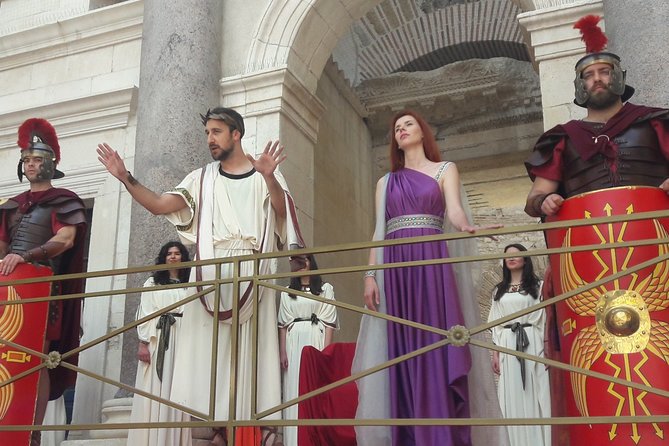
Split’s best “aha” moment is realizing the city isn’t a single era—it’s layers. This tour is set up to help you read those layers fast: the Roman structure of Diocletian’s Palace, then the medieval and later life that filled its spaces. In about 2 hours, you get enough orientation to keep appreciating Split long after the walk ends.
I like that the palace isn’t treated like a frozen monument. You’re guided through the most important sections—public and symbolic spaces—so you understand why Split’s center still feels like a city living inside an ancient shell.
The Old Town portion matters too. It keeps the tour from becoming only “look at old rocks.” You get the street-level setting—squares, harbor views, and city landmarks—so the palace connects to everyday Split life.
Meeting at the waterfront and pacing your walk around the palace
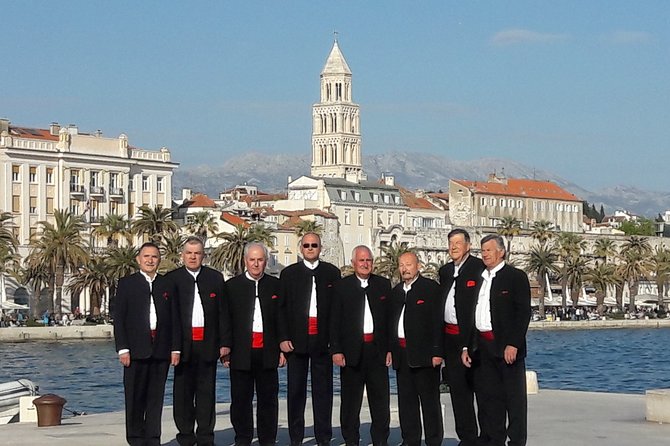
The tour starts and ends at the same place on the waterfront: the Main Stage of the Riva promenade. The listed meeting point address is Obala Hrvatskog narodnog preporoda 22, 21000 Split. That location is a big help because it’s easy to orient yourself around the water first, then walk inward toward the palace.
The route is designed as a steady strolling pace rather than a sprint. That’s important because the palace sections include stop-and-explain moments, and the Old Town squares are about looking closely at details. If your timing is strict (like you’re juggling a ship day or dinner plans), I still suggest you build in a buffer so you don’t feel rushed.
In warm months, the timing of the walk can matter. If you’re going in the heat of August, plan for sun and long exposure on foot; I’d aim for the earlier side if your schedule allows.
Stop-by-stop: palace gates, emperor squares, and Split’s key monuments
You’re not just touring random points—you’re taken through a sequence that builds a mental map of Split’s center. Here’s what to expect at each stop, and what’s worth noticing.
1) Palazzo di Diocleziano (Diocletian’s Palace proper)
This is the anchor stop: the UNESCO site tied to the palace built in 305 AD. You get a 25-minute tour of Diocletian’s Palace with admission indicated as free on the activity’s side, so you can focus on learning rather than hunting ticket details on-site.
What to watch for here is how the palace’s layout explains why Split is so distinct. If you’ve been thinking in terms of Roman empire grandeur, this stop reframes it as a real built environment that kept shaping the city afterward.
A few more Split boat days and tours worth a second look


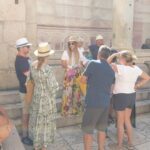
2) Old Split (medieval lanes, city layers)
Next comes Old Split, the Medieval Old Town portion. Expect another 25 minutes that links the palace to the street pattern and everyday urban life around it.
This section is where the tour becomes more than monuments. You’ll start seeing how the city grew into and around the palace structure—small streets and open spaces working together.
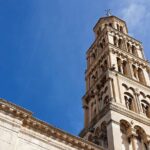
3) Cathedral of Saint Domnius (seen from outside)
You’ll see the Cathedral of Saint Domnius from the outside for about 5 minutes, with admission not included. That makes this a good “visual bookmark” stop, even if you don’t plan to go inside.
The catch: if you were hoping for a full interior cathedral visit, it won’t happen here. You’ll get the exterior context and move on.
4) Riva Harbor (waterfront start/finish energy)
The tour includes a brief 5-minute stop at Riva Harbor, where the atmosphere of Split’s waterfront helps you reset your orientation. This short segment also helps break up the heavier concentration of palace details.
It’s a good moment for photos too—especially if you want a wide view before you move into tighter streets.
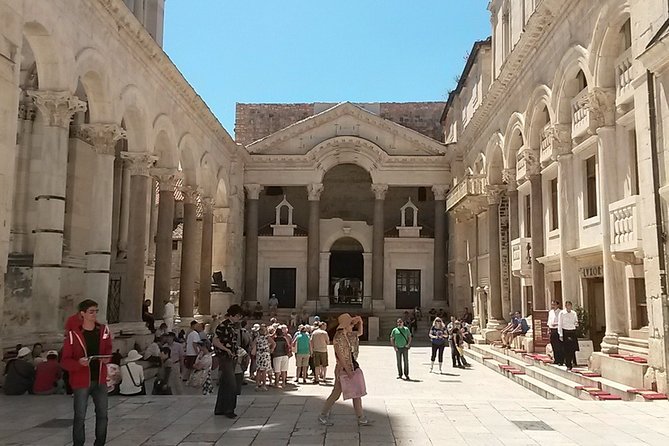
5) The Peristyle (Emperor’s Square / heart and soul)
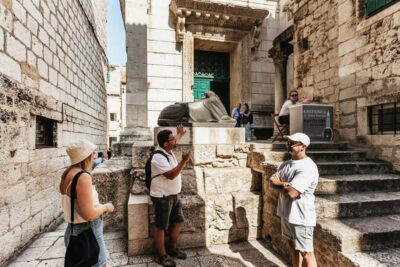
At 5 minutes, the Peristyle of Diocletian’s Palace is the “centerpiece” stop. It’s described as the heart and soul of Split, and that phrase makes sense once you’re standing in the right place and hearing the story behind it.
This is one of the best stops for soaking in what the space was meant to do—public-facing, ceremonial, and deeply symbolic.
6) Grgur Ninski statue (key Croatian historical figure)
You’ll spend about 5 minutes at the Grgur Ninski Statue. This is where the tour shifts from Roman structure to Croatian cultural memory, with an emphasis on one of Croatia’s most important historical figures.
If you like your history with names attached (not just dates), this stop is a payoff. It also helps make Split feel like more than a Roman-themed city.
7) Fruit’s Square / Trg Brace Radic (Marul statue)
Next is Fruit’s Square (Trg Brace Radic), another 5-minute stop. You’ll see the statue of Marul, described as the father of Croatian literature.
This is the kind of detail that makes a walking tour worth it. The square isn’t only a scenic pause—it’s a reminder that Split’s identity isn’t only built heritage; it’s also language and culture.
8) Narodni Trg (People’s Square)
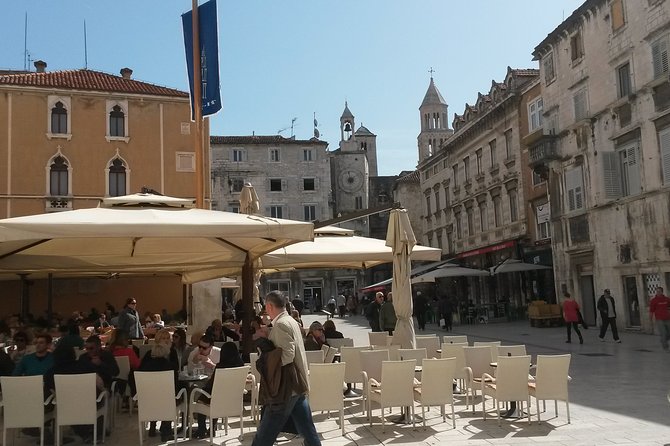
You’ll visit Narodni Trg for about 5 minutes. It’s described as the biggest and liveliest piazza in Old Town, so this stop gives you the “city life” rhythm after palace time.
Again, no interior ticket surprises—just a landmark square that helps you picture where people gather.
9) Temple of Jupiter (outside first, optional inside)
The Temple of Jupiter stop is about 5 minutes, and you’ll see it from the outside. There’s an optional interior visit noted as not included.
If you like Roman religion and architecture, you may want that interior access—just remember it’s an add-on decision, not automatically part of the tour’s included time.
10) City Clock (a 24-hour clock with age)
You’ll see the 500-year-old 24-hour clock for around 5 minutes. This is a neat reminder that Split keeps oddball details in plain sight.
I’d treat this as a “slow down” stop. Stand there for a moment and let the guide’s explanation connect the clock to daily life patterns, not just its age.
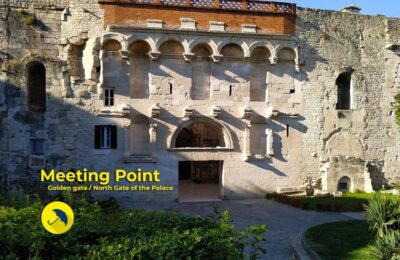
11) The Golden Gate (main entrance into the palace)
At 5 minutes, you’ll view the Golden Gate, described as the main and most beautiful entrance into Diocletian’s Palace. It’s one of those stops where you can see why people remember the palace by its dramatic thresholds.
If you’re into architecture, focus on how this gate functions visually—like a statement at the boundary between city and imperial space.
12) Diocletian Palace Substructures (best preserved section, with possible paid entry)
This is a longer 20-minute stop focused on the best preserved part: the palace substructures. Admission here is marked as not included.
This matters because it can change what you actually get on the day. If you’re hoping for the most in-depth palace experience, you should be ready for an extra fee at this point.
13) Vestibulum (main entrance to the private residence)
You end with about 5 minutes at the Vestibulum of Diocletian’s Palace, described as the main entrance to the emperor’s private residence. Admission here is marked as free.
This closing stop gives the tour a satisfying structure: you start with the palace concept, then move through public areas, symbols, and landmarks, and finish at a threshold tied to private imperial space.
Small group size and licensed local guides: the real value
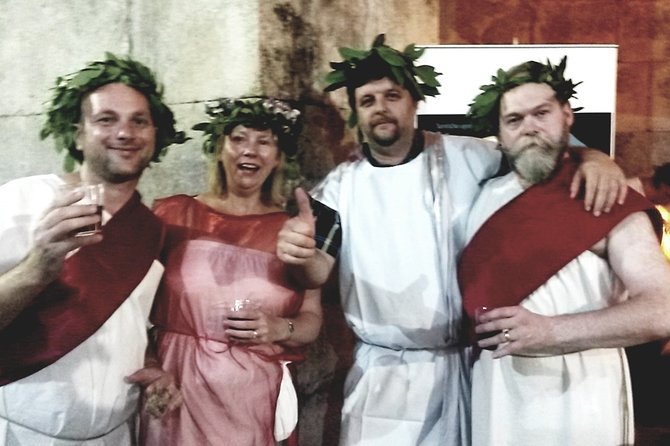
This is a small-group tour with a maximum of 15 travelers. The minimum to run is 4, so if the day’s turnout is low, the group can be tiny. That’s a big deal with a history walk, because it means the guide can slow down when questions come up.
In practical terms, a smaller group also makes the explanation easier to follow. When you’re standing in stone corridors or at narrow exterior viewpoints, you want enough space to actually see and hear.
I also like the guide focus on clarity and storytelling. Feedback highlights guides like Joško and Daniela for keeping the energy up without turning it into a lecture. Humor shows up in the right places, and the pacing feels designed for attention rather than rushing through the highlights.
One more plus: flexibility. There are examples of the guide adapting the walk when someone had mobility challenges, even if that meant taking longer. If that’s relevant for your group, tell the guide early and be ready for a slower pace.
Price check: $30 is fair, but know the optional tickets

At $30 per person for a group tour, this sits in the “value for time” category, mainly because most key sights in the route are treated as included/free for the tour’s purposes. The tour also comes with a licensed resident guide, a custom itinerary, and a mobile ticket.
Here’s what you should plan for on the cost side:
- Museum of Diocletian’s Cellars: not included, listed at €10 per person
- Temple of Jupiter interior option: not included
- Diocletian Palace substructures: listed as not included (so expect an extra ticket option if you want entry)
- Gratuities: not included
So yes, you can keep costs controlled if you stick to the included viewing parts. But if you want the deeper museum-style context, expect to budget for at least the €10 cellar ticket, plus any optional interior access you choose.
One last money-saver idea: if you’re paying extra for the substructures or cellars, go in with a short mental goal like: I want to understand how Roman life became Roman-era shells and then real city spaces. That makes the paid parts feel worth it rather than like a second ticket tax.
Is this a history tour or Game of Thrones sightseeing?
This is a history-first walk. If you’re hoping for a tour that explains TV scenes line-by-line, the format won’t match that expectation.
But there’s a real upside for pop-culture fans too: you’ll still pass locations you might recognize. The difference is you’ll learn the underlying history and then you get to spot the TV connections yourself.
If you want both—history facts plus film-callouts—bring your own notes or screenshots so you can play spot-the-location while still getting the Roman and Croatian context.
Who should book this Split walking tour?
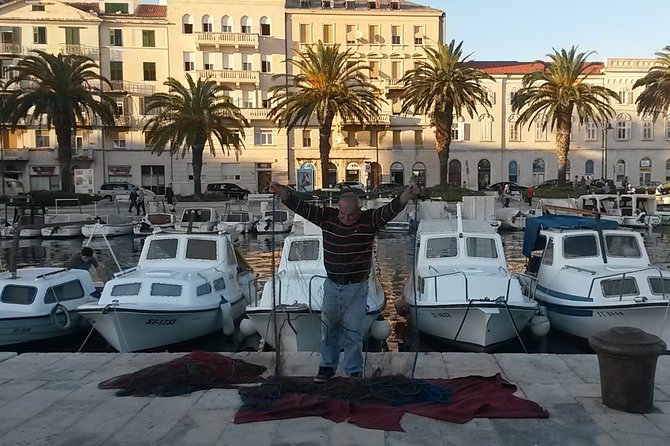
Book it if you’re a history lover who likes explanations tied to real places. This works well for people who enjoy architecture, want context around monuments and squares, and like a guide who can keep the walk lively without turning it into fluff.
It’s also a strong fit for anyone who wants an intro to Split that doesn’t require hours of solo map-reading. You come away knowing where key spots are and what they mean.
Skip it (or switch to a different style of tour) if:
- you only want short exterior stops with zero extra ticket possibilities
- you’re looking specifically for entertainment-focused storytelling unrelated to history
- you’re traveling with teens under 18 on the group tour (the group tour is adults only; a private option exists for all ages)
My verdict: should you book it?
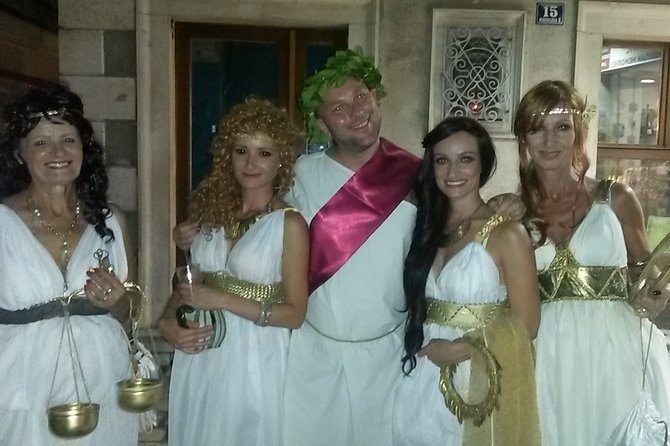
If you want a focused, local-led walk through Diocletian’s Palace and the surrounding Old Town squares, this is a smart buy for $30—especially because the small group size keeps the experience controlled and the explanations clear. The route is built to give you orientation fast, then let you go back on your own with a better sense of what you’re seeing.
I’d book it if you’re comfortable with optional costs for things like the Cellars (€10) or substructure entry. If you’d rather avoid paid extras entirely, confirm what you plan to skip before you arrive—because some of the most interesting palace layers are behind ticketed access.
FAQ
How long is the Split Emperor’s walking tour?
It runs about 2 hours (approx.).
What language is the tour offered in?
The group tour is offered in English.
What is the group size limit?
The tour has a maximum of 15 travelers.
Is this tour adults-only?
Yes. The group tour is adults only. A private tour is for all ages.
Where do you meet for the tour?
The meeting point is Obala Hrvatskog narodnog preporoda 22, 21000 Split, and the tour ends back at the meeting point.
Is there a starting and ending point on the waterfront?
The tour starts and finishes at the Main Stage of the Riva promenade.
Is the Museum of Diocletian’s Cellars included?
No. Admission to the Museum of Diocletian’s Cellars is not included and costs €10 per person.
Is the Cathedral of Saint Domnius part of the tour entry?
You will see the Cathedral of Saint Domnius from outside. Admission is listed as not included.
Is the Temple of Jupiter interior visit included?
You’ll see the Temple of Jupiter from outside. An optional visit inside is not included.
What if the weather is bad?
This experience requires good weather. If it’s canceled due to poor weather, you’ll be offered a different date or a full refund.
If you want, tell me your travel month and whether you prefer museums or purely outdoor sights, and I’ll suggest how to plan the optional ticket parts so the tour fits your day.
More Tours in Split
- From Split: Krka Waterfalls, Food & Wine Tasting Tour
★ 5.0 · 9,326 reviews - Blue cave, Mamma Mia and Hvar, 5 islands speedboat tour
★ 5.0 · 7,150 reviews - From Split: Krka Waterfalls, Food & Wine Tasting Tour
★ 4.9 · 6,598 reviews - Split/Trogir: Blue Cave, Mamma Mia, Hvar and 5 Island Tour
★ 4.6 · 6,320 reviews - Blue Cave and Hvar Tour – 5 Islands Tour from Split and Trogir
★ 5.0 · 4,815 reviews
More Tour Reviews in Split
- Split: Krka Waterfalls Trip with Boat Cruise and Swimming
★ 4.8 · 10,519 reviews - From Split: Krka Waterfalls, Food & Wine Tasting Tour
★ 5.0 · 9,326 reviews - Blue cave, Mamma Mia and Hvar, 5 islands speedboat tour
★ 5.0 · 7,150 reviews - From Split: Krka Waterfalls, Food & Wine Tasting Tour
★ 4.9 · 6,598 reviews - Split/Trogir: Blue Cave, Mamma Mia, Hvar and 5 Island Tour
★ 4.6 · 6,320 reviews
Walk Split a Different Way
- Split: Old Town and Diocletian Palace Walking Tour
★ 4.9 · 4,727 reviews - Walking Tour of Split and Diocletian’s Palace
★ 5.0 · 2,588 reviews - Krka Waterfalls tour with Trogir Walking tour and Krka panoramic boat cruise
★ 5.0 · 1,659 reviews - Split & Diocletian’s Palace Walking Tour
★ 5.0 · 1,125 reviews - Walking Tour of Split with a ‘Magister’ of History
★ 5.0 · 1,122 reviews
Still deciding? More Split trips we have been out and reviewed

Split Old Town Walking Tours, compared.
 ★ 4.9Old Town and Diocletian Palace Walking TourFrom $174,727 reviews
 ★ 5.0Walking Tour of Split and Diocletian’s PalaceFrom $482,588 reviews
 ★ 5.0Krka Waterfalls tour with Trogir Walking tour and Krka panoramic boat cruiseFrom $481,659 reviews
 ★ 5.0Split & Diocletian’s Palace Walking TourFrom $211,125 reviews
 ★ 5.0Walking Tour of Split with a ‘Magister’ of HistoryFrom $341,122 reviews
 ★ 5.0Split Walking Tour with Professor of HistoryFrom $24926 reviews
 ★ 4.7Diocletian Palace & Old Town Guided Walking TourFrom $17882 reviews
 ★ 4.7Krka Waterfalls Cruise & Trogir Walking TourFrom $47681 reviews
Browse the lists this tour appears in