
Reviewed · SPLIT PRIVATE TOURS
The Best of Split Private Tour
Split makes instant sense on foot. This private walk through Split Old Town is the quickest way to understand why the city is built over Diocletian’s Palace and how Roman, Venetian, and modern Split all fit together.
I really like the stop-by-stop pace: you get time at the palace substructures and then clear context at the Peristyle, not just quick photo stops. I also like the local-life threading through the route, like the Green Market and the squares where people actually hang out year-round.
One thing to plan for: it’s still a walking tour through stone streets and lots of historic steps. If you want optional interiors (or you’re traveling with mobility issues), bring comfy shoes and tell your guide your pace early.
In This Review
- Key highlights you’ll feel on this walk
- Why Diocletian’s Palace substructures set the tone
- Meeting at the Riva: pickup, timing, and first impressions
- Walking the Roman core: substructures, Vestibule, and the Peristyle
- Saint Domnius Cathedral: the emperor’s mausoleum afterlife
- From Palace to people: Green Market and Fruit Square
- Golden Gate, City Clock, and the Venetian-looking edges
- Prokurative and Riva: where the tour naturally ends
- Price and included admissions: is $199.62 worth it?
- What kind of traveler this suits best
- Should you book this Split private walking tour?
- FAQ
- How long is the Best of Split Private Tour?
- How much does the tour cost?
- Is pickup available?
- What’s included in the price?
- Are there any additional ticket costs?
- Can I cancel and get a full refund?
Key highlights you’ll feel on this walk
- Diocletian’s Palace substructures with admission included, so you’re not guessing where the big story starts
- Private pacing that works for different needs, from slow walkers to families with a baby
- Free-to-see stops like the Vestibule, Peristyle, Golden Gate, City Clock, and several squares
- Local errands on your route: the Green Market for everyday flavors and real-market life
- Golden Gate details and the St. Martin church built into the gate from the 5th century
- End at the Riva so you leave with an easy, familiar place to plan lunch and a return stroll
On your own schedule: more private tours in Split
- SPLIT-PRIVATE Walking Tour of Diocletian’s Palace & Old Town★ 5.0 · 467 reviews
- Private Krka Waterfalls tour with 30min Boat Cruse★ 4.0 · 458 reviews
- Split by Private Electric Rickshaw – Palace & Hidden Gems★ 5.0 · 412 reviews
- Private Blue cave, Mamma Mia and Hvar, 5 islands tour from Split★ 5.0 · 387 reviews
Why Diocletian’s Palace substructures set the tone
If you only do one thing in Split, start with the palace under your feet. The Diocletian’s Palace substructures are where the Roman scale stops being abstract and starts being physical—walls, corridors, and the sense that this place was built to last. It’s also smart that your entry ticket is included, because you can focus on the story instead of budgeting your way through the highlights.
This is also where a good guide earns their pay. Instead of tossing dates at you, the tour structure helps you connect the palace to everything above it: streets that run where you’d expect a city to grow, squares that feel “inside the palace,” and viewpoints that only make sense once you understand the original layout.
And because it’s a private tour, the guide can tailor the explanation level—big-picture for first-timers, more detail if you want to geek out on how the site evolved.
Meeting at the Riva: pickup, timing, and first impressions
Your meeting point is the Riva waterfront, at Obala Hrvatskog narodnog preporoda 23, near the bronze map. It’s an easy landmark once you’re in the port area, and it keeps the start simple for cruise days.
Pickup is also available in a way that actually helps you. If you’re staying in the Old Town, the guide can meet you at your apartment or hotel. If you’re on a cruise, the tour is arranged so the guide meets you at the port. For people staying outside the Old Town, you’ll typically regroup again at the Riva.
The start time is listed as on request for this private format. That matters because Split’s Old Town can feel dramatically different depending on the hour—morning for calmer streets, later in the day for more energy.
Walking the Roman core: substructures, Vestibule, and the Peristyle
After you settle in, the tour flows through the palace in a way that makes the “why” of Split easier to grasp. The first major stop is the substructures (about 45 minutes), where you’ll learn what you’re looking at and why it mattered to the emperor’s world. Expect a guided, on-foot style explanation that helps you read the space like a map instead of a maze.
Then comes the Vestibule of Diocletian’s Palace. Even though this segment is shorter, it’s an important clue: it functioned as ceremonial access tied to the emperor’s apartments. You’ll get the sense that even the “small halls” were part of a carefully staged approach.
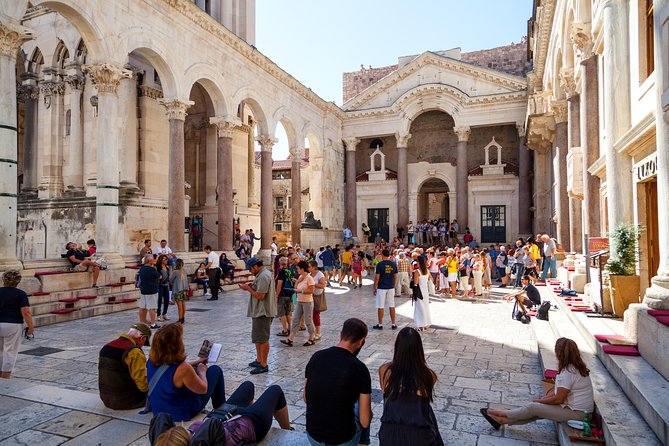
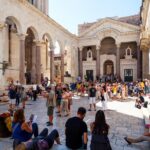
Next is the Peristyle, the ceremonial courtyard framed by arcades and oriented toward the imperial loggia. This stop tends to land well because it’s not just history—it’s architecture you can appreciate instantly. You can look around and understand how the palace shaped daily movement and gathering spaces.
A practical note: because these are historic areas, surfaces can be uneven and there’s a lot of walking close together. In practice, that’s exactly why private matters. In real situations—knee limitations, babies, or multi-generation groups—the guide’s pace and rest opportunities can make the difference between a fun outing and a suffer-fest.
Saint Domnius Cathedral: the emperor’s mausoleum afterlife
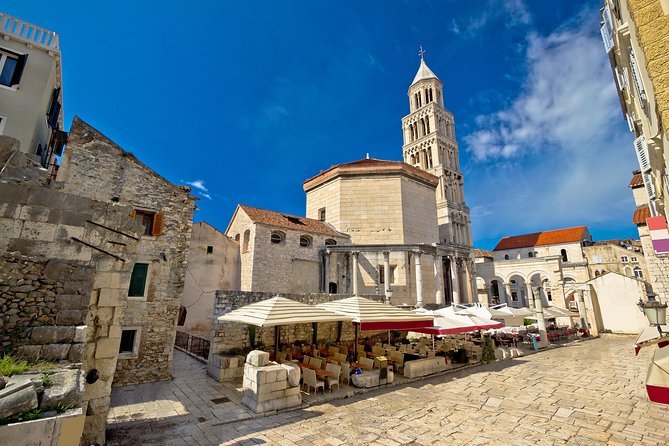
Split’s Cathedral of Saint Domnius gets its power from being more than a church. It’s housed in the former mausoleum of Diocletian, a massive 4th-century structure that dominates the central area of the palace complex. The scale is the point, and your guide helps you understand how something designed for one kind of power became a centerpiece for another.
Important for planning: cathedral admission is not included in the tour price. That doesn’t mean you should skip it—many people consider it a must—but you should be ready to pay for entry if you want to go inside. Your guide can also help you decide how much time to spend, especially if you’re juggling cruise schedules or sun fatigue.
This is another spot where a great guide’s communication style shows. If you’re meeting a guide like Jelena, Vinka, Kristina, Ana, or Lea (names that have appeared with this provider), you can expect clear storytelling that ties what you see to why it still matters in the city today.
A few more Split boat days and tours worth a second look



From Palace to people: Green Market and Fruit Square
Once the Roman groundwork is in place, the route shifts outward into daily Split. The Green Market is a short stop, but it’s one of the smartest ways to experience a city you don’t live in. This is where locals buy fruit and vegetables, and it’s also a place to pick up the kinds of food you’ll see in casual lunches—think cheese and prosciutto in the local style. Even if you don’t shop, it’s valuable to see how the market works and where people actually spend their time.
Then you move to Fruit’s Square (Trg Brace Radic), which sits just outside the palace. It’s picturesque and easy to linger in, but it’s also a story stop: you’ll learn about Marko Marulić, described here as the father of Croatian literature, with his statue in the middle of the square. Understanding who the city celebrates helps you read the square beyond its photo value.
These two stops also reset your brain. After the palace details, it’s nice to shift into street-level life—voices, everyday routines, and the kind of “city texture” that a museum can’t replicate.
Golden Gate, City Clock, and the Venetian-looking edges
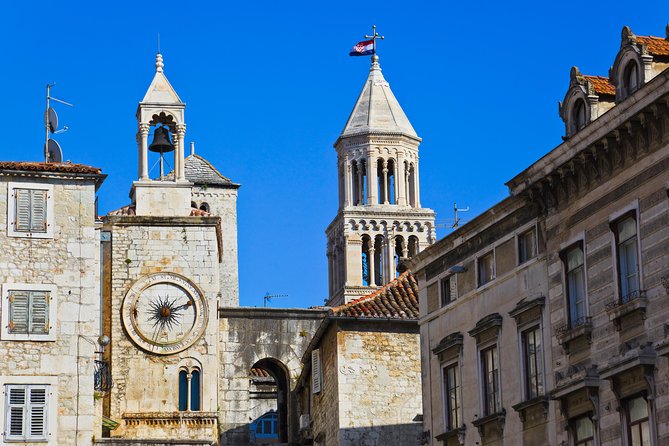
One of Split’s quirks is how often new eras “wear” old structures. You’ll see that in the Golden Gate, described as the northern gate and the most prominent of the four palace gates. A church dedicated to St. Martin was built into the gate in the 5th century, so you’re looking at a layered place where religion, power, and city movement overlap.
Then there’s the Grgur Ninski statue. It’s an easy stop—just a few minutes—but it’s memorable because it comes with a ritual: people rub the statue’s toe for good luck. For a city full of stone and stories, these small traditions help you feel connected fast.
You’ll also spot the City Clock, built into the western gate. It’s one of the recognizable landmarks, and it helps you orient yourself as you move back toward the waterfront.
If you’re thinking ahead for photos: the route gives you repeated chances to frame the city. You’re not just walking forward—you’re also turning your head back toward what you already saw so it starts to click as one connected complex.
Prokurative and Riva: where the tour naturally ends
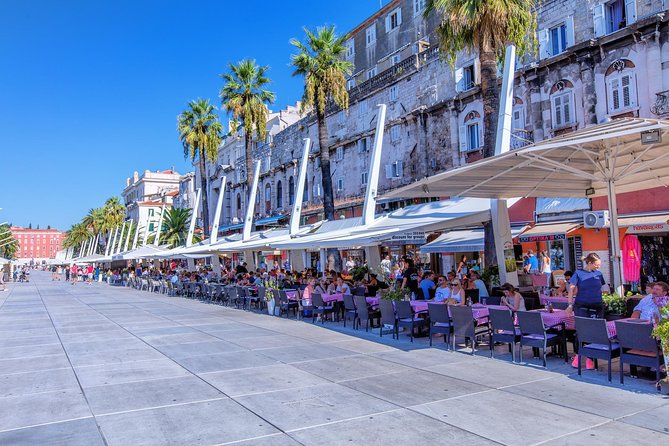
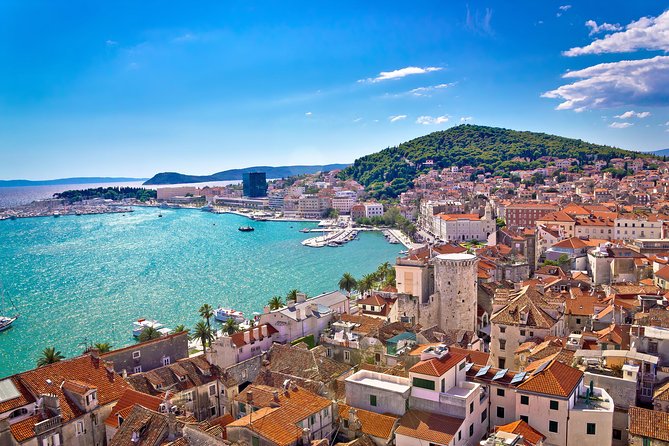
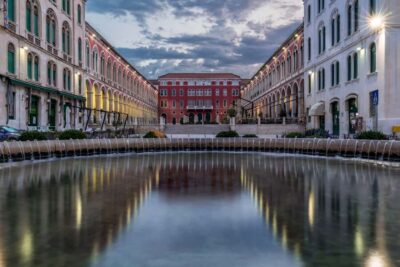
The later part of the walk shifts from gates and squares into the waterfront atmosphere. Prokurative (also called Republic Square) resembles Venice’s St. Mark’s Square in layout and style, and it sits west of the Riva. You’ll learn why the name is used and what to look for around the arcades and neo-Renaissance buildings. The square is only open on the south side, which creates that classic viewing angle toward the harbor and the waterfront.
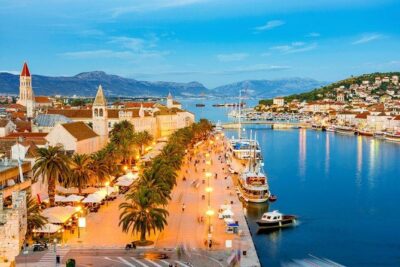
Finally, you reach the Riva harbor, considered the most beautiful promenade in Croatia in the way this tour frames it. This end point is practical: your guide finishes where you can easily continue on your own. You can grab a drink, browse nearby streets, or plan lunch with confidence because you’ll recognize the landmarks instantly.
After a 2.5-hour tour, you’ll usually feel like you’ve seen a lot without getting lost in “everything.” That’s the benefit of having the palace story tied to the waterfront reality—Split stops being a list of sites and starts being a place you can navigate.
Price and included admissions: is $199.62 worth it?
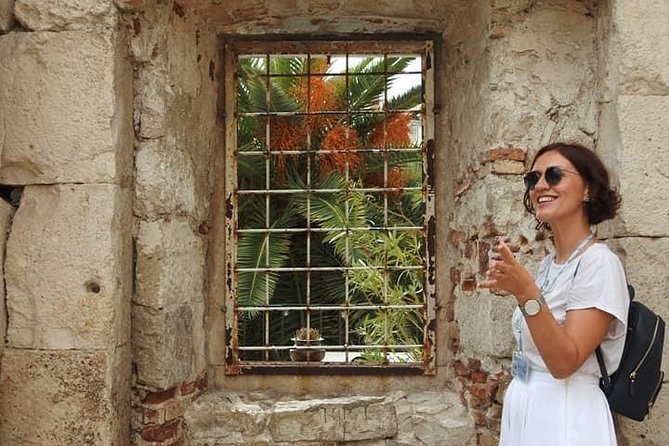
At $199.62 per person for about 2 hours 30 minutes, this isn’t the cheapest way to see Old Town. But it can be good value when you compare what you actually get: a local licensed guide, an individualized route built around your group, and admission included for the Diocletian’s Palace substructures.
A key detail: some major pieces are free along the way. The Vestibule and the Peristyle are free entries. Several gates and exterior landmarks—like the Golden Gate, City Clock, and the statue area—don’t require additional ticketing. That keeps your day from turning into a stack of unexpected costs.
The main extra you should plan for is the optional stop: Mausoleum & Jupiter’s Temple, listed at €8.00 per person. And the cathedral admission is not included. So the smart move is simple: decide in advance whether you want those optional interiors and whether you’ll want to spend extra time there. If you’re traveling on a tight schedule, you can also tell the guide to focus on the free highlights and save energy.
From the reviews style that comes through here, one thing clearly boosts value: your guide’s ability to adjust pacing. People mention guides like Vinka and Kristina being patient with mobility limits and finding ways to rest. That kind of attention isn’t a line-item fee, but it changes how worth the money feels.
What kind of traveler this suits best
This tour is a great fit if you want history explained in a way that helps you walk out understanding where everything is. If you like city wandering but hate getting stuck in a maze of confusing ruins, this hits the sweet spot.
It also works well for mixed groups. The private format means your guide can slow down, help with special needs, and keep younger travelers comfortable. If you’re traveling with a baby, using a cane, or coordinating multiple generations, private pacing can save the day.
If you already know a lot about Roman architecture and want a heavy academic lecture, you might want something more specialized. Still, the structure here is built for first-timers and curious generalists, not just archaeologists.
Should you book this Split private walking tour?
Book it if you want the fastest, most understandable route through Split’s most important layers: the Roman core, the cathedral connection, then the squares and waterfront life. You’ll likely appreciate the private pacing, especially if your group needs adjustments.
Skip or reconsider if you strongly dislike walking on uneven historic stone for 2.5 hours, or if you want only free sites and hate any extra-ticket decisions. In that case, you could piece together a cheaper self-guided loop—but you’d lose the “what you’re seeing and why it matters” guidance that makes the palace click.
If you’re choosing between doing this and doing nothing, the answer is simple: do this, then use the ending at the Riva to keep your day moving your way.
FAQ
How long is the Best of Split Private Tour?
It runs for about 2 hours 30 minutes.
How much does the tour cost?
The price is $199.62 per person.
Is pickup available?
Yes. Pickup is offered, and the meeting can be arranged at Old Town apartments/hotels. For cruise ship guests, the guide meets you at the port. If you’re staying outside the Old Town, you typically meet at the Riva waterfront.
What’s included in the price?
A local licensed guide and custom tour organization are included. Admission is included for the Diocletian’s Palace substructures.
Are there any additional ticket costs?
Yes. The Mausoleum & Jupiter’s Temple are optional and cost €8.00 per person. The Cathedral of Saint Domnius admission is not included.
Can I cancel and get a full refund?
Yes. Free cancellation is available if you cancel up to 24 hours in advance for a full refund.
More Tours in Split
- From Split: Krka Waterfalls, Food & Wine Tasting Tour
★ 5.0 · 9,326 reviews - Blue cave, Mamma Mia and Hvar, 5 islands speedboat tour
★ 5.0 · 7,150 reviews - From Split: Krka Waterfalls, Food & Wine Tasting Tour
★ 4.9 · 6,598 reviews - Split/Trogir: Blue Cave, Mamma Mia, Hvar and 5 Island Tour
★ 4.6 · 6,320 reviews - Blue Cave and Hvar Tour – 5 Islands Tour from Split and Trogir
★ 5.0 · 4,815 reviews
More Tour Reviews in Split
- Split: Krka Waterfalls Trip with Boat Cruise and Swimming
★ 4.8 · 10,519 reviews - From Split: Krka Waterfalls, Food & Wine Tasting Tour
★ 5.0 · 9,326 reviews - Blue cave, Mamma Mia and Hvar, 5 islands speedboat tour
★ 5.0 · 7,150 reviews - From Split: Krka Waterfalls, Food & Wine Tasting Tour
★ 4.9 · 6,598 reviews - Split/Trogir: Blue Cave, Mamma Mia, Hvar and 5 Island Tour
★ 4.6 · 6,320 reviews
Just Your Group in Split
- SPLIT-PRIVATE Walking Tour of Diocletian’s Palace & Old Town
★ 5.0 · 467 reviews - Private Krka Waterfalls tour with 30min Boat Cruse
★ 4.0 · 458 reviews - Split by Private Electric Rickshaw – Palace & Hidden Gems
★ 5.0 · 412 reviews - Private Blue cave, Mamma Mia and Hvar, 5 islands tour from Split
★ 5.0 · 387 reviews - Private Full-Day Krka Waterfalls Tour with Wine Tasting
★ 5.0 · 263 reviews
Still deciding? More Split trips we have been out and reviewed
Split Private Tours, compared.
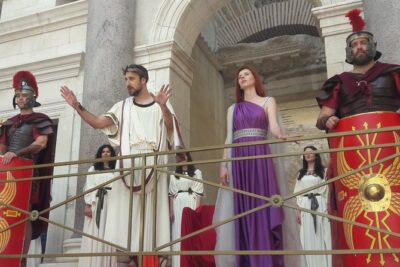 ★ 5.0SPLIT-PRIVATE Walking Tour of Diocletian’s Palace & Old TownFrom $240467 reviews
 ★ 4.0Private Krka Waterfalls tour with 30min Boat CruseFrom $301458 reviews
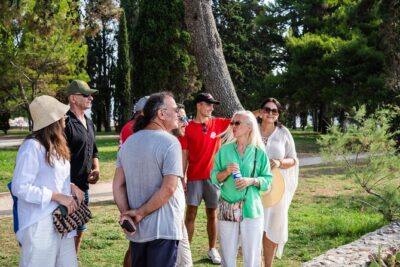 ★ 5.0Split by Private Electric Rickshaw – Palace & Hidden GemsFrom $48412 reviews
 ★ 5.0Private Blue cave, Mamma Mia and Hvar, 5 islands tour from SplitFrom $1,572387 reviews
 ★ 5.0Private Full-Day Krka Waterfalls Tour with Wine TastingFrom $665263 reviews
 ★ 5.0Private Boat Tour by local expert – Create Your ItineraryFrom $483261 reviews
 ★ 5.0Plitvice Lakes – Private tourFrom $786222 reviews
 ★ 5.0Split airport to Split Private transfer to 8 pax (Door to Door any location)From $90213 reviews