
Reviewed · DIOCLETIAN'S PALACE & OLD TOWN
Split: Diocletian’s Palace Private walking tour
Roman Split feels like a movie set. This private walking tour takes you through Diocletian’s Palace, a 1700-year-old Roman home that still has real-life residents inside its walls.
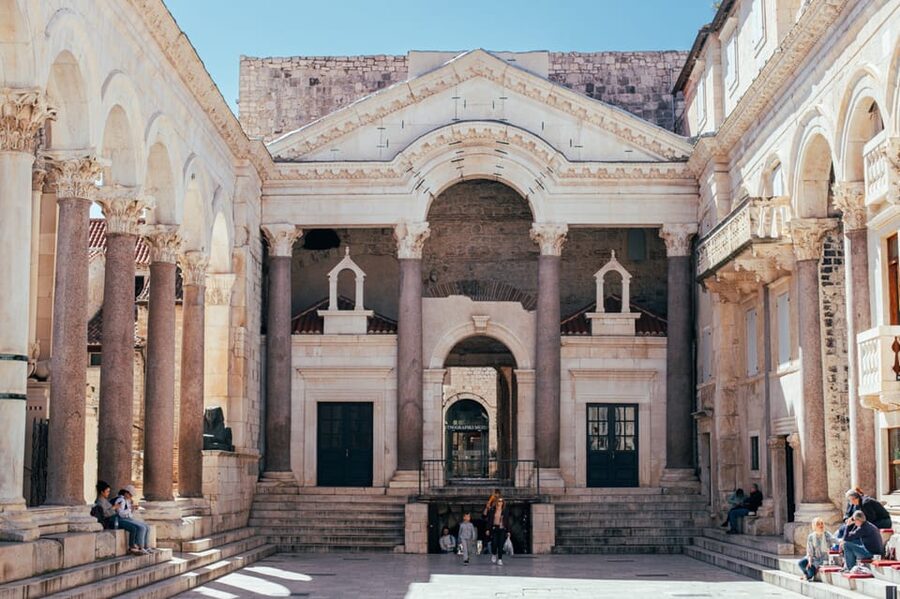
What I like most is how the guide turns stone into meaning. You’ll spend time in the Peristyle, tied to Diocletian’s public image and his worship as Jupiter’s son, and then shift to the Split Cathedral, built over a mausoleum and later transformed when Christianity took over.
One thing to consider: not every stop is guaranteed. Some sights can be affected by church services or events, and the palace is only partly wheelchair accessible (though the tour can be adapted if you tell them your needs in advance).
In This Review
- Key highlights you’ll actually use
- Why Diocletian’s Palace Still Works as a Walking Tour
- Meeting at the Bronze Model on the Riva Promenade
- Peristyle and the Jupiter-Son Story in the Main Courtyard
- Split Cathedral: From Pagan Mausoleum to Christian Center
- Vestibule: The Palace Entrance to Diocletian’s Private Quarters
- North Gate (Porta Aurea) and the Church of St. Martin in the Guard Corridor
- Price and Value for a Max-10 Private Walk
- Guides, Energy, and What You’ll Learn Fast
- Logistics That Matter on a Historic-Sites Day
- Who This Tour Is Best For (and who should consider another plan)
- Should You Book Split Guide’s Diocletian’s Palace Private Tour?
- FAQ
- Where does the Diocletian’s Palace tour start?
- How big is the group for this private tour?
- What sites are included in the tour?
- What languages are available?
- Can the itinerary change?
- Is the tour wheelchair accessible?
Key highlights you’ll actually use
- A max-10 private group means better questions and less waiting around.
- Peristyle first, so you understand how power and religion worked in Diocletian’s day.
- Split Cathedral’s origin story: mausoleum to cathedral, with the emperor’s remains disappearing after Christianization.
- Vestibule and private-chamber context, so you grasp where dignitaries entered versus where life unfolded.
- North Gate = Porta Aurea, plus a stop at the Church of St. Martin tucked into the old guard corridor.
On your own schedule: more private tours in Split
- SPLIT-PRIVATE Walking Tour of Diocletian’s Palace & Old Town★ 5.0 · 467 reviews
- Private Krka Waterfalls tour with 30min Boat Cruse★ 4.0 · 458 reviews
- Split by Private Electric Rickshaw – Palace & Hidden Gems★ 5.0 · 412 reviews
- Private Blue cave, Mamma Mia and Hvar, 5 islands tour from Split★ 5.0 · 387 reviews
Why Diocletian’s Palace Still Works as a Walking Tour
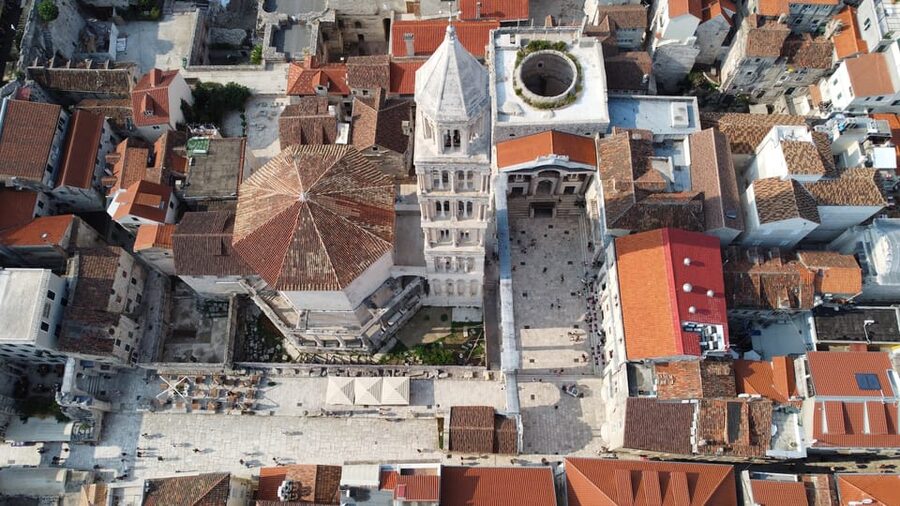
Diocletian’s Palace isn’t a closed museum box. It’s a Roman fortress layout that still lives as part of Split, so you’re walking through history while you also see normal street life happening around you.
That changes how the visit feels. With a guide, you don’t just look at walls. You start reading the palace like a map of authority—gates, ceremonial spaces, and the routes people used when power was on display.
Meeting at the Bronze Model on the Riva Promenade
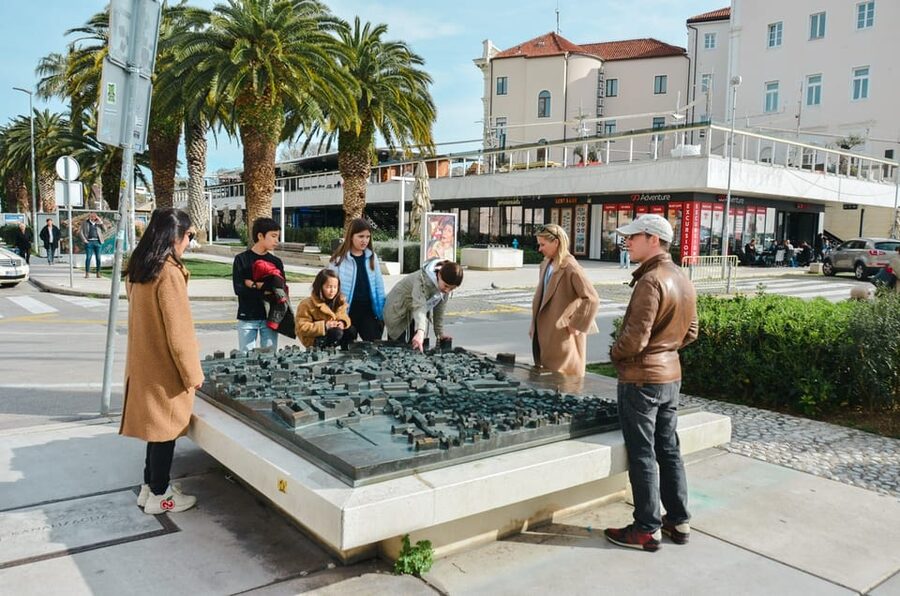
Your tour starts at the bronze model of the city of Split at the eastern end of the promenade called the Riva. This is a smart first move because it gives you quick context before you start threading through the palace.
I like tours that help you get your bearings early. Once you see how the city’s pieces connect in miniature, the real walking route makes more sense. And because this tour ends back at the same meeting point, you finish with an easier mental link to the rest of Split.
Peristyle and the Jupiter-Son Story in the Main Courtyard
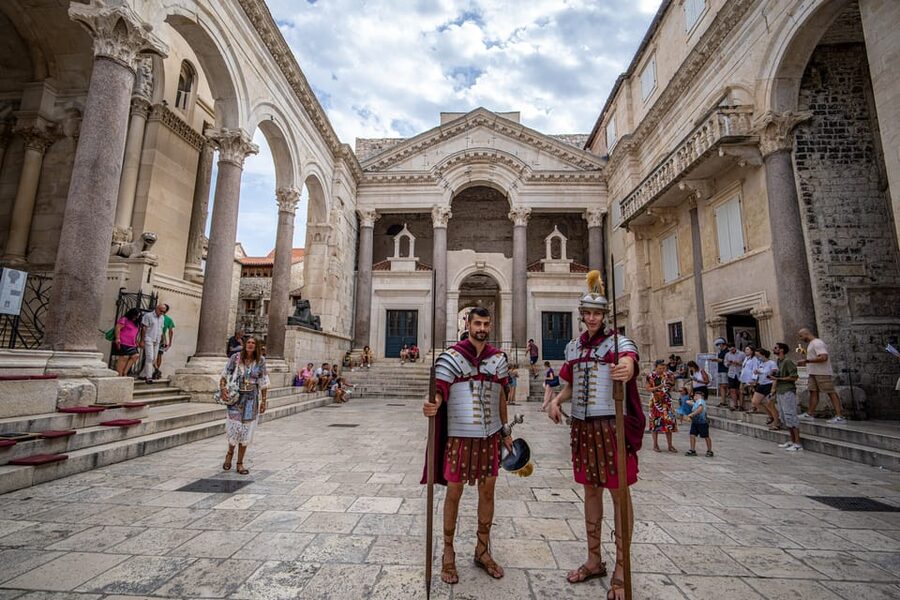
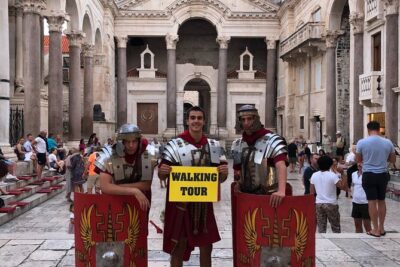
The Peristyle is the kind of place where a guide earns their fee. This is where Diocletian was worshipped as Jupiter’s son, and that religious-political framing matters more than it sounds.
In practical terms, the Peristyle sets the tone: you see where an emperor’s presence could be made public, and you understand why this wasn’t just “a nice courtyard.” It functioned as a meeting point where imperial symbolism met daily movement through the palace.
If you’ve ever visited ruins and felt like you were missing the point, this stop is designed to fix that. You’ll walk away with a clearer idea of what the space was for, and how people would have experienced it.
Split Cathedral: From Pagan Mausoleum to Christian Center
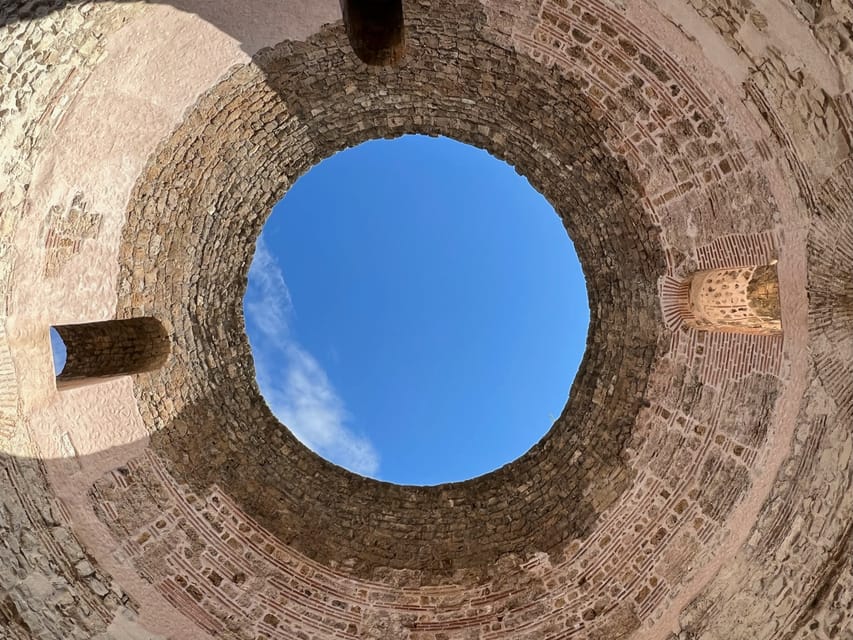
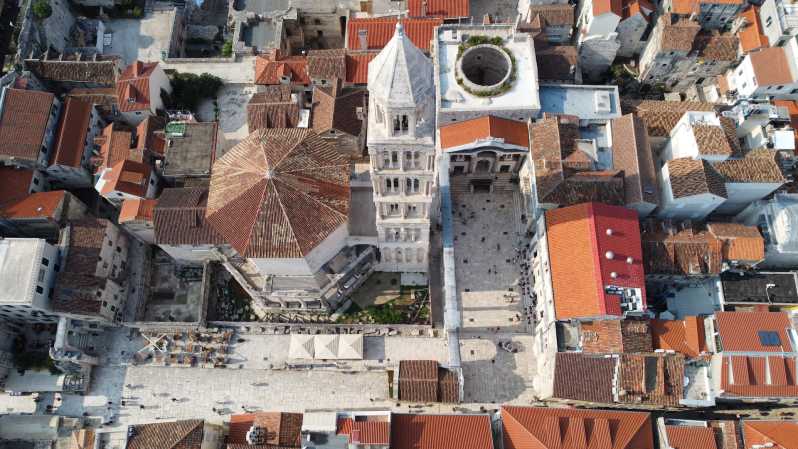
Next comes Split Cathedral, which used to be Diocletian’s mausoleum. Then Christianity arrived, Diocletian’s remains vanished, and the structure became the cathedral you see today.
Even without inventing extra details, the transformation alone tells you a lot. You’re not looking at a random church in a Roman setting—you’re standing in the outcome of a major shift in belief and power.
What makes this stop especially useful is that it helps you connect the palace’s imperial identity to Split’s later identity. It also gives you a tangible example of how old authority gets repurposed rather than erased.
Prefer to walk it? More guided strolls through Split




Vestibule: The Palace Entrance to Diocletian’s Private Quarters
The tour then steps into the Vestibule, the grand entrance to Diocletian’s private chambers. The key idea here is the contrast between public and personal space.
Think of it like this: you’re moving from ceremonial zones into an area meant for dignitaries and special access. The vestibule isn’t just architectural theater; it’s a transition point that explains how status worked inside the palace.
If you like tours that teach you how to read circulation—who went where, and why—this is a great moment. It helps you visualize the palace as an active system, not an abandoned shell.
North Gate (Porta Aurea) and the Church of St. Martin in the Guard Corridor
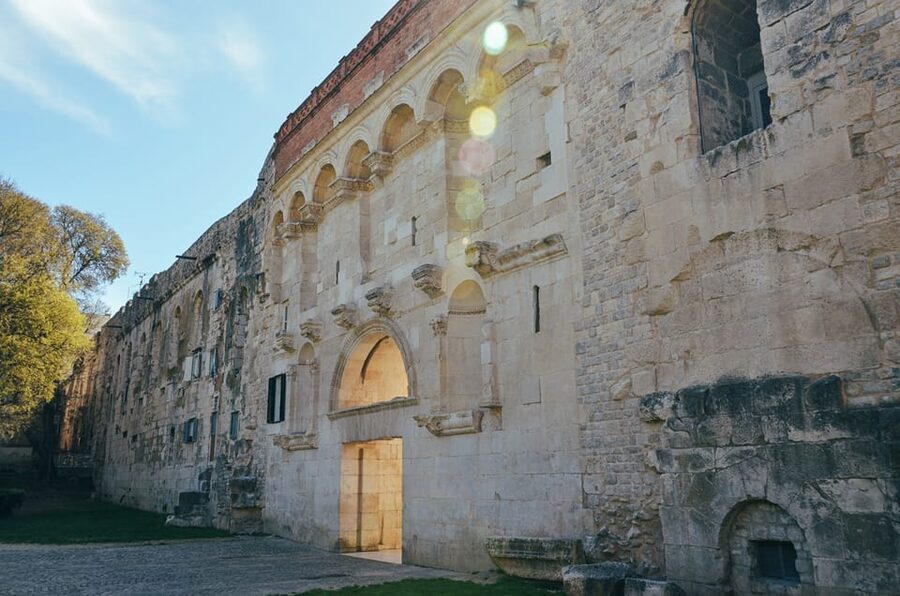
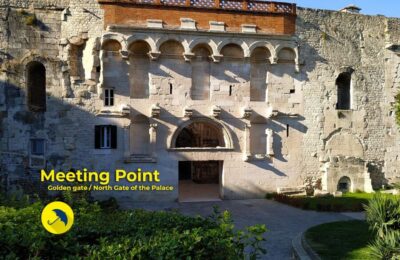
The North Gate is the palace’s most important city gate during the Roman era, also known as the Golden Gate or Porta Aurea. Names like that aren’t random. They signal how central and prestigious this entrance was.
From here, the story keeps moving inward. You’ll also see the Church of St. Martin, described as the city’s smallest church, located inside the former guard corridor.
I really like when a tour does this kind of pairing. A major gate (power, movement, and defense) plus a tiny church (religion, adaptation, and reuse) makes the palace feel like a lived-in organism. You start to notice how one era’s infrastructure can become another era’s everyday sacred space.
And since you’re walking, the scale differences hit harder than they do in photos. That’s where guides help: they point out what you’d otherwise overlook because your eyes are busy taking everything in at once.
Price and Value for a Max-10 Private Walk
The tour price is $135 per person. For a private walking experience, that’s not an impulse-buy price, so the value question is fair.
Here’s where it makes sense: the group is capped at maximum 10, and the tour is individually customizable. That combination usually matters more in historic centers than people expect. When your group is small, you can slow down at the details you care about, and you’re less likely to get rushed through key spaces.
You’re also paying for interpretation, not just access. The tour points you to specific concepts—Diocletian’s Jupiter-son worship, the mausoleum-to-cathedral shift, and the palace’s gate hierarchy—so you’re not stuck collecting facts you’ll forget later.
If you’re the type who wants to see the highlights but also understand what they meant, this price can feel reasonable. If you prefer to wander alone with a guidebook and no structure, you might spend less by going self-guided—just accept that you’ll miss some of the “why” behind the arrangement.
Guides, Energy, and What You’ll Learn Fast
Split’s old layers can be confusing on your own. The biggest benefit of this tour is speed with clarity: you get the palace’s essential story in a way that helps you navigate the rest of the city with better instincts.
One notable guide mentioned is Dana, described as enthusiastic and able to deliver an unforgettable private tour. Even if Dana isn’t your guide, the broader point is that this experience leans into lively explaining, not dead-pan recitation.
Another thing I appreciate from the feedback is the “get the lay of the land” angle—meaning you don’t only leave with photos. You leave with a mental map of where you are in the palace and how the main sites connect.
Logistics That Matter on a Historic-Sites Day

Because the palace is active and church-related spaces may be involved, you might see slight program changes. The tour notes that some sights cannot be visited due to events or church services, and the route may adjust accordingly.
Also, the site is only partially wheelchair accessible. The good news: the tour can be adapted if you inform the provider in advance. If mobility is an issue for you, you’ll get the most value by planning early rather than hoping for the best on the day.
Finally, the tour runs in French, German, and English, and it starts and ends at the same point near the Riva, which keeps you from feeling stranded mid-walk.
Who This Tour Is Best For (and who should consider another plan)
This tour is a strong match for:
- First-timers to Split who want the key palace highlights in a focused route
- Travelers who like Roman history but also want the Christianity-over-Rome story
- People who prefer a private, small group experience so questions don’t get cut off
It might be less ideal if:
- You want to spend most of your day doing long solo wandering with no guide interaction
- You have strict accessibility needs and you want a fully guaranteed route regardless of services or event scheduling
Should You Book Split Guide’s Diocletian’s Palace Private Tour?
I’d book it if you want your visit to feel organized and understandable, not like you’re standing in front of a lot of impressive stone and hoping it clicks.
The value comes from three things: the palace is still part of daily Split life, the tour targets the spaces that explain how the empire operated, and the group is small enough for real attention. If you care about meaning—Peristyle, cathedral transformation, Diocletian’s access points, and the North Gate’s importance—this is the kind of guided walk that pays off immediately.
If you’re flexible on what you might see at the exact moment (because services and events can affect access), and you’re okay with partial accessibility realities, this tour is a smart way to get the highlights plus the story.
FAQ
Where does the Diocletian’s Palace tour start?
It starts at the bronze model of the city of Split at the eastern end of the promenade Riva.
How big is the group for this private tour?
The tour is designed for a maximum group size of 10 participants.
What sites are included in the tour?
You’ll see the Peristyle, Split Cathedral, the Vestibule, the North Gate (Golden Gate/Porta Aurea), and the Church of St. Martin inside the former guard corridor.
What languages are available?
The tour is offered in French, German, and English.
Can the itinerary change?
Yes. Some sights may not be visitable due to events or church services, and the tour may be adjusted slightly.
Is the tour wheelchair accessible?
The site is partially not wheelchair accessible, but the tour can be adapted to participants’ special needs if you inform the provider in advance.
Deeper Into the Palace, Split
- Split: Old Town and Diocletian Palace Walking Tour
★ 4.9 · 4,727 reviews - Walking Tour of Split and Diocletian’s Palace
★ 5.0 · 2,588 reviews - Split & Diocletian’s Palace Walking Tour
★ 5.0 · 1,125 reviews - Split: Diocletian Palace & Old Town Guided Walking Tour
★ 4.7 · 882 reviews - Split Old Town and Diocletian’s Palace Tour
★ 4.8 · 716 reviews
Walk Split a Different Way
- Split: Old Town and Diocletian Palace Walking Tour
★ 4.9 · 4,727 reviews - Walking Tour of Split and Diocletian’s Palace
★ 5.0 · 2,588 reviews - Krka Waterfalls tour with Trogir Walking tour and Krka panoramic boat cruise
★ 5.0 · 1,659 reviews - Split & Diocletian’s Palace Walking Tour
★ 5.0 · 1,125 reviews - Walking Tour of Split with a ‘Magister’ of History
★ 5.0 · 1,122 reviews
Just Your Group in Split
- SPLIT-PRIVATE Walking Tour of Diocletian’s Palace & Old Town
★ 5.0 · 467 reviews - Private Krka Waterfalls tour with 30min Boat Cruse
★ 4.0 · 458 reviews - Split by Private Electric Rickshaw – Palace & Hidden Gems
★ 5.0 · 412 reviews - Private Blue cave, Mamma Mia and Hvar, 5 islands tour from Split
★ 5.0 · 387 reviews - The Best of Split Private Tour
★ 5.0 · 338 reviews
Still deciding? More Split trips we have been out and reviewed




Diocletian's Palace & Old Town, compared.
 ★ 4.9Old Town and Diocletian Palace Walking TourFrom $174,727 reviews
 ★ 5.0Walking Tour of Split and Diocletian’s PalaceFrom $482,588 reviews
 ★ 5.0Split & Diocletian’s Palace Walking TourFrom $211,125 reviews
 ★ 4.7Diocletian Palace & Old Town Guided Walking TourFrom $17882 reviews
 ★ 4.8Split Old Town and Diocletian’s Palace TourFrom $17716 reviews
 ★ 4.8Game of Thrones Tour with Diocletian’s Palace CellarFrom $41545 reviews
 ★ 5.0Diocletian’s Palace and Old Town SMALL GROUP Walking TourFrom $16502 reviews
 ★ 5.0SPLIT-PRIVATE Walking Tour of Diocletian’s Palace & Old TownFrom $240467 reviews
Browse the lists this tour appears in