

Reviewed · DIOCLETIAN'S PALACE & OLD TOWN
Private Walking Tour in Split Old Town (ENG, FRA, ITA, ESP)
Split old town makes sense on foot. This private walking tour gives you a clear route through the Roman core, then swings into medieval streets, with licensed local guide Sanja (Master’s degree) keeping the story human and easy to follow. I like that the tour is built around the key sights you’d otherwise miss or misunderstand, and I especially like how it ties the architecture to everyday life in Split today. One possible drawback: most of the big stops are outside, and the Diocletian Palace Substructures require an extra €10 per person ticket.
You’ll get a strong sense of orientation fast, which matters in a place where streets twist and change names. I also like that the pace is timed well for real sightseeing, including time to look closely at details like the Peristyle layout and the way sound can carry in certain palace spaces. The main thing to consider is that it’s a 1 hour 45 minute walk, so comfortable shoes and a willingness to keep moving will make the experience better.
In This Review
- Key things to know before you go
- Riva promenade: where the walk starts (and ends)
- Getting oriented inside Diocletian’s Palace
- The substructures visit: the ticket you’ll want to plan for
- Cathedral of Saint Domnius: Roman burial power, Christian centerpiece
- Emperor’s daily life stops: Triklinij and the Vestibulum acoustics
- Peristyle of Diocletian’s Palace: the imperial square
- Temple of Jupiter and the Golden Gate: Roman power at street level
- Grgur Ninski and the medieval pulse of Narodni Trg
- Venice-era Old Town Hall and Fruit’s Square (Trg Brace Radic)
- Marko Marulic and the “when you arrive matters” fish market
- Marmontova Ulica and Prokurative: French rule to Austrian-Hungary
- The guide’s role (and why private helps here)
- Value: what you’re really paying for
- What to wear and how to pace yourself
- Should you book this private Split Old Town walk?
- FAQ
- What time does the tour start?
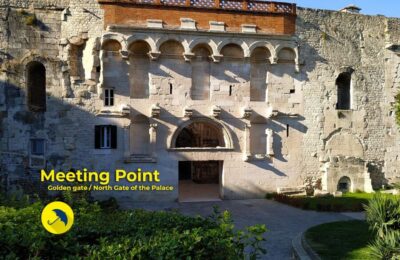
- Where is the meeting point?
- How long is the private walking tour?
- What does the tour cost?
- Is the tour only offered in English?
- Do I need to pay for any entrance tickets?
- Is it really a private tour?
- What happens if the weather is poor?
- Are service animals allowed?
Key things to know before you go
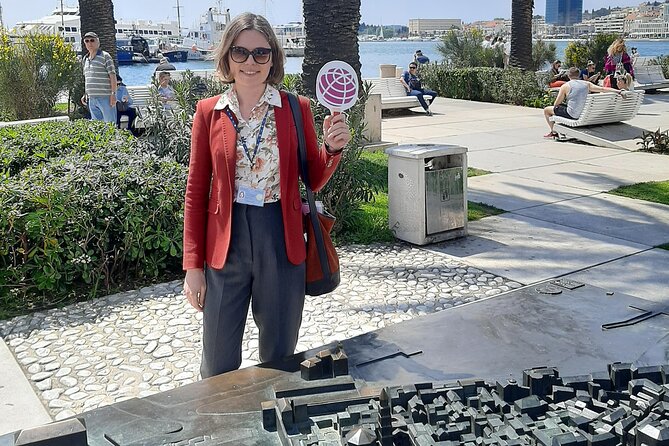
- Private group experience: It’s just your group on the tour (up to 15 people per group), so you’re not squeezed into a crowd rhythm.
- Start and end at Riva Harbor: You begin and finish at the Riva promenade area, which makes the whole walk feel complete.
- Diocletian’s Palace is the main event: You’ll cover the palace grounds and then go inside the best-preserved area via the substructures.
- A chance at Dalmatian singing acoustics: In summer, the Vestibulum space can be a great spot to hear traditional singing because of how it sounds.
- Photo-friendly Roman and medieval “anchors”: Golden Gate, Cathedral of Saint Domnius, the Peristyle, and Grgur Ninski all frame the story.
- Fish market timing matters: The fish market is open in the morning, so this morning start can help you see it.
On your own schedule: more private tours in Split
- SPLIT-PRIVATE Walking Tour of Diocletian’s Palace & Old Town★ 5.0 · 467 reviews
- Private Krka Waterfalls tour with 30min Boat Cruse★ 4.0 · 458 reviews
- Split by Private Electric Rickshaw – Palace & Hidden Gems★ 5.0 · 412 reviews
- Private Blue cave, Mamma Mia and Hvar, 5 islands tour from Split★ 5.0 · 387 reviews
Riva promenade: where the walk starts (and ends)
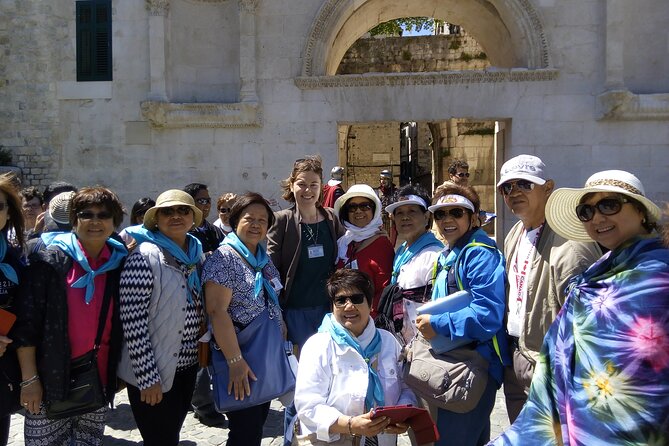
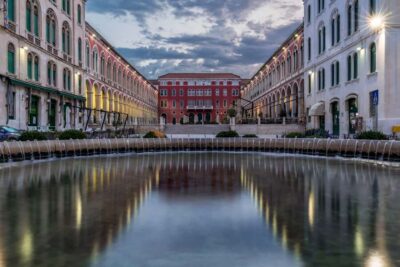
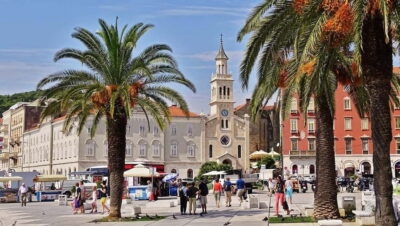
Your day begins on the Riva promenade near the water, with the meeting point at Obala Hrvatskog narodnog preporoda 22. This spot is smart because you get a wide view immediately: you can see the Roman palace mass, the medieval town layout, and even the direction toward Marjan hill/park. It’s like getting your bearings before the maze starts.
The best part is that the tour also ends back at this same area. That means you don’t finish somewhere random and wonder how to get back—your last memories and photos are tied to the waterfront where the story of Split feels grounded.
Getting oriented inside Diocletian’s Palace
Diocletian’s Palace is the heart of the whole experience, and the route gives it the time it deserves. You’ll walk the palace area on foot (around 9 acres worth), and your guide focuses on how the ancient structure is being used for modern life now. That connection matters, because you don’t just see ruins—you learn why these walls still function the way they do.
At this stage, you’ll also start noticing the logic of the space: passageways, entrances, and the way the palace sections relate to each other. Without this kind of guided “map in your head,” it’s easy to wander and only catch the big postcard views.
Practical note: the main palace areas here are listed as free to enter, so your budget stays predictable for most of the walk.
The substructures visit: the ticket you’ll want to plan for
Next comes the Diocletian Palace Substructures, and this is the piece that most helps you understand construction and purpose. These substructures are described as the best preserved part of the palace, which explains why they’re treated as the most valuable area for learning the building logic. You’ll be encouraged to go inside and see the available rooms.
Here’s the only extra cost noted on the tour: admission to the substructures is €10 per person and isn’t included. If you’re trying to keep costs tight, build that into your mental math now so it doesn’t feel like a surprise mid-tour.
Cathedral of Saint Domnius: Roman burial power, Christian centerpiece
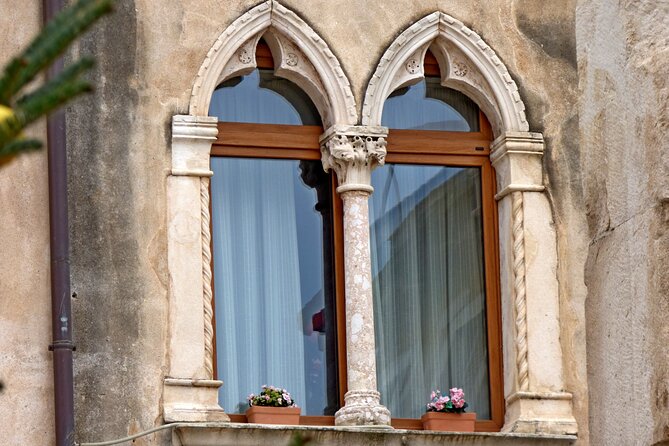
After the palace complex, you’ll look at the Cathedral of Saint Domnius from the outside. What makes this moment special is that it connects two eras through one site: it’s a Roman Catholic cathedral that’s also tied to the emperor’s burial (his mausoleum).
Even though your visit here is external, the stop still works because the guide can point out what to look for and how the space evolved. Split’s charm is that history layers instead of replacing itself, and this is one of the clearest examples.
Prefer to walk it? More guided strolls through Split


Emperor’s daily life stops: Triklinij and the Vestibulum acoustics
Your route then shifts to spaces tied to Diocletian’s personal world. First is Triklinij, associated with the emperor’s apartment area and especially the dining hall complex. It’s a short stop by timing, but it helps you picture the palace not just as government architecture, but as lived-in space where meals and authority were linked.
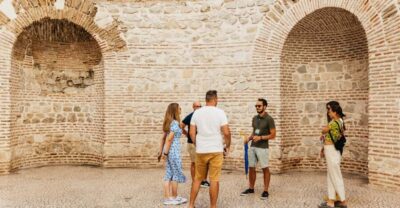
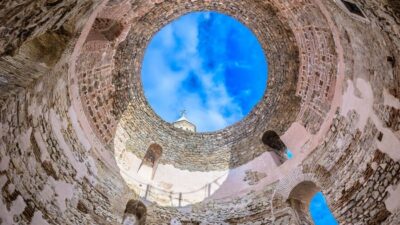
Then you reach the Vestibulum of Diocletian’s Palace. This is one of those “small stop, big payoff” moments. During summer months, it’s possible to hear traditional Dalmatian singing here because the site offers great acoustics. Even if the singing isn’t happening on your date, the guide’s explanation of the space and its importance makes the room feel purposeful instead of random.
Peristyle of Diocletian’s Palace: the imperial square

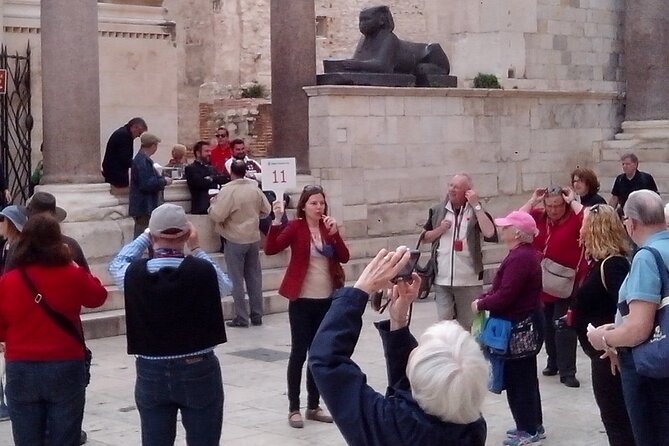
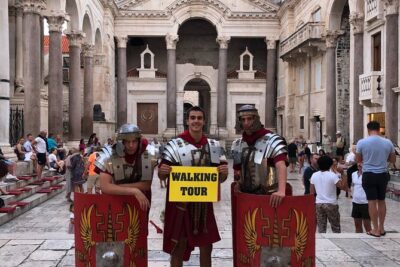
You’ll then step into the Peristyle, the palace’s imperial square. This is a key visual moment: the guide explains why this open area mattered and helps you read the surrounding structure like it’s part of a stage set.
Two highlights are called out here:
- You get a view back toward the emperor’s mausoleum area (today’s Cathedral with its belltower).
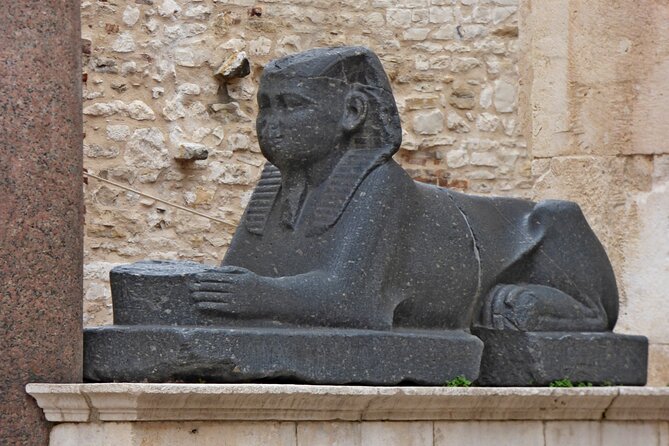
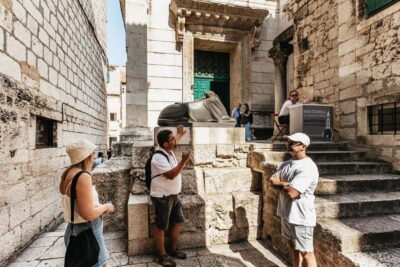
- You’ll also see an original Egyptian sphinx within the palace complex.
If you’re the type who likes to take photos, this stop is built for it. If you’re the type who dislikes photos, it still helps because the guide ties the sightlines to the story.
Temple of Jupiter and the Golden Gate: Roman power at street level
From the Peristyle area, your tour continues with two more Roman anchors. First is the Temple of Jupiter stop, external. Seeing it from outside keeps the pace brisk, and the guide can point out what made Jupiter worship central for the era.
Next is the Golden Gate, which you pass through as you move back into the Roman palace perimeter and look outward at the fortification views. This kind of stop is about perspective: the city looks different when you’re thinking about defensive walls and main entrances instead of just sightseeing.
Grgur Ninski and the medieval pulse of Narodni Trg
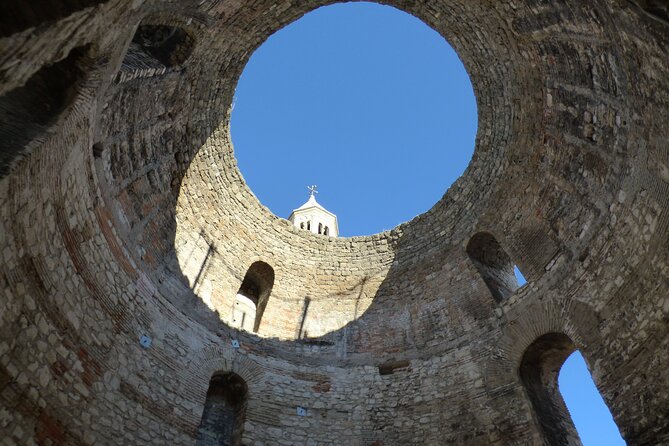
Once you move toward the medieval layers, the tour keeps shifting gears without losing momentum. You’ll spot the iconic Grgur Ninski Statue, which is one of those recognizable “you made it to Split” markers.
Then comes Narodni Trg, the main square of medieval Split. This is where you start hearing the city as a community, not just a historic museum. The guide discusses why the square mattered, helping you connect the Roman-era setting to later civic life.
Venice-era Old Town Hall and Fruit’s Square (Trg Brace Radic)
At Old Town Hall (seen from Pjaca square), you’ll get a quick look at what’s associated with the Republic of Venice era. It’s a short stop, but it reinforces a pattern you’ll keep noticing: Split’s identity changes by power centers, yet the physical space keeps hosting new layers.
Then you’ll reach Fruit’s Square (Trg Brace Radic), where the guide points out a large tower once part of medieval fortifications. This square is also used to talk about noble families from that period and how they shaped the town. In other words, this stop isn’t just about architecture. It’s about who held power and how that power showed up in stone.
Marko Marulic and the “when you arrive matters” fish market
Near Fruit’s Square, you’ll see the Marko Marulic sculpture, a writer strongly linked with the cultural identity of the region. It’s a two-minute sight, but it gives a human face to a city that can otherwise feel like only temples and walls.
Then you pass by or visit the Split Fish Market. The key detail is timing: it’s open only in the morning. Since the tour starts at 9:00 am, you have a better chance of seeing it in action rather than just an empty frontage.
Even if you don’t linger for food, this stop adds the “present-day Split” texture that keeps the Roman story from feeling like it happened on another planet.
Marmontova Ulica and Prokurative: French rule to Austrian-Hungary
The route continues through streets and squares that reflect later empires. You’ll walk along Marmontova Ulica, described as a street from the time Split was under French rule in the 19th century. It’s the kind of detail you’d miss if you only stuck to the palace core.
Next is Prokurative, a famous square linked to the Austrian-Hungarian monarchy in the 19th century. Like many of Split’s best moments, it’s not just the view—it’s how the guide frames the square’s role in shaping public life.
At this point, your “Split timeline” clicks into place: Roman foundations, medieval organization, and later rule leaving their fingerprints on streets you can actually walk.
The guide’s role (and why private helps here)
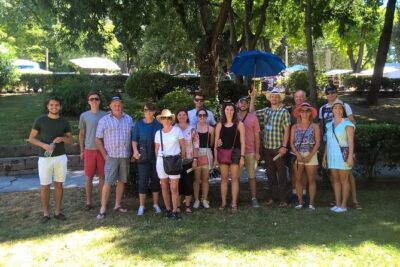
This is where the private format really earns its keep. With Sanja as the licensed guide with a Master’s degree, you’re not just following a checklist. You’re getting explanations timed to what you’re looking at right then—so the details stick.
The reviews you can expect to echo are about the clarity of the English and the way the pace stays comfortable, including for families. A good walking tour isn’t only about facts; it’s about keeping you oriented so you don’t lose the thread halfway through a city that’s designed to confuse you a little.
Also, because the tour is private, you can ask questions in the moment. That’s useful here since Split’s palace spaces can look similar until someone explains what each one was for.
Value: what you’re really paying for
The price is $156.19 per group (up to 15 people) for about 1 hour 45 minutes. That pricing can feel high if you compare it to a solo museum ticket, but it’s more like paying for expert direction and a tailored route through the heaviest hitter of Split’s Old Town.
Most entrance fees on the route are free; the notable exception is the substructures (€10 per person). So the money isn’t primarily going to admissions—it’s going to interpretation, timing, and making the main complex readable.
If you’re a couple or a small group, this format can be a strong value because your per-person cost drops while the tour remains private. If you’re traveling solo, you may still find it worth it for the guide focus—just compare against your own touring style.
What to wear and how to pace yourself
This tour is mostly walking through compact historic areas, with multiple stops and short durations at each. For me, that means comfortable shoes and a water bottle are not optional. You’ll be outside most of the time, so plan your clothing around heat and sun.
Also, think of this as an “orientation + highlights” walk. It sets you up to explore more later on your own, not to cover everything like a full museum day.
Should you book this private Split Old Town walk?
Yes, if you want to understand Split instead of just pass through it. This tour works best when you care about context—why Diocletian’s Palace was built the way it was, how the spaces connect, and what to look for as you move from Roman to medieval to later periods.
Book it especially if you’re spending limited time in Split, or if it’s your first day in town and you want to get your bearings fast. If you hate walking and prefer slow museum-style time, you might find the packed 1h45 pace challenging—but for most people who like history on their feet, it’s a smart way to start.
If you do book, plan the €10 per person for the substructures ticket, and wear shoes you’re happy to walk in for nearly two hours.
FAQ
What time does the tour start?
The tour starts at 9:00 am.
Where is the meeting point?
You meet at Obala Hrvatskog narodnog preporoda 22, 21000 Split, Croatia.
How long is the private walking tour?
It runs about 1 hour 45 minutes.
What does the tour cost?
It’s $156.19 per group (up to 15 people).
Is the tour only offered in English?
Yes. This experience is offered in English.
Do I need to pay for any entrance tickets?
Most stops have free admission, but the Diocletian Palace Substructures require an entrance ticket of €10.00 per person.
Is it really a private tour?
Yes. It’s private, and only your group participates.
What happens if the weather is poor?
This experience requires good weather. If canceled due to poor weather, you’ll be offered a different date or a full refund.
Are service animals allowed?
Yes, service animals are allowed.
Deeper Into the Palace, Split
- Split: Old Town and Diocletian Palace Walking Tour
★ 4.9 · 4,727 reviews - Walking Tour of Split and Diocletian’s Palace
★ 5.0 · 2,588 reviews - Split & Diocletian’s Palace Walking Tour
★ 5.0 · 1,125 reviews - Split: Diocletian Palace & Old Town Guided Walking Tour
★ 4.7 · 882 reviews - Split Old Town and Diocletian’s Palace Tour
★ 4.8 · 716 reviews
Walk Split a Different Way
- Split: Old Town and Diocletian Palace Walking Tour
★ 4.9 · 4,727 reviews - Walking Tour of Split and Diocletian’s Palace
★ 5.0 · 2,588 reviews - Krka Waterfalls tour with Trogir Walking tour and Krka panoramic boat cruise
★ 5.0 · 1,659 reviews - Split & Diocletian’s Palace Walking Tour
★ 5.0 · 1,125 reviews - Walking Tour of Split with a ‘Magister’ of History
★ 5.0 · 1,122 reviews
Just Your Group in Split
- SPLIT-PRIVATE Walking Tour of Diocletian’s Palace & Old Town
★ 5.0 · 467 reviews - Private Krka Waterfalls tour with 30min Boat Cruse
★ 4.0 · 458 reviews - Split by Private Electric Rickshaw – Palace & Hidden Gems
★ 5.0 · 412 reviews - Private Blue cave, Mamma Mia and Hvar, 5 islands tour from Split
★ 5.0 · 387 reviews - The Best of Split Private Tour
★ 5.0 · 338 reviews
Still deciding? More Split trips we have been out and reviewed


Diocletian's Palace & Old Town, compared.
 ★ 4.9Old Town and Diocletian Palace Walking TourFrom $174,727 reviews
 ★ 5.0Walking Tour of Split and Diocletian’s PalaceFrom $482,588 reviews
 ★ 5.0Split & Diocletian’s Palace Walking TourFrom $211,125 reviews
 ★ 4.7Diocletian Palace & Old Town Guided Walking TourFrom $17882 reviews
 ★ 4.8Split Old Town and Diocletian’s Palace TourFrom $17716 reviews
 ★ 4.8Game of Thrones Tour with Diocletian’s Palace CellarFrom $41545 reviews
 ★ 5.0Diocletian’s Palace and Old Town SMALL GROUP Walking TourFrom $16502 reviews
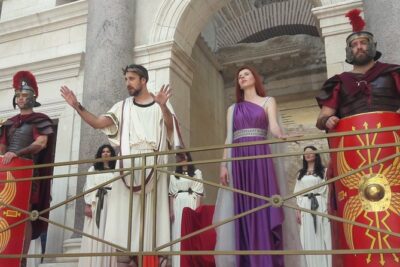 ★ 5.0SPLIT-PRIVATE Walking Tour of Diocletian’s Palace & Old TownFrom $240467 reviews
Browse the lists this tour appears in