
Reviewed · SPLIT OLD TOWN WALKING TOURS
Walking tour of Split with an Art Historian
Split’s palace feels like a living map. This small-group walk with Josipa connects Roman planning, medieval reuse, and today’s everyday life, without making you memorize dates. You’ll move at a human pace, learn how the city’s spaces work, and pick up stories you’ll still be repeating later.
Two things I like a lot: you get art-history clarity for major monuments (not just vague facts), and you’re guided to practical photo spots plus quirky local details like Gregory of Nin’s toe-rub tradition and the tiny Let Me Pass street. One consideration: the route includes unavoidable steps and some uneven spots, so it’s not ideal if stairs are a problem for you.
In This Review
- Key highlights I’d plan around
- Diocletian’s Palace, explained street by street
- Meeting in Đardin (Strossmayer Park): water as your first clue
- Tower 2 and the first lesson: why Split isn’t a typical ruin
- The Golden Gate and Cardo: learning the Roman street logic
- Gregory of Nin’s statue and the toe-rub tradition
- The Peristyle approach: where grandeur hits in steps
- Gates within gates: Iron Gate and the Silver Gate detour
- St. Domnius cathedral: why you’ll view it without entering
- The Robert Adam moment and why aesthetics matter
- Let Me Pass Street: tiny dimensions, big local memory
- Vestibulum photo stop: acoustics and klapa singing
- Substructures shortcut to Riva: the quieter layer under the palace
- Riva Harbor and the model stop: leaving with your bearings
- Price, timing, and value at around $30
- Who this tour fits best in Split
- Should you book this Split walking tour with Josipa?
- FAQ
- How long does the walking tour take?
- Is the tour offered in English, and how large is the group?
- Does this tour include entry into paid sites or museums?
- What walking difficulty should I expect?
- Will the tour run in bad weather?
- Can I bring a dog or a service animal?
- Is free cancellation available, and how far in advance do I need to cancel for a full refund?
Key highlights I’d plan around
- Josipa’s storytelling focus: she links art, architecture, and city layout so the palace makes sense fast
- Small group (max 10): easier questions, calmer viewing, and better listening than big tours
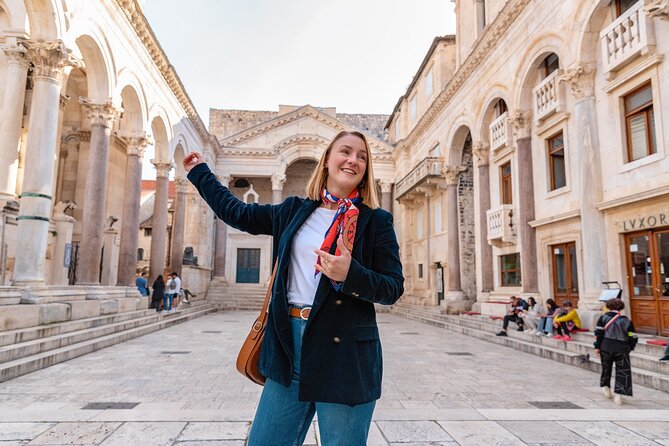
- Photo-ready stops built into the walk: vestibule views and the Peristyle approach are naturally great for pics
- Big symbolism in small places: Gregory of Nin, Let Me Pass Street, and the gate-ranking stories
- No paid-site pressure: the tour stays outside paid museums and doesn’t require extra tickets at every stop
- Optional add-on idea: the substructures are referenced, with a path to a separate deeper visit if you want it
Prefer to walk it? More guided strolls through Split
- Split: Old Town and Diocletian Palace Walking Tour★ 4.9 · 4,727 reviews
- Walking Tour of Split and Diocletian’s Palace★ 5.0 · 2,588 reviews
- Krka Waterfalls tour with Trogir Walking tour and Krka panoramic boat cruise★ 5.0 · 1,659 reviews
- Split & Diocletian’s Palace Walking Tour★ 5.0 · 1,125 reviews
Diocletian’s Palace, explained street by street
If you’ve ever stared at Diocletian’s Palace and thought, I see walls, but where’s the point, this is the kind of tour that fixes that. You don’t just stop at famous spots; you learn how the palace was planned, how people moved through it, and why certain thresholds mattered so much.
What makes it work is the structure of the walk. You’re guided along the logic of the old Roman street grid, then shown how later centuries layered their own meaning on top. Even if you only know Split from the waterfront promenade, you’ll start to recognize the city’s bones.
The pacing is built for understanding too. The tour lasts about 1 hour 40 minutes to 2 hours, and the group stays small enough that Josipa can slow down when questions pop up. It’s also rain or shine, so the experience is more about learning the palace than about chasing perfect weather.
Meeting in Đardin (Strossmayer Park): water as your first clue
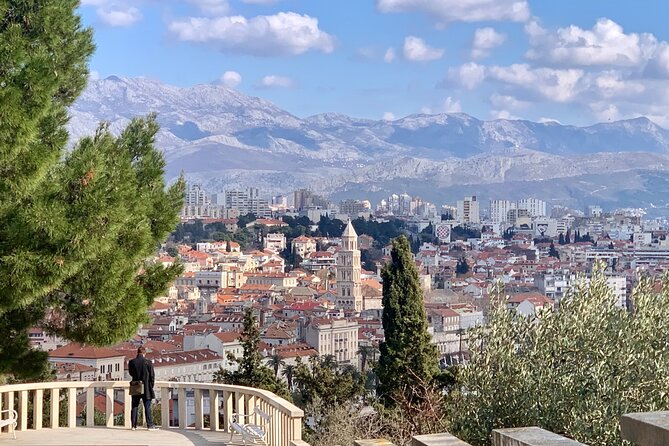
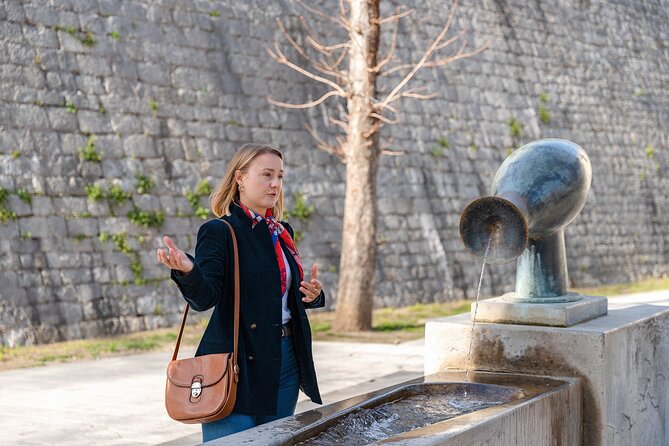
You start in Strossmayer Park, locally called Đardin, by the central fountain. That opener is smarter than it sounds. The guide frames Split as a place where water isn’t just decoration—it’s something that helped life function inside the palace for over 17 centuries.
From the start, you’re trained to notice the city’s practical choices. Even if you’re walking through what looks like a scenic park, you’re getting the idea that Roman-era power, comfort, and control depended on infrastructure.
This first stop is quick, but it sets a theme for the whole tour: the palace isn’t only stone and views. It’s also systems—water, movement, and access.
Tower 2 and the first lesson: why Split isn’t a typical ruin
Next you head to Tower 2 of Diocletian’s palace. The moment you hear why it’s part of the story, you’ll understand the tour’s angle: Split isn’t just an ancient monument you visit from a distance.
This stop helps you read what you’re looking at. You get a sense of how defensive and administrative functions fit into a complex that also ended up becoming a neighborhood for centuries. It’s a helpful pivot from seeing the palace as a postcard to seeing it as a real built environment.
And since this is outside viewing rather than a museum-style experience, it’s a good place to ask questions early. It also works if you’re the type who likes context before the big wow moments.
The Golden Gate and Cardo: learning the Roman street logic
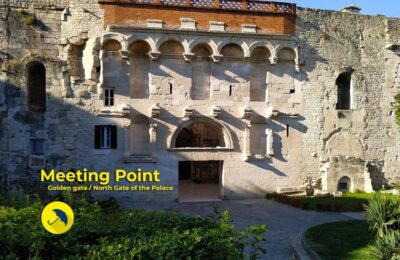
The tour then shifts into your main route: gateways and streets. You’ll stand at the Golden Gate, one of the entrances to the palace, and then walk along the Roman street system that runs north to south, the Cardo.
Here’s the value for you: once you understand the direction and purpose of the main streets, the palace becomes easier to navigate on your own later. You start to see why certain areas feel more formal, why some corners feel tucked away, and how entrances connect to public spaces.
You also get a detour through Dioklecijanova, tied to the main roadway inside the palace. This is where you’re led toward a hidden garden area. The garden moment is short, but it reinforces a key idea: even within an emperor’s palace, later life kept creating pockets of calm.
A few more Split boat days and tours worth a second look


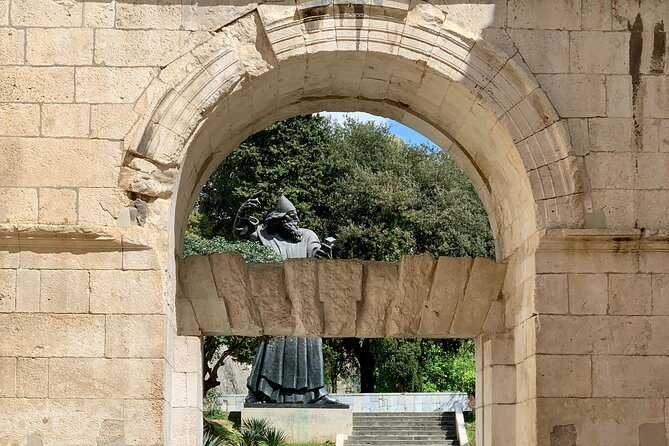
Gregory of Nin’s statue and the toe-rub tradition
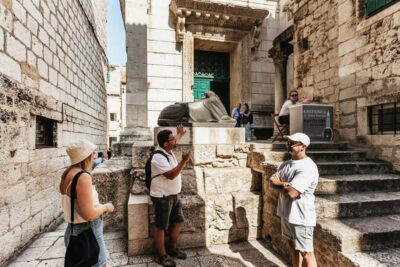
Before you enter deeper, you’ll stop at the Gregory of Nin statue. It’s a 7-meter bronze monument created by Croatian sculptor Ivan Meštrović—and yes, toe-rubbing is part of the ritual. You’ll also learn why the monument has stuck in local popular culture.
This stop is small in distance, but big in meaning. It shows how people turn religious and historical figures into everyday symbols. You’ll see the statue not as an isolated artwork, but as part of how Split expresses identity.
If you’re even mildly into folklore, this is the part you’ll talk about later at dinner.
The Peristyle approach: where grandeur hits in steps
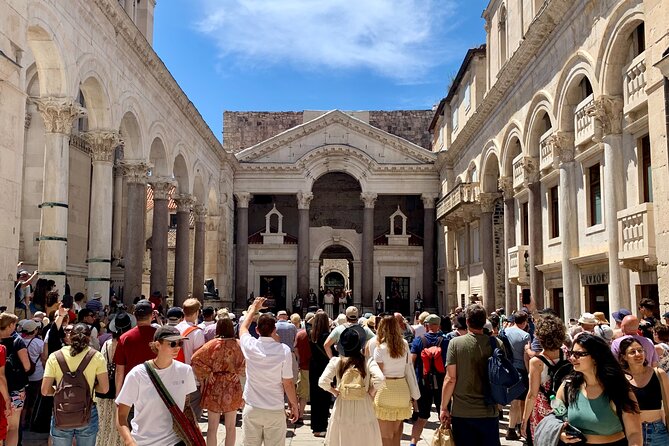
Then comes the Peristyle of Diocletian’s Palace, approached along the Decumanus. This is where the architecture starts feeling dramatic, not just old. You learn the origin and history of the Peristyle and how the space’s design helped define how people gathered and moved.
For a lot of first-time visitors, the Peristyle is the first moment the palace stops being confusing. It’s also naturally photogenic, because you get that classic open-view framing while still hearing the story.
And timing matters here. If you’re doing the tour during a busier part of the day, getting to the Peristyle early helps. Even without going into crowd math, my practical advice is to aim for a morning slot if you can.
Gates within gates: Iron Gate and the Silver Gate detour
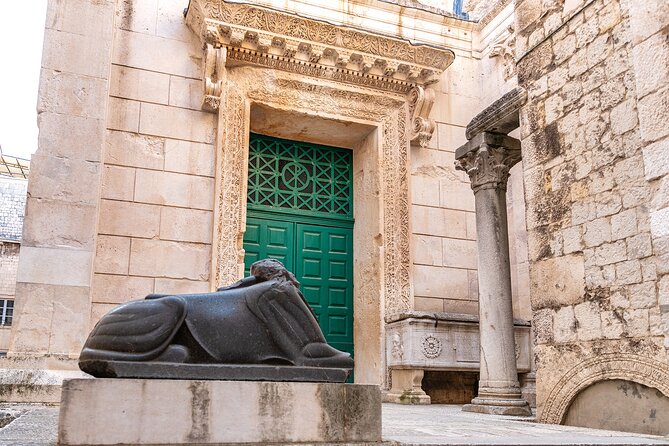
The tour keeps pulling you from one meaningful threshold to the next. You’ll hear the story of the Iron Gate, described in a value-ranking way as the palace’s platinum gate. It’s the kind of detail that sounds like trivia until you realize it explains how entrances were treated as status points, not just doorways.
There’s also a short move toward the Eastern (Silver) Gate. This detour is quick, but it reveals a subtle lesson: the palace didn’t run on one straight line. It had branching access and secondary routes that mattered.
If you’re the type who enjoys architecture that communicates power, these gate stories will make you look differently at the stonework.
St. Domnius cathedral: why you’ll view it without entering
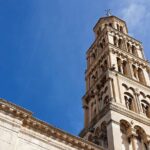
Standing on the Peristyle, you’ll talk about the Cathedral of Saint Domnius. The guide explains how it began as a mausoleum for the Roman Emperor and later became a Christian cathedral.
Here’s the trade-off: this tour does not enter paid sites or museums, so you won’t go inside the cathedral. That’s not a problem if you’re looking for context and outdoor structure viewing. It can be a drawback if you specifically want interior time and ticketed access.
Still, even from outside, the story helps you connect Roman imperial intent with later religious reuse. Split is full of layers like this, and this is one of the clearest explanations you’ll get on foot.
The Robert Adam moment and why aesthetics matter
At one of the major standout views, you’ll hear a story about how Scottish architect Robert Adam in the 18th century listed a Split attraction as one of the most beautiful European monuments. The point isn’t just the name-drop.
The real value is learning to look at beauty as part of history. When you know that later artists and architects also praised what they saw here, the palace stops feeling like a relic. It becomes something that has inspired taste across centuries.
This is the stop that reminds you: you’re not only learning facts. You’re learning how the eye is meant to read the scene.
Let Me Pass Street: tiny dimensions, big local memory
Then you’ll get to Let Me Pass (Pusti me da prodjem) Street, famous for being under 10 meters long and only 57 centimeters wide. It’s narrow enough that it almost feels like a prank built into the city plan.
But it’s more than a curiosity. You’ll also hear how it’s honored with a public monument elsewhere in Split. That detail gives you a clue about local humor and how residents treat even awkward space constraints as identity.
If you like fun facts that you can share with people later, this is a high-retention stop.
Vestibulum photo stop: acoustics and klapa singing
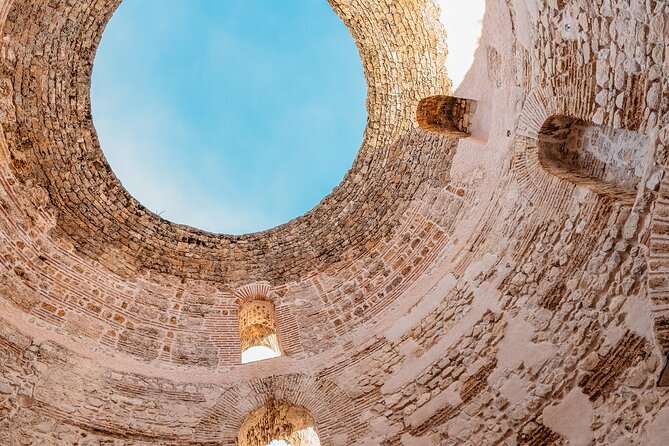
Next comes the Vestibulum of Diocletian’s Palace, a popular open-air photo spot. The guide frames the space as one that’s made for sound as much as sight, and you’ll hear about the possibility of klapa singing in this acoustically rich environment.
Even if singing isn’t happening when you arrive, the idea makes you listen differently. You’ll notice how stone geometry can shape echo and volume, turning architecture into an audio tool.
This is also a good place to pause. You’re not sprinting; you’re absorbing.
Substructures shortcut to Riva: the quieter layer under the palace
One of the tour’s most interesting moments is the transition toward the Diocletian Palace substructures. You’ll take a shortcut through this area to reach the Riva waterfront, and the shift in atmosphere is part of the story.
This is where the guide helps you understand why extra tickets exist for deeper exploration. You won’t explore the substructures in their entirety on this walk due to time constraints and additional admission fees, but you can get guidance for a separate visit if you’re curious.
Practical takeaway: if you love archaeology and want more than outdoor context, plan a second block of time later. This tour gives you the map and the motivation.
Riva Harbor and the model stop: leaving with your bearings
You’ll stroll along Riva Harbor, described as a place that acts as street, promenade, and square. It’s also the perfect reality check after the palace maze: you step back into a wider urban rhythm where today’s Split shows itself.
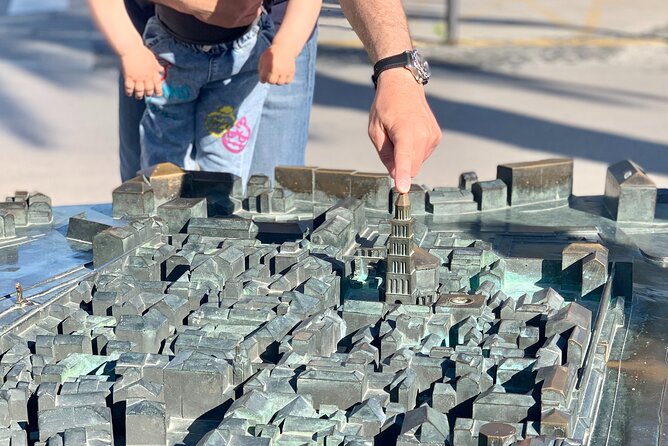
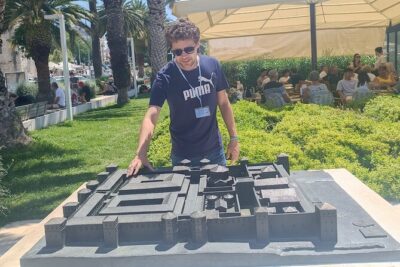
Then you’ll reach Maketa Grada Splita, the large model of Split’s Old Town. This stop is short, but it’s hugely useful. The palace covers a lot of ground, and the model helps you understand topography and layout, so your future wandering has direction.
You’ll finish near the bronze model on the Riva waterfront, with Josipa recapping what you saw and offering tips for more exploring afterward.
Price, timing, and value at around $30
At $30.23 per person for about 1 hour 40 minutes to 2 hours, the price makes sense if you care about interpretation. You’re paying for a guide who connects art, architecture, and city planning, not just for walking between landmarks.
The tour also avoids a common cost trap: it doesn’t include entering paid sites or museums. That means you’re not forced into adding tickets for every major stop. You still get a lot of the big visual moments and the explanation behind them, especially in outdoor sections and public spaces.
Small-group size (maximum 10 travelers) is part of the value too. If you’ve ever been stuck behind someone taller at a monument, you’ll appreciate the ability to hear and ask.
And if you’re planning ahead, it’s typically booked about 25 days in advance, so grabbing a slot sooner is smart, especially in peak season.
Who this tour fits best in Split
This is a great fit if you want:
- Diocletian’s Palace made understandable, not just viewed
- art-and-architecture storytelling that connects Roman and medieval layers
- clear photo stops, including the vestibule view angles
- a calmer pace than big city tours
It may not be the best fit if you want:
- long time inside ticketed interiors (the cathedral and deeper substructures aren’t entered here)
- an entirely stroller-level route (steps are part of the walk)
For best results, bring sun protection and water, and expect to move at a steady city-walking clip.
Should you book this Split walking tour with Josipa?
If you’re visiting Split for the first time and want to understand why Diocletian’s Palace still drives the city’s layout, I’d book it. The art-historian angle, the small group size, and the way the route teaches you how to read the space make it more useful than a simple highlights loop.
If your main goal is museum interiors and ticketed rooms, you’ll likely want to plan separate entry time for those paid experiences. But for getting your bearings fast and learning the palace’s logic in one solid outing, this tour is a strong way to start.
FAQ
How long does the walking tour take?
It runs for about 1 hour 40 minutes to 2 hours.
Is the tour offered in English, and how large is the group?
Yes, it’s offered in English. The group size is capped at 10 travelers.
Does this tour include entry into paid sites or museums?
No. The tour does not enter any museums or paid sites. For example, it discusses the Cathedral of Saint Domnius but does not include entering it.
What walking difficulty should I expect?
The tour includes several unavoidable steps. Most of the walking is flat, but some areas can be slightly uneven.
Will the tour run in bad weather?
Yes, it takes place rain or shine.
Can I bring a dog or a service animal?
Service animals are allowed. If you want to bring a dog, you should contact the provider before booking so the guide can confirm details and keep the experience comfortable for everyone.
Is free cancellation available, and how far in advance do I need to cancel for a full refund?
You can cancel up to 24 hours in advance for a full refund. Canceling within 24 hours of the start time isn’t refundable.
More Tours in Split
- From Split: Krka Waterfalls, Food & Wine Tasting Tour
★ 5.0 · 9,326 reviews - Blue cave, Mamma Mia and Hvar, 5 islands speedboat tour
★ 5.0 · 7,150 reviews - From Split: Krka Waterfalls, Food & Wine Tasting Tour
★ 4.9 · 6,598 reviews - Split/Trogir: Blue Cave, Mamma Mia, Hvar and 5 Island Tour
★ 4.6 · 6,320 reviews - Blue Cave and Hvar Tour – 5 Islands Tour from Split and Trogir
★ 5.0 · 4,815 reviews
More Tour Reviews in Split
- Split: Krka Waterfalls Trip with Boat Cruise and Swimming
★ 4.8 · 10,519 reviews - From Split: Krka Waterfalls, Food & Wine Tasting Tour
★ 5.0 · 9,326 reviews - Blue cave, Mamma Mia and Hvar, 5 islands speedboat tour
★ 5.0 · 7,150 reviews - From Split: Krka Waterfalls, Food & Wine Tasting Tour
★ 4.9 · 6,598 reviews - Split/Trogir: Blue Cave, Mamma Mia, Hvar and 5 Island Tour
★ 4.6 · 6,320 reviews
Walk Split a Different Way
- Split: Old Town and Diocletian Palace Walking Tour
★ 4.9 · 4,727 reviews - Walking Tour of Split and Diocletian’s Palace
★ 5.0 · 2,588 reviews - Krka Waterfalls tour with Trogir Walking tour and Krka panoramic boat cruise
★ 5.0 · 1,659 reviews - Split & Diocletian’s Palace Walking Tour
★ 5.0 · 1,125 reviews - Walking Tour of Split with a ‘Magister’ of History
★ 5.0 · 1,122 reviews
Still deciding? More Split trips we have been out and reviewed

Split Old Town Walking Tours, compared.
 ★ 4.9Old Town and Diocletian Palace Walking TourFrom $174,727 reviews
 ★ 5.0Walking Tour of Split and Diocletian’s PalaceFrom $482,588 reviews
 ★ 5.0Krka Waterfalls tour with Trogir Walking tour and Krka panoramic boat cruiseFrom $481,659 reviews
 ★ 5.0Split & Diocletian’s Palace Walking TourFrom $211,125 reviews
 ★ 5.0Walking Tour of Split with a ‘Magister’ of HistoryFrom $341,122 reviews
 ★ 5.0Split Walking Tour with Professor of HistoryFrom $24926 reviews
 ★ 4.7Diocletian Palace & Old Town Guided Walking TourFrom $17882 reviews
 ★ 4.7Krka Waterfalls Cruise & Trogir Walking TourFrom $47681 reviews
Browse the lists this tour appears in