
Reviewed · SPLIT OLD TOWN WALKING TOURS
Step into History: Private Guided Walking Tour of Split
Split’s old stones are still talking.
This private guided walking tour is a smart way to understand Split in just 2 hours. I especially like the focus on Diocletian’s Palace—Roman ruins, courtyards, and the Peristyle Square core—and the way the walk connects those details to what you see today in town. One thing to consider: you’ll cover a lot on foot in a short time, so comfortable shoes matter.
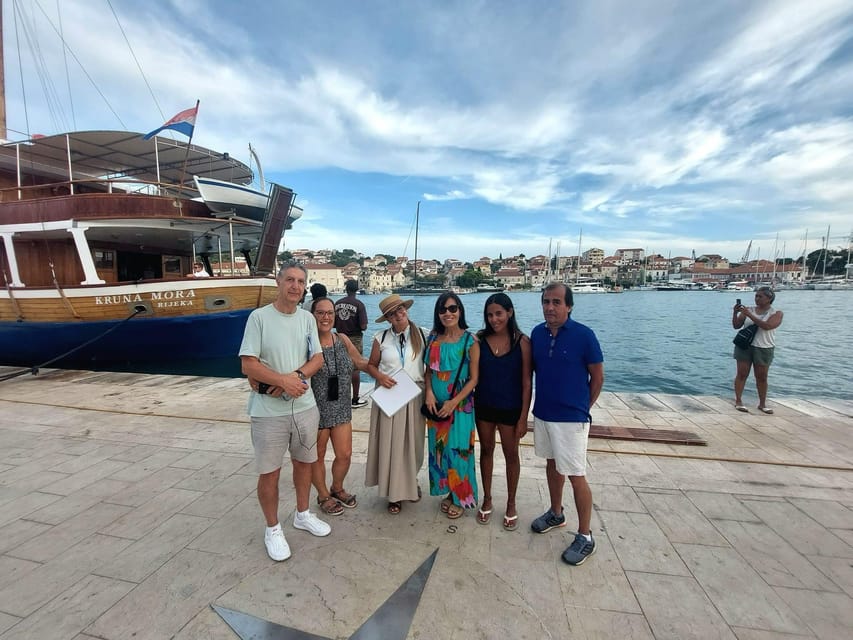
If you choose the English private tour, you’ll meet your guide at the Riva Promenade, with the Adriatic in view before you step into the Palace’s stone maze. In one booking highlight, the guide Christina stood out for being pleasant and very clear in how she explained what you were looking at—exactly what you want when the streets can feel like they’re all the same at first.
In This Review
- Key highlights you’ll feel right away
- Why Diocletian’s Palace still shapes Split
- Meeting at Riva Promenade: the views that set the tone
- Private walking pace (and what it means for your photos)
- Walking the Diocletian’s Palace ruins you can actually recognize
- Peristyle Square: the ceremonial center made visual
- Cathedral of Saint Domnius and the Bell Tower viewpoint
- Piazza and the old city walls over the Adriatic
- How the 2-hour format works for your day
- Price and value: what $129 per group buys you
- Accessibility and comfort: plan for stone streets
- Who should book this tour?
- Should you book this private Split walking tour?
- FAQ
- How long is the private guided walking tour of Split?
- Where does the tour start?
- What’s the price for this tour?
- Is the tour private?
- What language is the live tour guide in?
- What are the main places you’ll visit?
- Is Diocletian’s Palace part of the UNESCO World Heritage list?
- Will I get panoramic views?
- Is the tour wheelchair accessible?
- Is free cancellation available?
Key highlights you’ll feel right away
- Riva Promenade start with Adriatic views to get your bearings fast
- Diocletian’s Palace (4th century AD) UNESCO setting you can actually walk through
- Peristyle Square explained as the ceremonial center of ancient Split
- Cathedral of Saint Domnius and Bell Tower for one of the best city-over-sea viewpoints on this route
- Piazza and the old city walls for a strong sense of where the city breathes
On your own schedule: more private tours in Split
- SPLIT-PRIVATE Walking Tour of Diocletian’s Palace & Old Town★ 5.0 · 467 reviews
- Private Krka Waterfalls tour with 30min Boat Cruse★ 4.0 · 458 reviews
- Split by Private Electric Rickshaw – Palace & Hidden Gems★ 5.0 · 412 reviews
- Private Blue cave, Mamma Mia and Hvar, 5 islands tour from Split★ 5.0 · 387 reviews
Why Diocletian’s Palace still shapes Split
Split isn’t just a port city with Roman leftovers. Diocletian’s Palace is the reason the city’s layout feels “designed,” even now, with streets and entrances aligned to an older plan.
You’ll spend real time inside the Palace complex, which dates back to the 4th century AD and is recognized as a UNESCO World Heritage Site. That matters because it turns a quick photo stop into something more useful: you start seeing patterns—how space was planned, where power was centered, and how everyday movement would have worked in ancient times.
Meeting at Riva Promenade: the views that set the tone
The tour begins at the Riva Promenade, where you meet your local guide and look out over the Adriatic Sea. I like this start because it slows you down for one minute and gives you context. Split’s old core isn’t isolated; it’s tied to the water and trade routes.
From there, you head into town and toward the Palace. Expect a shift from bright open-sky sea air to tight streets and stone corridors. This change is part of the experience: you’re moving from modern Split’s rhythm into a world built for Roman authority and ceremonies.
Private walking pace (and what it means for your photos)
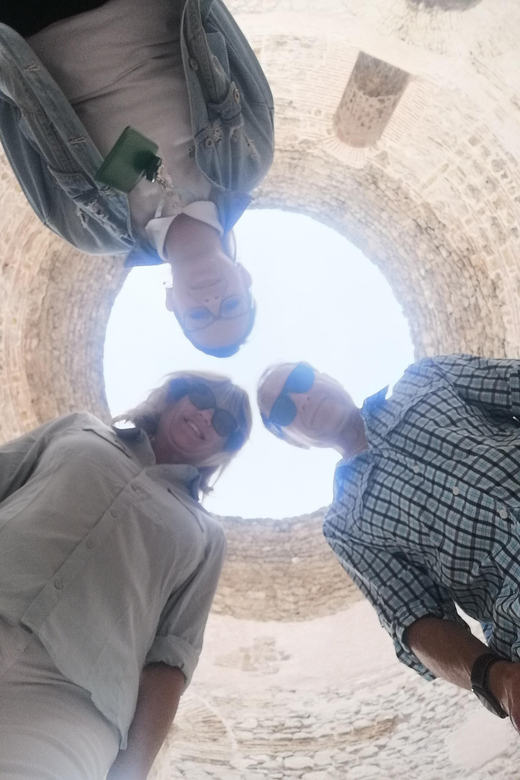
This is a private group tour, priced per group (up to 15 people) for a total duration of 2 hours. That’s a key value point. Instead of fitting into a loud herd, you can keep a steadier pace and hear the guide without constant interruptions.
It also means your guide can tailor how they pace the stops—stopping longer where you’re interested and speeding up where you’re not. If you’re the type who likes to photograph details (doorways, stonework, courtyards), a private format helps. You’re not forced to “move on” every 60 seconds.
Walking the Diocletian’s Palace ruins you can actually recognize
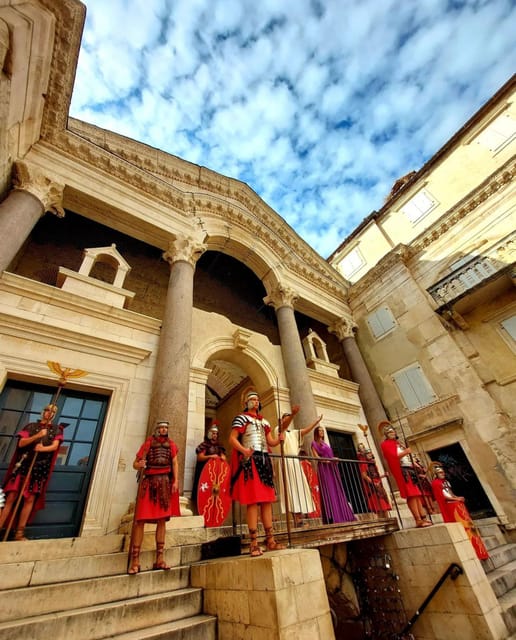
Inside the Palace, you’ll see ruins, hidden courtyards, and well-preserved Roman architecture. What makes this stop worth your time is that it’s not random. The Palace wasn’t built to be a single monument; it functioned as an entire complex with spaces for movement, work, authority, and ceremony.
As you walk through the maze-like streets, I suggest you think in layers:
- Look for boundaries—where one area ends and another begins.
- Notice the courtyards—they act like breathing spaces in stone.
- Treat the architecture like evidence—Roman design choices are still visible.
A good local guide helps you connect what you see to why it was built that way. Christina, for example, is praised for being pleasant and clear, which is exactly the vibe you want when you’re trying to map a 4th-century layout onto what stands today.
Prefer to walk it? More guided strolls through Split


Peristyle Square: the ceremonial center made visual
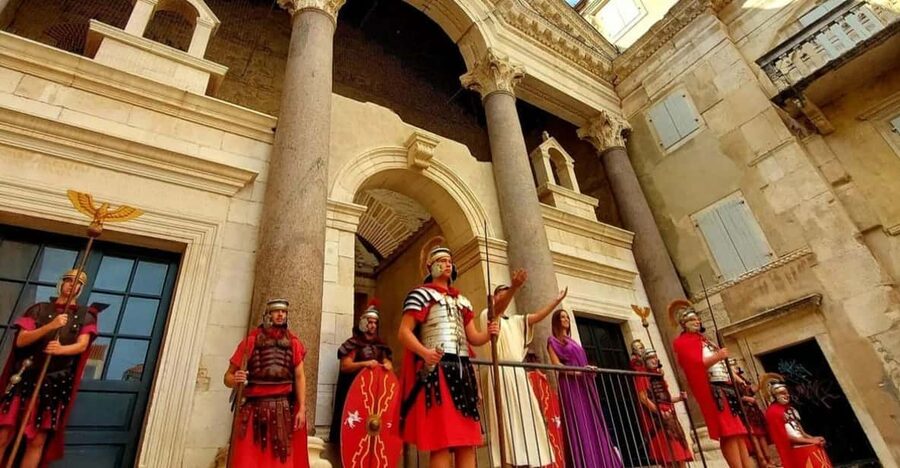
Peristyle Square is the heart you can feel. It’s the central courtyard of Diocletian’s Palace, and it’s also where ceremonial power would have played out.
This is one of those stops where the explanation matters. If you just stand in the square, it’s pretty. If you understand it as the ceremonial center of ancient Split, it clicks into place: you start to see how the surrounding spaces directed movement and attention. In other words, you stop treating it like a scenic courtyard and start treating it like a stage.
When you’re standing there, take a slow look around. Try to imagine the Palace as a functioning world, not a museum. That mental shift is what turns a “site visit” into something that sticks.
Cathedral of Saint Domnius and the Bell Tower viewpoint
After the Palace core, you’ll visit the Cathedral of Saint Domnius, one of the oldest cathedrals in the world. That age factor is a major reason to include it on a short tour: you’re not only walking through Roman civic space, you’re also seeing how centuries layered themselves into the same urban footprint.
Then you’ll climb the Bell Tower for panoramic views. Even if you don’t love heights, this is one of the best ways to make sense of Split’s layout. From above, the Palace’s geometry and the surrounding city connect in your head. You can start tracing where the walk went—street by street—and that makes your next wander more confident.
One practical note: a bell tower climb typically involves stairs. The tour is listed as wheelchair accessible, but tower climbs can still be tricky depending on the exact route and what access means on site. If you’re traveling with mobility needs, I’d treat this as something worth asking about before you go.
Piazza and the old city walls over the Adriatic
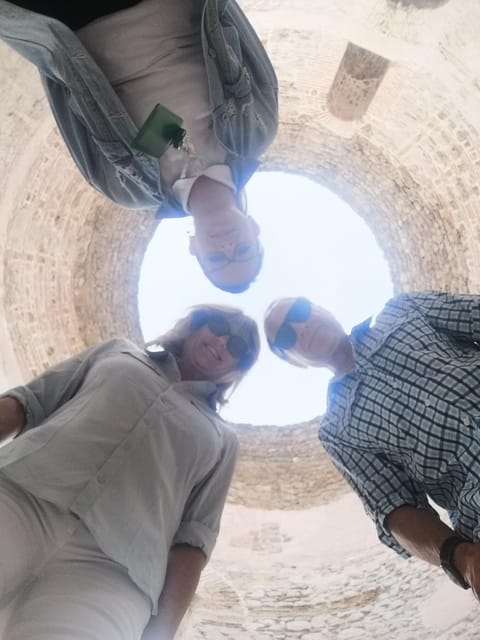
Next up is Piazza, Split’s main square. Here, the value isn’t just the open space. Piazza gives you a “town map” feeling—this is where your eyes relax after stone corridors and where you can watch daily city life.
Then you’ll stroll along the ancient city walls for views of the Adriatic Sea. I like wall walks because they do two things at once:
- They show you what the city protected.
- They show you how the city faced outward.
This part is where you’ll likely get your best “Split postcard” angles, but the real win is the sense of scale. The sea isn’t background. It’s part of the city’s story, and the walls make that connection feel obvious.
How the 2-hour format works for your day
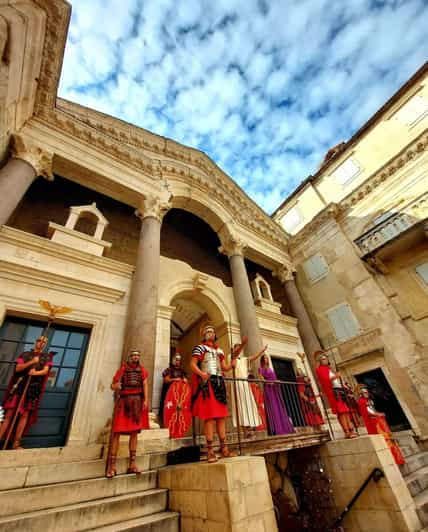
A 2-hour walking tour is a pressure cooker in the best way. It’s short enough to fit between meals, and it’s long enough to hit the major anchors: Palace core, Peristyle Square, Saint Domnius, Bell Tower, then Piazza and sea-wall views.
Still, it’s not the full Split experience. You won’t cover everything—Split is too big, and it’s too layered for one quick route. The smart move is to use this tour as orientation. Afterward, you’ll be better at choosing where to wander next, because you’ll understand the big structures first.
If you’re on a tight schedule, this is a strong use of time. If you’re a slower walker who loves sitting in cafés for long breaks, consider building buffer time around it.
Price and value: what $129 per group buys you
The price is $129 per group, up to 15 people, with private group service for 2 hours. That pricing setup can be a great deal for families or small friend groups because you’re not paying a per-person rate listed here.
Here’s how I think about value on tours like this:
- A guided walk helps you avoid the “I’m looking at stones, but I don’t know what I’m seeing” problem.
- The Palace and Saint Domnius areas are packed with details that are hard to decode alone.
- A private format means your guide can keep the pace and focus where your group wants it.
If you’re traveling solo or as a couple, the cost may feel less dramatic depending on alternative options. But if you want the structure—knowing where to go, what to notice, and how it all connects—this format is still often worth it because it compresses planning time into one paid hour (plus the return on your brain).
Accessibility and comfort: plan for stone streets
The tour is listed as wheelchair accessible and features a private group format, which can make logistics easier. That said, you should also assume you’ll be walking on uneven old-city surfaces—Split’s center isn’t built for smooth stroller wheels or for people who hate steps.
A simple approach:
- Wear comfortable shoes you can trust on stone.
- Bring water if you’re going in warm weather.
- If climbing the Bell Tower is a concern, ask in advance what access looks like for your situation.
This kind of tour gives you a lot of payoff if you keep your body comfortable enough to enjoy it.
Who should book this tour?
This is a great fit if you:
- Want the big Palace highlights without getting lost.
- Like history that’s explained in plain language while you walk.
- Prefer a local guide approach over wandering with zero context.
- Want a short, high-impact plan that still includes a view from the Bell Tower.
It also works well if your group includes a mix of interests. Architecture and major landmarks give history-minded people plenty to chew on, while the sea views and Piazza atmosphere keep the rest of the group happy.
Should you book this private Split walking tour?
I’d book it if your goal is clarity and momentum. You’ll come away understanding what Diocletian’s Palace is really doing in the city—how the Palace core, Peristyle Square, and Saint Domnius connect across time. Plus, the route ends with Piazza and sea-wall views, so you get both the “ancient structure” and the “where the city breathes” feeling.
I’d hesitate only if you want a slower, more wandering day where every side street gets time. This tour is built for focus. If you want depth in lots of neighborhoods, pair it with extra free time after.
If you do book: plan to wear good shoes, and make sure your guide knows what you care about—views, architecture, or the meaning behind the spaces. With a private format, that kind of direction helps you get a better walk.
FAQ
How long is the private guided walking tour of Split?
The tour lasts 2 hours.
Where does the tour start?
The meeting point is the Riva Promenade.
What’s the price for this tour?
It costs $129 per group, up to 15 people.
Is the tour private?
Yes. It’s a private group experience.
What language is the live tour guide in?
The tour guide speaks English.
What are the main places you’ll visit?
You’ll see Diocletian’s Palace, Peristyle Square, Piazza, the Cathedral of Saint Domnius, and you’ll also climb the Bell Tower. The route includes a stretch along the ancient city walls with Adriatic views.
Is Diocletian’s Palace part of the UNESCO World Heritage list?
Yes. Diocletian’s Palace is described as a UNESCO World Heritage Site.
Will I get panoramic views?
Yes. The tour includes climbing the Bell Tower for panoramic views of the city.
Is the tour wheelchair accessible?
Yes, the tour is listed as wheelchair accessible.
Is free cancellation available?
Yes. You can cancel up to 24 hours in advance for a full refund.
More Tour Reviews in Split
- Split: Krka Waterfalls Trip with Boat Cruise and Swimming
★ 4.8 · 10,519 reviews - From Split: Krka Waterfalls, Food & Wine Tasting Tour
★ 5.0 · 9,326 reviews - Blue cave, Mamma Mia and Hvar, 5 islands speedboat tour
★ 5.0 · 7,150 reviews - From Split: Krka Waterfalls, Food & Wine Tasting Tour
★ 4.9 · 6,598 reviews - Split/Trogir: Blue Cave, Mamma Mia, Hvar and 5 Island Tour
★ 4.6 · 6,320 reviews
Walk Split a Different Way
- Split: Old Town and Diocletian Palace Walking Tour
★ 4.9 · 4,727 reviews - Walking Tour of Split and Diocletian’s Palace
★ 5.0 · 2,588 reviews - Krka Waterfalls tour with Trogir Walking tour and Krka panoramic boat cruise
★ 5.0 · 1,659 reviews - Split & Diocletian’s Palace Walking Tour
★ 5.0 · 1,125 reviews - Walking Tour of Split with a ‘Magister’ of History
★ 5.0 · 1,122 reviews
Just Your Group in Split
- SPLIT-PRIVATE Walking Tour of Diocletian’s Palace & Old Town
★ 5.0 · 467 reviews - Private Krka Waterfalls tour with 30min Boat Cruse
★ 4.0 · 458 reviews - Split by Private Electric Rickshaw – Palace & Hidden Gems
★ 5.0 · 412 reviews - Private Blue cave, Mamma Mia and Hvar, 5 islands tour from Split
★ 5.0 · 387 reviews - The Best of Split Private Tour
★ 5.0 · 338 reviews
Still deciding? More Split trips we have been out and reviewed
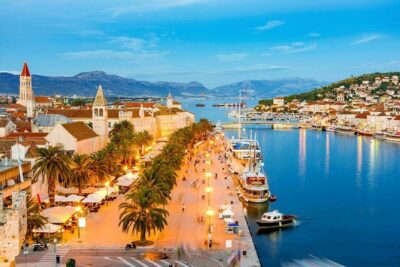
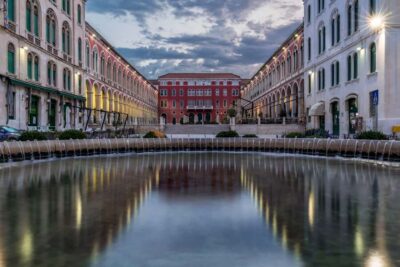


Split Old Town Walking Tours, compared.
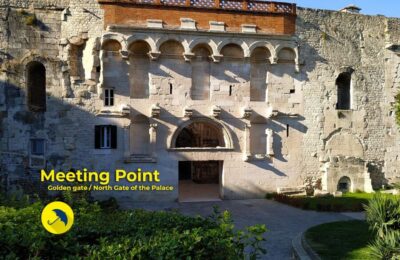 ★ 4.9Old Town and Diocletian Palace Walking TourFrom $174,727 reviews
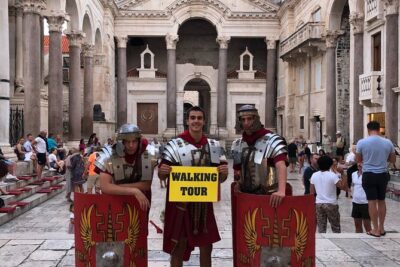 ★ 5.0Walking Tour of Split and Diocletian’s PalaceFrom $482,588 reviews
 ★ 5.0Krka Waterfalls tour with Trogir Walking tour and Krka panoramic boat cruiseFrom $481,659 reviews
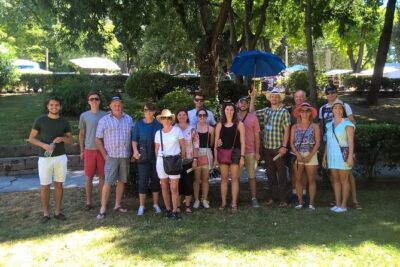 ★ 5.0Split & Diocletian’s Palace Walking TourFrom $211,125 reviews
 ★ 5.0Walking Tour of Split with a ‘Magister’ of HistoryFrom $341,122 reviews
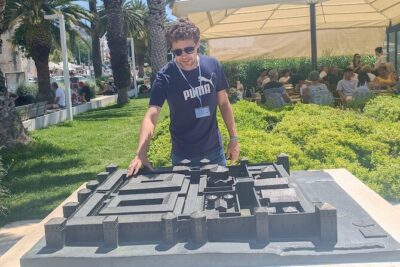 ★ 5.0Split Walking Tour with Professor of HistoryFrom $24926 reviews
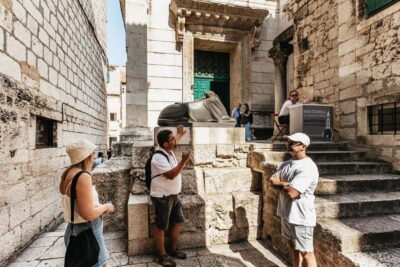 ★ 4.7Diocletian Palace & Old Town Guided Walking TourFrom $17882 reviews
 ★ 4.7Krka Waterfalls Cruise & Trogir Walking TourFrom $47681 reviews
Browse the lists this tour appears in