
Reviewed · SPLIT OLD TOWN WALKING TOURS
Split: Walking Tour of Split with Art Historian
Split’s stone stories come alive fast. I like this tour because Josipa, an art historian, guides you through the heart of the city with context you can actually use, not just a list of monuments. You’ll see the famous places and get pointed to smaller details most people miss—like Egyptian sphinxes hiding in plain sight.
What really makes it work is the mix of art-history insight and practical local guidance. I also like the small-group feel, so questions don’t get brushed aside. One consideration: the route includes several unavoidable steps and it’s not suitable for wheelchair users or people with mobility impairments.
In This Review
- Key highlights you’ll feel right away
- Why an art historian like Josipa changes how you see Split
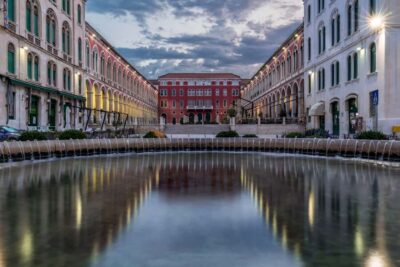
- Meeting at Strossmayerova Fountain and getting your bearings
- Walking into the palace story: Gregory, gates, and the first clues
- Gregory of Nin Statue
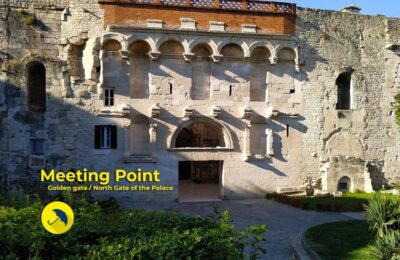
- Golden Gate, Split
- Sv. Martin
- Bronze Gate, Split
- Diocletian’s Peristyle: where the details start doing the talking
- Silver Gate, Split
- Jupiter’s Temple area and the Passage-learning trick
- Street Let Me Pass
- Vestibul and Triklinij: learning the choreography of daily life
- Vestibul (photo stop)
- Triklinij
- Diocletian’s Cellars: story-first before ticket decisions
- Riva waterfront: the Roman shell meets modern Split
- Where to go next: model view, Fruit Square, and People’s Square
- Model of the historical core of the city of Split
- Fruit Square, Split
- People’s Square
- What you get for $27 in 2 hours (and what you don’t)
- Who this walking tour suits best
- Should you book Split Walking Tour with Josipa?
- FAQ
- How long is the Split walking tour?
- What does the tour cost?
- Who is the guide for this experience?
- Where exactly do I meet the tour?
- Is the tour conducted in English?
- Does the tour enter paid sites?
- What kind of weather does the tour run in?
- Is the tour suitable for wheelchair users or people with mobility impairments?
- Is the tour suitable for people with hearing impairments?
- Can I cancel for a refund, and is there a pay-later option?
Key highlights you’ll feel right away
- Josipa’s art-historian eye connects buildings to purpose, not just dates.
- A 2-hour “greatest hits” walk that still makes space for the lesser-known stuff.
- Egyptian sphinxes in the palace complex—you’ll learn exactly where to look.
- Off-usual-route moments that help you slow down and actually see what’s in front of you.
- No paid-site entry, but you’ll get clear pointers on how to visit the big names later.
Prefer to walk it? More guided strolls through Split
- Split: Old Town and Diocletian Palace Walking Tour★ 4.9 · 4,727 reviews
- Walking Tour of Split and Diocletian’s Palace★ 5.0 · 2,588 reviews
- Krka Waterfalls tour with Trogir Walking tour and Krka panoramic boat cruise★ 5.0 · 1,659 reviews
- Split & Diocletian’s Palace Walking Tour★ 5.0 · 1,125 reviews
Why an art historian like Josipa changes how you see Split

Split can feel confusing at first: Roman walls, medieval layers, and modern life all stacked on top of each other. A regular walking tour often treats that as trivia. This one treats it like a puzzle you can solve by looking closely—especially with a guide who reads architecture for meaning.
Josipa’s approach is built around function. She doesn’t just say this is old; she helps you understand why a space looked the way it did and what it was meant to do. That’s the difference between seeing Diocletian’s Palace as a backdrop and seeing it as a working world that kept evolving long after the Romans.
I also like that the tour moves at a pace that supports learning. You don’t feel rushed through the big stops, and the group stays small enough that you can ask questions and get straight answers. When the tour reaches the Peristyle and the related palace areas, it becomes less like sightseeing and more like guided looking—where the right detail at the right moment makes the whole place click.
Meeting at Strossmayerova Fountain and getting your bearings
The meeting point is outside the city walls area, around Strossmayer Park (Djardin), near Strossmayerova Fountain. Your easiest search terms are Strossmayer Park or Strossmayerova Fountain. The park is just above the Golden Gates area and near the Gregory of Nin Statue.
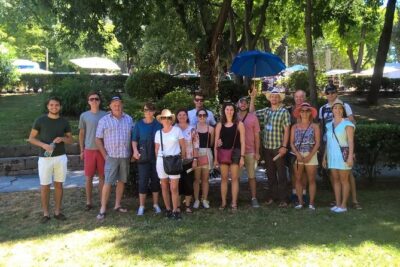
In practice, you’ll recognize Josipa because she’s holding a sign in yellow and blue that says Aspalathos Guided Tours. Summer traffic can be heavy, and they note a maximum wait time of 10 minutes—after that, the group departs and the guide won’t be reachable by phone during the walk.
If you like tours that start with orientation, this one does that job. You’re placed right where the historic core begins, so the rest of the walk feels like a sequence rather than random landmarks.
Walking into the palace story: Gregory, gates, and the first clues
The route quickly frames Split as a city of transitions. You begin with a spot that sets a tone beyond Roman archaeology: the Gregory of Nin Statue. Even if you only get a short stop there, it helps anchor the walk in Split’s later identity—because the city didn’t stop being itself after the Romans.
From there, the tour shifts into the palace entrance zone with stops that act like checkpoints in a bigger system.
Gregory of Nin Statue
This early pause is short, but useful. It’s your first “you’re in Split now” moment, and it positions you for the climb/approach toward the Golden Gates area.
A few more Split boat days and tours worth a second look




Golden Gate, Split
This is where the tour’s logic becomes clear: gates aren’t just pretty—they’re part of how power and movement worked. Josipa’s explanation helps you read the space before you even fully step into the palace.
Sv. Martin
This short stop keeps the walk from becoming one long Roman march. You get a quick look and story that supports the idea that Split kept layering new meaning onto older structure.
Bronze Gate, Split
Again, you’re looking at access points—how people moved in and out, and how the palace controlled flow. The value here is learning how to “see” gates as systems, not decorative features.
Diocletian’s Peristyle: where the details start doing the talking
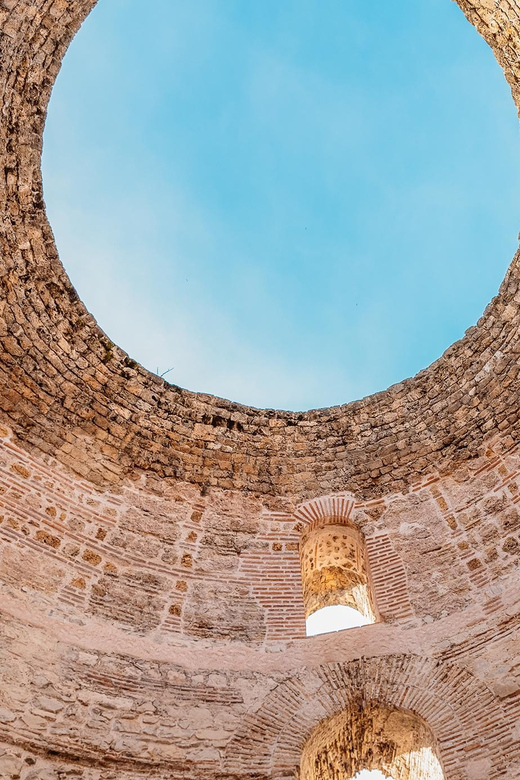
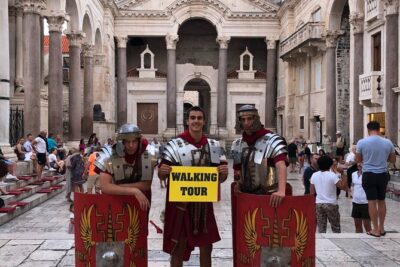
When you reach Peristil, the tour starts paying off in a way that’s hard to replicate on your own. The Peristyle is a key courtyard zone, and Josipa’s storytelling helps you understand how it functioned inside the original palace setup.
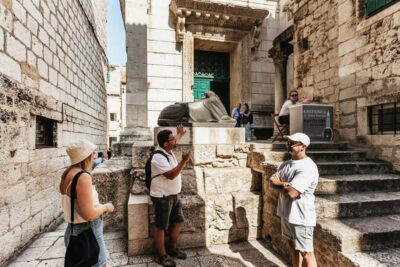
This is also where the tour’s promised “hidden in plain sight” moments become real. You’ll be guided to Egyptian sphinxes that many people walk past without noticing. The payoff isn’t just the surprise of seeing them—it’s the explanation of how these objects and motifs fit into the palace world.
If you’re the kind of person who likes noticing tiny things while everyone else is just taking photos, this is your best segment. The tour encourages you to look up, scan around, and connect what you see to what you’re hearing.
Silver Gate, Split
Right after Peristyle, the Silver Gate stop keeps the “palace as a living machine” theme going. You’re learning how different parts of the palace connect—so later stops inside the complex won’t feel random.
Jupiter’s Temple area and the Passage-learning trick
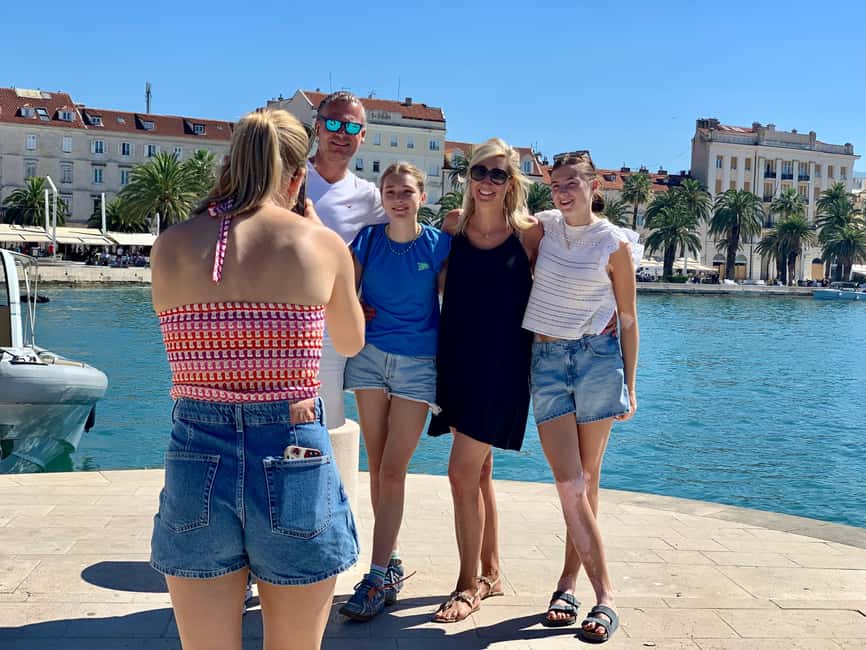
You’ll spend time around Jupiter’s Temple and related palace zones, but with an important twist: the tour does not enter paid sites such as the Temple of Jupiter, Cathedral, or the Substructures. That means you won’t do ticket lines or guided interior entry during this walk.
Instead, you get the stories and context, plus instructions on how to visit those significant sites later on your own. For many visitors, that’s actually good value. You’re getting the “why this matters” part first—so when you return with a ticket, the place feels less abstract.
Josipa’s commentary at these stops also helps you understand what ongoing excavations and new findings have been adding. The tour specifically notes you’ll hear about the latest insights from work happening on the grounds.
Street Let Me Pass
This is one of those small stops that works because it teaches observation. You’re shown how circulation in and around the palace wasn’t accidental. “Let me pass” sounds like a street detail, but the tour treats it like a clue to daily movement patterns.
Vestibul and Triklinij: learning the choreography of daily life
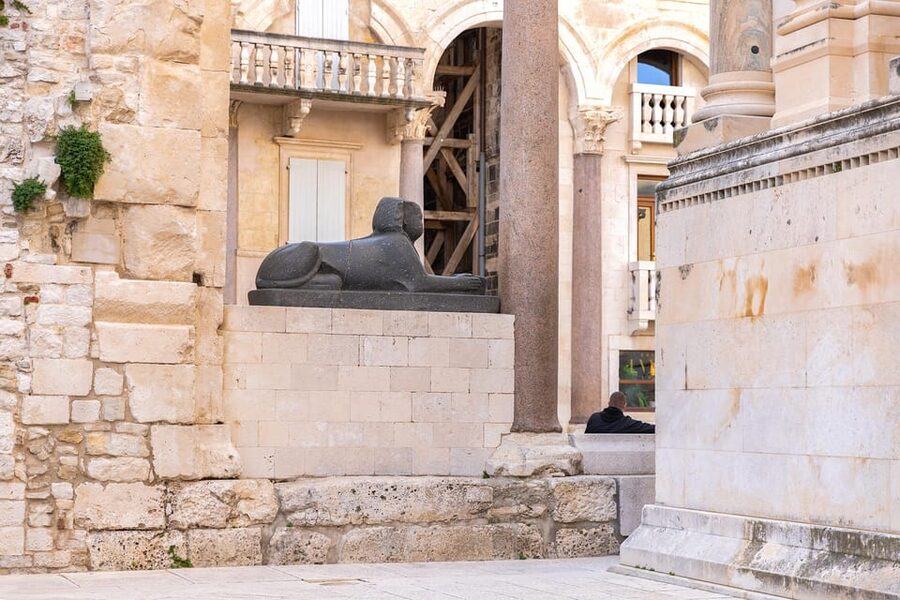
Two of the most interesting stops are Vestibul (with a photo stop) and Triklinij.
Vestibul (photo stop)
The photo stop matters, because this is where the architecture is doing more than looking old. Josipa uses the visuals to point out form and detail—so you know what to capture and what to pay attention to when you’re later looking at the same areas independently.
Triklinij
The Triklinij segment is short, but it fits the overall theme: palace life wasn’t just grand halls. It included spaces designed for routine social and ceremonial functions. Even if you’re not going inside paid areas, you’re learning what these rooms likely meant and why their design mattered.
Diocletian’s Cellars: story-first before ticket decisions
Then comes Diocletian’s Cellars. Even with the note that the tour doesn’t enter paid sites, this stop is still worthwhile because it gives you the framing you’ll want later.
Josipa walks you through the significance of the cellar spaces so you can understand what you’re seeing, even from outside/along your route. She also includes the kind of guidance that helps you choose when to return and what to prioritize.
If you like planning your self-guided time, this structure is smart:
- First, you understand the purpose and relationships between spaces.
- Then, you decide which paid interiors are worth your time later.
Riva waterfront: the Roman shell meets modern Split

After the palace core, the tour opens out to everyday life with the walk along Riva, Split. This is where Split stops being only ancient architecture and becomes a real waterfront city.
The value here isn’t that Riva is rare—it’s that your brain has been reset. After hearing how the palace organized life centuries ago, you notice how the shoreline and public spaces shape modern routines. You’ll be able to see the continuity without forcing it.
Riva also gives a natural “breather moment” after denser palace areas. If you’re scheduling dinner, this is the section where you’ll likely start mentally shifting from history mode to food and sunset planning.
Where to go next: model view, Fruit Square, and People’s Square
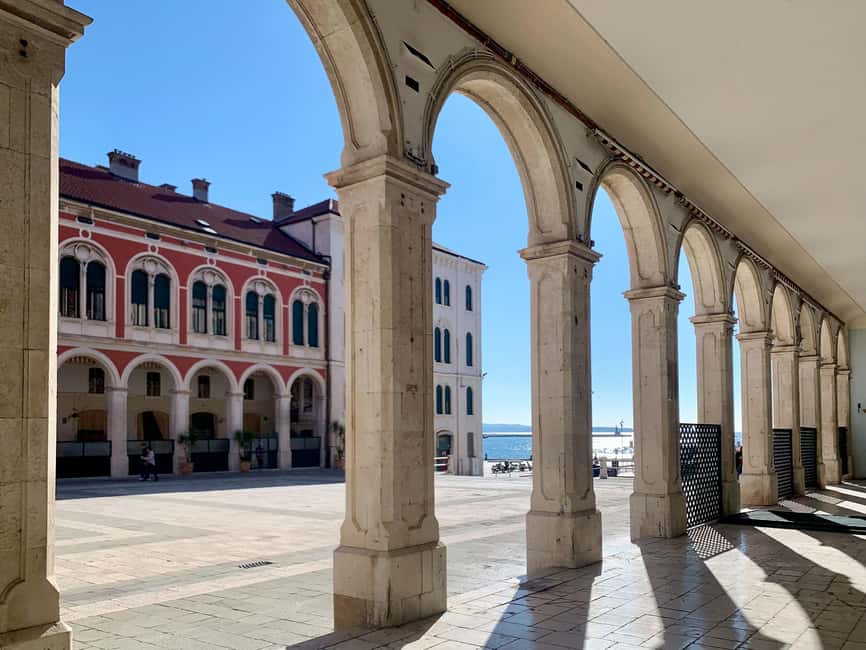
The closing part of the walk helps you transition from “what did I see?” to “how do I explore more?”
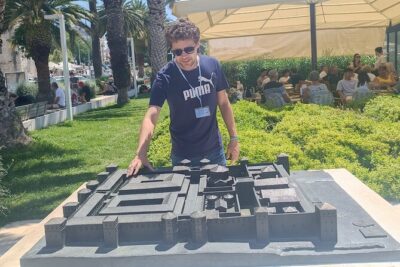
Model of the historical core of the city of Split
This stop is useful for understanding the layout. A model helps your mind stop treating the old city as disconnected photo stops and start seeing it as a connected area—useful for later walking plans.
Fruit Square, Split
This is your chance to step into a more local-feeling square. The tour treats it as more than a backdrop, using it to guide your sense of what kind of street life you’ll likely encounter as you continue exploring on your own.
People’s Square
The final square helps you land the visit with a sense of the city’s present-day rhythm. Josipa’s guidance here tends to be practical—how to keep exploring without overcomplicating your route.
What you get for $27 in 2 hours (and what you don’t)
At $27 per person for about 2 hours, you’re paying for a specific skill: turning stone and architecture into meaning. You’re also paying for the human part—Josipa’s ability to answer questions and adapt the pace with a small group.
This tour also makes a clear trade-off: it doesn’t enter paid interiors. That can be a drawback if you strongly prefer ticketed site immersion. But for many visitors, it’s a smart way to spend the first part of the day or early evening:
- You learn the storyline.
- Then you decide what’s worth paying to step inside.
The other big part of the value is the local advice. The tour description promises honest, Croatia-at-its-best recommendations, and the feedback highlights restaurant suggestions and viewpoint tips that help you extend the experience after the walk ends.
Who this walking tour suits best
This tour is a great fit if you want:
- A small-group walk with room for questions
- Art-history context tied to the actual buildings
- A route that covers the must-see highlights plus quieter details like the sphinxes
- Practical direction for the rest of your Split time, including what to do next around the city’s core
It’s not suitable if you need step-free access. The tour notes unavoidable steps and states it’s not appropriate for wheelchair users or people with mobility impairments. It also says it’s not suitable for hearing-impaired people.
If you’re an art-history fan, a “look closely” type traveler, or someone who wants their first Split orientation done by a real local specialist, you’ll likely get a lot out of this.
Should you book Split Walking Tour with Josipa?
Book it if you want your Split visit to feel guided by more than facts. Josipa’s art-historian framing helps you read Diocletian’s Palace with better understanding, and you’ll appreciate the extra attention to details like the Egyptian sphinxes and the gate-to-courtyard logic of the complex.
Skip it or pair it with ticket planning if you know you want to spend most of your time inside paid sites during the tour. Since this walk doesn’t include interior entry to places like the Cathedral or Temple of Jupiter, you’ll need to plan those separately.
If you’re comfortable with a walking route that includes steps and you want the kind of tour that leaves you knowing what to do next, this is a strong choice for the money.
FAQ
How long is the Split walking tour?
The tour lasts about 2 hours.
What does the tour cost?
It costs $27 per person.
Who is the guide for this experience?
The licensed local guide is Josipa, the owner of Aspalathos Guided Tours.
Where exactly do I meet the tour?
Meet around Strossmayerova Fountain in Strossmayer Park (Djardin). It’s just above the Golden Gates and near the Gregory of Nin Statue. The guide will be holding a yellow and blue Aspalathos Guided Tours sign.
Is the tour conducted in English?
Yes, the live guide speaks English.
Does the tour enter paid sites?
No. The tour does not enter paid sites (like the Substructures, Cathedral, or the Temple of Jupiter). It passes them and includes stories plus suggestions on how to visit later.
What kind of weather does the tour run in?
It runs rain or shine.
Is the tour suitable for wheelchair users or people with mobility impairments?
No. It notes that it is not suitable for people with mobility impairments and wheelchair users.
Is the tour suitable for people with hearing impairments?
No, it states it is not suitable for hearing-impaired people.
Can I cancel for a refund, and is there a pay-later option?
You can cancel up to 24 hours in advance for a full refund. You can also reserve now and pay later.
More Tours in Split
- From Split: Krka Waterfalls, Food & Wine Tasting Tour
★ 5.0 · 9,326 reviews - Blue cave, Mamma Mia and Hvar, 5 islands speedboat tour
★ 5.0 · 7,150 reviews - From Split: Krka Waterfalls, Food & Wine Tasting Tour
★ 4.9 · 6,598 reviews - Split/Trogir: Blue Cave, Mamma Mia, Hvar and 5 Island Tour
★ 4.6 · 6,320 reviews - Blue Cave and Hvar Tour – 5 Islands Tour from Split and Trogir
★ 5.0 · 4,815 reviews
More Tour Reviews in Split
- Split: Krka Waterfalls Trip with Boat Cruise and Swimming
★ 4.8 · 10,519 reviews - From Split: Krka Waterfalls, Food & Wine Tasting Tour
★ 5.0 · 9,326 reviews - Blue cave, Mamma Mia and Hvar, 5 islands speedboat tour
★ 5.0 · 7,150 reviews - From Split: Krka Waterfalls, Food & Wine Tasting Tour
★ 4.9 · 6,598 reviews - Split/Trogir: Blue Cave, Mamma Mia, Hvar and 5 Island Tour
★ 4.6 · 6,320 reviews
Walk Split a Different Way
- Split: Old Town and Diocletian Palace Walking Tour
★ 4.9 · 4,727 reviews - Walking Tour of Split and Diocletian’s Palace
★ 5.0 · 2,588 reviews - Krka Waterfalls tour with Trogir Walking tour and Krka panoramic boat cruise
★ 5.0 · 1,659 reviews - Split & Diocletian’s Palace Walking Tour
★ 5.0 · 1,125 reviews - Walking Tour of Split with a ‘Magister’ of History
★ 5.0 · 1,122 reviews
Still deciding? More Split trips we have been out and reviewed


Split Old Town Walking Tours, compared.
 ★ 4.9Old Town and Diocletian Palace Walking TourFrom $174,727 reviews
 ★ 5.0Walking Tour of Split and Diocletian’s PalaceFrom $482,588 reviews
 ★ 5.0Krka Waterfalls tour with Trogir Walking tour and Krka panoramic boat cruiseFrom $481,659 reviews
 ★ 5.0Split & Diocletian’s Palace Walking TourFrom $211,125 reviews
 ★ 5.0Walking Tour of Split with a ‘Magister’ of HistoryFrom $341,122 reviews
 ★ 5.0Split Walking Tour with Professor of HistoryFrom $24926 reviews
 ★ 4.7Diocletian Palace & Old Town Guided Walking TourFrom $17882 reviews
 ★ 4.7Krka Waterfalls Cruise & Trogir Walking TourFrom $47681 reviews
Browse the lists this tour appears in