
Reviewed · SPLIT OLD TOWN WALKING TOURS
Split History Walking Tour – Rome away from Rome (small group)
Ancient Split fits in ninety minutes. This Split History Walking Tour links the big-name ruins of Diocletian’s Palace with the everyday public squares you’ll still recognize today, all explained in plain English.
I like the small group size and the steady pace that keeps the story clear as you move site to site. I also like the UNESCO angle, especially the live-feeling connection between the Vestibulum acoustics and Dalmatian klapa singing. One possible drawback: you may need to pay extra if you want to see the interior of a specific monument stop.
In This Review
- Key Highlights You Should Know
- Why This Walk Starts at Riva Harbor
- Diocletian’s Cellars: Vaulted Late Antiquity, Up Close
- The Peristyle Square: Emperor Worship to City Streets
- A Robert Adam–Approved Monument and the Choice to Pay Extra
- The Vestibulum: Acoustics, Architecture, and UNESCO-Linked Klapa
- Triklinij: The Emperor’s Dining Room and Carpe Diem
- Golden Gate: Palace Defense, an Old Chapel, and the Difficulty of Entering
- Grgur Ninski Statue: A Photo Moment with a Legend
- Narodni Trg and Fruit Square: Split’s City Squares Outside the Palace
- Price and Value: What You Get for $24.03
- Pace, Language, and the Local-Guy Advantage
- Who This Tour Is Best For (and Who Might Skip It)
- Should You Book This Split History Walking Tour?
- FAQ
- How long is the Split History Walking Tour?
- What is the price per person?
- Is the tour offered in English?
- How big is the group?
- Where does the tour start and end?
- Is there an admission fee to see the main sights?
- Do I need a printout ticket?
- Can I cancel if my plans change?
Key Highlights You Should Know
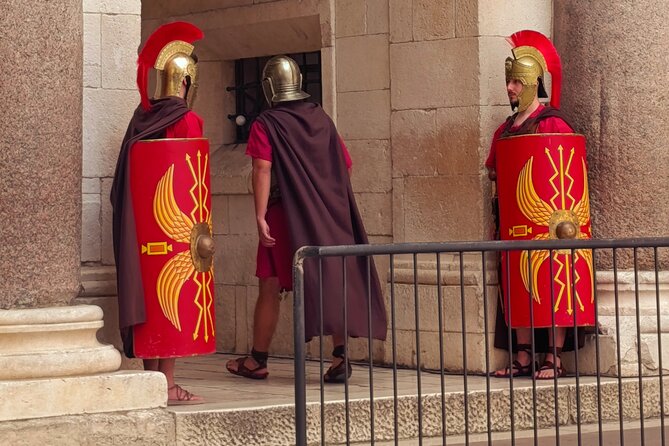
- 90 minutes, focused route: You hit the palace core plus two major squares without feeling like you’re wandering all day.
- Best-preserved vaulted cellars: Expect a strong “how this place was built” explanation early on.
- Peristyle + main streets in context: You’ll learn how Cardo and Decumanus changed shape across centuries.
- Vestibulum acoustics and klapa: You get the why behind the legendary sound that still attracts a cappella groups.
- Golden Gate and defensive logic: The gate isn’t just pretty—it’s about how hard it was to get inside.
- Fruit Square and Venetian-Ottoman pressure: Baroque architecture comes with real-world political stakes.
Prefer to walk it? More guided strolls through Split
- Split: Old Town and Diocletian Palace Walking Tour★ 4.9 · 4,727 reviews
- Walking Tour of Split and Diocletian’s Palace★ 5.0 · 2,588 reviews
- Krka Waterfalls tour with Trogir Walking tour and Krka panoramic boat cruise★ 5.0 · 1,659 reviews
- Split & Diocletian’s Palace Walking Tour★ 5.0 · 1,125 reviews
Why This Walk Starts at Riva Harbor
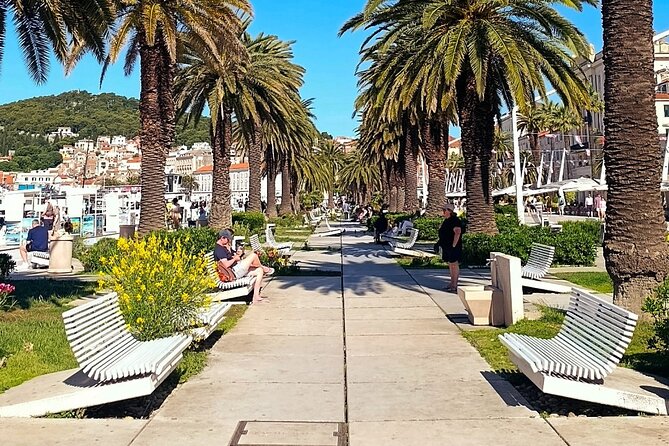
Split’s Riva Harbor sets the tone fast. You’re looking at the promenade where daily life happens, but your guide frames it as the waterfront of a palace—so you start seeing the city as layers, not just ruins.
This is where I’d watch for two things: your footing around the waterfront area and the guide’s “translation” from palace power to local routine. The tour doesn’t treat history like a museum label; it treats it like the reason Split looks and works the way it does.
With a maximum of 10 travelers, you can ask questions without waiting forever. That matters in a compact 1.5-hour format.
Diocletian’s Cellars: Vaulted Late Antiquity, Up Close
The tour quickly moves into Diocletian Palace substructures—specifically the Palace’s cellars, known for being among the best preserved vaulted complexes from late antiquity. This stop is short, but it’s doing heavy lifting for the whole tour.
Here’s what I think makes this stop valuable: you’re not only seeing stone. You’re seeing engineering. The vaulted design explains how large-scale spaces were supported, organized, and kept functional long after the original purpose changed.
If you like history that’s tied to real construction choices—arches, vaults, and pressure-bearing shapes—this is one of the strongest early moments. And since the admission is listed as free for the stop, you don’t have to decide on the spot whether it’s worth paying for.
The Peristyle Square: Emperor Worship to City Streets
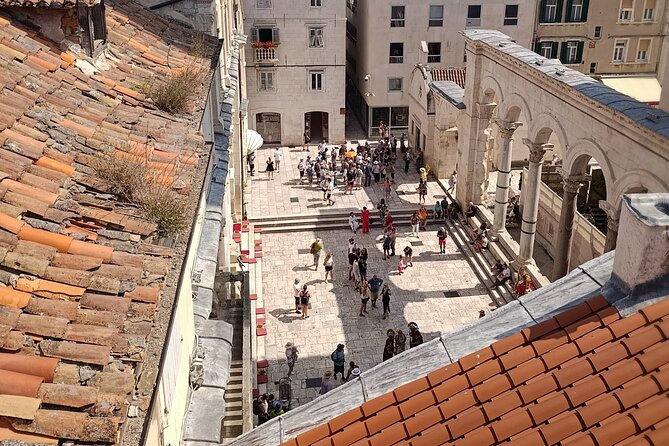
Next comes the Peristyle of Diocletian’s Palace, a square that feels like time travel in open air. Columns surround you, and your guide connects what you’re seeing to the idea of adoration of an emperor—then explains how that ceremony-shaped space eventually became part of everyday city movement.
You’ll also get the “street logic” lesson: Cardo and Decumanus—the two main streets—were transformed through centuries by different architectural styles. It’s a simple idea, but it helps you read Split’s layout when you step away from the group.
This is a good point in the tour to slow down. Even with a tight schedule, Peristyle is the place where details jump out: the rhythm of columns, the square proportions, and the feeling that people have used this exact kind of public space for a long, long time.
A Robert Adam–Approved Monument and the Choice to Pay Extra
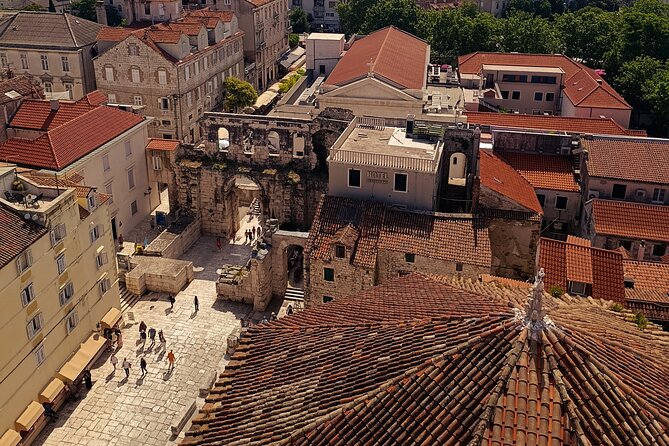
Just a few steps away, there’s a smaller, more tucked-in antiquity piece between houses. This is the sort of stop that makes you think: Split isn’t just one big sight—it’s a bunch of carefully placed corners.
What makes it memorable is the reference to British architect Robert Adam, who visited in the 18th century and included it among the most beautiful monuments in Europe. That kind of outsider endorsement doesn’t replace local meaning, but it gives you a helpful frame: this is art and architecture, not only archaeology.
There’s also a practical consideration. Visit to the interior is available for an additional fee. If you want to go inside, plan for extra cost and a little patience. If you’re happy with exterior interpretation, you can stay fully on the free stops and keep moving with the group.
A few more Split boat days and tours worth a second look


The Vestibulum: Acoustics, Architecture, and UNESCO-Linked Klapa
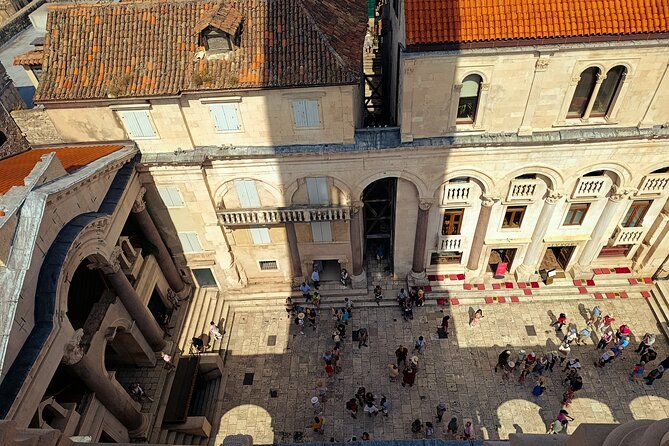
The Vestibulum of Diocletian’s Palace is one of those places where the building tells you how it was meant to be experienced. It’s circular, has an open ceiling, and the description focuses on both look and acoustics.
The reason this matters today: because the acoustics are great, it’s frequently used by klapa singing groups. Klapa is Dalmatian a cappella, and your guide ties it into the UNESCO protection of this musical tradition.
I like this stop because it connects “ancient space” with something living. You’re not just learning what an emperor might have heard in a different era. You’re learning why a centuries-old shape still supports human sound.
If you’re musical (or even just curious), this is a smart moment to pay attention. Close your eyes for a second if the group pauses—it helps you understand what people mean when they say the acoustics are special.
Triklinij: The Emperor’s Dining Room and Carpe Diem
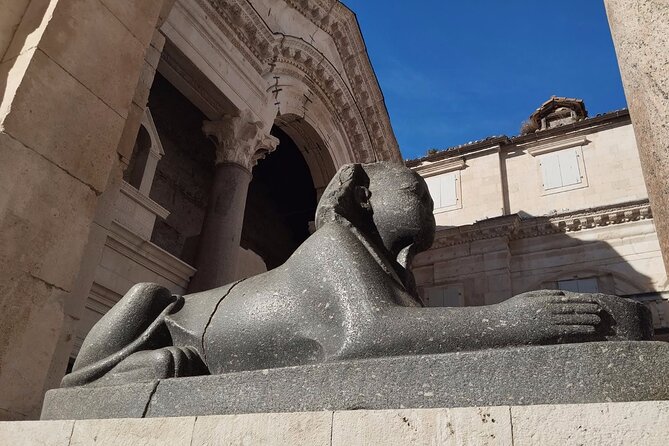
Then you step into what’s left of the emperor’s dining room: the Triklinij. Your guide explains Roman-style dining and how what happened here linked to ideas and behaviors people still quote today—like carpe diem.
This stop is also where the tour uses details to keep the story human. You’re shown not only the room but the “how” of daily life in Roman terms: what they ate and why they visited vomitorium so frequently.
If you’re the type who loves explanations that connect to language, this will be satisfying. It’s not just Latin word trivia—it’s meaning tied to routine and celebration.
Since admission is listed as free here, it’s an efficient stop. You’re getting content without an extra charge.
Golden Gate: Palace Defense, an Old Chapel, and the Difficulty of Entering
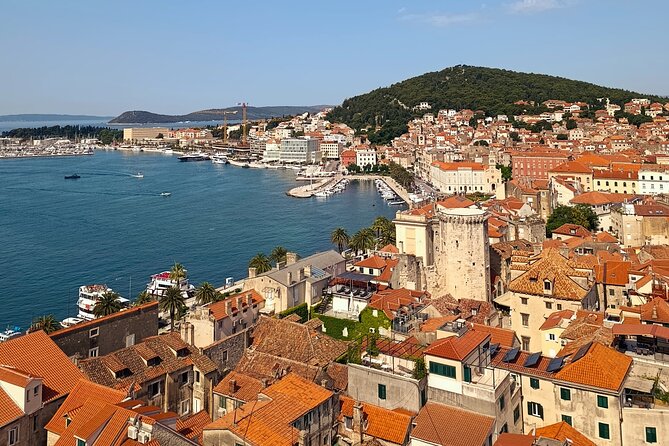
The Golden Gate is where the tour shifts from palace life to palace protection. You’ll see how it wasn’t so easy to enter a palace built as a military camp.
Your guide also points out the best preserved wall of the palace and identifies where the oldest chapel in Split is hidden. That’s a helpful detail because it changes the way you see the gate: it’s not only a passage—it’s a boundary between inside power and outside pressure.
This is a great stop if you like “defensive logic” in architecture. Gates weren’t built for dramatic photos alone. They were built to control movement, limit danger, and slow down anyone trying to enter.
And because this stop is short, it works well in a 90-minute tour. You get the key idea without spending an hour on a single monument.
Grgur Ninski Statue: A Photo Moment with a Legend
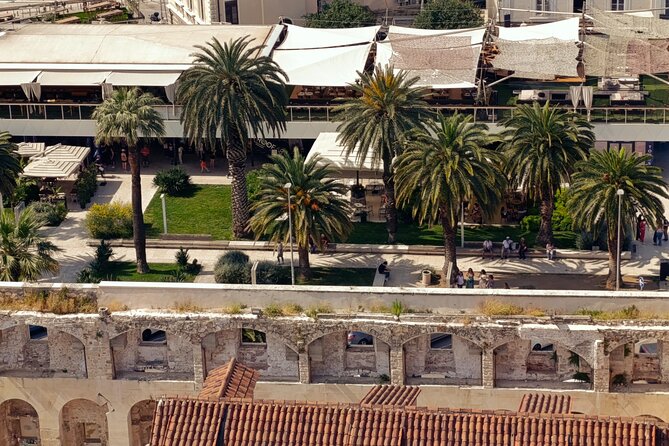
The Grgur Ninski statue is both a landmark and a ritual. Yes, it’s a popular photo stop—but it also comes with a story: touching the golden toe is said to make your wish come true.
If you’re traveling with kids or you just like fun traditions, this is where the tour becomes lighter. It’s not all uniforms and columns; you get a local custom that still gets repeated.
The statue is also by Ivan Meštrović, and your guide helps connect the artwork to its creator. Even if you don’t know much about sculpture, you’ll understand why people stop here.
This is the shortest stop on the route, so it’s easy to fit into your day even if you’re tired. It’s also a good reset after the more architectural stops.
Narodni Trg and Fruit Square: Split’s City Squares Outside the Palace
From there the tour moves into the city’s public spaces, where history is written in architecture, renaming, and political pressure.
At Narodni Trg, you’re in Split’s main square of the old town—one that changed its name several times through history. The point here isn’t just to list names. It’s to show how power shifts, and the center of daily life shifts with it.
Then comes Fruit’s Square (Trg Brace Radic). This stop is all about baroque style architecture and stories of the Venetian Republic defending Split against the Ottoman Empire. You also hear how Marko Marulić, often described as the father of Croatian literature, is tied to the place.
I like how this ending stretches your understanding. The palace is spectacular, but squares are where you actually live while you’re on vacation. By the end, you should feel like you can walk these areas on your own and recognize what’s going on.
The tour ends at Radić Brothers Square (Fruit Square), and it’s a good location to transition into gelato, coffee, or an easy wander.
Price and Value: What You Get for $24.03
At $24.03 per person for about 1 hour 30 minutes, this tour is priced like a practical city walk rather than a long, museum-style experience. That’s good news if you’re short on time and you want structure.
You also get clear value in two ways:
- The route is centered on Diocletian Palace, a UNESCO World Heritage site.
- The stops are marked as admission ticket free (with the note that one interior option can cost extra).
Small group size also makes the price feel more fair. With a maximum of 10 travelers, you don’t get that “everyone talks, no one hears the guide” problem.
One more thing: the tour is offered in English and uses a mobile ticket. That saves you effort when you’re trying to move quickly through the old town.
Booking tends to happen about 22 days in advance on average, which is a quiet hint that this is a popular way to handle Split when you only have a day or two.
Pace, Language, and the Local-Guy Advantage
Because this is led by a professional, licensed local guide who lives in Split, you don’t just get dates—you get the way Spliters think about the places. That local touch shows up most clearly in how the guide connects monuments to living culture.
One guide highlighted in the available feedback is Anita, described as friendly, very knowledgeable, and with excellent English. People also mention the pace as a real strength—slow enough to understand, quick enough to keep the route enjoyable.
Even if your guide isn’t Anita, the format stays the same: clear explanations, a small-group feel, and a route built around the palace core plus the squares that keep the city moving.
If you’re the type who learns better with conversation, a walking tour like this usually clicks. If you want audio-only ruins viewing, you might feel that you’re paying for interpretation you don’t need.
Who This Tour Is Best For (and Who Might Skip It)
This tour suits you if:
- you want a high-impact Split introduction in a short time
- you like Roman and late-antique architecture explained in plain terms
- you want to understand why UNESCO-protected klapa singing still matters in certain spaces
- you prefer small-group walking over big tours
You might skip or pair it with something else if:
- you plan to spend hours inside multiple buildings and prefer a longer route
- you’re only interested in interiors, since at least one stop’s interior costs extra
- you want a totally self-guided day with no guidance at all
Should You Book This Split History Walking Tour?
I’d book it if you want a smart first look at Split’s biggest story: how Diocletian’s Palace shaped a city that still functions around those stones. The mix of palace architecture, city squares, and the klapa acoustics angle gives you more than the usual “stand and read” approach.
Also, the practical length—about 1.5 hours—works really well when you’re juggling ferry times, dinner plans, or just want to avoid spending your whole day walking with no plan.
If you’re already comfortable reading ruins on your own, you might not need a guide for every stop. But if you want your visit to feel like it clicks into place, this is a solid, efficient choice.
FAQ
How long is the Split History Walking Tour?
The tour lasts about 1 hour 30 minutes.
What is the price per person?
The price is $24.03 per person.
Is the tour offered in English?
Yes, the tour is offered in English.
How big is the group?
This experience has a maximum of 10 travelers.
Where does the tour start and end?
It starts at Split sign, 21000 Grad, Split, Croatia, and ends at Gelateria Voćni trg / Trg Braće Radić, 21000, Split, Croatia (Radić Brothers Square / Fruit Square).
Is there an admission fee to see the main sights?
The stops listed are marked as admission ticket free. One monument stop notes that visiting the interior is available for an additional fee.
Do I need a printout ticket?
No. The tour uses a mobile ticket.
Can I cancel if my plans change?
Free cancellation is available. You can cancel up to 24 hours in advance for a full refund.
More Tours in Split
- From Split: Krka Waterfalls, Food & Wine Tasting Tour
★ 5.0 · 9,326 reviews - Blue cave, Mamma Mia and Hvar, 5 islands speedboat tour
★ 5.0 · 7,150 reviews - From Split: Krka Waterfalls, Food & Wine Tasting Tour
★ 4.9 · 6,598 reviews - Split/Trogir: Blue Cave, Mamma Mia, Hvar and 5 Island Tour
★ 4.6 · 6,320 reviews - Blue Cave and Hvar Tour – 5 Islands Tour from Split and Trogir
★ 5.0 · 4,815 reviews
More Tour Reviews in Split
- Split: Krka Waterfalls Trip with Boat Cruise and Swimming
★ 4.8 · 10,519 reviews - From Split: Krka Waterfalls, Food & Wine Tasting Tour
★ 5.0 · 9,326 reviews - Blue cave, Mamma Mia and Hvar, 5 islands speedboat tour
★ 5.0 · 7,150 reviews - From Split: Krka Waterfalls, Food & Wine Tasting Tour
★ 4.9 · 6,598 reviews - Split/Trogir: Blue Cave, Mamma Mia, Hvar and 5 Island Tour
★ 4.6 · 6,320 reviews
Walk Split a Different Way
- Split: Old Town and Diocletian Palace Walking Tour
★ 4.9 · 4,727 reviews - Walking Tour of Split and Diocletian’s Palace
★ 5.0 · 2,588 reviews - Krka Waterfalls tour with Trogir Walking tour and Krka panoramic boat cruise
★ 5.0 · 1,659 reviews - Split & Diocletian’s Palace Walking Tour
★ 5.0 · 1,125 reviews - Walking Tour of Split with a ‘Magister’ of History
★ 5.0 · 1,122 reviews
Still deciding? More Split trips we have been out and reviewed

Split Old Town Walking Tours, compared.
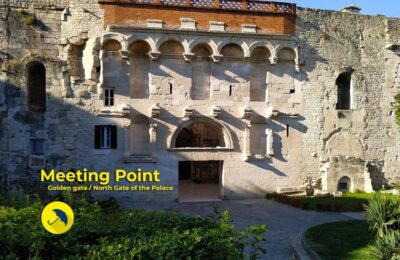 ★ 4.9Old Town and Diocletian Palace Walking TourFrom $174,727 reviews
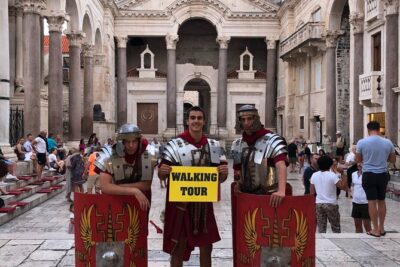 ★ 5.0Walking Tour of Split and Diocletian’s PalaceFrom $482,588 reviews
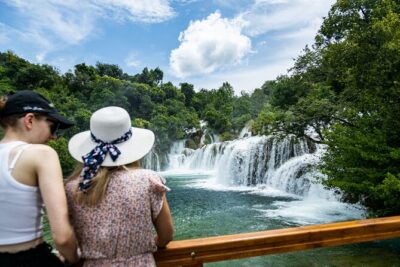 ★ 5.0Krka Waterfalls tour with Trogir Walking tour and Krka panoramic boat cruiseFrom $481,659 reviews
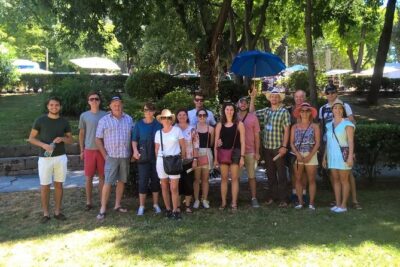 ★ 5.0Split & Diocletian’s Palace Walking TourFrom $211,125 reviews
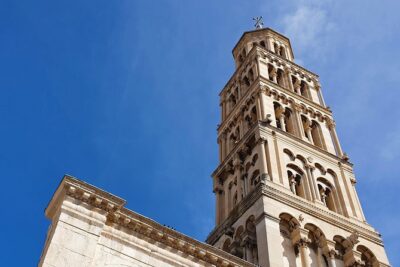 ★ 5.0Walking Tour of Split with a ‘Magister’ of HistoryFrom $341,122 reviews
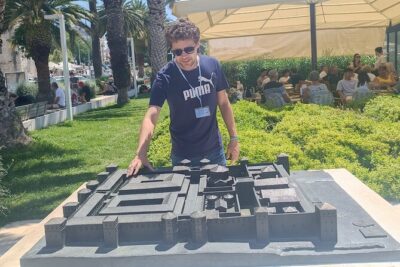 ★ 5.0Split Walking Tour with Professor of HistoryFrom $24926 reviews
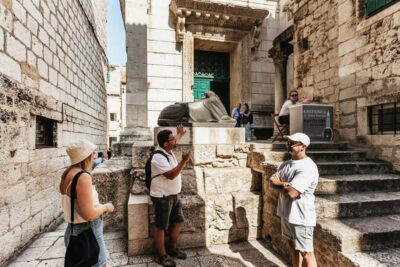 ★ 4.7Diocletian Palace & Old Town Guided Walking TourFrom $17882 reviews
 ★ 4.7Krka Waterfalls Cruise & Trogir Walking TourFrom $47681 reviews
Browse the lists this tour appears in