
Reviewed · SPLIT OLD TOWN WALKING TOURS
Split highlights – Evening walking tour
Split looks different after dark. This evening walk through Diocletian’s Palace and the waterfront costs about $39.74 and runs roughly 1.5 to 2 hours, guided by a licensed English local. I love how the stops mix big monuments with real street corners where Split happens. I also love that the group stays small, so you actually hear the story. The main catch is that the palace area can feel busy in the evening, so you’ll want to keep moving.
I also like that the tour is timed well if you’re new in town. It gives you a fast sense of direction by stringing together Golden Gate, the central squares, and the Riva promenade, ending with a view from the Marjan side. If you’re jet-lagged, this is the kind of plan that gets you outside without demanding all-day stamina.
One practical note: the Cathedral of Saint Domnius is a free stop for seeing, but admission isn’t included for that building, so you may need to pay there separately.
In This Review
- Key points that make this evening tour worth it
- Price and timing: the value in 1.5–2 hours
- Meeting point at Golden Gate and where you end up
- Golden Gate: where Diocletian’s story begins
- Peristyle: the palace’s center and that 3,500-year-old sphinx
- Cathedral of Saint Domnius and the bell tower you should notice
- Vestibulum: the emperor’s chambers and a musical hint
- Pjaca: the city’s living room and the football talk
- Prokurative (Republic Square): modelled after St. Mark’s views
- The Riva promenade: Split’s main stage after dark
- Marjan viewpoint finish: your reward for a good route
- Guides: the difference between seeing places and understanding them
- Small logistics that keep the evening smooth
- Who should book this evening walking tour
- Should you book this tour?
- FAQ
- How long is the Split evening walking tour?
- What time does the tour start?
- Where do we meet the guide?
- Where does the tour end?
- Is the tour offered in English?
- Is the ticket mobile?
- Are admissions included for all stops?
- How large is the group?
- What happens if the weather is bad or I cancel?
Key points that make this evening tour worth it
- Small group size (max 8) means more back-and-forth and less standing around
- Diocletian’s Palace at night brings a calmer, moodier feel than daytime crowds
- Free access at most stops keeps the cost predictable
- Local guide stories bring landmarks to life, with names like Bosko Papic, Pavle, and Luka showing up in the guide roster
- A finish with a wide view helps you map Split in your head fast
Prefer to walk it? More guided strolls through Split
- Split: Old Town and Diocletian Palace Walking Tour★ 4.9 · 4,727 reviews
- Walking Tour of Split and Diocletian’s Palace★ 5.0 · 2,588 reviews
- Krka Waterfalls tour with Trogir Walking tour and Krka panoramic boat cruise★ 5.0 · 1,659 reviews
- Split & Diocletian’s Palace Walking Tour★ 5.0 · 1,125 reviews
Price and timing: the value in 1.5–2 hours
For $39.74, you’re paying for a licensed local guide, a simple route you can follow without getting lost, and a curated set of sights that are especially good after the sun goes down. The duration matters here. At 1 hour 30 minutes to about 2 hours, you get meaningful time in the palace core and waterfront without turning your evening into an all-day marathon.
The tour starts at 7:00 pm, which is ideal for night-lighting and evening energy. Expect a walking pace that keeps you moving from stop to stop. You’ll be on your feet enough to want comfortable shoes, especially if you’re ending at a viewpoint.
Meeting point at Golden Gate and where you end up
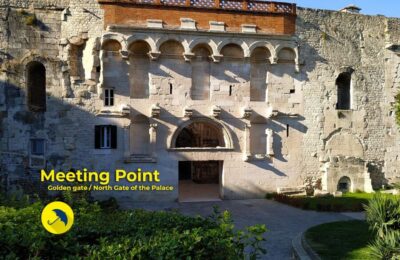
You meet at Golden Gate, Dioklecijanova 7. The start is right in the palace area, so you don’t have to fight your way into the old town first.
The walk ends at Vodoskok, at Trg Franje Tuđmana, in front of the fountain at the beginning of the Riva promenade. That’s a helpful finish point because it drops you right onto Split’s main public walkway, where you can keep wandering, grab food, or simply decompress by the water.
The tour also uses a mobile ticket, so you’re not juggling paper. And since it’s near public transportation, you can usually line it up smoothly with the rest of your day.
Golden Gate: where Diocletian’s story begins
The tour kicks off at the Golden Gate, the kind of entrance you can’t help but notice. The emperor entered the main palace gates for the first time when he retired and never looked back. That idea sets the tone: you’re not just looking at an old door. You’re stepping into a decision that shaped everything around it.
There’s also a small detail that’s easy to miss if you’re rushing: the statue of Croatian bishop Grgur, positioned overlooking the gates, is said to offer good luck to passengers. You’ll get a quick moment to look, not just pass by, and that’s a big reason I like starting here—your brain clicks into the palace story immediately.
Admission for this stop is free, so you’re not paying to get oriented at the beginning.
Peristyle: the palace’s center and that 3,500-year-old sphinx
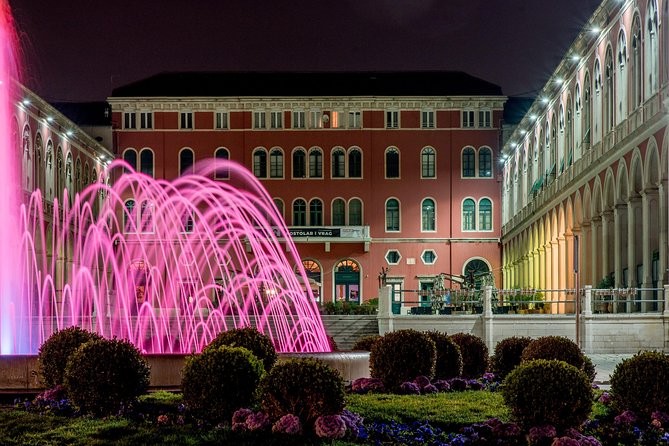
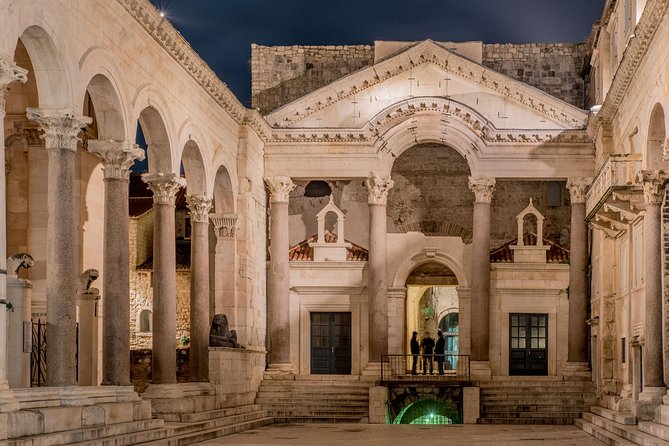
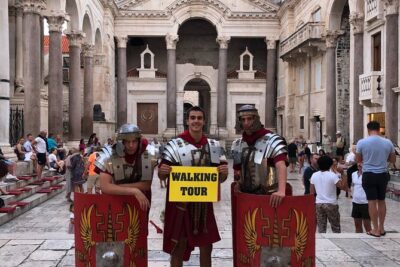
Next comes the Peristyle of Diocletian’s Palace. This square is described as the geographical and spiritual center of the palace, and it shows. Even if you don’t know every term, you can feel why this spot would matter. It’s open, monumental, and designed to create a sense of presence.
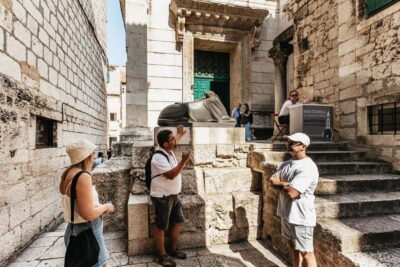
One standout detail is the sphinx: it’s guarded by a 3500-year-old sphinx. It’s the kind of landmark your guide can point out in a way that makes you look twice, because it’s easy to assume you’ve seen everything already. This is one of those moments where a guide’s directions turn a quick photo into a real memory.
Admission is free here too, which makes this a great place to pause and let the night atmosphere settle in.
A few more Split boat days and tours worth a second look


Cathedral of Saint Domnius and the bell tower you should notice
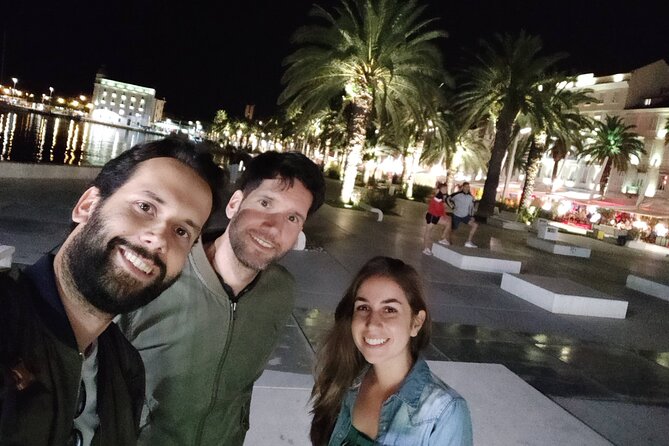
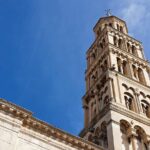
You then move to the Cathedral of Saint Domnius. This building has a strong past: it was once the mausoleum of Roman Emperor Diocletian. It’s also described as the oldest building in the world where a cathedral is situated, and that alone is a reason to slow down for a moment.
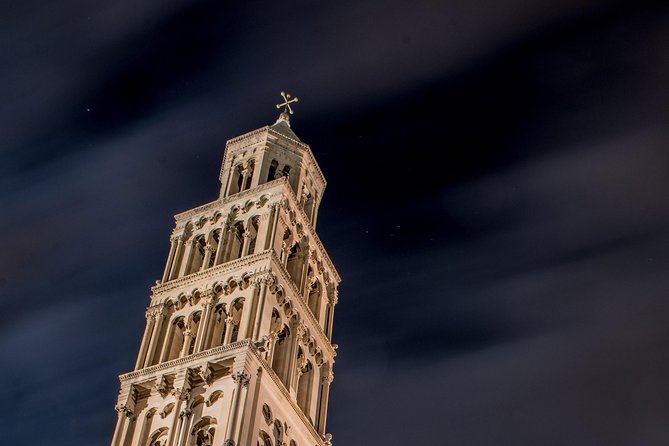
In front of it stands a Romanesque bell tower. Even if you’re not a architecture superfan, this is an easy one to appreciate because you can compare styles just by looking.
Here’s the one cost-related watch-out: the tour notes that admission for this stop isn’t included. So while the walking portion works smoothly, your total evening cost may rise slightly if you decide to go in.
Vestibulum: the emperor’s chambers and a musical hint
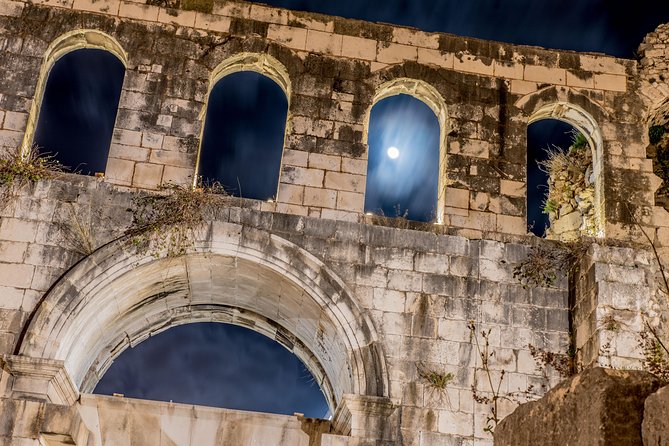
The route continues through the Vestibulum of Diocletian’s Palace, a striking round hallway that acts like a transition into the emperor’s chambers. The best part of this segment is the sound. You can hear local klapa singing in this area.
Even if you don’t catch a perfect song at the exact moment, you’ll get the idea: this is where the guide helps you connect ancient spaces with present-day life. That’s one reason night tours can feel more human. You’re listening, not just reading plaques.
Admission at this stop is free, so you can focus on the sensory details without worrying about another ticket.
Pjaca: the city’s living room and the football talk
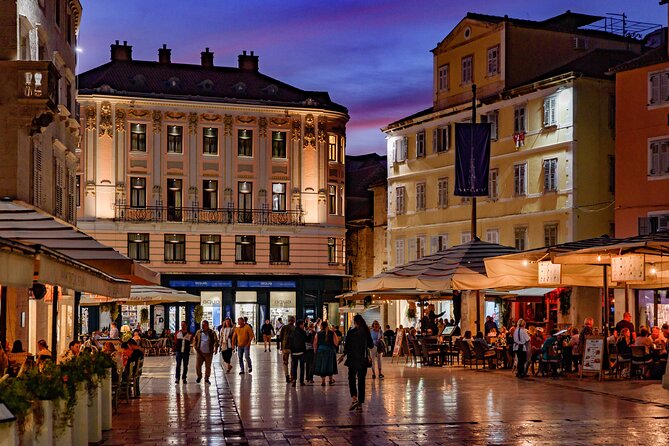
Pjaca is described as the central stage of city life. This is where locals rest, meet, see and be seen—and yes, where football conversations show up.
That might sound like a small detail, but I like it because it tells you what the tour is really doing. You’re not only learning how Split was built for emperors. You’re also seeing how it functions for everyday people now.
This stop is free, and it’s also a good reset point after the denser palace areas. You’ll have a chance to look outward at the rhythm of the square rather than craning your neck at stone.
Prokurative (Republic Square): modelled after St. Mark’s views
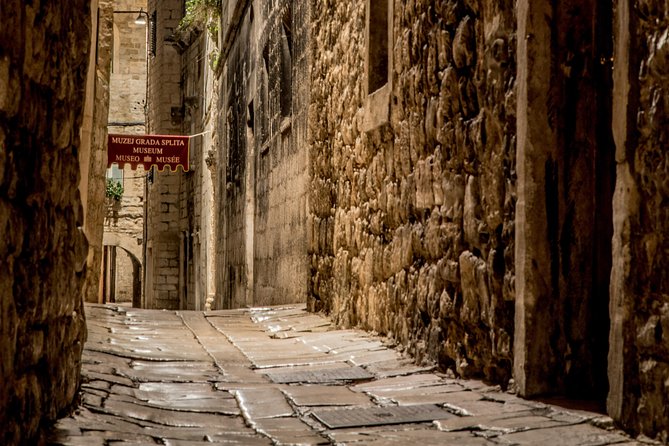
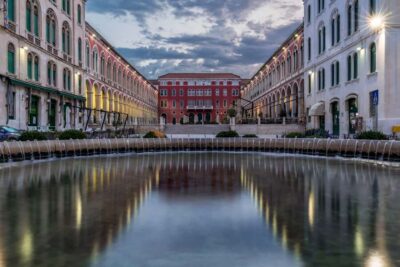
After Pjaca, you reach Prokurative, officially called Republic Square. The description compares it to Venice’s St. Mark’s Square, which gives you a helpful mental reference before you even turn the corner.
What I find practical about this stop is the viewpoint setup. The square is open on the south side, so you get a nice look toward the harbor and the Riva. In other words, this isn’t just architecture spotting. It helps you understand where the water sits in relation to the old town.
Admission is free, and the timing fits well with an evening walk—this is when many people start looking for their next photo angle.
The Riva promenade: Split’s main stage after dark
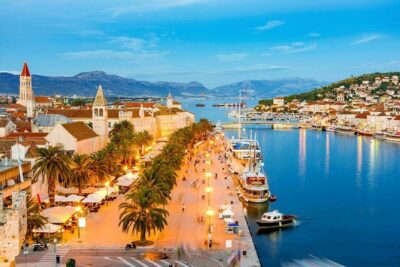
Then you hit the Riva Harbor and promenade, Split’s living room. The tour frames it as the city’s most popular public place and a venue for everyday theatre and legendary events.
Even without any grand backstory, Riva works at night because it’s simply active. You get movement, lights reflecting on water, and a steady hum that makes you feel part of the city rather than stuck watching it.
This is also a good spot to pace yourself. If you want a drink or a snack before the final viewpoint, this is where it makes sense to do it—though the tour ends later, so plan around your energy.
Admission is listed as free at this stop as well.
Marjan viewpoint finish: your reward for a good route
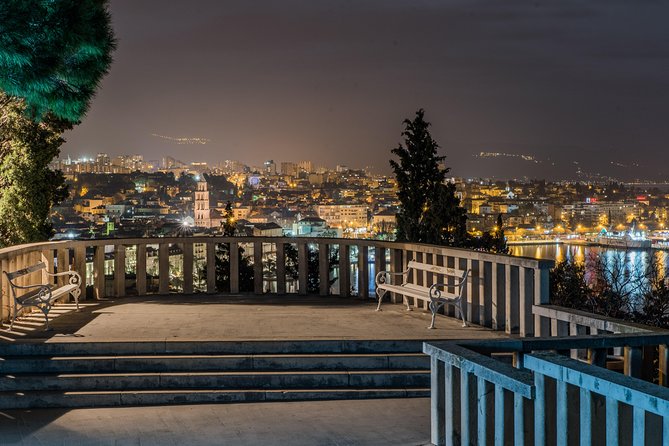
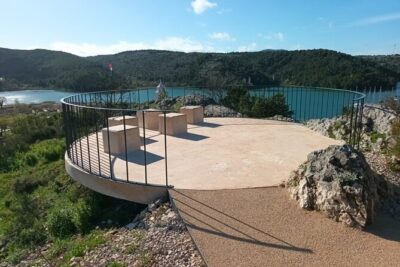
The tour ends with Prva Vidilica Na Marjanu, a terrace built for views. It’s described as the perfect way to end, with an outlook where the whole of Split feels at your palm.
The timing matters: it’s about 15 minutes on foot from the old town. That means you don’t finish with a dramatic long hike. It’s more like a final “reset your brain” walk—step up, look out, and suddenly the streets you walked through make more sense.
Admission is free here, so the payoff is only time and a bit of leg work.
Guides: the difference between seeing places and understanding them
What really lifts this tour is the guide. The tour is built to be understandable and story-driven, and the guides’ local personality shows up in the results. You might be lucky enough to have Bosko Papic, who’s described as a Split native—knowledgeable in the good sense, plus charming—and particularly good at answering questions about history and life in Split. Other guides mentioned include Pavle and Luka, both praised for bringing the city to life with anecdotes.
Even if you’re not the type who reads every plaque, a strong guide gives you the “why” behind what you’re seeing. You also get better restaurant and neighborhood tips, which can save you time later.
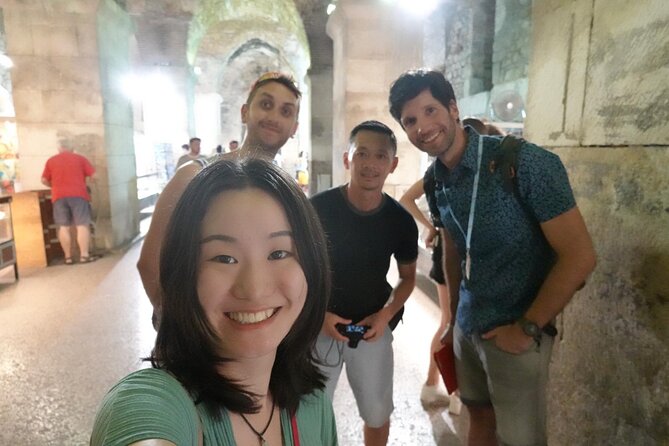
In a small group (max 8), the guide can also adjust pacing if someone asks questions at the wrong (or right) moment. That flexibility is hard to replicate on big, noisy tours.
Small logistics that keep the evening smooth
A few practical details make the experience easier to enjoy:
- English-speaking licensed local guide keeps the pace friendly for non-Croatian speakers
- Mobile ticket means fewer steps and fewer lost confirmations
- Near public transportation helps you reach the start point and move on after
- Service animals allowed if you need that option
- Good weather is required, with an alternate date or full refund if poor weather cancels the tour
Since it’s an evening activity, I’d also plan for cooler temperatures. You’ll likely want a layer, especially when you’re walking by the water and then heading to an open terrace.
Who should book this evening walking tour
This is a great fit if:
- You want a first-night orientation to Split
- You like history told through stories and streets, not just facts
- You prefer a smaller group where questions aren’t awkward
- You’re okay with a steady walk for about 1.5–2 hours
If you’re traveling with limited energy, the walking time might feel like a lot, especially if you’re sensitive to crowds in the palace area at night. Also, if you don’t plan to pay for cathedral admission, you might not get as much value from that specific stop—though the exterior viewing still fits the flow of the tour.
Should you book this tour?
Yes—if you want the easiest path to understanding Split’s core without getting tangled in directions. The price is fair for what you get: a licensed local guide, a tight route, and stops chosen for evening impact, including the palace focus and a rewarding view finish.
I’d book it early in your trip. You’ll come away with better wayfinding, plus a clearer sense of how Split’s grand structures connect to everyday life in squares like Pjaca and along the Riva.
If you’re extremely crowd-sensitive, you might want to go in with realistic expectations about the palace being busy at night. And remember the Cathedral of Saint Domnius admission is not included, so think about whether you want to factor that into your budget.
FAQ
How long is the Split evening walking tour?
It lasts about 1 hour 30 minutes to 2 hours.
What time does the tour start?
The start time is 7:00 pm.
Where do we meet the guide?
You meet at Golden Gate, Dioklecijanova 7, 21000 Split, Croatia.
Where does the tour end?
The tour ends at Vodoskok, Trg Franje Tuđmana, 21000 Split, at the fountain at the beginning of the Riva promenade.
Is the tour offered in English?
Yes, it’s offered in English.
Is the ticket mobile?
Yes, you’ll receive a mobile ticket.
Are admissions included for all stops?
Most stops are listed as free. The one that is specifically not included is admission for the Cathedral of Saint Domnius.
How large is the group?
The tour has a maximum of 8 travelers.
What happens if the weather is bad or I cancel?
The tour requires good weather. If it’s canceled due to poor weather, you’ll be offered a different date or a full refund. You can cancel up to 24 hours in advance for a full refund.
More Tours in Split
- From Split: Krka Waterfalls, Food & Wine Tasting Tour
★ 5.0 · 9,326 reviews - Blue cave, Mamma Mia and Hvar, 5 islands speedboat tour
★ 5.0 · 7,150 reviews - From Split: Krka Waterfalls, Food & Wine Tasting Tour
★ 4.9 · 6,598 reviews - Split/Trogir: Blue Cave, Mamma Mia, Hvar and 5 Island Tour
★ 4.6 · 6,320 reviews - Blue Cave and Hvar Tour – 5 Islands Tour from Split and Trogir
★ 5.0 · 4,815 reviews
More Tour Reviews in Split
- Split: Krka Waterfalls Trip with Boat Cruise and Swimming
★ 4.8 · 10,519 reviews - From Split: Krka Waterfalls, Food & Wine Tasting Tour
★ 5.0 · 9,326 reviews - Blue cave, Mamma Mia and Hvar, 5 islands speedboat tour
★ 5.0 · 7,150 reviews - From Split: Krka Waterfalls, Food & Wine Tasting Tour
★ 4.9 · 6,598 reviews - Split/Trogir: Blue Cave, Mamma Mia, Hvar and 5 Island Tour
★ 4.6 · 6,320 reviews
Walk Split a Different Way
- Split: Old Town and Diocletian Palace Walking Tour
★ 4.9 · 4,727 reviews - Walking Tour of Split and Diocletian’s Palace
★ 5.0 · 2,588 reviews - Krka Waterfalls tour with Trogir Walking tour and Krka panoramic boat cruise
★ 5.0 · 1,659 reviews - Split & Diocletian’s Palace Walking Tour
★ 5.0 · 1,125 reviews - Walking Tour of Split with a ‘Magister’ of History
★ 5.0 · 1,122 reviews
Still deciding? More Split trips we have been out and reviewed
Split Old Town Walking Tours, compared.
 ★ 4.9Old Town and Diocletian Palace Walking TourFrom $174,727 reviews
 ★ 5.0Walking Tour of Split and Diocletian’s PalaceFrom $482,588 reviews
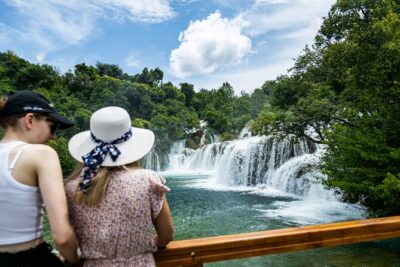 ★ 5.0Krka Waterfalls tour with Trogir Walking tour and Krka panoramic boat cruiseFrom $481,659 reviews
 ★ 5.0Split & Diocletian’s Palace Walking TourFrom $211,125 reviews
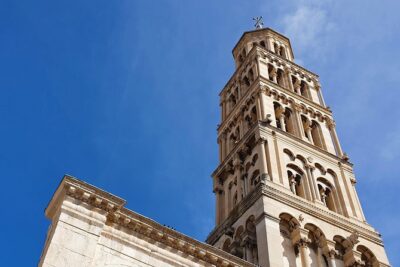 ★ 5.0Walking Tour of Split with a ‘Magister’ of HistoryFrom $341,122 reviews
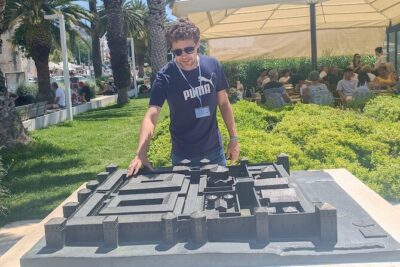 ★ 5.0Split Walking Tour with Professor of HistoryFrom $24926 reviews
 ★ 4.7Diocletian Palace & Old Town Guided Walking TourFrom $17882 reviews
 ★ 4.7Krka Waterfalls Cruise & Trogir Walking TourFrom $47681 reviews
Browse the lists this tour appears in