
Reviewed · SPLIT OLD TOWN WALKING TOURS
Split: Guided Walking Tour in English
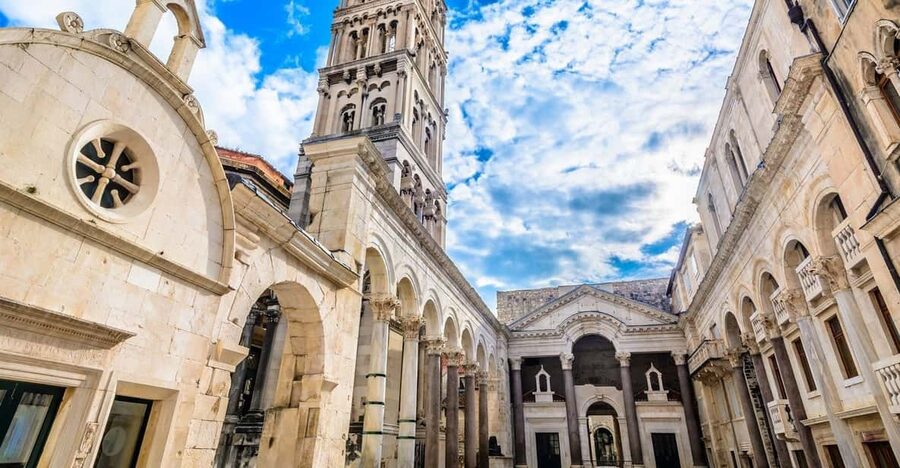
One neighborhood of stone and stories beats fast. This 90-minute guided walk in Split connects the city’s street life with the UNESCO core of Diocletian’s Palace, so you understand what you’re seeing instead of just passing it.
I especially like the way the tour trades big lectures for real-world orientation: you get your bearings on the main streets and then shift into the palace like it’s the city’s beating heart. I also love the local angle, because guides such as Gabrijela and Petra are praised for being friendly and for sharing practical culture-and-food context along the way.
One thing to consider: entrance fees aren’t included, so if you plan to go inside specific churches or museums, you’ll need to budget for tickets on your own (your guide can point you where to buy).
In This Review
- Key things to look forward to
- Meeting at Gray Line, then getting your bearings in Split
- Stroll the streets: the parts of Split tourists often miss
- Diocletian’s Palace: the UNESCO center you can actually understand
- Peristyle court, imperial apartments, and the mausoleum area
- How Split grew: medieval additions and people living inside
- English guides: local culture, food tips, and better questions
- Price and value: what you get for $29, and what costs extra
- The itinerary in real life: what each part is doing for you
- Who should book this tour, and who might not love it
- Should you book this Split palace walking tour?
- FAQ
- How long is the Split guided walking tour?
- Where do I meet the guide?
- Is the tour in English?
- Are entrance fees included?
- Is the tour wheelchair accessible?
- Can I cancel for a full refund?
Key things to look forward to
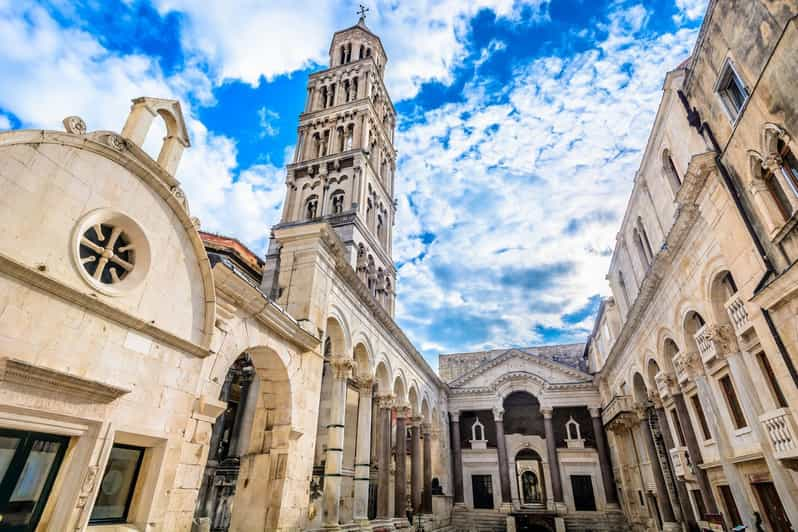
- Diocletian’s Palace (about 1,700 years old): the landmark that explains Split’s whole shape
- Peristyle court and imperial apartments: big visual landmarks to help you picture the past
- UNESCO World Heritage focus: you’ll know what matters and why, not just where to walk
- Local customs and daily life: more than architecture—how people live around the site
- English guide with real local voice: guides like Gabrijela and Petra come up often in standout feedback
- Mostly outdoor walking: great for sightseeing, but not for wheelchairs
Prefer to walk it? More guided strolls through Split
- Split: Old Town and Diocletian Palace Walking Tour★ 4.9 · 4,727 reviews
- Walking Tour of Split and Diocletian’s Palace★ 5.0 · 2,588 reviews
- Krka Waterfalls tour with Trogir Walking tour and Krka panoramic boat cruise★ 5.0 · 1,659 reviews
- Split & Diocletian’s Palace Walking Tour★ 5.0 · 1,125 reviews
Meeting at Gray Line, then getting your bearings in Split
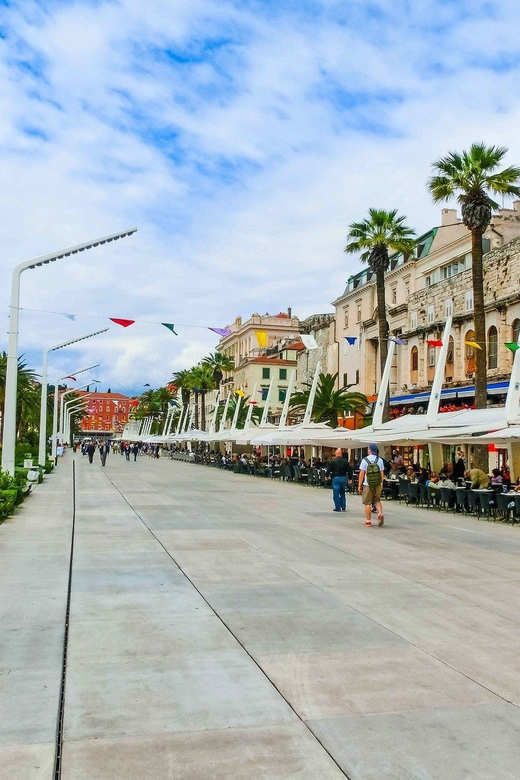
The tour starts at Gray Line’s office on Obala Hrvatskog narodnog preporoda 21. That’s a helpful detail because Split’s historic center can feel like a maze once you’re in it. Starting at a clear, central meeting spot means you can focus on the experience rather than spending the first 20 minutes figuring out where the group is supposed to gather.
From there, the rhythm is simple: you walk main monuments and key landmarks for about 90 minutes, led by an English-speaking guide. The pace is built for learning at street level. You’re not touring from one bus stop to another; you’re walking through the city’s actual seams—where everyday life meets centuries of architecture.
This matters more than it sounds. Split is one of those places where a “quick look” can leave you with a confused blur. A guided start helps you connect the dots fast: what you’re seeing now, what got added later, and why people still use these spaces today.
Stroll the streets: the parts of Split tourists often miss
Before you fully step into the palace complex, you’ll get a guided stroll around the pretty streets of Split. This is more than a warm-up. It’s where you learn how the city feels to live in—narrow stone lanes, turning corners that reveal sudden views, and a constant mix of old and lived-in.
Even if you’ve seen photos of Diocletian’s Palace, you’ll benefit from this street segment because it sets expectations. Split’s historic center isn’t a single museum. It’s a working neighborhood shaped by the palace and expanded over time. When you later walk through palace remains and medieval extensions, you’ll understand why the streets look the way they do.
Also, this street time is where you can ask the kind of questions that make the rest of your day easier. I like that the tour isn’t only about pointing; it’s about helping you interpret what’s in front of you—where to focus, what to notice, and how to avoid spending your limited hours just hunting for the next big sight.
Diocletian’s Palace: the UNESCO center you can actually understand
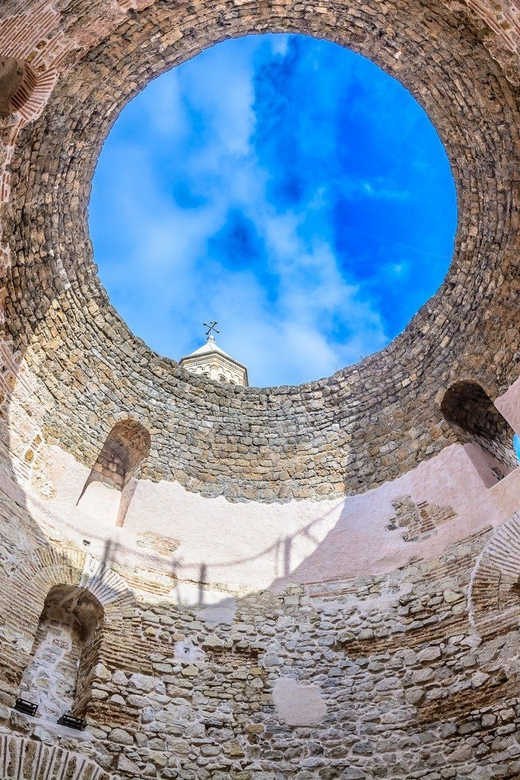
The main event is Diocletian’s Palace, the extraordinary complex built for the Roman emperor Diocletian. The tour frames it as the core that shaped Split’s growth, not as a standalone monument you visit once and forget.
If you want a practical takeaway, here it is: when you understand what the palace was designed to do—imperial life, controlled space, formal access—you start noticing those patterns everywhere in the surrounding area. The tour helps you connect the dots between the palace remains and later layers of the city that formed around them.
This is also where the UNESCO angle becomes useful. “UNESCO” can sound like a stamp rather than a story. Here, the point is the opposite: you learn what’s extraordinary about the palace layout and how it influenced everything that came later.
You’ll also move through the palace’s key features, including the monumental spaces that once served the imperial household. Even if you don’t memorize every architectural term, you’ll walk away with a mental map that makes the complex feel legible instead of overwhelming.
Peristyle court, imperial apartments, and the mausoleum area
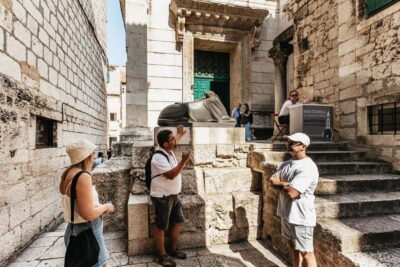
One of the highlights of the tour is exploring spaces you can picture even when you’re looking at ruins and reconstructions. The guide brings attention to the Peristyle, described as the monumental court that provided access to the imperial apartments and the mausoleum.
This detail is worth paying attention to. Courts and access routes explain the “logic” of the palace. Instead of just seeing stone, you start seeing movement—how people would enter, where authority was concentrated, and how the palace functioned day to day.
Guides also tend to connect these spaces to the city’s later story. That’s what helps the palace feel like the foundation of Split rather than a detached exhibit. When you’re standing near the areas linked to access and imperial life, you’ll understand why the city built outward the way it did and why certain routes and open spaces became anchors for later development.
And if you’re the type who likes to understand the “why,” this portion delivers. It turns architecture into a timeline you can walk through in real time.
A few more Split boat days and tours worth a second look




How Split grew: medieval additions and people living inside
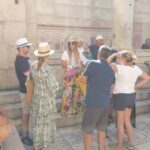
After the core Roman structure, the tour moves through what came later—medieval extensions and additions that grew around the palace. This is where Split gets especially interesting. The city isn’t frozen. It keeps changing, and the palace complex is the framework that survived.
One of the most compelling parts is that there are still people living within the walls. That changes how you experience the site. You’re not just staring at history; you’re watching history coexist with daily routines. That lived-in quality can make the whole place feel more human and less staged.
The tour is designed to help you notice the blend. You’ll pass different features tied to the palace layout and then recognize how later buildings and neighborhoods took shape around it. That contrast—Roman intention versus medieval growth—helps you understand why Split looks the way it does now.
It also gives you better context for wandering afterward on your own. Once you learn the “spine” of Diocletian’s Palace, you can explore nearby streets with more confidence because you’re no longer guessing what connects to what.
English guides: local culture, food tips, and better questions
A big reason this tour scores high is the guides. Several named guides show up in standout feedback, including Gabrijela and Petra. They’re described as having strong English and a solid ability to explain history in a way that actually sticks.
The other reason I think this tour works is the culture talk. Along with the monuments, the guide shares details about local customs and traditions and offers food recommendations. That matters because Split is more than sights. If you know a few local cues early, you’re more likely to enjoy the city rather than just collect photos.
Here’s the practical upside: when your guide is good, you can ask questions that unlock your remaining time. Should you eat in a certain part of town? What should you notice on the next street corner? What’s worth your energy and what’s not?
Group size can vary. On quieter days, the tour may run with very few people, which can turn it into a more conversational experience where questions don’t get rushed. You can’t count on that, but it’s a nice possibility.
Price and value: what you get for $29, and what costs extra
At $29 per person for a 1.5-hour guided walk, this is positioned as a value-friendly way into Split’s biggest monument. You’re paying for the guide’s ability to translate stone into meaning, plus the walking route that hits the main palace and city highlights.
Two key points about value:
- You get an English-speaking guide and a structured route that focuses on the parts of Split that make sense together.
- Entrance fees are not included, so if you want to go inside churches or museums, plan for extra ticket costs.
Your guide can still help. You’ll likely receive direction on where to purchase tickets and which landmarks are worth prioritizing after the walking portion. That’s useful because it helps you avoid wasting time hunting last-minute.
If you’re budget-conscious, this setup is smart. You can do the walking tour to learn the context, then choose only the interiors you care about. If you’re the type who loves museums and church interiors, just remember to factor in tickets so there are no surprises when you’re ready to cross the threshold.
The itinerary in real life: what each part is doing for you
Let’s map out the tour in the order you’ll experience it.
Start at Obala Hrvatskog narodnog preporoda 21
You’re set up at the Gray Line office, which makes the start easy. The guide’s first job is getting you ready to see Split with better eyes.
Streets of Split and main monuments
This is where you learn the flow of the city center. You’re walking to understand layout, not speed-run history. Expect to notice small architectural cues you might otherwise miss.
Diocletian’s Palace core areas
You’ll focus on the palace’s extraordinary design and what made it so influential: the palace as the engine for Split’s growth. You’ll also connect the palace to the later layers added over time.
Peristyle and imperial-access landmarks
The Peristyle court and access points help you visualize how the palace worked. It’s one of those moments where a guide’s explanation turns scattered ruins into a coherent scene.
Finishing back near the start
The tour ends again at Obala Hrvatskog narodnog preporoda 21. That’s practical because it puts you near areas where you can continue your day—grab a snack, head to a museum you’ve chosen, or just wander without feeling lost.
Who should book this tour, and who might not love it
This is a strong fit if you want:
- A guided way to understand Diocletian’s Palace quickly
- A local-voiced explanation in English
- A route that connects the palace to medieval Split and to the way people live around it
It’s less ideal if:
- You need wheelchair access. The tour is not wheelchair accessible and involves walking through the kind of uneven stone streets and historic pathways you should expect in the old center.
- You’re traveling with pets. Pets aren’t allowed.
- You’re bringing unaccompanied minors. Children must be accompanied by an adult, and unaccompanied minors aren’t allowed.
If you enjoy walking tours but also want real substance—more than “here’s a wall, take a photo”—this one hits the sweet spot.
Should you book this Split palace walking tour?
I’d book it if you want the fastest path to understanding Split’s most important site without getting stuck in confusing details. For $29, you’re buying expert interpretation for about 90 minutes, plus a route that centers the UNESCO palace complex and its later layers. That’s a good value structure: learn first, then decide what to see inside on your own pace.
I would skip or reconsider if you’re wheelchair-bound or if you only want “hands-on” interiors. Since entrance fees aren’t included, you’ll still need to handle tickets for museums and churches if those are your priorities.
If you’re planning your first day in Split, this is a smart start. You’ll walk away with a mental map of Roman palace life, medieval growth, and the fact that people still live within the historic walls—three ideas that make the rest of your wandering much more enjoyable.
FAQ
How long is the Split guided walking tour?
It lasts about 90 minutes.
Where do I meet the guide?
Meet at the Gray Line office, Obala Hrvatskog Narodnog Preporoda 21, Split.
Is the tour in English?
Yes, the guide provides the tour in English.
Are entrance fees included?
No. Entrance fees are not included, and the guide can help you with where to buy tickets. After the tour, you can visit landmarks at your own pace.
Is the tour wheelchair accessible?
No. This tour is not wheelchair accessible.
Can I cancel for a full refund?
Yes. You can cancel up to 24 hours in advance for a full refund.
More Tours in Split
- From Split: Krka Waterfalls, Food & Wine Tasting Tour
★ 5.0 · 9,326 reviews - Blue cave, Mamma Mia and Hvar, 5 islands speedboat tour
★ 5.0 · 7,150 reviews - From Split: Krka Waterfalls, Food & Wine Tasting Tour
★ 4.9 · 6,598 reviews - Split/Trogir: Blue Cave, Mamma Mia, Hvar and 5 Island Tour
★ 4.6 · 6,320 reviews - Blue Cave and Hvar Tour – 5 Islands Tour from Split and Trogir
★ 5.0 · 4,815 reviews
More Tour Reviews in Split
- Split: Krka Waterfalls Trip with Boat Cruise and Swimming
★ 4.8 · 10,519 reviews - From Split: Krka Waterfalls, Food & Wine Tasting Tour
★ 5.0 · 9,326 reviews - Blue cave, Mamma Mia and Hvar, 5 islands speedboat tour
★ 5.0 · 7,150 reviews - From Split: Krka Waterfalls, Food & Wine Tasting Tour
★ 4.9 · 6,598 reviews - Split/Trogir: Blue Cave, Mamma Mia, Hvar and 5 Island Tour
★ 4.6 · 6,320 reviews
Walk Split a Different Way
- Split: Old Town and Diocletian Palace Walking Tour
★ 4.9 · 4,727 reviews - Walking Tour of Split and Diocletian’s Palace
★ 5.0 · 2,588 reviews - Krka Waterfalls tour with Trogir Walking tour and Krka panoramic boat cruise
★ 5.0 · 1,659 reviews - Split & Diocletian’s Palace Walking Tour
★ 5.0 · 1,125 reviews - Walking Tour of Split with a ‘Magister’ of History
★ 5.0 · 1,122 reviews
Still deciding? More Split trips we have been out and reviewed



Split Old Town Walking Tours, compared.
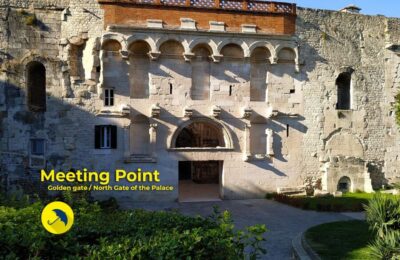 ★ 4.9Old Town and Diocletian Palace Walking TourFrom $174,727 reviews
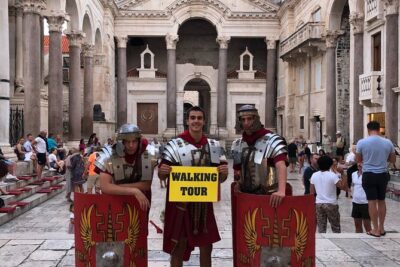 ★ 5.0Walking Tour of Split and Diocletian’s PalaceFrom $482,588 reviews
 ★ 5.0Krka Waterfalls tour with Trogir Walking tour and Krka panoramic boat cruiseFrom $481,659 reviews
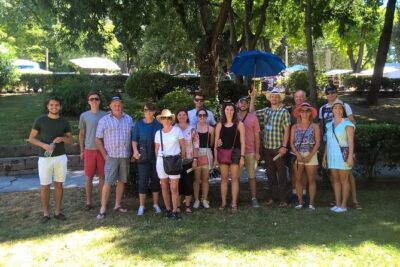 ★ 5.0Split & Diocletian’s Palace Walking TourFrom $211,125 reviews
 ★ 5.0Walking Tour of Split with a ‘Magister’ of HistoryFrom $341,122 reviews
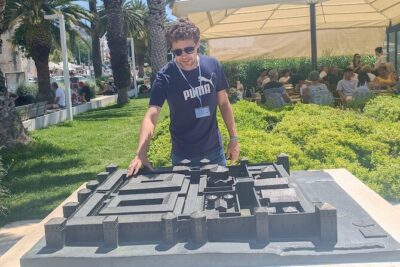 ★ 5.0Split Walking Tour with Professor of HistoryFrom $24926 reviews
 ★ 4.7Diocletian Palace & Old Town Guided Walking TourFrom $17882 reviews
 ★ 4.7Krka Waterfalls Cruise & Trogir Walking TourFrom $47681 reviews
Browse the lists this tour appears in