
Reviewed · SPLIT OLD TOWN WALKING TOURS
Split: Food Tasting Walking Tour
Split tastes better inside Roman walls. This 2-hour Split food tasting walk threads through the Diocletian’s Palace area and medieval streets with stories that explain what you’re eating and where it fits in local life. You start with market snacks, then keep moving shop to shop—so the history and the food feel linked, not separate.
My favorite part is how the tour mixes big-name landmarks with very specific flavors you can actually chase later. You’ll get taste stops tied to stand-out dishes and treats—like Soparnik, a UNESCO-protected specialty, plus a chocolate stop connected to a Guinness record. You also walk into the Peškarija fish market area, where the tasting turns into a mini lesson on how locals eat salted anchovies.
One important thing to consider: the tour is not wheelchair accessible, and it’s built for people who can handle a steady walk on uneven old-stone streets.
In This Review
- Key highlights worth planning around
- Entering Diocletian’s Palace: the meeting point that sets the tone
- Green Market café stop: a sweet start with arancini and sugared almonds
- UNESCO-protected Soparnik and prosciutto tastings
- Chocolate stop with a Guinness record: why it works in a food tour
- The rafiol cake moment: finishing with a bakery you’ll remember
- Peškarija fish market: salted anchovies and marenda brunch habits
- How the tastings are paced during the 2 hours
- Small group feel and guide quality: what makes it special
- Price and value: is $64 for 2 hours fair?
- Who should book this tour (and who should skip it)
- Quick practical tips for your day
- Should you book Split’s Food Tasting Walking Tour?
- FAQ
- How much does the Split Food Tasting Walking Tour cost?
- How long is the tour?
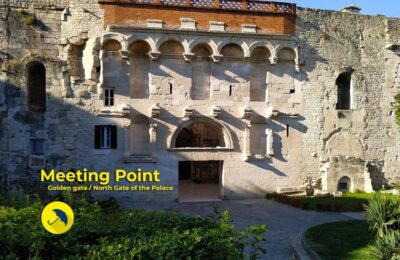
- Where do I meet the guide?
- What language is the tour guide?
- What’s included in the price?
- Are there extra costs during the tour?
- Is local wine included?
- What should I bring?
- Is the tour wheelchair accessible?
- What’s the cancellation policy and pay-later option?
Key highlights worth planning around
- Start near Golden/North Gate by the Gregory of Nin statue to get oriented fast
- Green Market and Fish Market tastings that feel like real shopping stops, not museum samples
- Soparnik (UNESCO-listed dish) plus prosciutto-style cured meat tastings
- Chocolate shop with a Guinness-largest-bar connection and a proper sweet tasting
- Peškarija fish market and a lesson on salted anchovies and marenda brunch habits
- Small-group energy with guides like Marta, Antonia, Slavko, Jakov, and Ina often praised for pacing and stories
Prefer to walk it? More guided strolls through Split
- Split: Old Town and Diocletian Palace Walking Tour★ 4.9 · 4,727 reviews
- Walking Tour of Split and Diocletian’s Palace★ 5.0 · 2,588 reviews
- Krka Waterfalls tour with Trogir Walking tour and Krka panoramic boat cruise★ 5.0 · 1,659 reviews
- Split & Diocletian’s Palace Walking Tour★ 5.0 · 1,125 reviews
Entering Diocletian’s Palace: the meeting point that sets the tone
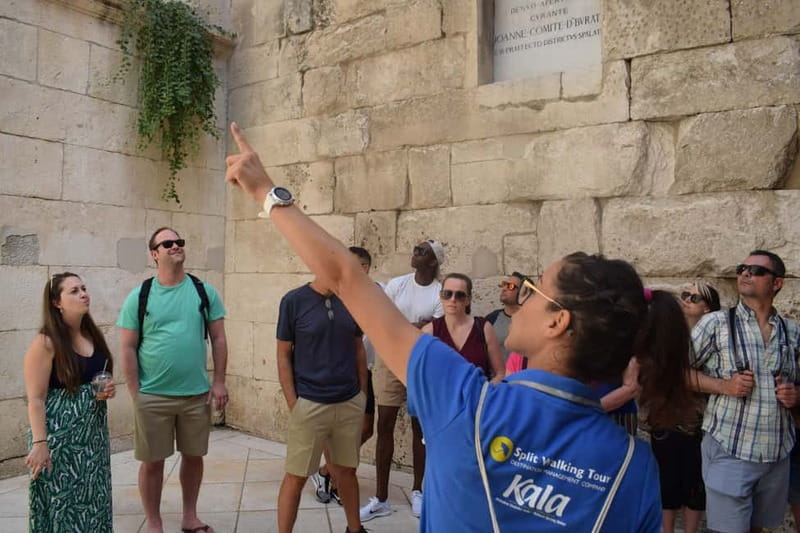
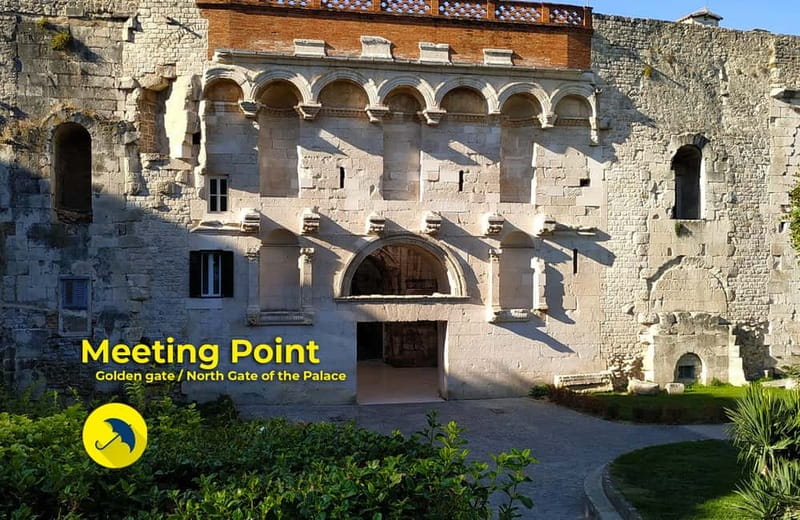
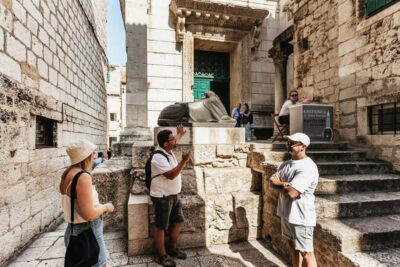
Most food tours start with food. This one starts with your bearings. You meet at the Golden/North Gate area, near the statue of Gregory of Nin, and you begin right where Split’s old Roman footprint is easiest to feel. That matters because the tastings aren’t treated like random snacks. They’re explained against a backdrop of centuries—Mediterranean routines, trading markets, and the way coastal cooking developed out of what was available.
The walk is built for short stops, quick tastes, and moving on before the group gets restless. That’s why the timing works well for a first afternoon in Split. You get enough context to understand what you see later, but you still have time to wander on your own after.
If you’re choosing a guide, you’ll notice names like Marta, Antonia, Slavko, Jakov, and Ina coming up often for friendly hosting and strong storytelling. The guides consistently focus on tying the food back to local habits and the city itself—so you don’t just hear what the dish is, you learn how it lives in Split.
Green Market café stop: a sweet start with arancini and sugared almonds
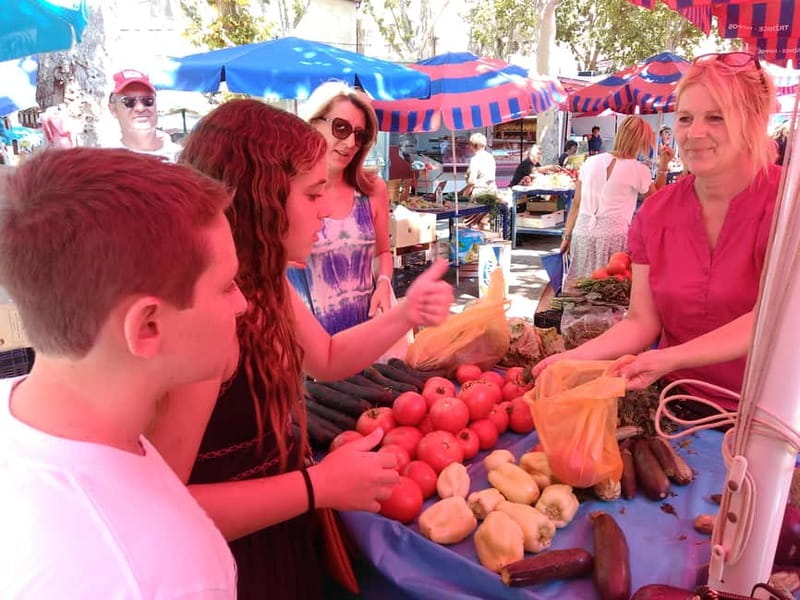
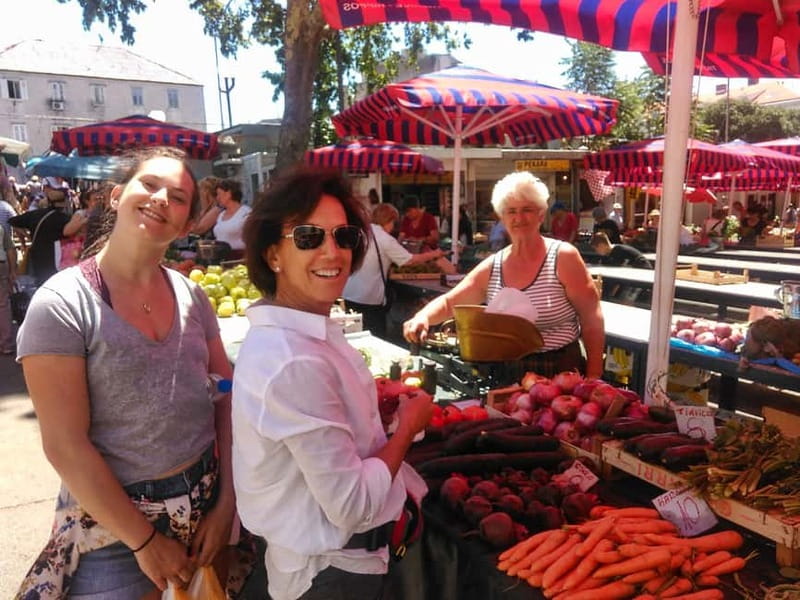
The tour begins with a quick café tasting—about 15 minutes—then you move into the Old Market (Green Market / Pazar) area for around 30 minutes of market time and sampling. This is one of the best parts to do early, because you’re not only tasting. You’re learning how to navigate the market vibe: what’s easy to eat while walking, what’s worth buying, and how people think about a morning snack.
Expect flavors that feel both simple and classic:
- Arancini (a local market-style bite)
- Almonds in sugar to sweeten your morning
Some groups also get pointed toward candy-style accents like candied citrus peel. That shows up in the kinds of tastings guests highlight most—sweet, slightly herbal, and very “Dalmatian summer.” It’s an easy win if you’re coming from the airport with a vague hunger and a desire to get oriented fast.
Practical tip: bring sunglasses and a hat. Split’s open market light can be intense, and the tour spends time outdoors.
UNESCO-protected Soparnik and prosciutto tastings
After the market start, the tour shifts from shopping vibes into regional food identity. You’ll taste Soparnik with stories that connect it to the UNESCO-listed tradition. That UNESCO angle is more than a badge. It helps you understand why certain techniques and ingredients get treated with care and pride, not casual “tourist food” vibes.
You also get a tasting connected to cured meats—prosciutto—while you stroll through the old-city streets. This part is useful if you tend to pick restaurants by photos. Here, you learn what to look for on a menu, and what to ask for if you want the real Dalmatian version rather than generic Italian-style wording.
One nuance: the tour description mentions a glass of local wine, but the included items list only says food tastings and traditional recipes. Also, some guests have specifically noted they didn’t receive wine on their day. If wine matters to you, ask the guide early in the tour and don’t assume it’s automatic.
Chocolate stop with a Guinness record: why it works in a food tour
A sweet stop is normal. A sweet stop that’s a whole city story is better. Midway through the walk you’ll visit a chocolate shop that’s tied to a Guinness record for the largest chocolate bar in the world, and you’ll taste there too.
What I like about this stop is how it breaks up the salt-and-meat rhythm without turning the tour into a sugar parade. The tastings stay linked to the local snack culture: markets, small portions, and the idea that food on a walking day is meant to be sampled, not plated.
It’s also a shop you can return to later. Even if you don’t want extra purchases during the tour, seeing the product in person makes it easier to decide afterward. Keep an eye on what’s offered for tasting versus what’s sold for takeaway, because extra expenses at the markets are optional.
A few more Split boat days and tours worth a second look


The rafiol cake moment: finishing with a bakery you’ll remember
After the chocolate, you head to an older-style bakery stop to taste rafiol cake—a well-known Split sweet that brings everything to a close with something warm, fragrant, and crowd-friendly.
This is a good place to slow down for 15 minutes and focus on texture and flavor rather than just chasing variety. Rafiol cake has that “local bakery” character that’s hard to replace later. If you’re the kind of person who likes to bring home edible souvenirs, this stop is your cue to take note: what the slices look like, what filling shows, and how it tastes compared to packaged versions you might see later.
One small drawback to expect: the tour has a tight schedule. If your brain locks onto one particular tasting, you might want to circle back after the tour ends.
Peškarija fish market: salted anchovies and marenda brunch habits
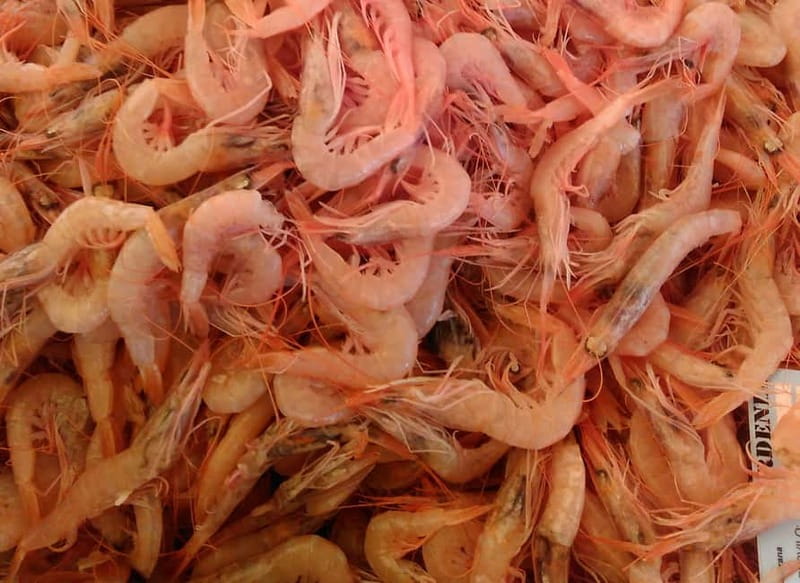
Then comes the part many food lovers wait for. You visit Split’s Fish Market, called Peškarija, and you’ll get a chance to taste and learn about eating habits that feel very local—specifically salted anchovies and the idea of marenda, a Dalmatian brunch tradition.
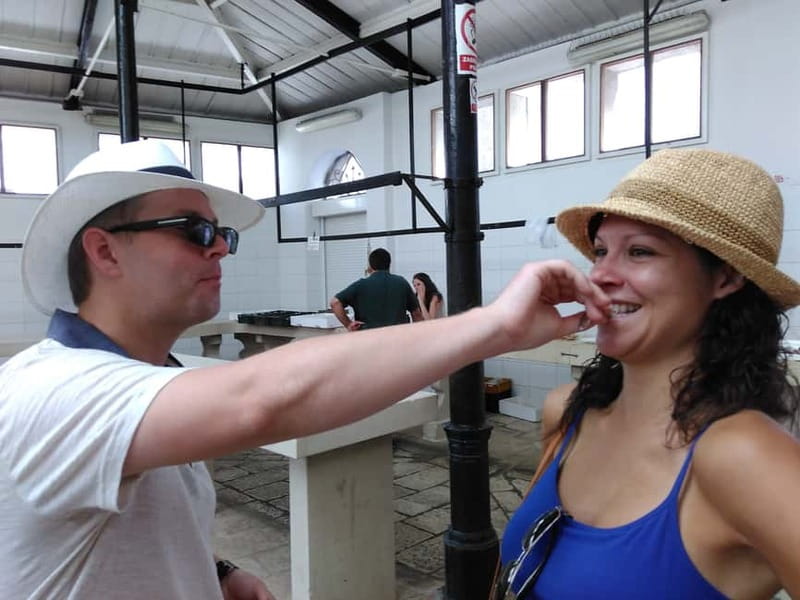
Peškarija is described as the second oldest fish market in Europe, and the market benches are over 120 years old. That detail matters because it turns a “food stop” into a real atmosphere: this isn’t a modern, Instagram-friendly market built from scratch. It’s a functioning older place where people still come for daily (or at least frequent) seafood routines.
The tasting lesson is the highlight:
- You’re taught how to eat salted anchovies in a way that fits the local rhythm.
- You learn how this connects to marenda, meaning food isn’t only for full meals—it shows up between activities, earlier in the day, and as part of the coast’s slower pacing.
If you love seafood but usually order the safe thing—grilled fish, fried calamari—this tasting teaches you a different starting point. It also gives you language for what to look for on menus later.
How the tastings are paced during the 2 hours
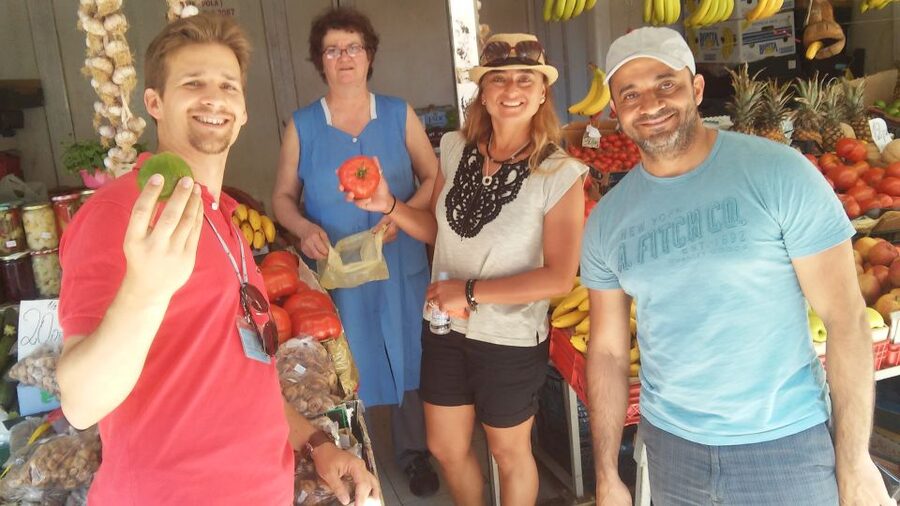
The tour runs about two hours, and it’s designed as a string of focused stops rather than one long event. Expect multiple tastings of roughly 15-minute blocks at cafés/shops and around 30-minute stretches in market areas. That pacing helps in two ways:
First, you get variety without feeling stuffed. Second, each stop is short enough that you still have room to explore Split after you finish.
From what guides and guests highlight, the best tours on this route manage the pace well and don’t rush. Guests often mention guides adapting to group needs and taking questions. If you’re the kind of person who asks about ingredients and cooking technique—especially local flatbreads, cured meats, and market sweets—this format works well.
Small group feel and guide quality: what makes it special
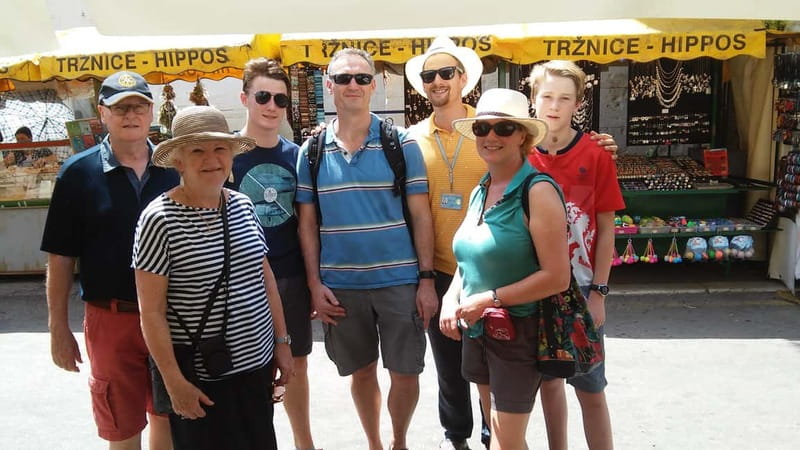
Your experience is strongly affected by the guide. Here, many guests praise hosts like Marta for making the food stories personal to Split, including cooking technique context. Others highlight guides like Slavko as personable and funny while still delivering clear explanations. Antonia and Jakov get credit for blending city history with food practicalities, and Ina is praised for keeping the conversation inclusive and comfortable.
Even when the tour promises the same tastings, the guide’s style changes the value:
- Do they explain what to look for when you shop later?
- Do they connect the dish to how people actually eat and buy?
- Do they give enough time at each stop?
In this tour, that’s exactly what tends to matter most.
Price and value: is $64 for 2 hours fair?
For $64 per person, you’re paying for three things at once:
1) A live guide who connects the food to Split’s historical and cultural setting
2) Multiple food tastings across key sites (green market, fish market, and specialty shops)
3) Traditional recipes, which can help you recreate flavors later
Is it expensive? Compared to buying snacks on your own, yes. But compared to the cost of a guided walking experience plus several tastings in central Split, the value usually lands in a fair zone—especially if you’re new to the city or you don’t want to guess your way through markets.
If you’re already confident navigating Split markets and you mainly want to eat, you could build something cheaper on your own. But you’d miss the structured route, the food logic behind each stop, and the tasting instruction (like how to eat salted anchovies as part of marenda).
Who should book this tour (and who should skip it)
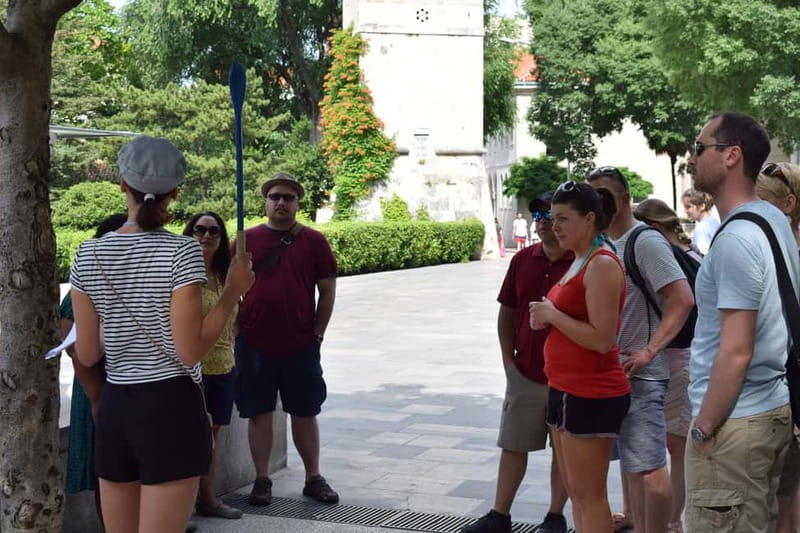
This is a great fit if you:
- Want to learn what to eat in Split without wasting time guessing
- Like markets and specialty shops more than sitting through a long meal
- Enjoy city walking tied to specific food stories
It’s less ideal if:
- You need wheelchair access (the tour is not accessible for wheelchair users)
- You’re traveling with someone who can’t handle steady walking and old-street surfaces
- You’re looking for a long, sit-down dinner experience (this is 2 hours, quick tastings and movement)
Families can go, but children must be accompanied by an adult, and unaccompanied minors aren’t allowed.
Quick practical tips for your day
Bring what the tour asks for: comfortable shoes, sunglasses, and a sun hat. Even in mild weather, the combination of walking plus market time is usually more tiring than you expect.
Also think about snacks and hydration strategy. The tastings are multiple small portions, but you’ll still want to eat more later if you’re a big-hunger person. If you’re sensitive to strong flavors like salt (anchovies are salted), pace yourself at Peškarija and give your palate a breather between stops.
Should you book Split’s Food Tasting Walking Tour?
I think you should book if you want a smart “food map” of Split in just two hours. The blend of Diocletian’s Palace-area walking, Green Market tasting, Soparnik, a Guinness-linked chocolate stop, and the Peškarija anchovy lesson gives you both variety and context. You’ll come away not only full of flavors, but also with a clearer sense of what’s worth repeating on your own later.
If you’re not into walking, or if accessibility is a hard requirement, skip it and look for a different format. And if you care specifically about wine, ask early on the day since what’s offered can vary.
Overall, this tour is a strong value choice for first-time Split visitors who want to eat like locals rather than just snack like tourists.
FAQ
How much does the Split Food Tasting Walking Tour cost?
The price is listed as $64 per person.
How long is the tour?
The duration is 2 hours.
Where do I meet the guide?
You meet at Golden/North Gate, near the statue of Gregory of Nin. Look for the blue umbrella.
What language is the tour guide?
The tour is offered with a live English guide.
What’s included in the price?
The price includes the guide, food tastings, and traditional recipes.
Are there extra costs during the tour?
Extra expenses at the markets may be optional. The tour includes tastings, but you might choose to buy additional items.
Is local wine included?
The tour description mentions a glass of local wine, but the provided included items list does not explicitly confirm it. If wine is important to you, ask the guide during the tour.
What should I bring?
Wear comfortable shoes and bring sunglasses and a sun hat.
Is the tour wheelchair accessible?
No. The tour is not accessible for wheelchair users.
What’s the cancellation policy and pay-later option?
You can cancel up to 24 hours in advance for a full refund, and you can reserve now and pay later to keep plans flexible.
More Tours in Split
- From Split: Krka Waterfalls, Food & Wine Tasting Tour
★ 5.0 · 9,326 reviews - Blue cave, Mamma Mia and Hvar, 5 islands speedboat tour
★ 5.0 · 7,150 reviews - From Split: Krka Waterfalls, Food & Wine Tasting Tour
★ 4.9 · 6,598 reviews - Split/Trogir: Blue Cave, Mamma Mia, Hvar and 5 Island Tour
★ 4.6 · 6,320 reviews - Blue Cave and Hvar Tour – 5 Islands Tour from Split and Trogir
★ 5.0 · 4,815 reviews
More Tour Reviews in Split
- Split: Krka Waterfalls Trip with Boat Cruise and Swimming
★ 4.8 · 10,519 reviews - From Split: Krka Waterfalls, Food & Wine Tasting Tour
★ 5.0 · 9,326 reviews - Blue cave, Mamma Mia and Hvar, 5 islands speedboat tour
★ 5.0 · 7,150 reviews - From Split: Krka Waterfalls, Food & Wine Tasting Tour
★ 4.9 · 6,598 reviews - Split/Trogir: Blue Cave, Mamma Mia, Hvar and 5 Island Tour
★ 4.6 · 6,320 reviews
Walk Split a Different Way
- Split: Old Town and Diocletian Palace Walking Tour
★ 4.9 · 4,727 reviews - Walking Tour of Split and Diocletian’s Palace
★ 5.0 · 2,588 reviews - Krka Waterfalls tour with Trogir Walking tour and Krka panoramic boat cruise
★ 5.0 · 1,659 reviews - Split & Diocletian’s Palace Walking Tour
★ 5.0 · 1,125 reviews - Walking Tour of Split with a ‘Magister’ of History
★ 5.0 · 1,122 reviews
Still deciding? More Split trips we have been out and reviewed

Split Old Town Walking Tours, compared.
 ★ 4.9Old Town and Diocletian Palace Walking TourFrom $174,727 reviews
 ★ 5.0Walking Tour of Split and Diocletian’s PalaceFrom $482,588 reviews
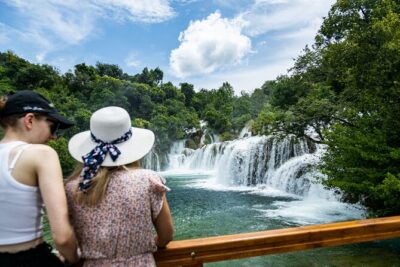 ★ 5.0Krka Waterfalls tour with Trogir Walking tour and Krka panoramic boat cruiseFrom $481,659 reviews
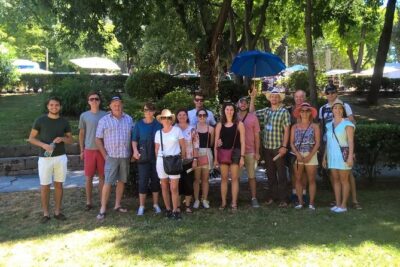 ★ 5.0Split & Diocletian’s Palace Walking TourFrom $211,125 reviews
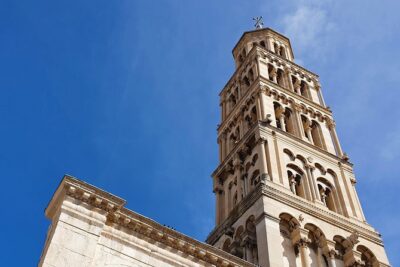 ★ 5.0Walking Tour of Split with a ‘Magister’ of HistoryFrom $341,122 reviews
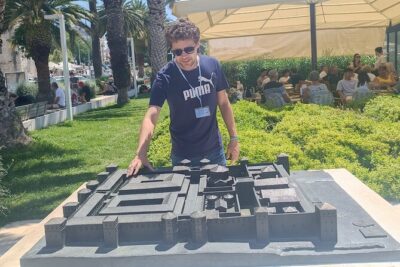 ★ 5.0Split Walking Tour with Professor of HistoryFrom $24926 reviews
 ★ 4.7Diocletian Palace & Old Town Guided Walking TourFrom $17882 reviews
 ★ 4.7Krka Waterfalls Cruise & Trogir Walking TourFrom $47681 reviews
Browse the lists this tour appears in