
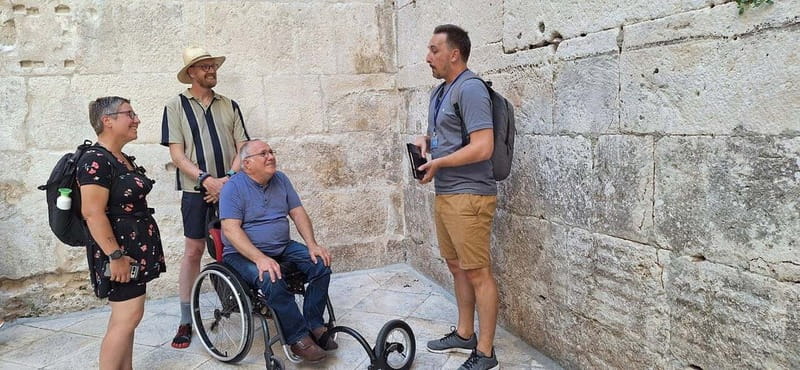
Reviewed · SPLIT OLD TOWN WALKING TOURS
Split: Cultural Walking Tour with Anthropologist Guide
Split has a lot of opinions hiding in plain sight. This walking tour turns the old stone streets into a map of Croatia’s controversies, from religion and identity to geopolitics and sexuality. You’ll see the big sights, but you’ll also learn why people argue about them so fiercely.
I especially liked Marin’s approach as a cultural anthropologist: he connects what you’re standing on with how modern Croatians think about the past. I also loved that the tour doesn’t treat taboos like a museum problem; it treats them like part of everyday society, with context you won’t get on a standard highlights walk.
The main drawback is tone. If you want a simple, postcard-style history tour with minimal friction, this one might feel heavy in places. It’s best for curious minds who like ideas, tensions, and the messy bits that explain why history still matters here.
In This Review
- Key takeaways before you go
- Entering the real Split: why controversies belong on a walking tour
- Meeting at the fountain in Park Josipa Jurja Strossmayera
- Golden Gate: Diocletian’s entrance as a story about power
- Peristil: where daily life and authority overlap
- Diocletian’s Cellars: economics, layers, and contested memories
- People’s Square and the question of public voice
- Židovski prolaz: hidden passage, visible histories
- Fruit Square and Riva: how everyday life gets political
- Republic Square: modern politics wearing old stone
- Finishing on Trumbićeva obala: leaving with context, not just photos
- Price and value: why $33 can feel like more than a walk
- Who should book this tour, and who might skip it
- Practical tips to get the most from it
- Should you book Controversies behind Split and Croatia?
- FAQ
- How long is the Split cultural walking tour?
- What is the price per person?
- Is the tour guided and in English?
- Where does the tour start?
- Where does the tour end?
- Does the tour include anything besides the walking guide?
- Are there any extra costs during the tour?
- Is the tour wheelchair accessible?
- What’s the cancellation policy?
- Can I reserve now and pay later?
Key takeaways before you go
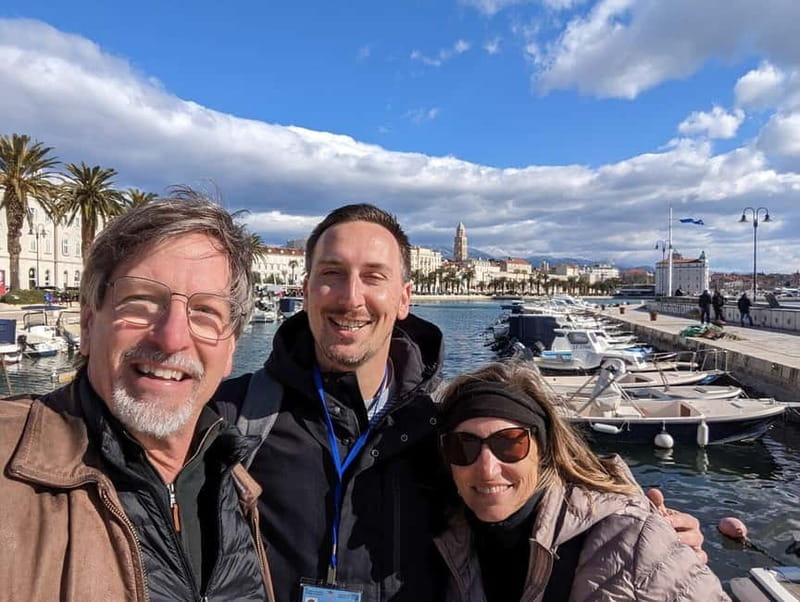
- Anthropologist-led storytelling that links monuments to politics, identity, and daily life
- No-gloves approach to contested history and contemporary taboos
- A classic Split core-route (Golden Gate, Peristil, Diocletian’s Cellars) with meaning attached
- Audio-visual material included for each topic, so themes stick
- Wheelchair accessible and built for a central-area walk
Prefer to walk it? More guided strolls through Split
- Split: Old Town and Diocletian Palace Walking Tour★ 4.9 · 4,727 reviews
- Walking Tour of Split and Diocletian’s Palace★ 5.0 · 2,588 reviews
- Krka Waterfalls tour with Trogir Walking tour and Krka panoramic boat cruise★ 5.0 · 1,659 reviews
- Split & Diocletian’s Palace Walking Tour★ 5.0 · 1,125 reviews
Entering the real Split: why controversies belong on a walking tour
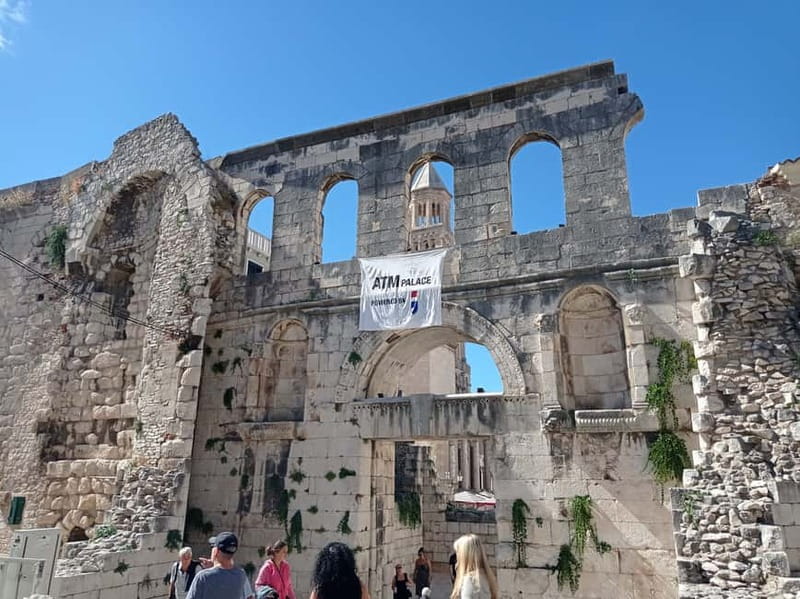
Split is a city of layers, but the smart trick is learning how those layers get argued over. This tour is built around the idea that contested history is not a niche interest. It’s part of how people explain themselves, their neighbors, and their place in Europe.
What makes this experience different is the way it pairs architecture with social questions. You won’t just get dates. You’ll get friction: how different groups see the same past, how religion and identity mix with politics, and how demographics shift the way stories get told. The walk stays grounded in sites you can actually point at, so the ideas don’t float off into theory.
Also, the guide is very focused on making connections across time. Ancient spaces become clues to modern debates. That’s not just “interesting.” It’s practical. After this, you’re less likely to miss the political subtext behind everyday details like street life, monuments, and even what people choose to emphasize.
And yes, it still covers the central landmarks you’d expect on a first visit. You get both: the “wow” sights and the “why do they care” explanations.
Meeting at the fountain in Park Josipa Jurja Strossmayera
Your tour starts at Ul. kralja Tomislava 12, in a big park. You’ll meet by the fountain located in the middle of the park, so it’s easy to spot if you come a few minutes early.
This starting choice matters. It gets you out of the immediate crush of the center and helps you transition from “holiday mode” into “pay attention” mode. The two-hour format is long enough to cover several key stops, but short enough that the themes stay sharp instead of wandering.
You should expect a steady pace on foot between central sites. Wear comfortable shoes, especially if you visit during warm weather or after rain. Even though the route is wheelchair accessible, the physical reality of walking-city streets still matters.
One more practical note: the tour runs in English, so if you’re comfortable in that language, you’ll get the full value of the conversations around identity, history, and geopolitics.
Golden Gate: Diocletian’s entrance as a story about power
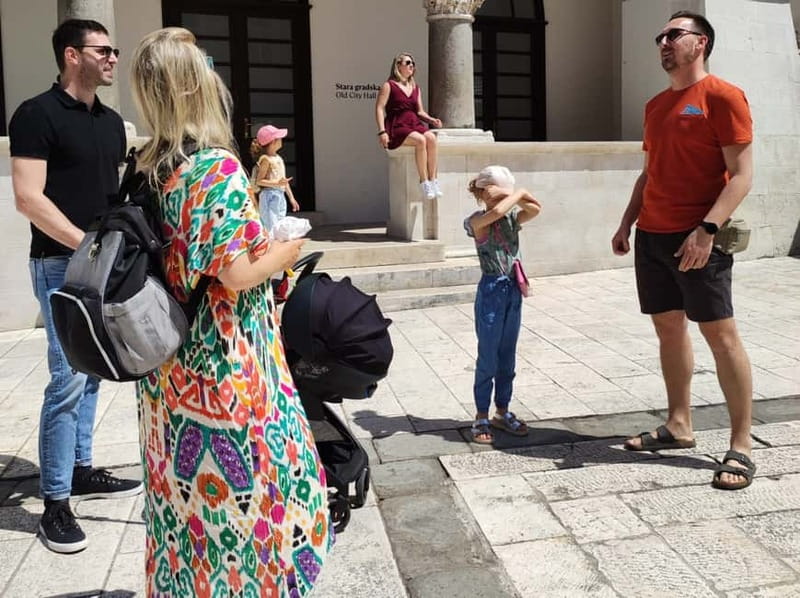
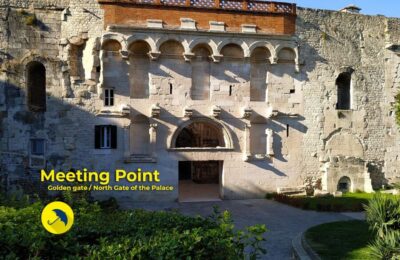
The first major stop is the Golden Gate (Golden Gate of Split). You’ll spend about 15 minutes here, and the time isn’t wasted on ornament alone. The guide uses the gate as a turning point: a symbol of authority, control, and who was allowed to move through which spaces.
When you think about it, gates are never just decoration. They’re political objects. They shape movement. They mark boundaries. And in a city like Split, those boundaries echo into later centuries, including how modern society talks about belonging.
If you’ve only seen the Golden Gate as a nice medieval photo spot, this stop changes the frame. You’ll start noticing how the physical entry points of a city can become metaphors for social rules—rules that may not be written, but are still felt.
Peristil: where daily life and authority overlap
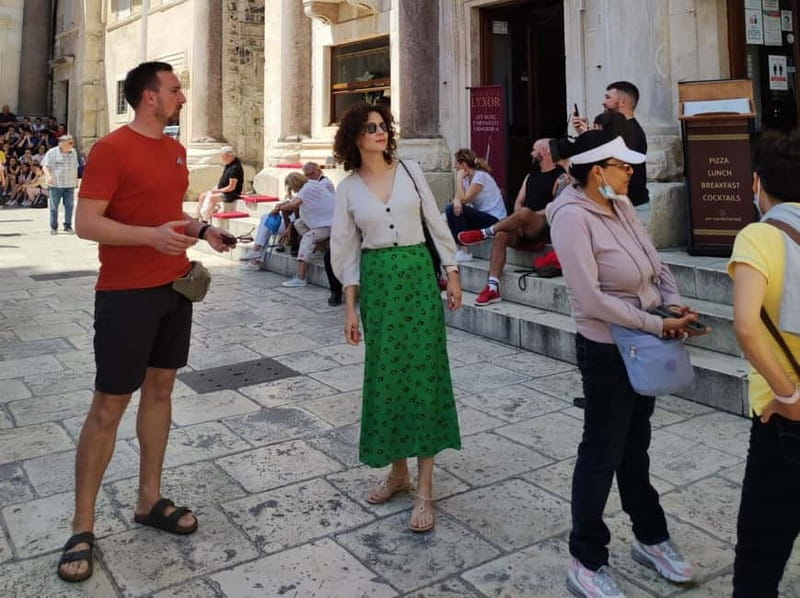
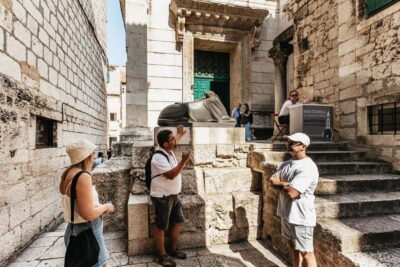
Next is Peristil, also around 15 minutes. This is the central open space linked to Diocletian’s palace design, and the guide treats it like more than a courtyard. The big idea is that public space is never neutral. Even when it looks “just architectural,” it affects how people meet, trade, and present themselves.
This is where you begin to see the tour’s signature blend: architecture plus sociology. You’re not learning isolated facts. You’re building a sense of how people use built space to support identity—then later, how new eras reuse older spaces to tell different stories.
You’ll also get a sense for how religious and social identities can shift while the stones stay the same. That tension—old structure, new meanings—is one of the reasons Split can feel like it has a debate running under every corner.
A few more Split boat days and tours worth a second look



Diocletian’s Cellars: economics, layers, and contested memories
At Diocletian’s Cellars, you’ll have about 10 minutes. The short time is understandable: the goal here is not a slow deep museum visit. It’s to give you a “meaning hook” for the spaces under the city.
Cellars are an easy metaphor for power and supply. They connect to economies: storage, production, and the systems that keep people fed and moving. And if the tour has a theme, it’s that economics and politics are not separate stories in Croatia. They overlap in how the past gets remembered and how today’s groups position themselves.
This stop also reinforces the tour’s overall tone: you’re walking through the center of Split, but you’re looking at it like an anthropologist might—asking what people gain, what people fear, and how memory can be both heritage and battleground.
People’s Square and the question of public voice
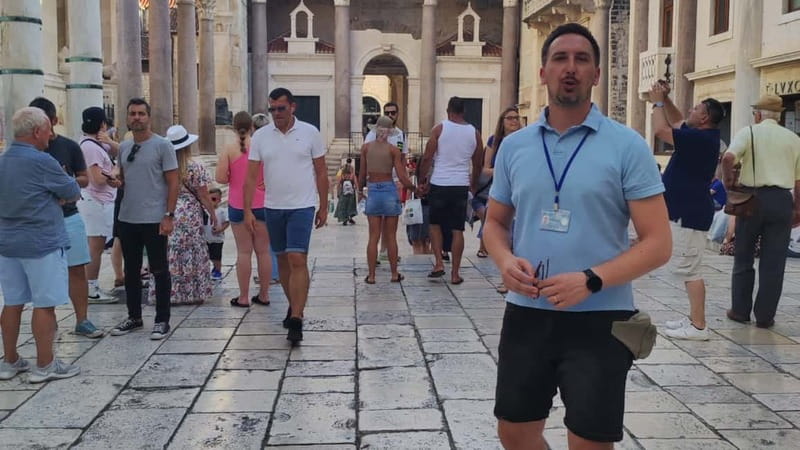
Then you reach People’s Square for about 15 minutes. Public squares are where identity becomes visible. Who shows up? What language is used? What’s celebrated? What’s ignored?
This is one of the places where the tour’s “with no gloves on” style fits naturally. The guide uses the physical space to talk about social movements and how modern Croatia shaped itself through conflicts of interpretation—who belongs, whose history counts, and what kind of country the future should be.
Even if you don’t leave with a single “correct” answer (because you shouldn’t—history isn’t that tidy), you’ll leave with a better map of the debates. That makes the rest of your time in Split feel clearer, not more confusing.
Židovski prolaz: hidden passage, visible histories
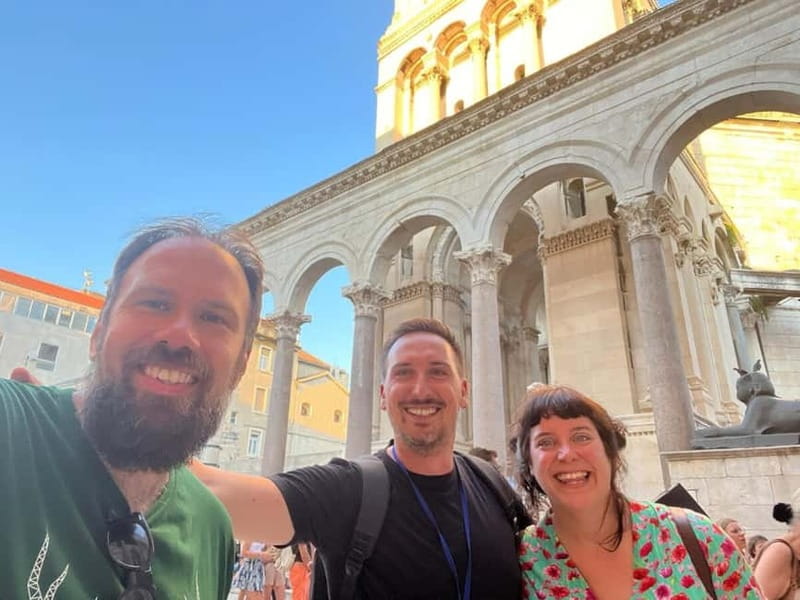
At Židovski prolaz you’ll spend around 10 minutes. A passage like this can feel like a nice little alley to stroll through. On this tour, it’s a reminder that city space often contains traces of communities that might not be centered in the main story.
This is where demographic and religious themes show up in a grounded way. The guide uses the passage to discuss identity and how communities are included, remembered, or pushed to the edges of official narratives.
It’s a good stop for anyone who likes learning how geography and identity connect. Small lanes can hold big meanings, especially in places where history keeps changing the labels people use.
Fruit Square and Riva: how everyday life gets political
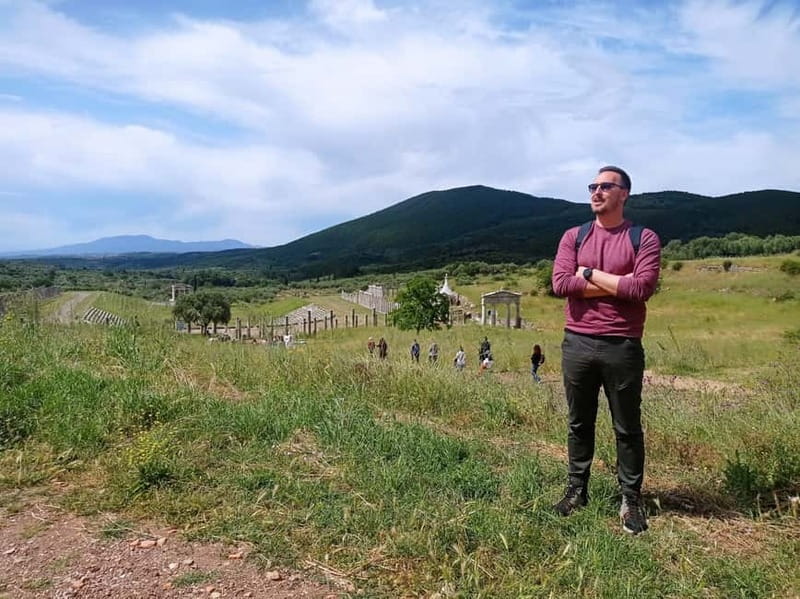
Next comes Fruit Square (about 15 minutes). Then you pass by Riva for about 5 minutes—less time for the waterfront stroll and more time for what that kind of public space represents.
Fruit Square is a practical example of how markets and crowds shape culture. People don’t just buy food here; they build routines, social networks, and shared norms. Those patterns become part of how identity forms.
Riva, meanwhile, is a reminder that even the most “relaxing” looking place can be a stage. Public waterfronts and promenade zones reflect what a city wants to project: openness, leisure, culture, sometimes even politics-by-atmosphere.
The guide’s job here is to help you notice the difference between how a place feels and what it communicates to others. Once you pick up on that, you’ll see why Split’s history doesn’t stay in the past.
Republic Square: modern politics wearing old stone

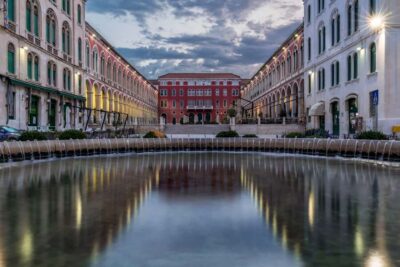
Republic Square is another 15-minute guided stop. This is a strong capstone for the tour’s big picture. By the time you reach it, you’ve seen palace space, passage space, market space, and waterfront space. Now you’re looking at a civic center.
In tours that only cover monuments, squares like this can feel like “just more impressive buildings.” Here, the guide treats the square like a stage for political identity. The tour weaves in topics such as religion, economics, and demographics—how groups form, how they interact, and how past decisions still echo through modern governance and social attitudes.
If you like to connect the dots, this is the moment where your mental map clicks. You start understanding why the same architecture can support different stories depending on who’s telling it and what they need the story to accomplish.
Finishing on Trumbićeva obala: leaving with context, not just photos
The tour finishes at Trumbićeva obala. Even with a shorter ending segment, it’s a smart way to close. You step from the civic-sounding square back toward the waterfront atmosphere, and it helps you integrate the ideas with your actual surroundings.
This is where you’ll appreciate the tour’s pacing. You don’t just race from site to site. You build themes, then test them against what you see in real time. That’s one reason this works well as a first-day tour: it gives you a conceptual toolkit for later self-guided exploring.
It also helps if you’re someone who likes to ask why things look the way they do. After this, you’ll be asking sharper questions in museums and on the street.
Price and value: why $33 can feel like more than a walk
The price is $33 per person for about 2 hours of English-language guidance, plus included audio-visual material for each topic.
That combination is the real value. A walking tour at this price can sometimes mean a lot of talking and not much structure. Here, the visuals help the themes land. If you’re the type who learns better when you can connect a spoken point to a visual reference, you’ll likely find the included material useful.
Also, the guide is not treating this like a casual stroll-through. The tour is explicitly built for people interested in contested history and current social controversies. If that’s your thing, the price stops feeling like “a tour fee” and starts feeling like “a guided lens.” You’re buying interpretation, not just movement.
Who should book this tour, and who might skip it
This tour fits you if:
- You want more than architecture and dates
- You enjoy conversations about identity, religion, and politics
- You like learning how the past is used in the present
- You’re okay with complexity and nuanced topics
You might consider a different option if you want:
- Only a classic highlights route with minimal controversy
- An easy, light history walk that avoids social tensions
One of the nice notes from real-world use of the tour style: the guide has been able to adapt to weather and allow time for interpretation, which matters when you’re dealing with serious topics and want to keep your footing (literally and mentally).
Practical tips to get the most from it
- Bring comfortable shoes. You’ll be moving through central Split for the full 2 hours.
- If you’re sensitive to tough topics, you may want to mentally prep for discussions about identity and taboo subjects.
- Use the guide’s pace. Don’t race ahead mentally. Let each site’s meaning connect to the next.
- If you need clarification, ask. The tour is built around guided explanation tied to specific places, so questions can work well.
And if you’re traveling with someone who prefers simpler sightseeing, you can still do it—you’ll just want to set expectations before you start. The tour’s whole point is that these questions matter.
Should you book Controversies behind Split and Croatia?
Book this tour if you want your first days in Split to make sense faster. The route gives you the recognizable center, but the real payoff is the interpretive framework: you learn how contested history becomes contemporary identity, and how social debates are shaped by what people remember—and what they argue to forget.
Skip it if you mainly want effortless sightseeing. This tour is for people who like thinking, not just taking photos. If that sounds like you, it’s a solid way to see Split with sharper eyes.
FAQ
How long is the Split cultural walking tour?
The tour lasts 2 hours.
What is the price per person?
It costs $33 per person.
Is the tour guided and in English?
Yes. It includes a live guide and the tour is in English.
Where does the tour start?
You meet at Ul. kralja Tomislava 12, 21000 Split, Croatia. The meeting point is next to the fountain located in the middle of the park.
Where does the tour end?
The activity ends at Trumbićeva obala, and it notes that it ends back at the meeting point area.
Does the tour include anything besides the walking guide?
Yes. The tour includes additional audio-visual material for each topic covered.
Are there any extra costs during the tour?
No extra costs are listed as included.
Is the tour wheelchair accessible?
Yes, it is wheelchair accessible.
What’s the cancellation policy?
You can cancel up to 24 hours in advance for a full refund.
Can I reserve now and pay later?
Yes. You can reserve your spot and pay later.
More Tours in Split
- From Split: Krka Waterfalls, Food & Wine Tasting Tour
★ 5.0 · 9,326 reviews - Blue cave, Mamma Mia and Hvar, 5 islands speedboat tour
★ 5.0 · 7,150 reviews - From Split: Krka Waterfalls, Food & Wine Tasting Tour
★ 4.9 · 6,598 reviews - Split/Trogir: Blue Cave, Mamma Mia, Hvar and 5 Island Tour
★ 4.6 · 6,320 reviews - Blue Cave and Hvar Tour – 5 Islands Tour from Split and Trogir
★ 5.0 · 4,815 reviews
More Tour Reviews in Split
- Split: Krka Waterfalls Trip with Boat Cruise and Swimming
★ 4.8 · 10,519 reviews - From Split: Krka Waterfalls, Food & Wine Tasting Tour
★ 5.0 · 9,326 reviews - Blue cave, Mamma Mia and Hvar, 5 islands speedboat tour
★ 5.0 · 7,150 reviews - From Split: Krka Waterfalls, Food & Wine Tasting Tour
★ 4.9 · 6,598 reviews - Split/Trogir: Blue Cave, Mamma Mia, Hvar and 5 Island Tour
★ 4.6 · 6,320 reviews
Walk Split a Different Way
- Split: Old Town and Diocletian Palace Walking Tour
★ 4.9 · 4,727 reviews - Walking Tour of Split and Diocletian’s Palace
★ 5.0 · 2,588 reviews - Krka Waterfalls tour with Trogir Walking tour and Krka panoramic boat cruise
★ 5.0 · 1,659 reviews - Split & Diocletian’s Palace Walking Tour
★ 5.0 · 1,125 reviews - Walking Tour of Split with a ‘Magister’ of History
★ 5.0 · 1,122 reviews
Still deciding? More Split trips we have been out and reviewed

Split Old Town Walking Tours, compared.
 ★ 4.9Old Town and Diocletian Palace Walking TourFrom $174,727 reviews
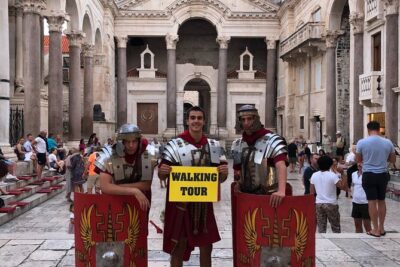 ★ 5.0Walking Tour of Split and Diocletian’s PalaceFrom $482,588 reviews
 ★ 5.0Krka Waterfalls tour with Trogir Walking tour and Krka panoramic boat cruiseFrom $481,659 reviews
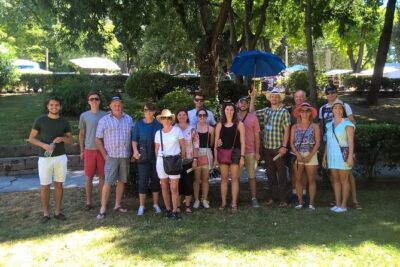 ★ 5.0Split & Diocletian’s Palace Walking TourFrom $211,125 reviews
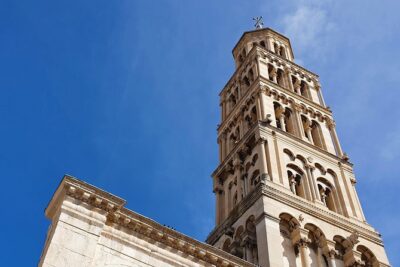 ★ 5.0Walking Tour of Split with a ‘Magister’ of HistoryFrom $341,122 reviews
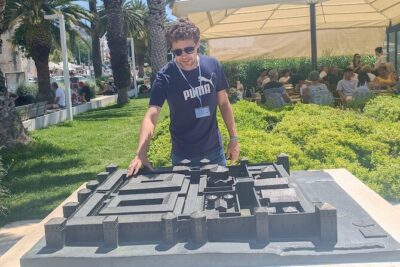 ★ 5.0Split Walking Tour with Professor of HistoryFrom $24926 reviews
 ★ 4.7Diocletian Palace & Old Town Guided Walking TourFrom $17882 reviews
 ★ 4.7Krka Waterfalls Cruise & Trogir Walking TourFrom $47681 reviews
Browse the lists this tour appears in