
Reviewed · SPLIT OLD TOWN WALKING TOURS
Private History Split Walking Tour in Italian – Small group
Diocletian’s Palace is not a museum wall. It’s a living address system for Split, and a great guide can make it click fast. This private, Italian-language walking tour connects the big names (Diocletian, Gregory of Nin, Marko Marulić) to the exact stones you’re standing on.
I really like two things here: the tight 1.5-hour route that hits the major parts of the palace, and the way the guide turns “old ruins” into cause-and-effect stories. One possible drawback: if you struggle with steps or uneven historic flooring, parts of the palace complex may feel tiring.
In This Review
- The tour highlights that actually matter
- Key things I’d plan around
- Why this walking tour works so well in Split
- Starting point: Peristil ulica and the palace orientation trick
- Stop inside the palace: the Peristyle you can navigate from
- Vestibulum of Diocletian: where the entrance area gets story weight
- Diocletian’s substructures: the underworld of function and construction
- The Golden Gate and Gregory of Nin: where religion meets language
- Riva Harbor stop: a bronze model that makes the palace real
- Fruit’s Square (Trg Brace Radic): Venice-era layers and a literary hero
- Split Synagogue pass-by: history context without ticket pressure
- About the guides: Italian language and real storytelling
- Value for the money: $69.39 for 90 minutes that actually gives structure
- Who this tour is best for (and who should rethink it)
- Practical tips to make your day smoother
- Should you book the Private History Split Walking Tour in Italian?
The tour highlights that actually matter
Guides are consistently praised for being well prepared and for giving clear explanations on what you’re seeing. I also like that you get practical sightseeing with built-in context—why Diocletian rose, how the palace was laid out, and how later Split layers fit on top.
On the flip side, you won’t cover everything inside the palace world in 90 minutes. You’ll skip the museum portion in one area, so if you want that extra indoor content, plan to add it after the walk.
On your own schedule: more private tours in Split
- SPLIT-PRIVATE Walking Tour of Diocletian’s Palace & Old Town★ 5.0 · 467 reviews
- Private Krka Waterfalls tour with 30min Boat Cruse★ 4.0 · 458 reviews
- Split by Private Electric Rickshaw – Palace & Hidden Gems★ 5.0 · 412 reviews
- Private Blue cave, Mamma Mia and Hvar, 5 islands tour from Split★ 5.0 · 387 reviews
Key things I’d plan around
- Peristyle first: you start in the palace’s central square, so you get orientation quickly.
- Vestibulum stop: you’ll hear about Diocletian’s entrance area, with a chance of traditional Dalmatian singing.
- Substructures walk-through: you see the palace under-story, but not the museum part.
- Golden Gate + Gregory of Nin: you get the main portal and a direct link to language and local identity.
- Riva Harbor model moment: a bronze model helps you visualize the palace’s original scale.
- Synagogue pass-by: you get the historical context, but admission isn’t included.
Why this walking tour works so well in Split
Split can feel like a maze at first. Streets fork, buildings stack on top of Roman foundations, and you’ll see arches and columns everywhere. This tour helps you sort the place. In about 90 minutes, you get a guided mental map of Diocletian’s Palace and the key spots that shaped the city afterward.
The second reason it works is pacing. The stops are short, so you’re not stuck listening for long stretches without looking up. And because this is a private tour where only your group joins, you can ask questions without feeling rushed by a crowd.
Finally, I like the story focus. The tour isn’t just dates and names. It follows the arc of Diocletian’s rise—from being an outsider to becoming a man with enormous power—then shows how later Split communities used (and reshaped) that Roman space.
Starting point: Peristil ulica and the palace orientation trick
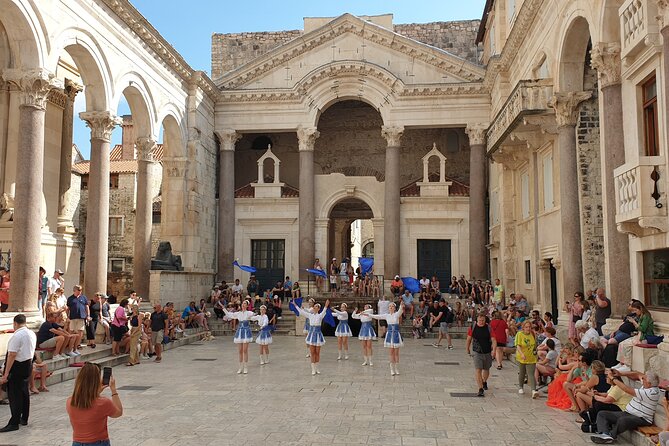
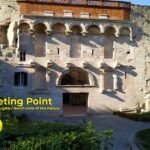
You meet at Peristil ulica (Peristil ul., 21000, Split). From there, the tour immediately aims at the best orientation spot: the Peristyle of Diocletian’s Palace.
This matters because the palace is huge, and many first-time visitors get lost in the “wow factor” and forget where they are. In the central square, you can see how to reach many other areas. It’s the kind of starting move that makes the rest of the walk feel smoother. You’ll understand the layout as you go, not after.
The tour also keeps the first stop efficient. You’re there long enough to reset your bearings, but not so long that you’re bored before the real highlights begin. If you’re taking Split in one day, this is a smart way to spend the first slice of your time.
Stop inside the palace: the Peristyle you can navigate from
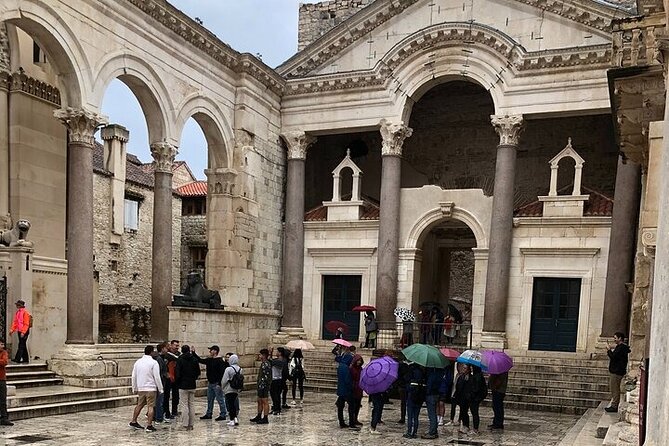
At the Peristyle, the guide turns what you see into a framework. Even if you only know Diocletian as a Roman emperor, you’ll start to grasp how the palace was designed to function—how spaces connect and how the palace’s central area becomes the hub.
This is also where you’ll start noticing the palace isn’t sealed off. Today it’s surrounded by life: shops, movement, and everyday buildings that grew into the Roman footprint. That blend is what makes Split different from other “walk through ancient ruins” days.
Practical tip: wear shoes you trust. The area is historic stone, and you’ll be walking on surfaces that can be uneven.
Prefer to walk it? More guided strolls through Split

Vestibulum of Diocletian: where the entrance area gets story weight
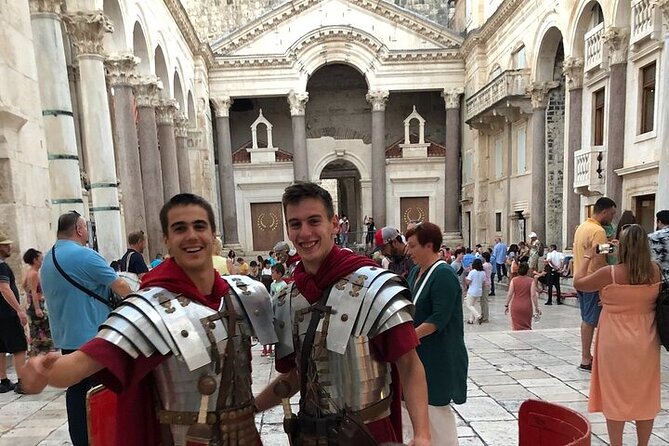
Next is the Vestibulum of Diocletian’s Palace. This is a shorter stop, but it’s targeted. You’re not just standing near an interesting doorway. You’re learning what this entrance zone meant and how it fits into the palace’s identity as both power and ceremony.
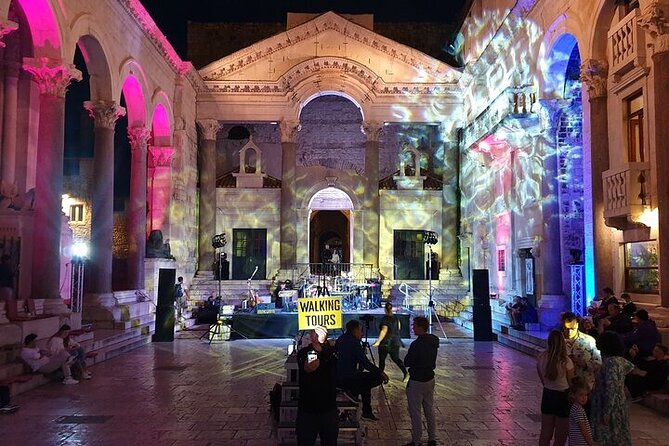
The tour also hints at something special: you might hear traditional Dalmatian singing. That doesn’t make the stop “guaranteed entertainment,” but it’s the kind of moment that can make a Roman site feel local and alive.
If you enjoy hearing how culture and history overlap—especially in places where old structures became stages for new traditions—this is a highlight.
Diocletian’s substructures: the underworld of function and construction
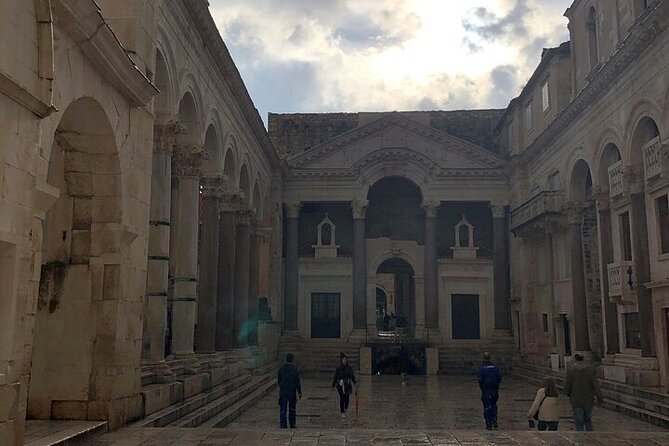
After the vestibule, you move into the substructures of Diocletian’s Palace. This is one of the most interesting parts of the day if you like how buildings were made and how they worked.
Here’s what you should expect: you’ll go through the substructures and learn about how they were constructed and what they were used for over time. The tour note matters—you won’t visit the museum portion of the substructures. The idea is to keep the walking circuit flowing and give you the big picture while still saving time.
For me, that’s a good trade. It prevents the tour from turning into a long indoor detour, and it leaves you free to add the museum later if you want deeper detail at your own pace.
Practical tip: the substructure areas can feel more enclosed, and indoor temperatures can differ from the outdoor air. If you’re visiting in warm months, plan for a bit of temperature swing.
The Golden Gate and Gregory of Nin: where religion meets language
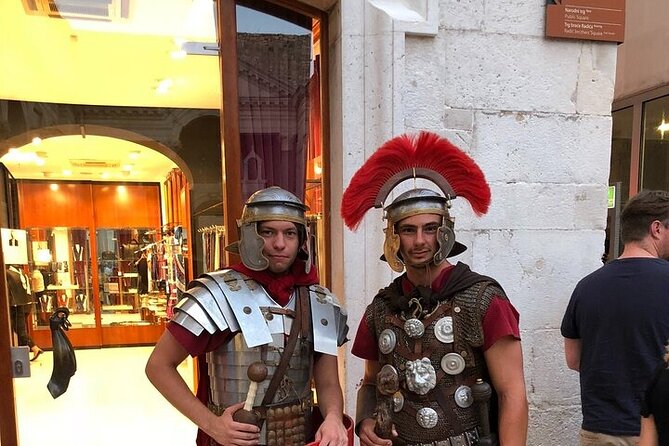
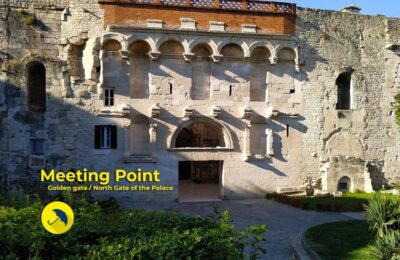
Then you reach the Golden Gate, which is the palace’s main entrance. This stop is built around a standout detail: you’ll see the statue of Gregory of Nin and learn why he matters—not only to local religious history, but also to our history and language.
That’s not a throwaway line. In Split, major religious figures often show up in public art and street memory because identity is part of how the city recounts itself. Gregory of Nin is one of those figures that helps you understand why people still point at certain corners and say, this is where meaning lives.
And you’ll notice something else: the palace entrance isn’t just an architectural feature. It frames how you enter the story of Split.
If you want your day to include a moment that feels like it has a heartbeat—not just stone and timelines—this is it.
Riva Harbor stop: a bronze model that makes the palace real
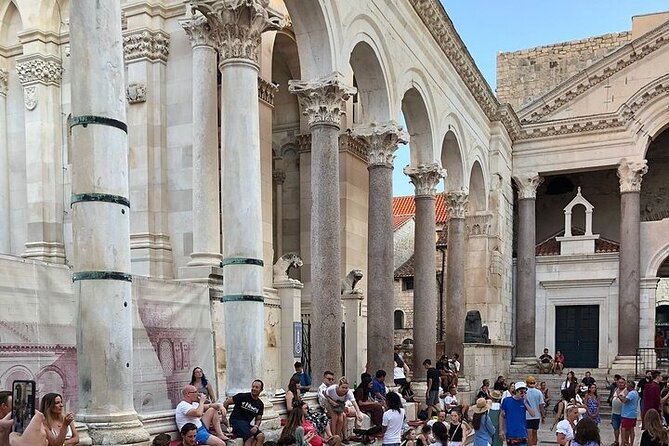
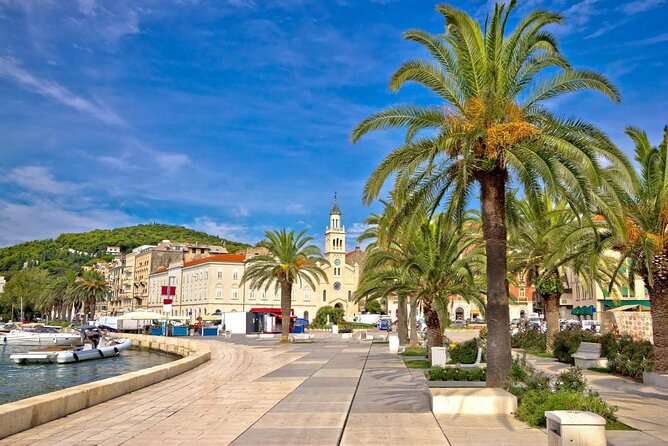
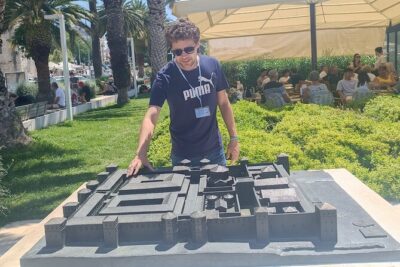
Next up is the Riva Harbor area. You’ll see a bronze model of Diocletian’s Palace and use it to wrap your head around scale. Walking through the real palace structures can be confusing until you’ve got a visual reference, and the model offers that quickly.
This is also where the tour connects Roman power to modern Split life. You’ll learn about the history of Split’s Riva promenade, which helps you understand why locals walk, meet, and linger where they do.
If you like travel moments that connect past and present—where you can sit down after a walk and recognize what you just learned—this stop is a good landing point.
Practical tip: Riva is lively. If you’re sensitive to crowds, plan to keep moving and let the guide lead you through the story before you stop for views.
Fruit’s Square (Trg Brace Radic): Venice-era layers and a literary hero
From the harbor you head to Fruit’s Square (Trg Brace Radic). Here the focus shifts from Roman foundations to later political and cultural layers.
You’ll learn about a 15th-century Venetian citadel and why that period left marks on the city fabric. Then you’ll connect the square to Marko Marulić, described here as the father of Croatian literature.
This stop is valuable because it reminds you Split didn’t just inherit Roman walls. It kept building identity on top of them—sometimes through governance, sometimes through language and ideas.
If you’re the kind of traveler who likes to understand why a city has certain public names and monuments, this is a strong moment. You’ll walk away with a specific story, not just a photo.
Split Synagogue pass-by: history context without ticket pressure
The final themed stop is the Split Synagogue, a 16th-century site. You’ll pass by it and learn about the history of the Jewish people in Split.
One important note for your planning: admission isn’t included. That means you should treat this part as context and orientation rather than an indoor visit.
I like tours that end with a balanced approach like this. You get the cultural thread, then you’re not forced into buying extra access to complete the story. If you’re curious, you can decide later if you want to add that visit.
About the guides: Italian language and real storytelling
This tour is described as Italian. In the feedback, the guides are repeatedly praised for being prepared and for speaking very good Italian.
I also noticed some guide names coming up often enough to matter: Maria gets singled out as helpful for learning Split’s history, and Doris is praised specifically for professionalism and interesting explanations. Mia Anica also appears in the set of guide credits, with compliments tied to how the tour is presented.
That’s a good sign for value. A historical walking tour lives or dies on the guide. When the explanations are clear and the pacing feels right, you come away with more than photos. You come away with connections.
If you’re not fluent in Italian, you might still enjoy the visuals, but this one is clearly built for an Italian-speaking audience.
Value for the money: $69.39 for 90 minutes that actually gives structure
At $69.39 per person for about 1 hour 30 minutes, the price sits in the mid-range for private history walking tours. Here’s why it can feel worth it:
- You’re paying for a human map of Diocletian’s Palace and its later layers, not just a route.
- The stops are chosen to reduce confusion: Peristyle orientation, Golden Gate focus, and a model at Riva for scale.
- You get a curated set of highlights across multiple eras, including Venetian-era context and a synagogue history stop.
There is also built-in cost clarity. Many parts here note admission ticket free, which helps keep your spending predictable. The synagogue admission isn’t included, so you have a clear boundary on where extras might come in.
If you’re short on time in Split and want the “main idea” of the palace explained without wandering on your own, this tour looks like good value.
Who this tour is best for (and who should rethink it)
This works especially well if:
- You want an efficient first-time Split experience focused on Diocletian’s Palace.
- You enjoy explanations that connect architecture, rulers, and everyday identity.
- You like small-group energy with the flexibility of a private setup.
It may be less ideal if:
- You have issues with high steps or heavy uneven walking. The palace layout can include areas that feel stairy or uneven even when you don’t think you’ll be climbing.
- You’re expecting a long museum-style visit. This is a walking-and-story route. The substructures museum portion is not included.
If you’re planning to visit Split in one day, this tour can give you the “why” behind the “wow.”
Practical tips to make your day smoother
A few things to pack mentally before you go:
- Bring comfortable shoes. The palace complex is old stone, and you’ll walk enough to care about footing.
- Arrive a few minutes early so you can start without stress at the Peristil ulica meeting point.
- If you want the synagogue interior or the substructures museum later, treat the tour as the foundation, not the full collection.
Also, if you care about language: this tour is offered in Italian, and the guide quality is a big part of what people praise. If you’re hoping for another language, double-check your booking details.
Should you book the Private History Split Walking Tour in Italian?
Yes, if you want a structured, high-signal walk through Diocletian’s Palace and the key civic stops around it. The route hits the orientation points (Peristyle), the power symbol (Golden Gate), the scale reference (Riva model), and the cultural layer moments (Venetian-era citadel context, Marko Marulić, and synagogue history). That’s the kind of mix that helps you understand Split instead of just seeing it.
I’d hold off only if you need lots of museum time or if your mobility is limited by steps and uneven stone. Otherwise, for a compact day and a real story-based approach, this is a smart booking.
More Tour Reviews in Split
- Split: Krka Waterfalls Trip with Boat Cruise and Swimming
★ 4.8 · 10,519 reviews - From Split: Krka Waterfalls, Food & Wine Tasting Tour
★ 5.0 · 9,326 reviews - Blue cave, Mamma Mia and Hvar, 5 islands speedboat tour
★ 5.0 · 7,150 reviews - From Split: Krka Waterfalls, Food & Wine Tasting Tour
★ 4.9 · 6,598 reviews - Split/Trogir: Blue Cave, Mamma Mia, Hvar and 5 Island Tour
★ 4.6 · 6,320 reviews
Walk Split a Different Way
- Split: Old Town and Diocletian Palace Walking Tour
★ 4.9 · 4,727 reviews - Walking Tour of Split and Diocletian’s Palace
★ 5.0 · 2,588 reviews - Krka Waterfalls tour with Trogir Walking tour and Krka panoramic boat cruise
★ 5.0 · 1,659 reviews - Split & Diocletian’s Palace Walking Tour
★ 5.0 · 1,125 reviews - Walking Tour of Split with a ‘Magister’ of History
★ 5.0 · 1,122 reviews
Just Your Group in Split
- SPLIT-PRIVATE Walking Tour of Diocletian’s Palace & Old Town
★ 5.0 · 467 reviews - Private Krka Waterfalls tour with 30min Boat Cruse
★ 4.0 · 458 reviews - Split by Private Electric Rickshaw – Palace & Hidden Gems
★ 5.0 · 412 reviews - Private Blue cave, Mamma Mia and Hvar, 5 islands tour from Split
★ 5.0 · 387 reviews - The Best of Split Private Tour
★ 5.0 · 338 reviews
Still deciding? More Split trips we have been out and reviewed


Split Old Town Walking Tours, compared.
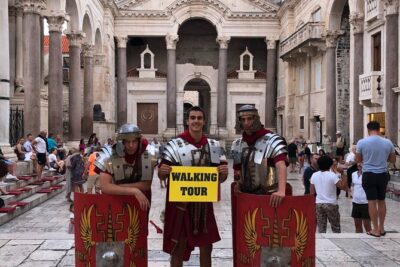
 ★ 4.9Old Town and Diocletian Palace Walking TourFrom $174,727 reviews
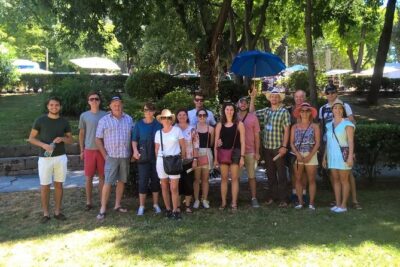
 ★ 5.0Walking Tour of Split and Diocletian’s PalaceFrom $482,588 reviews
 ★ 5.0Krka Waterfalls tour with Trogir Walking tour and Krka panoramic boat cruiseFrom $481,659 reviews
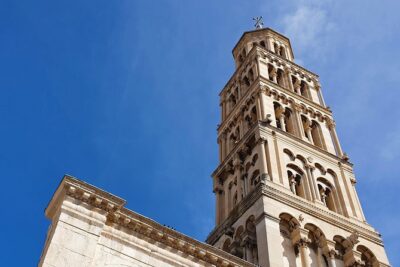
 ★ 5.0Split & Diocletian’s Palace Walking TourFrom $211,125 reviews
 ★ 5.0Walking Tour of Split with a ‘Magister’ of HistoryFrom $341,122 reviews
 ★ 5.0Split Walking Tour with Professor of HistoryFrom $24926 reviews
 ★ 4.7Diocletian Palace & Old Town Guided Walking TourFrom $17882 reviews
 ★ 4.7Krka Waterfalls Cruise & Trogir Walking TourFrom $47681 reviews
Browse the lists this tour appears in