
Reviewed · SPLIT OLD TOWN WALKING TOURS
History Split Walking Tour in French -Small group
Diocletian’s Palace is a maze worth learning. This French small-group walk turns the stone streets of Split into a clear story of power, construction, and what changed over time, with guides like Antonela and Irene bringing the details to life. You’ll get to the big showpieces of the palace and the old town without wandering around guessing what you’re looking at.
What I love most is how focused the route stays on the palace highlights that actually help you understand Split. The second win is the guide energy: you get firm explanations, lots of answers, and even moments like potential traditional Dalmatian singing near the vestibule. One possible drawback: it’s not the best fit if you dislike higher steps, because parts of the old palace area can mean uneven footing and stair-y sections.
At 1 hour 30 minutes on paper (often running closer to 2), it’s a smart way to get your bearings fast—especially if it’s your first time in Split and you want the big picture before you go exploring on your own.
In This Review
- Key highlights to look for
- French Split Palaces: what this tour is really good at
- Meeting spot and how to plan your timing
- Entering Diocletian’s Palace from the Peristyle: the “main room” mindset
- The Vestibulum: where you hear the palace’s quieter side
- Substructures of the palace: the part most people walk past
- The Golden Gate and Gregory of Nin: the history you can point at
- Riva Harbor and the bronze model: turning the palace into an image
- Fruit’s Square (Trg Brace Radic): Venetian layers and a literary hero
- The Split Synagogue: what you’ll see (and what you won’t)
- Guide quality is the whole game here
- Value for money: what your $69.14 is buying
- Who should book this tour, and who might skip it
- Should you book the History Split Walking Tour in French – Small group?
- FAQ
- How long is the History Split Walking Tour in French?
- Where does the tour start and end?
- Is the tour in French?
- What’s included in the tour price?
- Is the Split Synagogue included?
- Is this tour suitable for people with mobility issues?
Key highlights to look for

- French-language guide who keeps the story straight and easy to follow
- Small group size (max 30), which usually means more room for questions
- Diocletian’s palace core stops: Peristyle, vestibule, substructures, and Golden Gate
- Gregory of Nin statue stop plus the language/history connection around it
- Riva Harbor viewpoint with a bronze model of the palace
- Synagogue pass-by with the Jewish history context (entry not included)
Prefer to walk it? More guided strolls through Split
- Split: Old Town and Diocletian Palace Walking Tour★ 4.9 · 4,727 reviews
- Walking Tour of Split and Diocletian’s Palace★ 5.0 · 2,588 reviews
- Krka Waterfalls tour with Trogir Walking tour and Krka panoramic boat cruise★ 5.0 · 1,659 reviews
- Split & Diocletian’s Palace Walking Tour★ 5.0 · 1,125 reviews
French Split Palaces: what this tour is really good at
If you’ve ever stood inside Diocletian’s Palace and thought, So… where do I even start, this tour is built for you. The palace covers a lot of ground, but the best part is that the guide doesn’t throw random facts at you. You move from one meaningful palace space to the next, and every stop helps you build a mental map of how the site worked.
And yes, it’s in French. That matters because the guide’s explanations are a big chunk of the value. From what I saw in the feedback and what the format promises, the guides are well liked and known for being friendly, engaged, and able to answer questions—even the odd ones.
Price-wise, at $69.14 per person, you’re paying for a structured walk plus the guidance that makes the stones readable. You’re not paying for a giant bus transfer or a long day plan. It’s a concentrated experience at a fair rate, especially because most stops don’t require extra admissions during the tour (the synagogue is different—more on that below). If you want a quick but thorough orientation around Diocletian’s Palace, the value is pretty clear.
Meeting spot and how to plan your timing
The tour starts and ends back at the meeting point near Peristil ulica/Peristil ul. (21000 Split). It’s also described as being near public transportation, which is helpful if you’re arriving from the ferry port or your hotel isn’t walk-friendly.
Duration is listed at about 1 hour 30 minutes, but you should plan for a bit longer. Several experiences note it ran a little past the posted time, which is usually a good sign: it means the guide is taking questions and pacing at human speed. If you have a tight dinner reservation, I’d give yourself some cushion.
Because it’s a walking tour in the palace area, wear shoes you can trust. The old stone can be slick in spots and the terrain can feel uneven. And if you’re the type who hates stairs, pay attention: it’s specifically noted as not recommended for travelers who have issues with high steps.
Entering Diocletian’s Palace from the Peristyle: the “main room” mindset
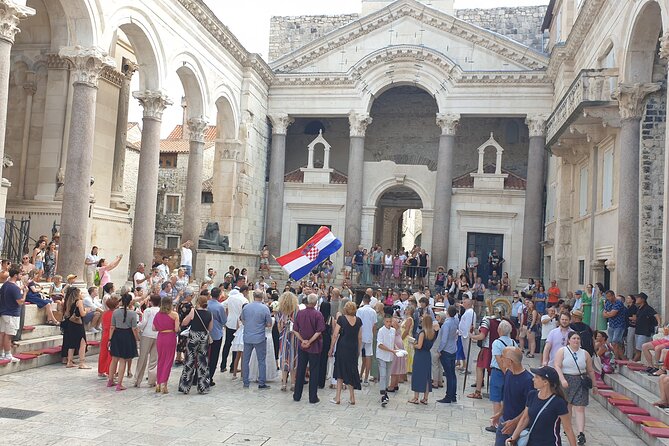
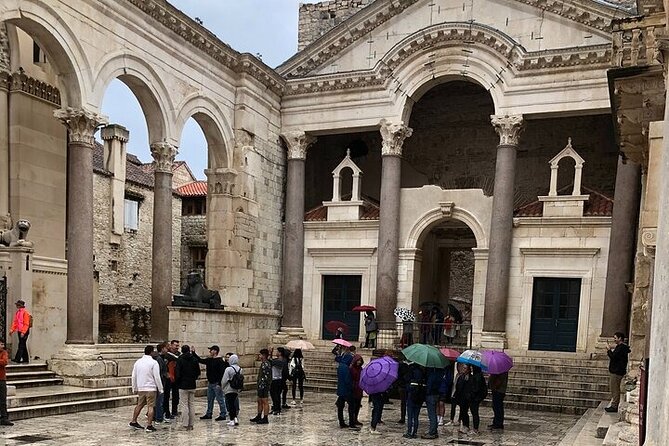
Stop 1 is the Peristyle of Diocletian’s Palace, essentially the central square and the place that connects you to lots of other key locations. This is an excellent first stop because it gives you your bearings. Once you understand the Peristyle, the palace stops feeling like a maze and starts feeling like a designed space.
The Peristyle is also a psychological trick. When you first arrive, the palace can seem like chaos. But standing in the central hub makes the rest of the tour click. The tour framing here is practical: you learn what things are and why they’re arranged where they are, so later, when you wander on your own, you’ll know what you’re looking at.
Admission here is marked as free during the tour, so you’re not juggling ticket logistics in your first minutes.
The Vestibulum: where you hear the palace’s quieter side
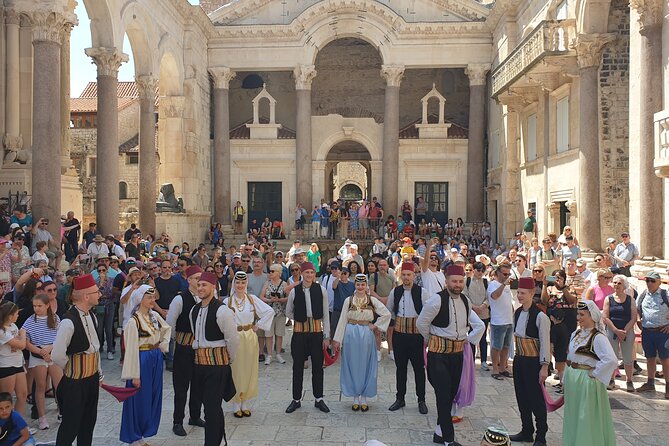
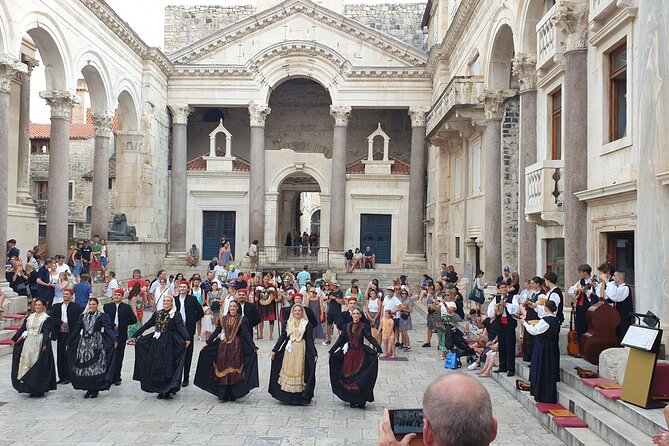
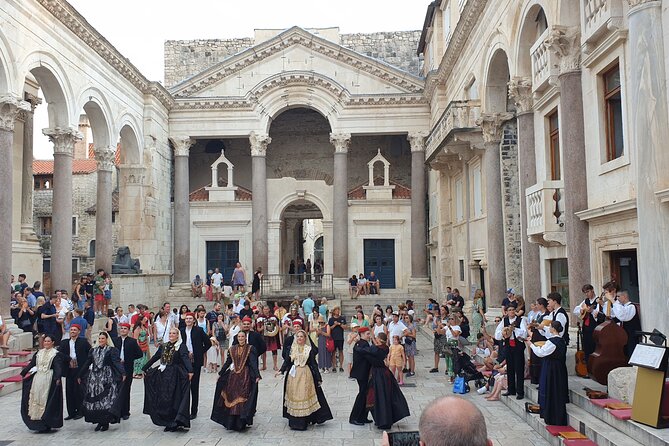
Next you go to the Vestibulum of Diocletian’s Palace. This is a short stop, but it’s where the guide can do something more than show you stone. You learn about the vestibule’s role and the broader story around Diocletian.
One nice detail is that you might hear traditional Dalmatian singing. That’s not just entertainment; it fits the theme of the tour, tying the palace setting to local cultural life. Even if the singing doesn’t happen, the point is that the guide aims to bring the place to life beyond sightseeing photos.
Again, admission is free for this stop in the tour context.
A few more Split boat days and tours worth a second look



Substructures of the palace: the part most people walk past
Stop 3 moves you through Diocletian Palace substructures—the under-structures and supporting spaces that helped the palace function. This is a smart choice for a guided tour because most visitors don’t naturally know what they’re seeing. The guide explains how the palace construction came together and what the substructures were for across time.
A key clarification: the tour notes that you won’t visit the museum part of the substructures. You can visit it later if you want more depth on your own schedule. That’s actually a good balance. You get the architectural story during the walk, and you’re not forced into extra time in a museum if you prefer to keep moving.
Admission is listed as free for this stop during the tour.
The Golden Gate and Gregory of Nin: the history you can point at
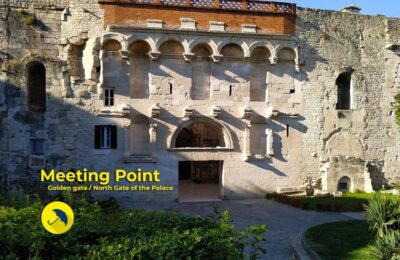
Stop 4 is the Golden Gate, the main entrance of Diocletian’s Palace. This is one of those places where you can feel the palace’s scale. Gates are where control, identity, and power show up in physical form.
Here the tour connects the palace to later Croatian history through the statue of Gregory of Nin. The guide explains his importance to history and to language. Even if you think you only came for Roman remains, this is where the tour broadens your understanding: Split isn’t stuck in one era. It keeps layering meaning.
Admission is listed as free for this stop as well.
Riva Harbor and the bronze model: turning the palace into an image
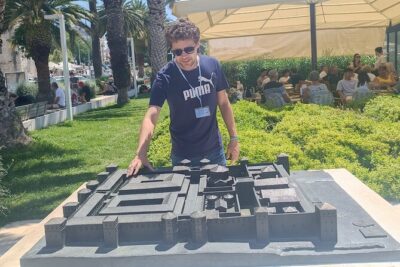
Stop 5 takes you to Riva Harbor, and it includes a neat visual learning moment: you’ll see a bronze model of Diocletian’s Palace. If you’ve ever struggled to visualize how the complex palace layout maps onto the modern city, this model helps a lot.
Then the guide shifts from Roman-scale to local-scale. You learn about the history of Split’s Riva promenade—the stretch many people associate with strolling, sunset views, and coffee breaks. That contrast is valuable. It shows you how a once-fortified palace world influences the modern city’s rhythm.
This stop is about 15 minutes, with admission marked as free during the tour.
Fruit’s Square (Trg Brace Radic): Venetian layers and a literary hero
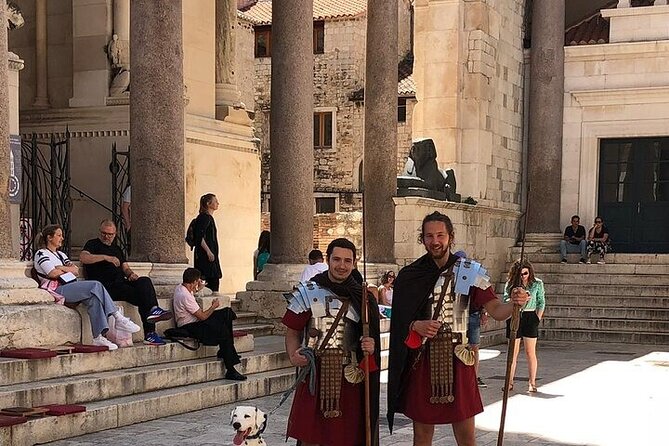
Stop 6 brings you to Fruit’s Square (Trg Brace Radic). This isn’t another Roman-only stop, which is part of why the tour works. You get a quick look at a 15th-century Venetian citadel and why that layer matters in Split’s story.
The tour also highlights Marko Marulić, described as the father of Croatian literature. That detail is exactly the kind of information that makes old-city walks more satisfying. You’re not just ticking off monuments. You’re learning who shaped cultural identity, and how different groups left traces that still show up in street and square life.
Admission is free for this stop in the tour format.
The Split Synagogue: what you’ll see (and what you won’t)
Stop 7 is the Split Synagogue area. The tour says you’ll pass by the 16th-century synagogue and learn about the history of the Jewish people in Split.
Important practical note: admission is not included. The tour’s language suggests you won’t do a full interior visit as part of this walk. If seeing inside is high on your list, you’ll need to arrange that separately based on what’s available during your trip.
Even for a pass-by stop, this can be meaningful. It gives you a broader view of Split beyond the palace and the dominant Christian/Venetian layers you’ll see elsewhere.
Guide quality is the whole game here
This is where the reviews really matter, because the tour is short enough that the guide’s skill is the difference between I saw things and I understood things. The feedback emphasizes guides who are friendly and highly engaged, and French that’s clear enough for visitors to follow without getting lost.
People specifically mention guides like Antonela speaking with warmth, humor, and firm knowledge, and Irene being praised for making the visit feel special even for families. There are also comments about guides taking time to explain and being able to answer questions, including unusual ones.
So what should you do as a reader? Come with at least one question in mind:
- Why did Diocletian’s place survive in this city form?
- How did the palace become part of daily life?
- What makes Gregory of Nin important enough to have a statue here?
If you ask even one thing, you’ll likely leave with more than the standard highlights.
Value for money: what your $69.14 is buying
At $69.14, you’re not paying for a long day or an all-day museum ticket. You’re paying for:
- a structured path through the palace’s key zones,
- a French-speaking guide who can explain what you’re seeing,
- and mostly free admissions at each of the palace stops.
In a place like Split, paying for a guide often makes sense because the city’s main landmark is also its confusing one. Diocletian’s Palace is physically impressive, but it’s not automatically intuitive. This tour helps you make it intuitive.
The one “watch this” item is the synagogue admission. But since you’re passing by and learning the context, you can still get value even if you don’t go inside that particular building during the tour.
Who should book this tour, and who might skip it
This is a great pick if:
- you want a French guided walk and would rather learn with a plan than wander alone,
- it’s your first time in Split and you want an orientation around Diocletian’s Palace,
- you like architecture but also want the political and cultural story behind it.
You might think twice if:
- you need step-free walking or struggle with high steps,
- you prefer self-guided exploration with minimal structured stops,
- you don’t care about history beyond a quick look.
If you’re traveling with kids, the feedback suggests the guide style can work well for families too, with the right pacing and engagement. And for couples, it’s also easy: short enough to fit into a day plan, focused enough to avoid feeling like a school lecture.
Should you book the History Split Walking Tour in French – Small group?
Yes, if your goal is to understand Diocletian’s Palace and the old town without getting lost in the details. This tour’s strength is how it connects spaces: Peristyle to vestibule, then substructures to the Golden Gate, and finally out to the modern city feel of Riva and the cultural layers around squares like Trg Brace Radic.
Book it if you want a guide-driven story in French, with stops that actually change how you see the palace. Skip it only if stairs are a problem for you or if you want a totally free-form walk with no guided structure.
If you do book: plan for a little over the listed time, bring comfortable shoes, and come ready to ask at least one question. That’s when a good palace tour turns into a memorable one.
FAQ
How long is the History Split Walking Tour in French?
It’s listed at about 1 hour 30 minutes. Some experiences note it runs longer than the posted time.
Where does the tour start and end?
The meeting point is Peristil ulica/Peristil ul., 21000, Split, Croatia. The tour ends back at the same meeting point.
Is the tour in French?
Yes, the tour is in French.
What’s included in the tour price?
The tour includes a guided walk led by an educated guide. Most stops are marked as free for admission within the tour, and you’ll use a mobile ticket.
Is the Split Synagogue included?
You’ll pass by the Split Synagogue and learn about it, but admission is not included.
Is this tour suitable for people with mobility issues?
It’s not recommended for travelers who have issues with high steps. Service animals are allowed, and the tour is near public transportation.
More Tours in Split
- From Split: Krka Waterfalls, Food & Wine Tasting Tour
★ 5.0 · 9,326 reviews - Blue cave, Mamma Mia and Hvar, 5 islands speedboat tour
★ 5.0 · 7,150 reviews - From Split: Krka Waterfalls, Food & Wine Tasting Tour
★ 4.9 · 6,598 reviews - Split/Trogir: Blue Cave, Mamma Mia, Hvar and 5 Island Tour
★ 4.6 · 6,320 reviews - Blue Cave and Hvar Tour – 5 Islands Tour from Split and Trogir
★ 5.0 · 4,815 reviews
More Tour Reviews in Split
- Split: Krka Waterfalls Trip with Boat Cruise and Swimming
★ 4.8 · 10,519 reviews - From Split: Krka Waterfalls, Food & Wine Tasting Tour
★ 5.0 · 9,326 reviews - Blue cave, Mamma Mia and Hvar, 5 islands speedboat tour
★ 5.0 · 7,150 reviews - From Split: Krka Waterfalls, Food & Wine Tasting Tour
★ 4.9 · 6,598 reviews - Split/Trogir: Blue Cave, Mamma Mia, Hvar and 5 Island Tour
★ 4.6 · 6,320 reviews
Walk Split a Different Way
- Split: Old Town and Diocletian Palace Walking Tour
★ 4.9 · 4,727 reviews - Walking Tour of Split and Diocletian’s Palace
★ 5.0 · 2,588 reviews - Krka Waterfalls tour with Trogir Walking tour and Krka panoramic boat cruise
★ 5.0 · 1,659 reviews - Split & Diocletian’s Palace Walking Tour
★ 5.0 · 1,125 reviews - Walking Tour of Split with a ‘Magister’ of History
★ 5.0 · 1,122 reviews
Still deciding? More Split trips we have been out and reviewed
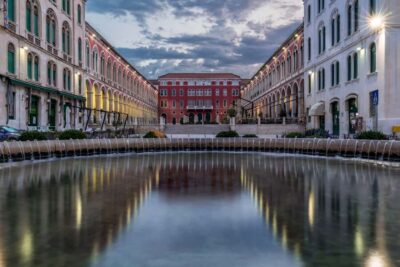


Split Old Town Walking Tours, compared.
 ★ 4.9Old Town and Diocletian Palace Walking TourFrom $174,727 reviews
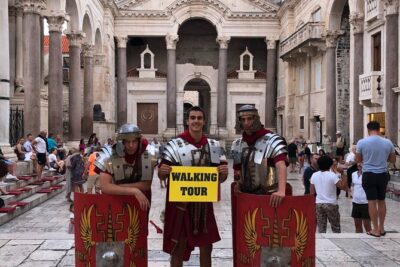 ★ 5.0Walking Tour of Split and Diocletian’s PalaceFrom $482,588 reviews
 ★ 5.0Krka Waterfalls tour with Trogir Walking tour and Krka panoramic boat cruiseFrom $481,659 reviews
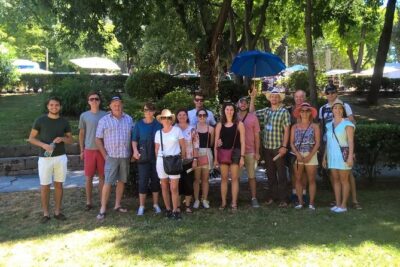 ★ 5.0Split & Diocletian’s Palace Walking TourFrom $211,125 reviews
 ★ 5.0Walking Tour of Split with a ‘Magister’ of HistoryFrom $341,122 reviews
 ★ 5.0Split Walking Tour with Professor of HistoryFrom $24926 reviews
 ★ 4.7Diocletian Palace & Old Town Guided Walking TourFrom $17882 reviews
 ★ 4.7Krka Waterfalls Cruise & Trogir Walking TourFrom $47681 reviews
Browse the lists this tour appears in