
Reviewed · SPLIT OLD TOWN WALKING TOURS
Experience Split With Local Professional Historian – Private
Roman walls in the heart of Split. This private, English-speaking historian-led stroll turns the old streets into a clear story, from the first gate into Diocletian’s Palace to the city squares that still run daily life. I like that it is structured, not just sightseeing, and you get visual help with 3D reconstruction images so you can picture what you’re standing on.
Two things I really like: you move as a group at a human pace, and your guide can handle real travel hiccups (late flights, tight dinner plans) without turning it into a rushed lecture. The only real consideration is timing and entry: the tour is offered Monday–Friday 5:00 PM–7:00 PM, and admission tickets are not included, so you may pay separately if you add interior visits on your own.
In This Review
- Key highlights to look for
- Why this private Split palace walk feels different
- Price and what $156.21 per group really means
- Meeting points and the 2-hour flow that keeps it sane
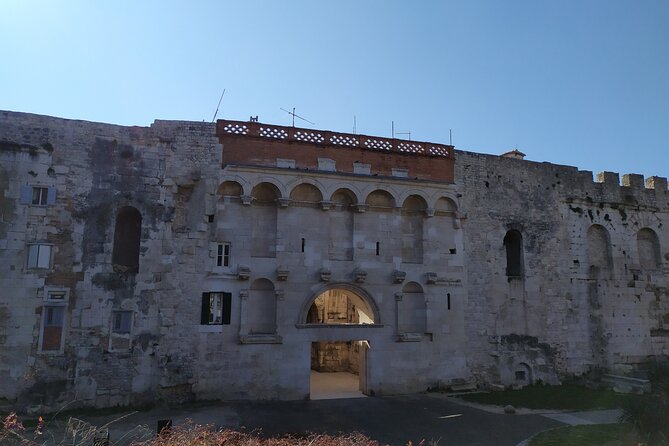
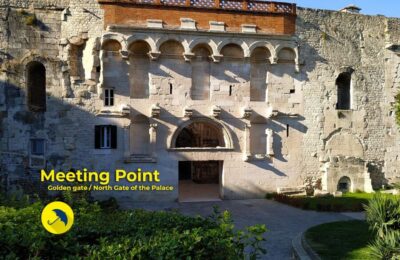
- Golden Gate: starting Split with a gate, not a monument
- Gregory of Nin statue: the story behind the famous figure
- Diocletian’s Palace (Palazzo di Diocleziano): the centerpiece you actually understand
- A note on what you won’t get (and how to plan)
- Peristyle: where people met, and where rules separated them
- Triclinium and the dining-room logic of empire
- Temple of Jupiter (outside): religion you can feel in the layout
- Cathedral of Saint Domnius: outside looks, inside warnings
- Vestibulum: the pre-entrance to power
- Riva Harbor and Fruit Square: the city keeps using the old bones
- Pjaca (People’s Square): where the city gathers, then keeps gathering
- What makes the guide style work (and how to get more out of it)
- Quick planning tips before you go
- Should you book this private historian tour?
- FAQ
- How long is the Split private historian tour?
- Is this tour private or shared?
- What language is the tour offered in?
- Where do I meet the guide and where does the tour end?
- Are admission tickets included?
- Is the start time fixed?
Key highlights to look for
- Master’s degree local historian guide who can answer follow-up questions as you walk
- 3D reconstruction display book to make palace ruins easier to understand
- Golden Gate to Pjaca route that links major monuments to how Split developed
- Diocletian’s Palace inside-and-out focus: Peristyle, cellars, temple views, and more
- Private group with flexible start times by request, so you’re not stuck with a mass-tour clock
- Practical pacing for breaks if someone in your group needs to sit or move slower
On your own schedule: more private tours in Split
- SPLIT-PRIVATE Walking Tour of Diocletian’s Palace & Old Town★ 5.0 · 467 reviews
- Private Krka Waterfalls tour with 30min Boat Cruse★ 4.0 · 458 reviews
- Split by Private Electric Rickshaw – Palace & Hidden Gems★ 5.0 · 412 reviews
- Private Blue cave, Mamma Mia and Hvar, 5 islands tour from Split★ 5.0 · 387 reviews
Why this private Split palace walk feels different
Split is one of those places where the stones are doing the talking. The difference here is that you don’t just get dates—you get how the pieces connect, and why people lived the way they did. The route is designed to follow the logic of Diocletian’s Palace first, then show how the palace became the medieval core of the city.
The guide brings a historian’s lens, with a format that stays easy to follow during a 2-hour walk. You’ll hear what things functioned for—gates, courtyards, dining spaces, religious shifts—so you can look at the same walls and actually understand them.
Price and what $156.21 per group really means
The price is $156.21 per group up to 15 for about 2 hours. That sounds like a lot until you do the math with your group size.
- If you have a full group close to 15 people, you’re essentially paying a small amount per person.
- If it’s just two or four of you, it shifts toward a more premium private experience.
What makes it good value is that you get a guide with a master’s degree in history, plus the 3D reconstruction visuals. This isn’t just a walk with big-name stops. It’s a guided way to read the palace and city like a connected map, with time built in for questions.
Also: you get a mobile ticket, which keeps things simple on a phone. And the start time can be flexible if you coordinate beforehand.
Meeting points and the 2-hour flow that keeps it sane
You’ll start at Golden Gate, Dioklecijanova 7, 21000 Split. The tour ends around People’s Square (Pjaca), Narodni trg 16, 21000 Split.
That end point matters. It’s a natural place to keep exploring on your own afterward—cafes, streets branching off, and the center of older-town energy. The tour is listed for about 2 hours, and the route is mostly in central Split, so you’re not losing half your evening to travel.
One more timing note: it runs Monday–Friday from 5:00 PM to 7:00 PM. If you’re visiting in peak months or you’re trying to fit the tour around dinner, plan your schedule early and message ahead about your preferred start time.
Golden Gate: starting Split with a gate, not a monument
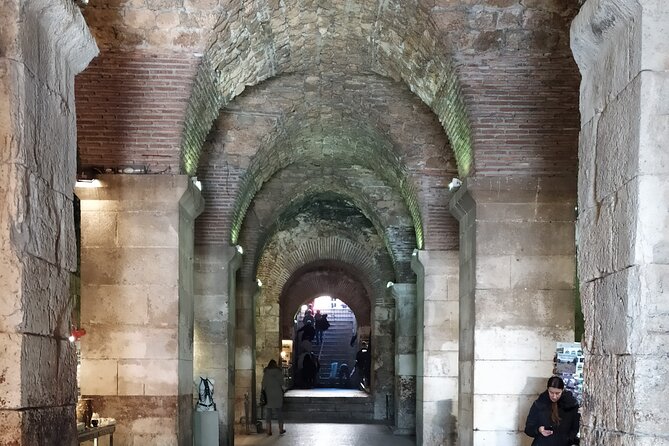
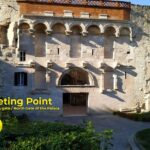
Stop one is the Golden Gate, the northern gate of Diocletian’s Palace. You’ll hear a key setup right away: this gate is famous, but it’s not made of gold. It’s stone, and that small joke helps you remember the larger point—how names travel faster than accuracy.
You’ll also get an orientation moment. Golden Gate sits opposite another major landmark—the Gregory of Nin area—so your guide uses that sightline to explain how Split’s “big story” starts at thresholds. Gates mattered because they controlled movement, access, and who belonged inside powerful spaces.
You’ll get about 15 minutes here, and the goal isn’t to stare at architecture. It’s to start seeing the palace as a designed world, with entry points that shaped daily life.
Prefer to walk it? More guided strolls through Split
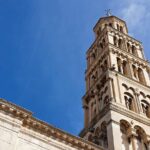

Gregory of Nin statue: the story behind the famous figure
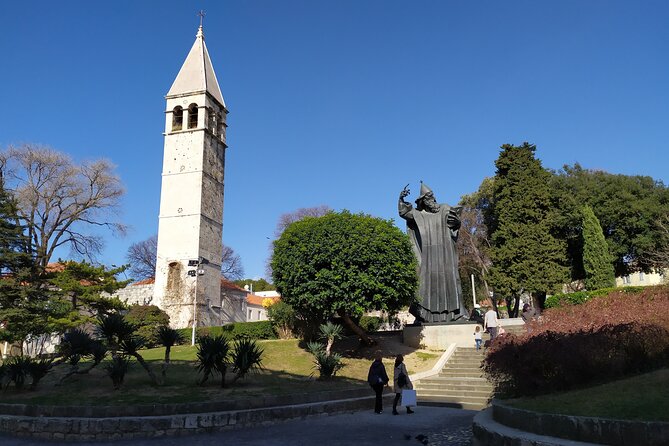
Next you’ll walk to the Grgur Ninski (Gregory of Nin) statue. This stop is short—about 10 minutes—but it serves as a cultural bridge. Instead of staying purely in Roman-era mechanics, your guide connects the palace legacy to later identity in Split.
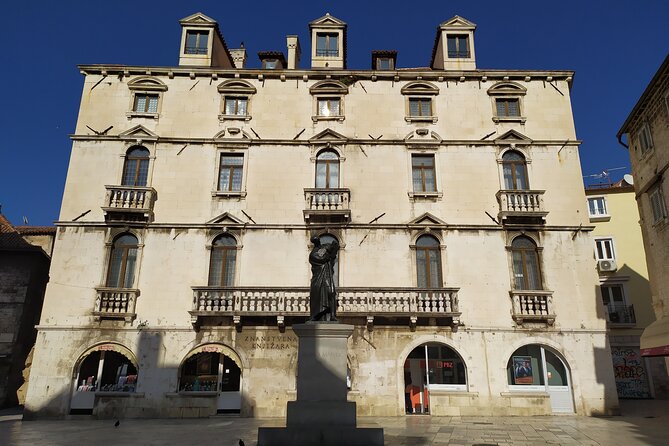
You’ll hear facts and a narrative about Gregory of Nin and the monument dedicated to him, including who made it. Even if you don’t plan to do more religious-history reading later, this is the kind of stop that makes Split’s statues feel less random and more like chapters.
Diocletian’s Palace (Palazzo di Diocleziano): the centerpiece you actually understand
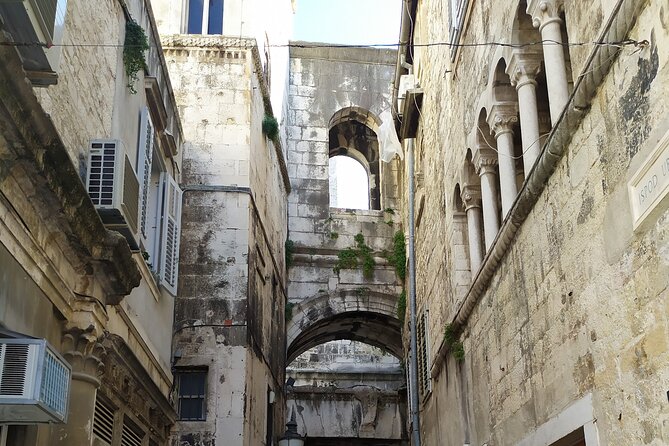
This is where the tour earns its name. The big stop is the Diocletian’s Palace in the old city center, one of the best-preserved monumental complexes of its kind. You’re not just walking past it. You’re getting a structured overview of what made Diocletian’s project work—and how it changed.
You’ll get time to see and hear about several key parts, including:
- Peristyle
- Jupiter’s Temple (outside)
- Diocletian’s Cellars (central substructure)
- Triclinium
- Mausoleum / Cathedral area (outside)
Your guide also covers the big transition: how the palace eventually shifted into a medieval city. You’ll hear what changed when different communities started using the spaces, and how that connects to later Christian presence and expansion.
This stop is about 20 minutes focused on the palace as a system. The payoff is practical. When you walk around afterward, you’ll know where the spaces fit—which makes photos better too.
A note on what you won’t get (and how to plan)
The tour includes views and explanations of major interior-related spaces, but it does not include admission tickets. So if you want to go inside specific sites, you may need to add those stops yourself with separate tickets.
Peristyle: where people met, and where rules separated them
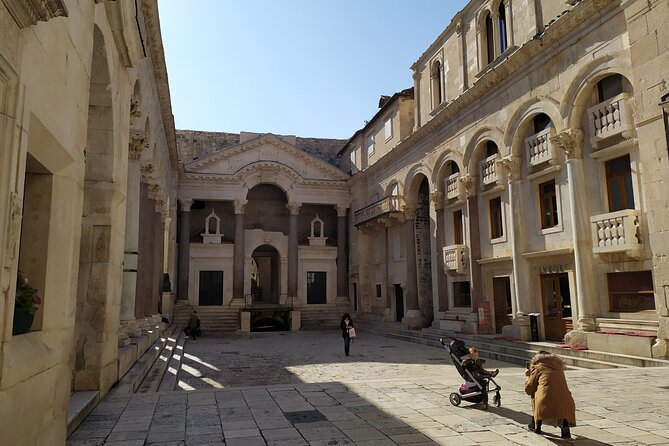
The tour next centers on the Peristyle of Diocletian’s Palace. This is the palace’s central courtyard, and it’s a mental key. Your guide explains the function: it connected people in the palace, but it also divided those with access to power from those without.
Standing there with the explanation changes what you see. Instead of a pretty courtyard, it becomes a “traffic diagram” of power and movement—who could pass, where views mattered, and how public life was staged.
From Peristyle, you’ll also connect to the cellars area. Your guide talks about how these spaces were used through history and why they mattered to the growth of Split. Even if you’ve seen photos before, this is the point where your understanding clicks.
This segment is about 20 minutes, and it leads naturally into dining spaces.
Triclinium and the dining-room logic of empire
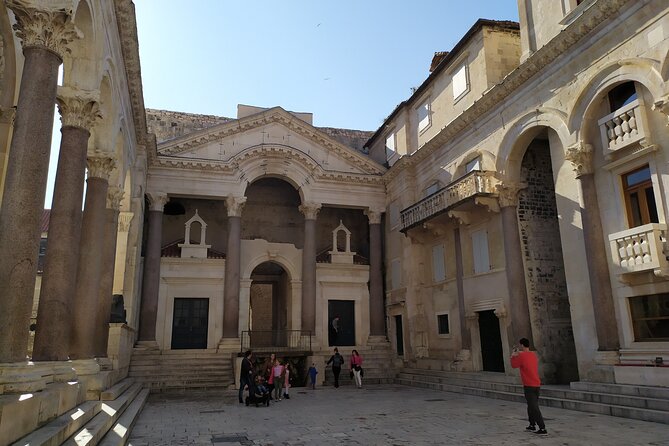
Right after the Peristyle, you check up on the Triclinium. Your guide explains Roman eating habits and, more importantly, how the emperor’s dining room was organized.
This is one of those small details that makes a site feel real. You stop thinking only about walls and start thinking about rituals: how people sat, how food and status were staged, and why architecture supported the social order.
If you’re into daily-life history, you’ll appreciate this. If you’re not, the guide keeps it readable by tying it back to what you see right in front of you.
Temple of Jupiter (outside): religion you can feel in the layout
Then it’s on to the Temple of Jupiter, viewed from outside. Roman temples were not optional decoration—they were a core part of public and private life, tied to the idea that the empire ran on religious order as much as political order.
You’ll hear about the importance of religion in the Roman Empire and how this temple fit within the larger palace setting. This stop is short—about 10 minutes—but it sets up the next shift toward Christian-era changes.
Cathedral of Saint Domnius: outside looks, inside warnings
Next comes the Cathedral of Saint Domnius (also spelled St. Domnius in the tour description), again from the outside. Your guide points out significant parts and explains the story behind what you see.
Here’s the smart move: if you decide to visit the cathedral interior later, your guide will warn you about interesting interior elements to look for. That kind of hint makes a standalone visit feel planned, not random.
This stop is about 10 minutes, and it works best if you’re open to making a quick self-guided add-on afterward.
Vestibulum: the pre-entrance to power
You’ll then visit the Vestibulum of Diocletian’s Palace, described as the pre-entrance to the private chambers. Even without going inside, this is a fascinating stop because it shows how even the “waiting area” was meant to impress.
Your guide explains what it looked like and its function. The point isn’t just aesthetics. It’s how a ruler’s private world was staged—how transitions from public to private were built to control access and mood.
This segment is about 10 minutes, and it helps you see Diocletian’s Palace as a designed emotional experience, not just an impressive construction.
Riva Harbor and Fruit Square: the city keeps using the old bones
Once the palace story is laid down, the tour shifts outward, and that’s when Split starts to feel modern—even though you’re still walking ancient spaces.
At Riva Harbor, your guide explains how the promenade was built over centuries and why it became central for locals. This stop is only about 5 minutes, but it’s useful. It gives you a quick model for how old waterfronts become social engines.
Then you’ll reach Fruit’s Square (Trg Brace Radic). The guide explains why it’s called Fruit Square and points out the significant monument in the middle, plus key surrounding sights. Expect about 10 minutes here.
This is a good place to slow down a bit, because squares are where Split’s pace becomes visible. If you’re hungry later, this stop also helps you locate an easy place to pause and grab something.
Pjaca (People’s Square): where the city gathers, then keeps gathering
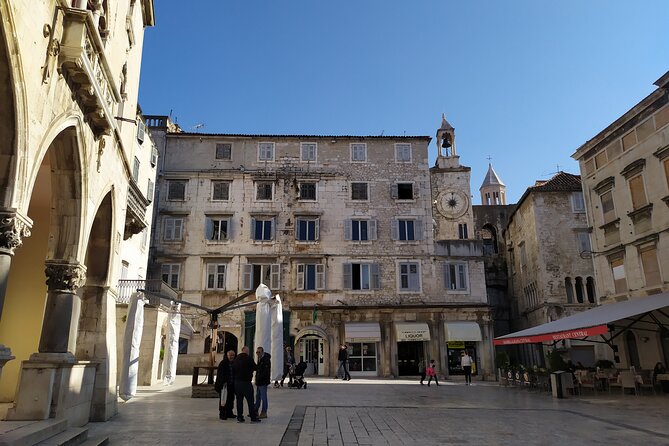
The tour finishes at People’s Square, Pjaca, known as the center of city happenings from medieval times to now. Your guide explains the square’s story and the surrounding buildings, including the old City Hall.
This last 10 minutes acts like a closing chapter. Instead of ending with a random landmark, you end in a civic heart—perfect for continuing on your own after the guided portion.
What makes the guide style work (and how to get more out of it)
A big reason this tour earns top marks is the guide’s ability to adapt. People value that the talk stays organized, while the guide remains flexible with real-life constraints—late arrivals and tight dinner deadlines. It also helps that the pacing can be adjusted for someone who needs a place to sit during parts of the walk.
When you book, I’d do two practical things:
- If you have a tight schedule, message early about dinner timing so the guide can shape the walk.
- Come with one or two questions you actually care about: Roman daily life, Christian transitions, or how the palace became the medieval city.
You’ll get more out of the 3D reconstruction if you treat it like a map. Look, listen, then keep matching the explanation to the walls around you.
Quick planning tips before you go
Split evening walks can be great, but they depend on weather. The experience is described as requiring good weather, so plan a backup window on travel days.
Wear comfortable shoes. Even when the pace is relaxed, you’re on old stone and uneven surfaces near major sites. Bring water if you run warm, especially if you’re walking past the harbor afterward.
Finally, remember that this is offered in English and is a private tour for your group. You’re not sharing the guide’s attention with strangers, so it’s easier to ask questions and get explanations tailored to what you want to understand.
Should you book this private historian tour?
I’d book it if you want more than a photo checklist. This is a smart choice for people who like the “why” behind places: gates, courtyards, religious shifts, and how a Roman palace became the living heart of a city.
You should also consider it if you’re traveling as a small group that would rather pay for privacy than compete with a crowd. At $156.21 per group up to 15, it can be a surprisingly solid deal once you share the cost.
Don’t book it if you’re mainly chasing interior museum time and paid entry. The tour is outside-focused in several spots, and admission tickets are not included, so you’ll need to decide on extra visits separately.
If you have one evening free during Monday–Friday 5:00 PM–7:00 PM, and you want Split’s old core explained in clear, practical terms, this one is worth putting on your plan.
FAQ
How long is the Split private historian tour?
It lasts about 2 hours.
Is this tour private or shared?
It’s a private tour, meaning only your group participates.
What language is the tour offered in?
The tour is offered in English.
Where do I meet the guide and where does the tour end?
Meet at Golden Gate, Dioklecijanova 7, 21000 Split. The tour ends at People’s Square (Pjaca), Narodni trg 16, 21000 Split.
Are admission tickets included?
No. The tour notes that there are no admission tickets included.
Is the start time fixed?
There is a listed time window, but flexible starting time is available if you contact in advance. A mobile ticket is also provided.
More Tour Reviews in Split
- Split: Krka Waterfalls Trip with Boat Cruise and Swimming
★ 4.8 · 10,519 reviews - From Split: Krka Waterfalls, Food & Wine Tasting Tour
★ 5.0 · 9,326 reviews - Blue cave, Mamma Mia and Hvar, 5 islands speedboat tour
★ 5.0 · 7,150 reviews - From Split: Krka Waterfalls, Food & Wine Tasting Tour
★ 4.9 · 6,598 reviews - Split/Trogir: Blue Cave, Mamma Mia, Hvar and 5 Island Tour
★ 4.6 · 6,320 reviews
Walk Split a Different Way
- Split: Old Town and Diocletian Palace Walking Tour
★ 4.9 · 4,727 reviews - Walking Tour of Split and Diocletian’s Palace
★ 5.0 · 2,588 reviews - Krka Waterfalls tour with Trogir Walking tour and Krka panoramic boat cruise
★ 5.0 · 1,659 reviews - Split & Diocletian’s Palace Walking Tour
★ 5.0 · 1,125 reviews - Walking Tour of Split with a ‘Magister’ of History
★ 5.0 · 1,122 reviews
Just Your Group in Split
- SPLIT-PRIVATE Walking Tour of Diocletian’s Palace & Old Town
★ 5.0 · 467 reviews - Private Krka Waterfalls tour with 30min Boat Cruse
★ 4.0 · 458 reviews - Split by Private Electric Rickshaw – Palace & Hidden Gems
★ 5.0 · 412 reviews - Private Blue cave, Mamma Mia and Hvar, 5 islands tour from Split
★ 5.0 · 387 reviews - The Best of Split Private Tour
★ 5.0 · 338 reviews
Still deciding? More Split trips we have been out and reviewed
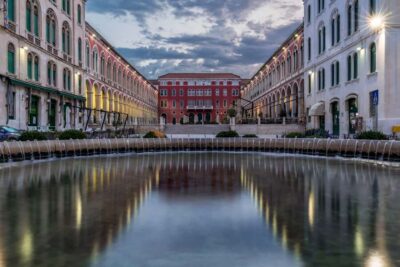


Split Old Town Walking Tours, compared.
 ★ 4.9Old Town and Diocletian Palace Walking TourFrom $174,727 reviews
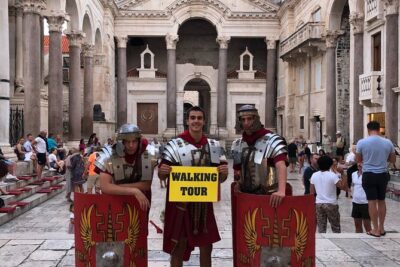 ★ 5.0Walking Tour of Split and Diocletian’s PalaceFrom $482,588 reviews
 ★ 5.0Krka Waterfalls tour with Trogir Walking tour and Krka panoramic boat cruiseFrom $481,659 reviews
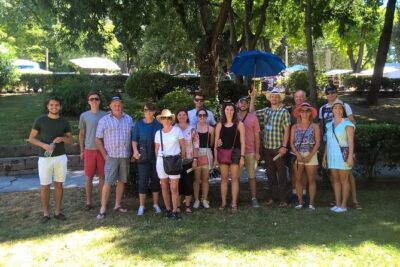 ★ 5.0Split & Diocletian’s Palace Walking TourFrom $211,125 reviews
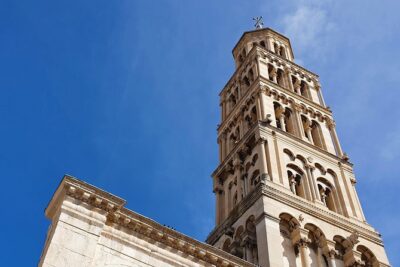 ★ 5.0Walking Tour of Split with a ‘Magister’ of HistoryFrom $341,122 reviews
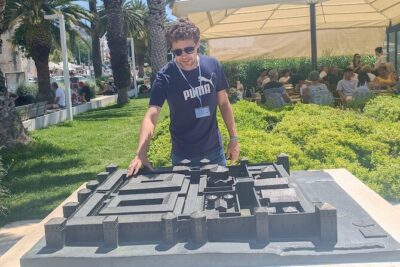 ★ 5.0Split Walking Tour with Professor of HistoryFrom $24926 reviews
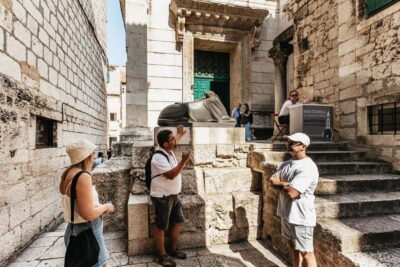 ★ 4.7Diocletian Palace & Old Town Guided Walking TourFrom $17882 reviews
 ★ 4.7Krka Waterfalls Cruise & Trogir Walking TourFrom $47681 reviews
Browse the lists this tour appears in