
Reviewed · SPLIT OLD TOWN WALKING TOURS
Discover Split’s Hidden History – Guided Walking Tour
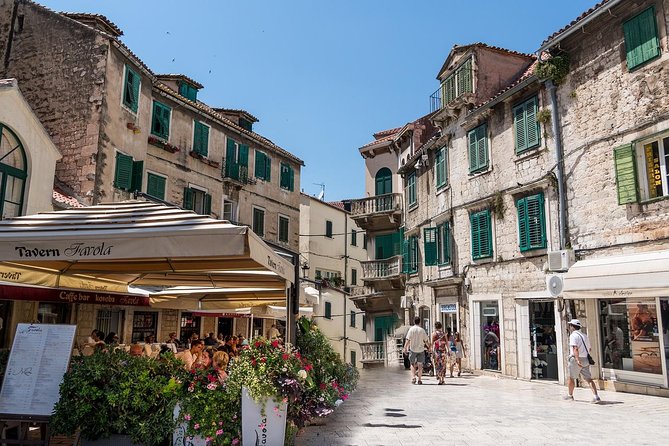
Split’s Roman core takes 90 minutes. This guided walking tour helps you get oriented fast in the Old Town while keeping the pace friendly, with a local English guide leading you through Diocletian’s palace spaces and the city’s big landmarks. I also like that admission tickets are included at each main stop, so you can spend less time figuring out entrances and more time learning what you’re seeing.
One thing to consider: it’s a walking tour with some stairs, so wear good shoes and plan to take it steady if you have mobility limits.
In This Review
- Key points worth your time
- 1) Roman Split in a 90-Minute Rhythm
- 2) Meeting on Obala Lazareta, Then Getting Your Bearings
- 3) Diocletian’s Palace Peristyle: The Courtyard That Runs the City
- 4) Cathedral of Saint Domnius: The Bell Tower and a Treasury Full of Clues
- 5) Temple of Jupiter: What Survives From Diocletian’s God Plan
- 6) The Real Value: A Guide Who Keeps It Clear (and Answers Questions)
- 7) Price and Tickets: Is $41.70 Good Value?
- 8) Practical Tips That Make the Walk Easier
- 9) Who This Tour Fits Best (and Who Should Skip It)
- 10) Should You Book This Split Walking Tour?
- FAQ
- How long is the Discover Split’s Hidden History guided walking tour?
- How much does the tour cost?
- Is the tour offered in English?
- Where does the tour start and end?
- Are admission tickets included?
- What is the maximum group size?
Key points worth your time
- Small group size (max 15) for questions without a loud scramble
- English-speaking local guide who explains the why, not just the what
- Diocletian’s Palace focus using the Peristyle as your anchor point
- St. Domnius Cathedral highlights including the bell tower and treasury details
- Temple of Jupiter (3rd century) shown as a rare, still-legible Roman temple
- 90-minute format that gives you direction for the rest of your Split days
Prefer to walk it? More guided strolls through Split
- Split: Old Town and Diocletian Palace Walking Tour★ 4.9 · 4,727 reviews
- Walking Tour of Split and Diocletian’s Palace★ 5.0 · 2,588 reviews
- Krka Waterfalls tour with Trogir Walking tour and Krka panoramic boat cruise★ 5.0 · 1,659 reviews
- Split & Diocletian’s Palace Walking Tour★ 5.0 · 1,125 reviews
1) Roman Split in a 90-Minute Rhythm
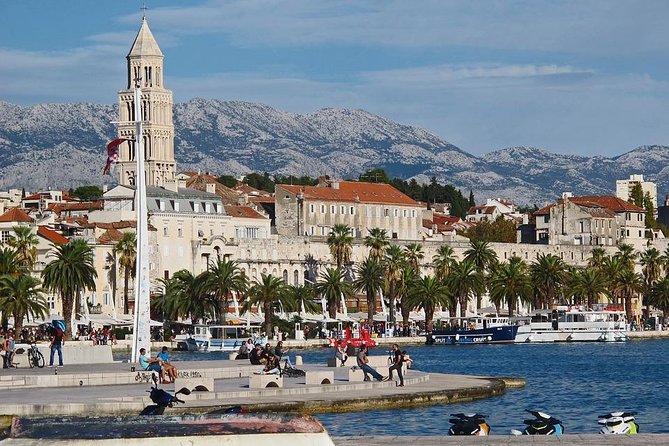
This tour is built for people who want history that’s usable. You’re not stuck with a long lecture or a marathon route. Instead, you move through three major stops tied to one theme: how Roman power shaped Split, and how later Christian life took over parts of that same setting.
The timing is tight in a good way. At about 1 hour 30 minutes, you should walk away knowing where you are and why these places matter. That makes the rest of Split easier, because the Old Town starts to feel like a map instead of a maze.
2) Meeting on Obala Lazareta, Then Getting Your Bearings
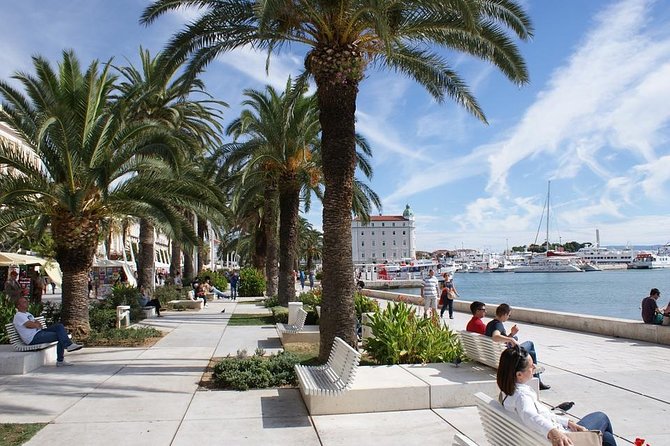
You start at Obala Lazareta 3 and you end right back where you began. That simple loop matters on a walking tour. It means you don’t have to worry about transit or changing neighborhoods at the finish.
Since the tour is scheduled for 9:00 am and confirmation is provided at booking, I’d treat this as your orientation stop—especially if it’s one of your first days in Split. A morning start also helps with the usual crowd pressure that builds later in the day around big sights.
And because it’s limited to 15 travelers, the guide can keep the group together. You’re more likely to hear the explanations clearly, and you’ll have a better shot at getting your questions answered without feeling rushed.
3) Diocletian’s Palace Peristyle: The Courtyard That Runs the City
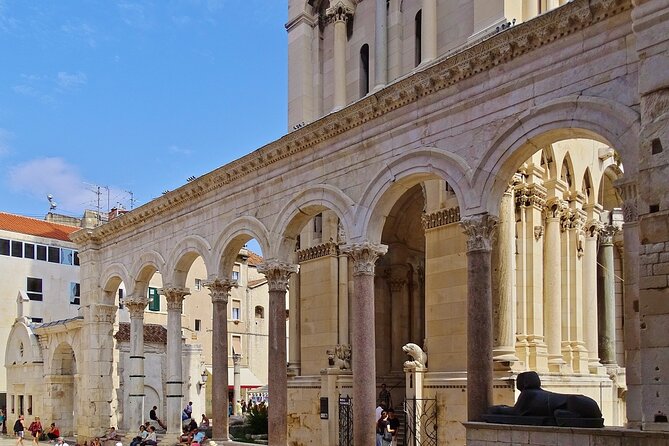
The tour’s first stop is the Peristyle of Diocletian’s Palace, described as the beating heart of Split. Even if you’ve seen Roman ruins before, this place tends to hit differently because you’re looking at a space that was designed to function as the center of a fortress world.
The Peristyle was originally a courtyard of Diocletian’s palace fortress, built by one of the last Roman emperors. In practical terms, that means your eyes connect the dots between walls, arches, and how people moved through the palace. You’re not just looking at leftover stone—you’re learning how power was organized in daily space.
You also get a 30-minute stop, and that’s enough time to notice what most visitors miss: the way the palace architecture shapes movement. If you leave this stop able to “read” the surroundings a little, the rest of Split becomes more coherent.
Small watch-outs: the area is historic and active, so you’ll want to stay aware of uneven surfaces and keep your footing when the group shifts position for photos.
4) Cathedral of Saint Domnius: The Bell Tower and a Treasury Full of Clues
Next comes one of Split’s most popular attractions: the Cathedral of Saint Domnius. This is the kind of site where the famous landmark isn’t just decorative—it’s tied to origin stories and later reuse.
The cathedral was built as a mausoleum for Diocletian, described here as the last famous persecutor of Christians. That phrasing may sound heavy, but it helps explain the layers you’ll notice on the ground: Roman authority first, then Christian meaning taking over.
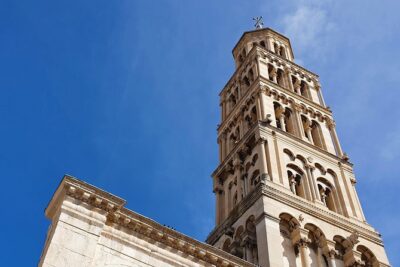
The cathedral’s bell tower is the emblem of the city, so you’ll likely recognize it quickly even before the guide starts explaining. But the real value is in how the stop expands beyond the exterior.
You also learn that the exterior is encircled by an original colonnade of 24 columns. That detail isn’t trivia—it’s the kind of structure that signals the scale of what Diocletian built and how the site continued to be used.
Inside, the cathedral’s treasury is highlighted as rich in reliquaries, icons, church robes, illuminated manuscripts, and documents in Glagolitic script. If you care about how written culture traveled and changed in the region, this is a meaningful point. Glagolitic script is a rare thing to encounter in your day-to-day sightseeing, and it gives you a concrete link between religion, language, and identity.
You get about 30 minutes here. That isn’t long enough to read every label like a scholar, but it’s enough to learn what the treasury is and why it matters, so you can look more intentionally on your own later if you want.
A few more Split boat days and tours worth a second look



5) Temple of Jupiter: What Survives From Diocletian’s God Plan
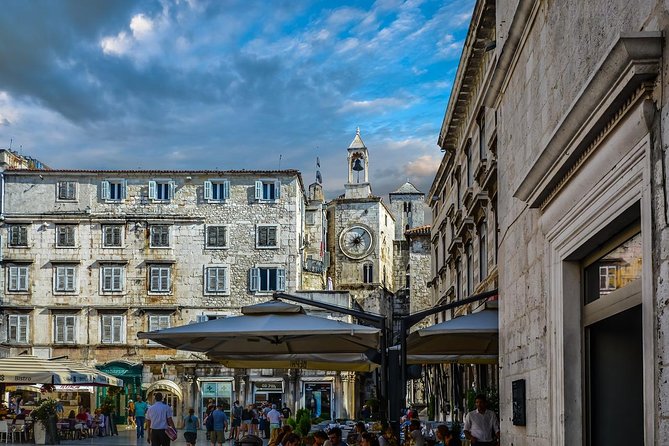
The final major stop is the Temple of Jupiter, constructed in the 3rd century as part of Diocletian’s Palace. It’s considered one of the most well-preserved Roman temples in the world, and the guide context makes that preservation feel practical rather than academic.
Here’s the key storyline: Diocletian believed he was the reincarnation of Jupiter, and Jupiter was highly worshipped until the Roman Empire shifted under Christian rule. That’s not just a mythological aside. It explains why a ruler would tie his political power to divine authority in stone.
A lot of Roman temples are ruined beyond easy interpretation. This one is different because you can still make sense of what it likely looked like when it was active. Even in 15 minutes, you should come away with a clearer picture of how Roman religion and imperial identity were built into everyday palace life.
6) The Real Value: A Guide Who Keeps It Clear (and Answers Questions)
What makes a guided walking tour worth the money is how it turns sight-seeing into understanding. With this experience, the guide is certified and speaks English, and the stops are sequenced so you can connect themes: Roman imperial space, then Christian adaptation, then the leftover Roman religious structure.
The best kind of guide doesn’t just recite dates. I like that the explanations are described as informative and personal, and that questions are handled directly. When you’re in a place like Split—where Roman, medieval, and later layers overlap—you don’t want to feel lost.
Also, the pace is reported as “just right,” which matches the structure here: 30 minutes, 30 minutes, then 15 minutes. That tempo helps if you’re trying to keep your energy up for the rest of the day. You’re not exhausted by the time you’re done, and you’re still fresh enough to explore beyond the official stops.
7) Price and Tickets: Is $41.70 Good Value?
At $41.70 per person, the headline question is whether you’re paying for a walk, or paying for access and guidance.
In this case, you’re getting a local English guide plus admission tickets included for the main stops: the Peristyle, the Cathedral of Saint Domnius, and the Temple of Jupiter. That matters because ticketing costs and entry logistics can add up fast in major Old Town sites.
The tour is also short—about 1 hour 30 minutes—and the group is capped at 15 travelers. For many people, that’s the sweet spot: enough structure to orient you, but not so much time that you feel like your day is locked down.
What’s not included is coffee/tea, and optional entrance fees are listed as not included. The honest takeaway: you’re covered for the primary sights tied to the tour, but if you choose extra add-ons on your own during sightseeing time, you’ll pay those separately.
8) Practical Tips That Make the Walk Easier
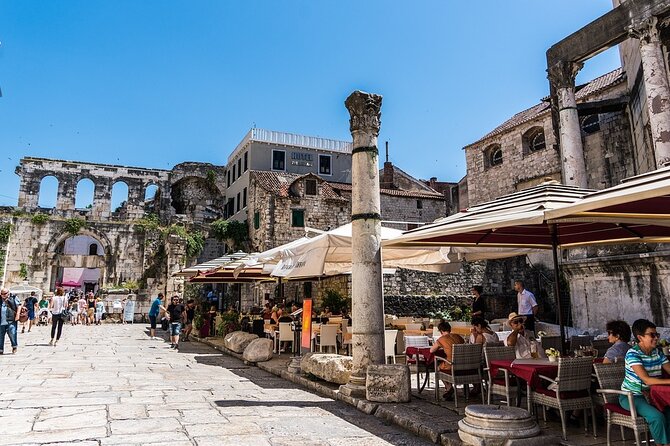
A walking tour in a historic center is always about comfort, not just curiosity.
- Wear comfortable shoes. This experience includes some stairs, even if they’re not described as extreme.
- Bring a small water plan. Coffee and tea aren’t included, so if you like a morning caffeine routine, plan on buying it before or after.
- Keep your expectations aligned with the schedule. This is an orientation-style tour. If you want long museum-style reading, you’ll likely want extra time on your own later.
- Good weather helps. The tour notes that it requires good weather, so check day-of conditions and keep a backup mindset.
Also, because you’ll get a mobile ticket, you can travel lighter. Just make sure your phone battery is decent, since you’ll want your ticket ready at start time.
9) Who This Tour Fits Best (and Who Should Skip It)
This tour is a strong fit if you want:
- a fast way to understand Split’s Roman roots and how they changed over time
- an English guide to help you interpret architecture you might otherwise treat as background
- a short, focused walk that won’t steal your whole morning
You might consider skipping or supplementing it if you:
- want a slower pacing with lots of free time inside each building
- prefer deep reading and long stays at collections (15–30 minutes per stop is limited by design)
- have concerns about stairs and uneven historic surfaces
10) Should You Book This Split Walking Tour?
If you’re planning your days in Split and want a clean way to connect major sites, I’d say this is worth booking. The value comes from the combo of a certified English guide, small-group pacing, and included admission for the key landmarks tied to Diocletian’s palace world.
You’ll get enough time at the Peristyle and the Cathedral of Saint Domnius to learn what you’re looking at, and then a sharper, story-driven stop at the Temple of Jupiter to close the loop. It’s the kind of tour that helps you stop seeing Split as random stone and start seeing it as a timeline you can walk through.
If you like structure, early starts, and clear explanations, book it. If you prefer total freedom with no scheduled stops, you may want to do the sites on your own—then use this tour only if you feel you need guidance to connect the layers.
FAQ
How long is the Discover Split’s Hidden History guided walking tour?
It runs for about 1 hour 30 minutes.
How much does the tour cost?
The price is $41.70 per person.
Is the tour offered in English?
Yes. The tour is offered in English.
Where does the tour start and end?
It starts at Obala Lazareta 3, 21000, Split, Croatia and ends back at the same meeting point.
Are admission tickets included?
Admission tickets are included for the stops at the Peristyle, the Cathedral of Saint Domnius, and the Temple of Jupiter. Optional entrance fees are not included.
What is the maximum group size?
The tour has a maximum of 15 travelers.
More Tours in Split
- From Split: Krka Waterfalls, Food & Wine Tasting Tour
★ 5.0 · 9,326 reviews - Blue cave, Mamma Mia and Hvar, 5 islands speedboat tour
★ 5.0 · 7,150 reviews - From Split: Krka Waterfalls, Food & Wine Tasting Tour
★ 4.9 · 6,598 reviews - Split/Trogir: Blue Cave, Mamma Mia, Hvar and 5 Island Tour
★ 4.6 · 6,320 reviews - Blue Cave and Hvar Tour – 5 Islands Tour from Split and Trogir
★ 5.0 · 4,815 reviews
More Tour Reviews in Split
- Split: Krka Waterfalls Trip with Boat Cruise and Swimming
★ 4.8 · 10,519 reviews - From Split: Krka Waterfalls, Food & Wine Tasting Tour
★ 5.0 · 9,326 reviews - Blue cave, Mamma Mia and Hvar, 5 islands speedboat tour
★ 5.0 · 7,150 reviews - From Split: Krka Waterfalls, Food & Wine Tasting Tour
★ 4.9 · 6,598 reviews - Split/Trogir: Blue Cave, Mamma Mia, Hvar and 5 Island Tour
★ 4.6 · 6,320 reviews
Walk Split a Different Way
- Split: Old Town and Diocletian Palace Walking Tour
★ 4.9 · 4,727 reviews - Walking Tour of Split and Diocletian’s Palace
★ 5.0 · 2,588 reviews - Krka Waterfalls tour with Trogir Walking tour and Krka panoramic boat cruise
★ 5.0 · 1,659 reviews - Split & Diocletian’s Palace Walking Tour
★ 5.0 · 1,125 reviews - Walking Tour of Split with a ‘Magister’ of History
★ 5.0 · 1,122 reviews
Still deciding? More Split trips we have been out and reviewed


Split Old Town Walking Tours, compared.
 ★ 4.9Old Town and Diocletian Palace Walking TourFrom $174,727 reviews
 ★ 5.0Walking Tour of Split and Diocletian’s PalaceFrom $482,588 reviews
 ★ 5.0Krka Waterfalls tour with Trogir Walking tour and Krka panoramic boat cruiseFrom $481,659 reviews
 ★ 5.0Split & Diocletian’s Palace Walking TourFrom $211,125 reviews
 ★ 5.0Walking Tour of Split with a ‘Magister’ of HistoryFrom $341,122 reviews
 ★ 5.0Split Walking Tour with Professor of HistoryFrom $24926 reviews
 ★ 4.7Diocletian Palace & Old Town Guided Walking TourFrom $17882 reviews
 ★ 4.7Krka Waterfalls Cruise & Trogir Walking TourFrom $47681 reviews
Browse the lists this tour appears in