
Reviewed · SPLIT OLD TOWN WALKING TOURS
90 Minute Walking Tour of Split
One square turns into a whole empire story. This 90-minute walking tour is a smart way to see the most recognizable parts of Split’s UNESCO Diocletian Palace and the older lanes of Old Split without spending the entire day sightseeing. I like how the route moves quickly but still covers major stops, and the meeting point is easy to find by the waterfront at Strossmayerova Fountain.
The guide, often Mijo, keeps things lively with humor and clear, big-picture explanations, then backs it up with practical tips for the rest of your stay. One thing to consider: a couple of the stops charge for entry (like the Temple of Jupiter and Saint Domnius), so you may pay a little extra if you want to go inside.
In This Review
- Key Points You’ll Actually Care About
- Getting Started at Strossmayerova Fountain: Easy Orientation First
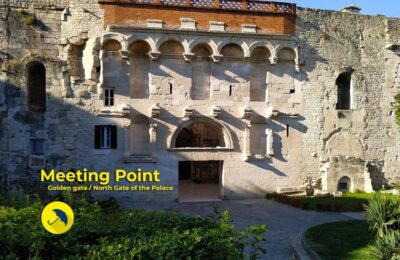
- Walking into Diocletian’s Palace Through the Golden Gate
- Peristyle Square: Where Power Meets Everyday Life
- Eastern (Silver) Gate: A Less Obvious Entrance with Big Meaning
- Optional Interior Moment: Temple of Jupiter
- Cathedral of Saint Domnius: Mausoleum or Church?
- Old Split After the Romans: A Different Feel, Same City
- Palazzo di Diocleziano: Why 55 Minutes Inside Matters
- Small-Group Energy: What You’re Really Paying For
- Where the Tour Ends: Keep Your Day Flexible
- Weather, Comfort, and Who This Tour Fits Best
- Should You Book This 90-Minute Split Walk?
- FAQ
- How long is the 90 Minute Walking Tour of Split?
- Where does the tour start and end?
- Is the tour offered in English?
- How much does it cost?
- What’s included in the tour?
- Are entrance tickets included?
- Is there pickup and drop-off?
- What’s the group size and is it easy to find the meeting point?
- What happens if weather is bad?
Key Points You’ll Actually Care About
- Small group up to 12 people, which usually means better questions and easier listening
- Well-paced 1.5-hour route: major palace highlights first, Old Split next
- Built for orientation: you walk away knowing where things are and why they matter
- Most sights are free to view, with a few optional paid interiors
- Guide follow-up and local food ideas, including coffee and gelato recommendations
- English tour with a mobile ticket, so you’re not juggling printouts
Prefer to walk it? More guided strolls through Split
- Split: Old Town and Diocletian Palace Walking Tour★ 4.9 · 4,727 reviews
- Walking Tour of Split and Diocletian’s Palace★ 5.0 · 2,588 reviews
- Krka Waterfalls tour with Trogir Walking tour and Krka panoramic boat cruise★ 5.0 · 1,659 reviews
- Split & Diocletian’s Palace Walking Tour★ 5.0 · 1,125 reviews
Getting Started at Strossmayerova Fountain: Easy Orientation First
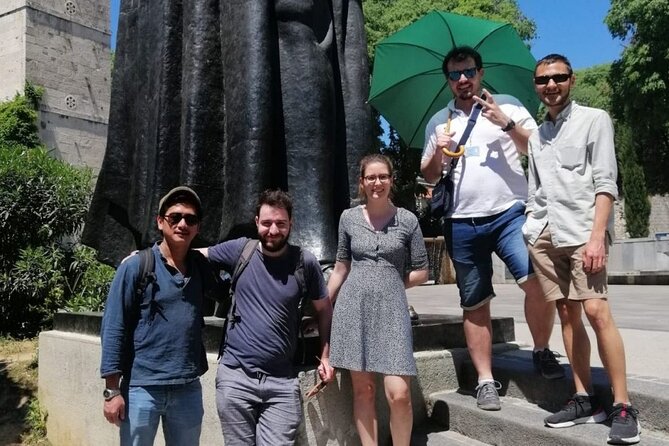
Your tour begins at Strossmayerova Fountain on Ul. kralja Tomislava 12 (near the waterfront). This is a great setup for first-timers because you’re not hunting for a hidden side street or guessing how long check-in might take. You’ll also be in a real central walking area, which matters if you want the rest of the day to stay open.
At Stop 1: Strossmayer Park, the guide meets you at the fountain and kicks things off with introductions. This isn’t just small talk. It’s your chance to get oriented—how the tour will flow, what you’ll be seeing, and what to watch for as you move into the old city. If you’re the kind of traveler who likes context before walking into the big sights, this opening works.
What I like: the start feels calm and organized, so you’re ready to pay attention instead of scrambling.
What to expect: a short welcome and a quick sense of how the guide will explain Split’s layers.
Walking into Diocletian’s Palace Through the Golden Gate
Next you move to the Golden Gate, the entrance tied to the famous ancient Diocletian Palace. The tour doesn’t just point at architecture—it explains the story behind how this place originated and why it was built the way it was. That matters because Diocletian’s Palace can feel like walls, passageways, and shadows if you don’t have a mental frame.
Stop 2: The Golden Gate is positioned early for a reason: it’s the moment where Split stops being generic old town and becomes a specific historical complex. You’ll get the background first, then you can recognize what you’re seeing as you go deeper.
Small drawback to consider: if you’re hoping for an ultra-fast sprint with almost no explanation, this part may feel a touch “story heavy.” But if you want the why, not just the what, you’ll appreciate it.
Peristyle Square: Where Power Meets Everyday Life
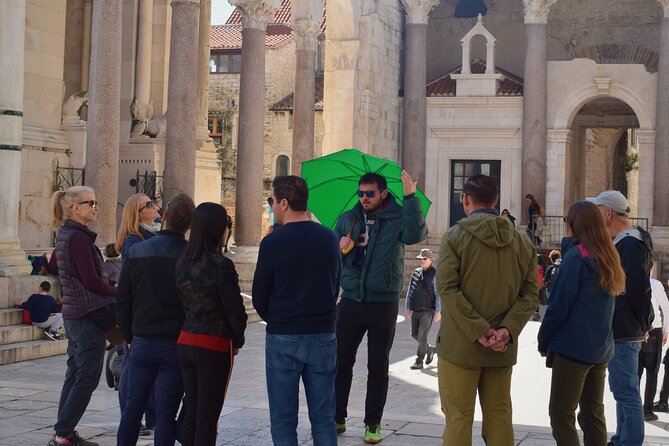
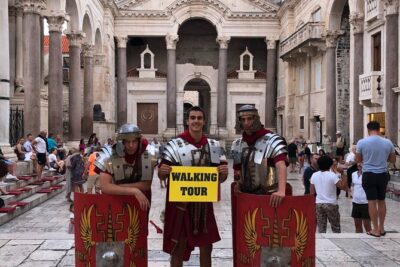
Then you step into the Peristyle of Diocletian’s Palace, described as the main square of the UNESCO-protected roman palace. This is one of those spaces that’s instantly memorable just by looking at it. The guide’s job is to help you connect the dots.
Stop 3 focuses on how the emperor used this kind of central space and what daily routines likely looked like for different people—military and servants included. It’s a helpful way to imagine the palace as a living system rather than a museum set.
What you’ll gain here: a sense of how the palace functioned as a world inside a world, and why that makes Split feel different from other Croatian old towns.
Tip for your own pacing: if you want photos, take them around the edges first. In central squares, people naturally drift and you’ll find it easier to frame shots without blocking others.
Eastern (Silver) Gate: A Less Obvious Entrance with Big Meaning
At Stop 4: Eastern (Silver) Gate, you’re led to one of the four gates. It’s not the main entrance, but the tour frames it as important and explains what its function was and what’s still visible today.
This stop is a good reminder that in an ancient city, even the gates that don’t get the postcards are still doing a lot of work. Doors and openings often tell you how movement, control, and security shaped everyday life.
Why this stop is worth it: it trains your eye. After hearing what this gate did, the rest of the palace walls and access points feel less random.
A few more Split boat days and tours worth a second look




Optional Interior Moment: Temple of Jupiter
Next comes Stop 5: Temple of Jupiter. The temple is described as a place tied to roman religious expressions, including an emperor who devoted an entire building to a god. It’s an interesting concept to hear before you decide what to do next, because it gives meaning to the structure even from outside.
Here’s the practical part: entrance is not included. The guide gives tips and tricks so you can visit afterwards if you want to pay for access.
What to decide in the moment:
- If you love interiors and details, plan to return on your own later.
- If you’re good with looking and moving on, you can treat this as a viewpoint stop and keep the tour rhythm.
This optional structure is a nice balance. You’re not pressured to buy more tickets during the walk, but you’re given enough direction to make a smart call.
Cathedral of Saint Domnius: Mausoleum or Church?

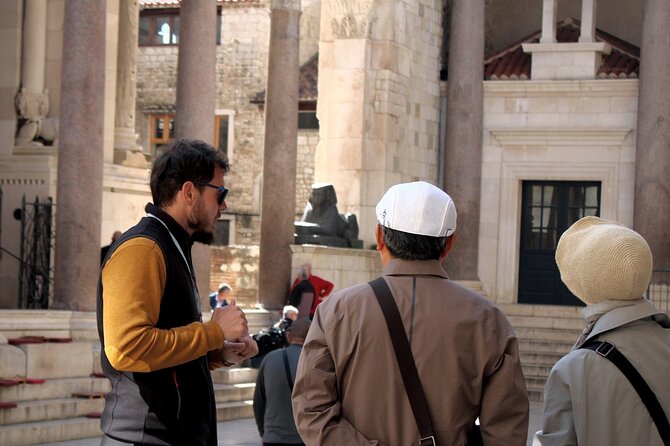
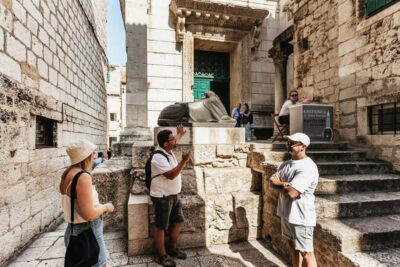
Stop 6: Cathedral of Saint Domnius brings up a classic question: is it a roman mausoleum or a church? The tour is built to help you think through that idea, and it adds an extra visual clue—there’s a gigantic cat that you’ll be guided to notice, then connect to the building’s story.
Again, entrance is not included, but the guide gives details and offers guidance so you can visit afterwards if you decide it’s worth your time.
Why I think this works for most people: you still get the big takeaway during the tour, and you keep flexibility. You can choose to spend your money and time on the interior only if the exterior explanations pushed you toward it.
Old Split After the Romans: A Different Feel, Same City
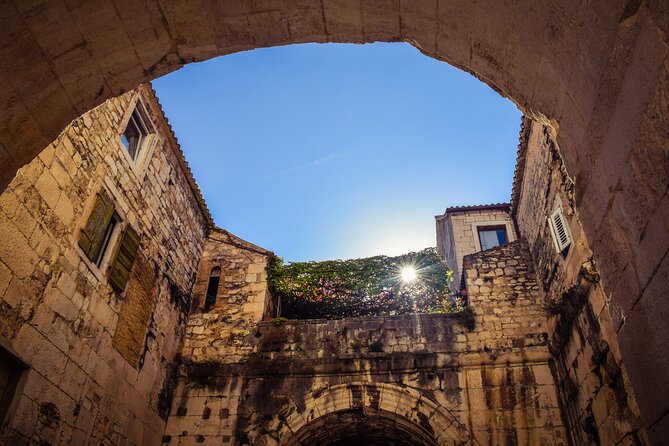
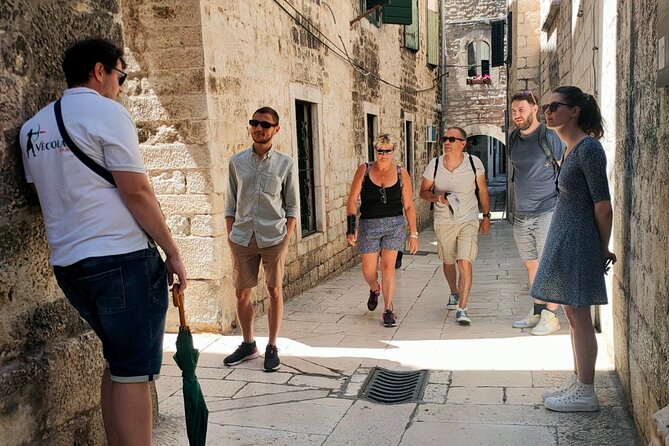
After spending much of the time in the palace zone, Stop 7: Old Split switches the mood. The tour frames this as a contrast—newer but still old medieval streets with their own secrets.
This is where you start to feel the city as lived-in, not just built. The palace gives you structure and scale. Old Split gives you texture: lanes, corners, and a sense that people have kept building and adapting around the old foundations.
What to watch for: the way the city layout changes after the palace complex. If you can get this contrast in your head, you’ll enjoy wandering later because you’ll know where you are without constantly checking maps.
Palazzo di Diocleziano: Why 55 Minutes Inside Matters
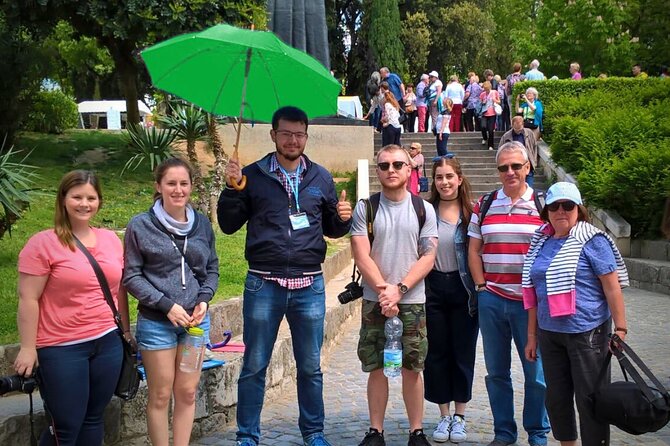
The tour spends most of its time at Stop 8: Palazzo di Diocleziano—about 55 minutes—and it’s described as the main focus, with the other stops happening mostly within the palace area.
Even if you’ve read about Diocletian’s Palace, it’s hard to truly understand the scale until you move through it slowly. This portion is where your earlier explanations pay off. When the guide talked about gates, squares, and roles of different people, you’re now walking inside that logic.
Practical value for you: this is the section that helps you build a mental map. After 55 minutes inside, it’s easier to come back later, pick a direction, and still feel oriented.
A small consideration: if you’re sensitive to crowds or you hate walking in confined old-stone passageways, you may want comfortable shoes and a willingness to move with the flow. The tour length is short enough that you won’t feel stuck.
Small-Group Energy: What You’re Really Paying For
The price is $18.14 per person for about 1 hour 30 minutes. That sounds simple, but the value is in how the tour is designed: a licensed professional guide, a maximum of 12 travelers, and enough time to hit the key sites without turning your day into a schedule contest.
Most people don’t need a long guided tour. They need a fast route, clear context, and recommendations that help them enjoy the rest of the day on their own.
The reviews give a strong signal on what’s included beyond facts: Mijo’s humor, a friendly style, and a real willingness to answer questions. One common theme is that the guide doesn’t just talk; he points you toward what to do next. That includes practical food ideas—coffee shops, places to eat, and even gelato suggestions—plus extra sightseeing recommendations.
Also, the tour is in English and uses a mobile ticket. It’s the kind of setup that’s easy to manage if you’ve already got a lot going on during your trip.
Where the Tour Ends: Keep Your Day Flexible
You finish at Ul. kralja Tomislava 15 (near the waterfront). Then you have the rest of the day to explore at your own pace. That matters because Split is a place where you’ll want breaks—wander, sit, eat, and go back for a second look when the light changes.
If you plan your afternoon well, this tour becomes an orientation jumpstart rather than a full-day activity. The walking time is just enough to set the stage, then you take over.
Weather, Comfort, and Who This Tour Fits Best
This experience depends on good weather. If it’s canceled due to poor weather, you’ll be offered a different date or a full refund. In other words: don’t schedule something else stressful for the exact same time window unless you’re comfortable with rescheduling.
Comfort tip: even with short stops, you’ll do continuous walking on uneven historic surfaces. Bring shoes you’d wear for a real city stroll, not just flat sandals.
This tour suits you if:
- you’re visiting Split for the first time and want fast orientation
- you prefer small groups and easy conversation
- you want the main Diocletian’s Palace highlights without paying for every interior stop
- you like humor and local perspective mixed into the explanations
It may not be ideal if:
- you want long, slow museum-style time inside buildings
- you dislike optional paid entrances at specific stops
Should You Book This 90-Minute Split Walk?
I think this tour is a solid booking for most visitors, especially if you’re arriving in Split with limited time. The route covers the big palace touchpoints—Golden Gate, Peristyle, Eastern Gate, and then the cathedral-temple area—and then it transitions into Old Split so you get the full feel of the city’s layers. You’re also not stuck in a long commitment; you’re done in about 90 minutes and can spend the rest of your day making your own choices.
If you care about local guidance, this is also a strong pick. The guide style—energetic, funny, and willing to share where to eat and grab coffee—adds real value. And because the group is capped at 12, it stays personal rather than chaotic.
If you’re the type who hates paying extra at optional interiors, you can simply view the exterior focus areas and decide later. The tour gives you enough direction to make that call without feeling lost.
FAQ
How long is the 90 Minute Walking Tour of Split?
It runs for about 1 hour 30 minutes.
Where does the tour start and end?
It starts at Strossmayerova Fountain, Ul. kralja Tomislava 12, 21000 Split, Croatia and ends at Ul. kralja Tomislava 15, 21000 Split, Croatia, near the waterfront.
Is the tour offered in English?
Yes, it’s offered in English.
How much does it cost?
The price is $18.14 per person.
What’s included in the tour?
It includes a licensed professional guide, exploration of UNESCO world site heritage, top highlights of the inner city, meeting culture from a local guide’s perspective, and recommendations and tips. It also covers the ancient and medieval parts of the city.
Are entrance tickets included?
Entrance is free for some stops, but entrance is not included for certain locations like the Temple of Jupiter and Cathedral of Saint Domnius, and the main palace interior portion is also marked as not included. The guide can help with tips for visiting afterward.
Is there pickup and drop-off?
No pickup and drop-off is included.
What’s the group size and is it easy to find the meeting point?
The tour has a maximum of 12 travelers. The meeting point is easy to locate at Strossmayerova Fountain and is near public transportation.
What happens if weather is bad?
This experience requires good weather. If it’s canceled due to poor weather, you’ll be offered a different date or a full refund.
More Tours in Split
- From Split: Krka Waterfalls, Food & Wine Tasting Tour
★ 5.0 · 9,326 reviews - Blue cave, Mamma Mia and Hvar, 5 islands speedboat tour
★ 5.0 · 7,150 reviews - From Split: Krka Waterfalls, Food & Wine Tasting Tour
★ 4.9 · 6,598 reviews - Split/Trogir: Blue Cave, Mamma Mia, Hvar and 5 Island Tour
★ 4.6 · 6,320 reviews - Blue Cave and Hvar Tour – 5 Islands Tour from Split and Trogir
★ 5.0 · 4,815 reviews
More Tour Reviews in Split
- Split: Krka Waterfalls Trip with Boat Cruise and Swimming
★ 4.8 · 10,519 reviews - From Split: Krka Waterfalls, Food & Wine Tasting Tour
★ 5.0 · 9,326 reviews - Blue cave, Mamma Mia and Hvar, 5 islands speedboat tour
★ 5.0 · 7,150 reviews - From Split: Krka Waterfalls, Food & Wine Tasting Tour
★ 4.9 · 6,598 reviews - Split/Trogir: Blue Cave, Mamma Mia, Hvar and 5 Island Tour
★ 4.6 · 6,320 reviews
Walk Split a Different Way
- Split: Old Town and Diocletian Palace Walking Tour
★ 4.9 · 4,727 reviews - Walking Tour of Split and Diocletian’s Palace
★ 5.0 · 2,588 reviews - Krka Waterfalls tour with Trogir Walking tour and Krka panoramic boat cruise
★ 5.0 · 1,659 reviews - Split & Diocletian’s Palace Walking Tour
★ 5.0 · 1,125 reviews - Walking Tour of Split with a ‘Magister’ of History
★ 5.0 · 1,122 reviews
Still deciding? More Split trips we have been out and reviewed


Split Old Town Walking Tours, compared.
 ★ 4.9Old Town and Diocletian Palace Walking TourFrom $174,727 reviews
 ★ 5.0Walking Tour of Split and Diocletian’s PalaceFrom $482,588 reviews
 ★ 5.0Krka Waterfalls tour with Trogir Walking tour and Krka panoramic boat cruiseFrom $481,659 reviews
 ★ 5.0Split & Diocletian’s Palace Walking TourFrom $211,125 reviews
 ★ 5.0Walking Tour of Split with a ‘Magister’ of HistoryFrom $341,122 reviews
 ★ 5.0Split Walking Tour with Professor of HistoryFrom $24926 reviews
 ★ 4.7Diocletian Palace & Old Town Guided Walking TourFrom $17882 reviews
 ★ 4.7Krka Waterfalls Cruise & Trogir Walking TourFrom $47681 reviews
Browse the lists this tour appears in