
Reviewed · DIOCLETIAN'S PALACE & OLD TOWN
Walking tour of Split old town and craft beer tasting
Split’s old town tells its story twice. This 2-hour walk pairs a hands-on look at UNESCO Diocletian’s Palace with a stop for craft beer at Leopolds, a microbrewery bar known for brewing its own beer. If you want your first Split evening to feel both historic and fun, this format makes it easy.
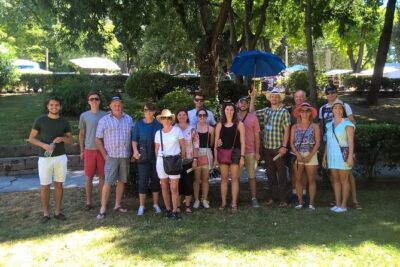
What I like most is the pacing and the scale. The tour is a small group capped at eight people, and the guide is a licensed local who lives in Split, so questions get answered in plain, practical terms (one guide named Darijo is specifically mentioned as conversational and great at explaining Diocletian’s Palace).
One thing to factor in: the beer is not included in the price. The tasting takes place at the end, but you’ll be paying for the drinks yourself, so plan a little extra for beer and anything else you order.
In This Review
- Key things to know before you go
- Split Old Town at 6:00 pm: when history feels human
- From Riva Harbor to the palace cellars: you learn why Split is built like this
- Peristyle square and the surrounding “stage set” of power
- Vestibulum acoustics and klapa singing: Roman space still has a job
- Triklinij and the emperor’s dining room idea
- Mausoleum to cathedral: when the palace changes religions
- Golden Gate, Gregory of Nin, and Pjaca: the palace becomes street life
- Fruit’s Square and baroque Split: Venetians, defense, and literature
- Leopolds Craft Beer Bar tasting: a microbrewery finish with a clear purpose
- Price and value: does $30.04 make sense
- Who should book this and who might skip
- Should you book this Split history-and-beer tour?
- FAQ
- What language is the tour offered in?
- How long is the Split old town walking tour with craft beer tasting?
- How much does the tour cost?
- How big is the group?
- What’s included in the tour price?
- Are the beers included?
- Where does the tour start and end?
- What time does the tour begin?
- Is free cancellation available?
Key things to know before you go

- Small group of up to 8 keeps the walk personal and question-friendly
- UNESCO Diocletian’s Palace is the main stage, with multiple free-to-view stops
- Guided history + Dalmatian singing context shows how Roman spaces still get used
- Finishes at Leopolds Craft Beer Bar for a microbrewery tasting session
- Beer and drinks cost extra beyond the $30.04 tour price
- English tour with a mobile ticket for easier check-in
Prefer to walk it? More guided strolls through Split
- Split: Old Town and Diocletian Palace Walking Tour★ 4.9 · 4,727 reviews
- Walking Tour of Split and Diocletian’s Palace★ 5.0 · 2,588 reviews
- Krka Waterfalls tour with Trogir Walking tour and Krka panoramic boat cruise★ 5.0 · 1,659 reviews
- Split & Diocletian’s Palace Walking Tour★ 5.0 · 1,125 reviews
Split Old Town at 6:00 pm: when history feels human
A 6:00 pm start is smart for Split. The sun is usually lower, the streets feel less like a rush, and your guide can point out details you would otherwise miss as you wander on your own. It also lines up well with dinner plans, because you’re done with the heavy sightseeing after about two hours.
For value, this tour hits two practical boxes: it gives you a guided route through the center of the old city, then it gives you a clear place to taste beer afterward instead of you having to guess where the best local brew scene is. And at about eight people max, you won’t get swallowed up by a big bus-tour crowd.
The price—$30.04 per person—includes the licensed local guide and the Diocletian’s Palace sightseeing portion. That matters because Diocletian’s Palace is the kind of site where the story can stay confusing unless someone maps it for you as you walk. Here, you get that map in real time.
From Riva Harbor to the palace cellars: you learn why Split is built like this
You start at the Riva Harbor area, and the guide sets up a key idea right away: this waterfront has changed roles over time. It’s not just a pretty promenade now. It used to function as the palace’s waterfront—part of the Roman ruler’s world—then it turned into the living, public-facing edge the city uses every day.
Next comes the palace substructures: the cellars. Even if you only see the central part, you’ll come away with a sense of why people call this the best-preserved vaulted complex of late antiquity in the world. Vaults are not just “old stone.” They’re engineering. They also explain how the palace could survive and keep shaping the city above it.
One of the biggest wins here is that you’re not walking into random ancient walls. You’re walking into a system. The harbor, the substructures, the squares above—everything connects, and the guide keeps turning the city into a timeline as you move.
Peristyle square and the surrounding “stage set” of power
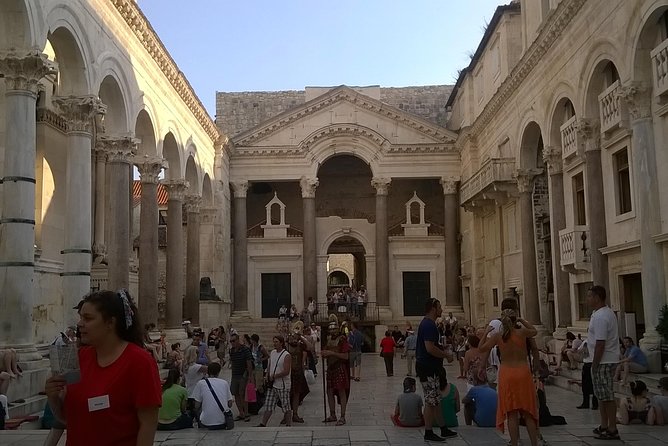
Then you step into the Peristyle of Diocletian’s Palace. This is the moment where Split’s Roman backbone becomes obvious. The columns, the open square, the sense of ceremony—these are the kinds of spaces designed for public presence, not quiet museum viewing.
From Peristyle, you also get an architectural lesson in how the main Roman streets—Cardo and Decumanus—were transformed through centuries. The point isn’t memorizing names. It’s learning how a city layers itself instead of wiping itself clean. In Split, you still feel the original grid, but later styles keep rewriting how those lines look and how people move through them.
A short walk afterward brings you to another standout: the palace interior area known for being praised as one of Europe’s most beautiful monuments by the British architect Robert Adam after his 18th-century visit. If you like architecture that has personality—spaces that feel staged and intentional—this stop is worth it.
Vestibulum acoustics and klapa singing: Roman space still has a job
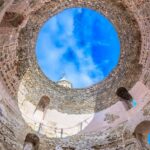
The Vestibulum is one of those stops that makes you slow down. It’s a circular building with an open ceiling, and what’s interesting here is how it works as sound architecture. The space served as a lobby into the residential quarters, but it still impresses people today, including through acoustics.
And yes, that leads to something very Dalmatian. The tour connects the acoustics to klapa singing groups—an a cappella style rooted in the region. It’s also recognized as UNESCO World Heritage for the tradition itself. So you’re not just watching a history slideshow; you’re learning why people still use certain old structures in modern cultural life.
Even if you’re not a music person, this is a practical takeaway: in Split, the old buildings are still “active.” They’re part of how locals gather and perform, not only a past you look at.
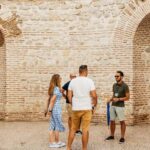
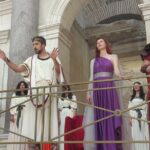
Inside the palace walls: more Old Town tours around Split
Triklinij and the emperor’s dining room idea
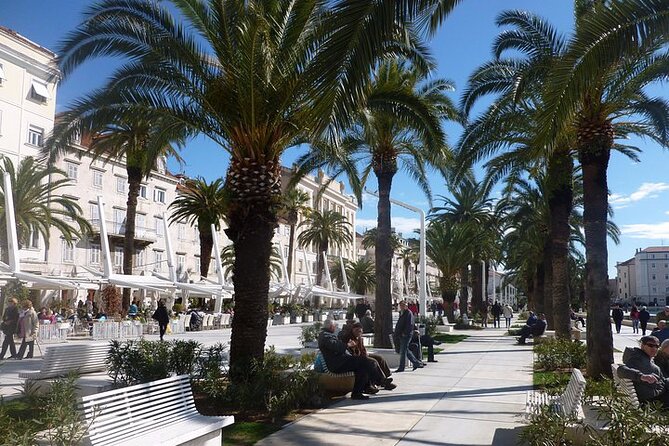
Next is Triklinij, where what remains of an emperor’s dining room helps you understand how Roman daily life was organized. The guide explains what people ate and why certain traffic patterns mattered—there’s a mention of the vomitorium concept being used frequently.
Here’s the real value: you stop thinking of Rome as only stone monuments. You start picturing meals, routines, and how people moved inside the palace. When the guide ties it to the idea of carpe diem, it becomes more than a slogan. It’s a reminder that these were lived spaces, not just royal backdrops.
Time stays tight—about 10 minutes at this stop—so you should come ready to absorb. If you’re the kind of person who likes to stare and read every plaque, you may want to add extra time afterward on your own. But for a 2-hour tour, this is a strong hit.
Mausoleum to cathedral: when the palace changes religions
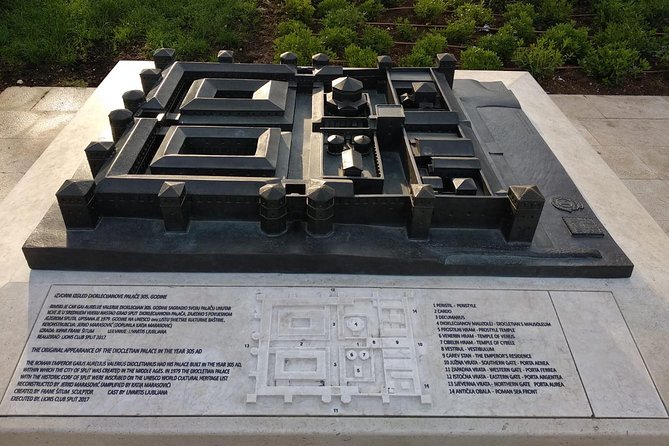
Another key stop focuses on Diocletian’s Mausoleum, which later became an impressive cathedral. The guide also points out the bell tower as an elegant feature on the Dalmatian coast.
This is one of those moments that makes Split feel less like “one era” and more like continuous transformation. A palace tomb turning into a cathedral isn’t a small change. It’s a shift in what the building represents, how people gather there, and how the city’s identity is expressed.
If you like heritage sites that keep their significance across centuries, this section is satisfying. It also helps you understand why the old city can feel both ancient and very much alive.
Golden Gate, Gregory of Nin, and Pjaca: the palace becomes street life
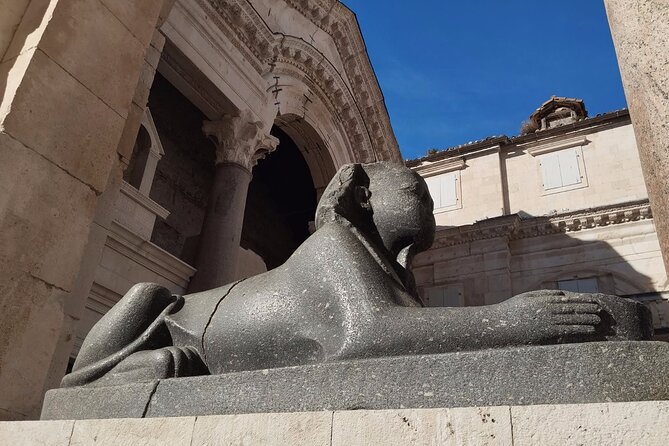
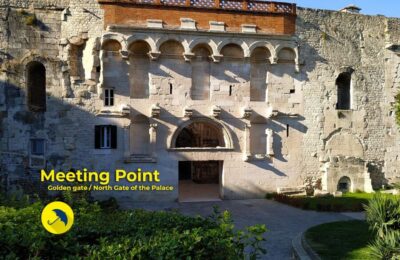
You then reach the Golden Gate, stepping into an area linked to the palace’s military side. The guide points out that entering the palace back in Roman times wasn’t simple—this was built as a military camp, not only a ruler’s residence. The gate area, plus the mention of the best-preserved palace wall, gives you a clearer sense of the palace’s defensive boundaries.
After that comes Grgur Ninski Statue. It’s a photo magnet, sure, but it’s also anchored in a story. You learn about Gregory of Nin and the sculptor Ivan Meštrović, and there’s a local legend that touching his golden toe brings luck. It’s the kind of small ritual that makes a landmark feel connected to everyday people.
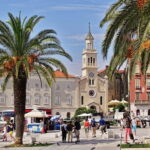
Finally, you end up at Pjaca, the main square of the old town. The tour explains that its name changed several times and that it carries layers of architecture shaped by turbulent history. This stop is useful because it pulls you back out of “palace mode” and into “city mode.” You start to see how the palace is the core, but the streets around it are what keep it social.
Fruit’s Square and baroque Split: Venetians, defense, and literature

The last sightseeing portion includes Fruit’s Square (Trg Brace Radic). This stop is about baroque Split and the defensive story tied to the Venetian Republic. You hear how Venice protected Split from Ottoman attacks, and you also get a nod to Marko Marulić, described as the father of Croatian literature.
What I like about this portion is that it doesn’t treat Split like a single chapter. Even after you’ve just walked through Rome and early-administration structures, you still get a sense of how later powers shaped daily life and architecture here.
Fruit’s Square also helps you orient your brain. By the time you’re done, you’re better able to understand where you are in the city and what kinds of styles you’ll see if you keep exploring after the tour.
Leopolds Craft Beer Bar tasting: a microbrewery finish with a clear purpose
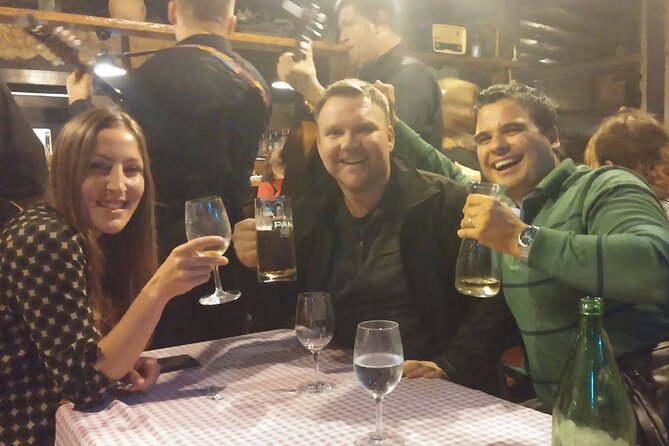
The tour ends at Leopolds Craft Beer Bar (Dosud ul 5). This is where the idea of “two-in-one” becomes real. Leopolds is described as one of Split’s top craft beer spots and as a boundary-pushing pub that brews its own beer.
You’ll spend about 30 minutes here for the tasting. The crucial practical note: beers and other drinks are not included, so this is not an all-you-can-sample situation. But it is a structured way to try local craft without walking in cold and guessing what to order.
If you like craft beer, this ending is especially good because the history portion already taught you how to read the city like a timeline. Beer gives you the same benefit in a different way: you’re tasting something produced right here, tied to local taste and local creativity.
A good strategy is to arrive ready to ask questions about what’s on tap. With a microbrewery, the answer you get usually depends on what they’re brewing at the moment.
Price and value: does $30.04 make sense
At $30.04 per person, you’re paying for two big things: a licensed local guide and guided access to multiple parts of Diocletian’s Palace. Also, the sightseeing stops are listed as admission ticket free, which matters in a city where entrance costs can pop up unexpectedly at some heritage sites.
Then you get the pairing with a microbrewery bar. You do pay for beer separately, but you still get a guided, time-boxed tasting experience rather than wandering to random bars that may or may not match your tastes.
Finally, consider timing and group size. Limited to eight travelers max, this kind of tour costs a bit more than solo audio-walking. But you’re also paying for a human who can translate what you’re seeing into why it matters.
Who should book this and who might skip
This works best if you want:
- a guided first pass through Diocletian’s Palace
- a manageable walk that fits an evening schedule
- craft beer that comes with a clear destination (Leopolds) at the end
You might skip it if:
- you only want major “one big monument” photo moments and prefer self-guided wandering
- you dislike paying extra for drinks, since beers are not included
If you’re traveling solo, this also tends to feel comfortable because the group stays small. If you’re with friends, it can be a good way to keep everyone engaged without splitting into different plans.
Should you book this Split history-and-beer tour?
Yes, if you want your first Split evening to do two jobs well: explain the ancient core of the city and end with an easy, local craft beer stop. The small group size, the focus on Diocletian’s Palace structures, and the fact that the guide is a licensed local add up to a solid value for $30.04.
If beer costs are a worry, you can still book and keep things light—just budget for the drinks you choose at Leopolds. For most people, this tour is a fun way to turn Split’s old streets into a story you actually understand.
FAQ
What language is the tour offered in?
The tour is offered in English.
How long is the Split old town walking tour with craft beer tasting?
It lasts about 2 hours.
How much does the tour cost?
The price is $30.04 per person.
How big is the group?
The tour has a maximum of 8 travelers.
What’s included in the tour price?
You get a professional licensed guide and sightseeing of Diocletian’s Palace (UNESCO). The tour also uses a mobile ticket.
Are the beers included?
No. Beers and other drinks are not included, so you’ll pay for them at the beer bar.
Where does the tour start and end?
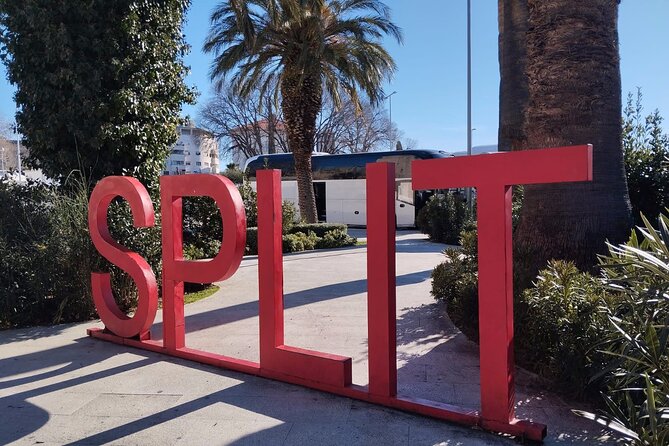
It starts near the Split sign 21000, Grad, Split, Croatia, and ends at Leopolds Craft Beer Bar, Dosud ul 5, 21000, Split, Croatia.
What time does the tour begin?
The start time is 6:00 pm.
Is free cancellation available?
Yes, you can cancel for a full refund if you cancel at least 24 hours before the experience start time.
More Tour Reviews in Split
- Split: Krka Waterfalls Trip with Boat Cruise and Swimming
★ 4.8 · 10,519 reviews - From Split: Krka Waterfalls, Food & Wine Tasting Tour
★ 5.0 · 9,326 reviews - Blue cave, Mamma Mia and Hvar, 5 islands speedboat tour
★ 5.0 · 7,150 reviews - From Split: Krka Waterfalls, Food & Wine Tasting Tour
★ 4.9 · 6,598 reviews - Split/Trogir: Blue Cave, Mamma Mia, Hvar and 5 Island Tour
★ 4.6 · 6,320 reviews
Deeper Into the Palace, Split
- Split: Old Town and Diocletian Palace Walking Tour
★ 4.9 · 4,727 reviews - Walking Tour of Split and Diocletian’s Palace
★ 5.0 · 2,588 reviews - Split & Diocletian’s Palace Walking Tour
★ 5.0 · 1,125 reviews - Split: Diocletian Palace & Old Town Guided Walking Tour
★ 4.7 · 882 reviews - Split Old Town and Diocletian’s Palace Tour
★ 4.8 · 716 reviews
Walk Split a Different Way
- Split: Old Town and Diocletian Palace Walking Tour
★ 4.9 · 4,727 reviews - Walking Tour of Split and Diocletian’s Palace
★ 5.0 · 2,588 reviews - Krka Waterfalls tour with Trogir Walking tour and Krka panoramic boat cruise
★ 5.0 · 1,659 reviews - Split & Diocletian’s Palace Walking Tour
★ 5.0 · 1,125 reviews - Walking Tour of Split with a ‘Magister’ of History
★ 5.0 · 1,122 reviews
Still deciding? More Split trips we have been out and reviewed
Diocletian's Palace & Old Town, compared.
 ★ 4.9Old Town and Diocletian Palace Walking TourFrom $174,727 reviews
 ★ 5.0Walking Tour of Split and Diocletian’s PalaceFrom $482,588 reviews
 ★ 5.0Split & Diocletian’s Palace Walking TourFrom $211,125 reviews
 ★ 4.7Diocletian Palace & Old Town Guided Walking TourFrom $17882 reviews
 ★ 4.8Split Old Town and Diocletian’s Palace TourFrom $17716 reviews
 ★ 4.8Game of Thrones Tour with Diocletian’s Palace CellarFrom $41545 reviews
 ★ 5.0Diocletian’s Palace and Old Town SMALL GROUP Walking TourFrom $16502 reviews
 ★ 5.0SPLIT-PRIVATE Walking Tour of Diocletian’s Palace & Old TownFrom $240467 reviews
Browse the lists this tour appears in