
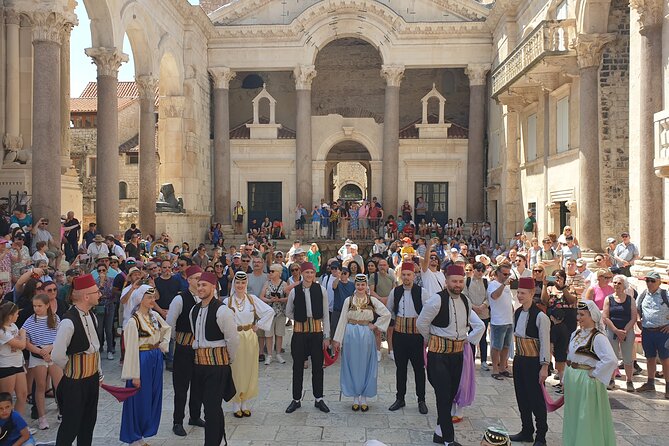
Reviewed · DIOCLETIAN'S PALACE & OLD TOWN
Split & Diocletian Palace Historical Walking Tour
Diocletian’s Palace is easy to miss on your own. This guided walk in Split puts you on the palace’s main routes fast—Peristyle first, then the substructures, gates, and waterfront views—so the whole place starts to make sense in about 90 minutes. It’s built for flexibility too, with morning and afternoon tour times, and an English-speaking guide.
What I like most is the chance to keep it small. You can choose a max of 5 people for a more personal feel, or go with the regular group up to 20, and either way you’re not stuck in a crowd that rushes the story. I also love that the tour hits a string of major sights where entry is typically ticket-free, so you spend your money on the guide, not on constant add-on fees.
One thing to consider: sound and optional access can be a mixed bag. The palace is busy and noise travels, so if the guide isn’t facing you, you might miss details. Also, a couple of stops are marked as not included (and the substructures museum portion isn’t visited), so you may want to plan for small separate tickets if you decide you want to go inside certain areas.
In This Review
- Key Highlights You’ll Care About
- Where the Tour Starts: Peristil ulica at the Palace Heart
- Peristyle of Diocletian’s Palace: Your Map in Stone
- The Palace Substructures: Foundations, Not Just Flashy Rooms
- Riva Harbor and the South Wall: Where Split Meets Roman Walls
- Fruit’s Square (Trg Brace Radic): Marko Marulić and a Venetian Echo
- The Last Remaining Ancient Roman Temple: Small Stop, Big Wow
- Vestibulum of Diocletian’s Palace: The Emperor’s Entrance Hall
- Triklinij: The Dining Hall in Roman-Style Ruins
- Venetian Palace Museum and the Cathedral in Diocletian’s Mausoleum
- Grgur Ninski Statue: Language, Identity, and the North Gate
- Golden Gate: Main Entrance and Gregory of Nin’s Presence
- Riva Harbor Again: The Bronze Model Moment
- Price and Value: What $156.17 Really Buys You
- Group Size, Pace, and Photo Chances
- Morning vs Afternoon: Picking the Right Light
- How to Get the Most Out of the Guide (So You Don’t Miss Things)
- Who This Tour Best Suits
- Should You Book This Split Walking Tour?
- FAQ
- How long is the Split & Diocletian Palace Historical Walking Tour?
- Where does the tour start and end?
- Is the tour offered in English?
- What group size should I expect?
- Does the tour use a mobile ticket?
- Are entrance tickets included for the stops?
- Does the tour visit the museum part of the substructures?
- Is the tour accessible for most travelers?
- Are service animals allowed?
- What is the cancellation policy?
Key Highlights You’ll Care About
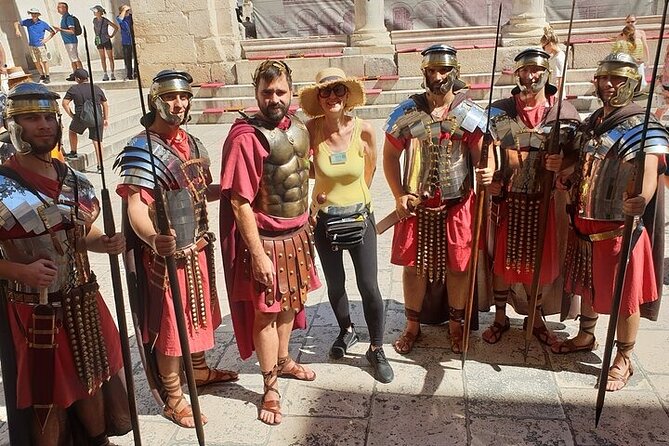
- Small-group option up to 5 for easier questions and better sightlines
- Peristyle Square first, so you understand where everything connects
- Substructures walk focused on foundations and how the palace worked
- Riva Harbor and south wall views that help you picture the palace in the city
- Roman, Venetian, and medieval layers in one tight walking route
- High satisfaction score with a 4.9/5 rating and 93% recommendation rate
Prefer to walk it? More guided strolls through Split
- Split: Old Town and Diocletian Palace Walking Tour★ 4.9 · 4,727 reviews
- Walking Tour of Split and Diocletian’s Palace★ 5.0 · 2,588 reviews
- Krka Waterfalls tour with Trogir Walking tour and Krka panoramic boat cruise★ 5.0 · 1,659 reviews
- Split & Diocletian’s Palace Walking Tour★ 5.0 · 1,125 reviews
Where the Tour Starts: Peristil ulica at the Palace Heart
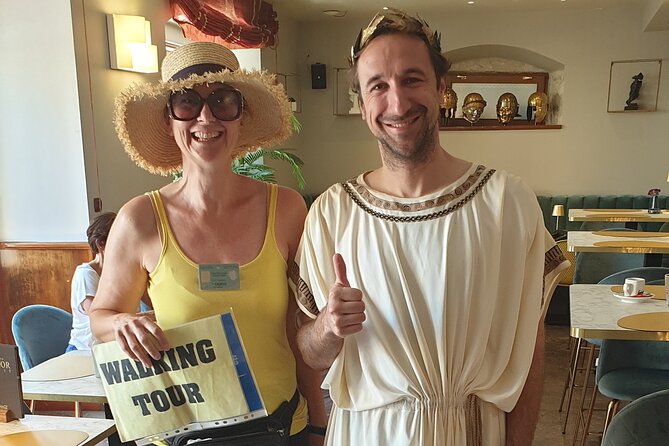
You meet at Peristil ul., 21000, Split, right by the palace core. That location matters because Diocletian’s Palace can feel like a maze until you learn the main “grid.” Starting here means the guide can point you toward nearly every key spot without you wasting time guessing.
From the start, you’ll get oriented quickly. You’re essentially learning how to read the palace: where the major streets run, what the open spaces mean, and why certain walls and gates are so important to Split’s identity.
Peristyle of Diocletian’s Palace: Your Map in Stone
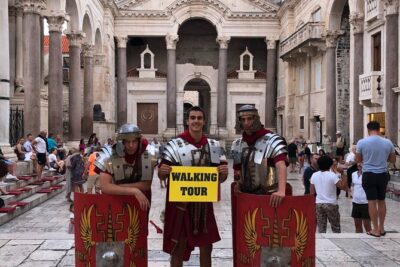
The first stop is the Peristyle, the central square of the palace. If you want one “anchor moment,” this is it. It’s the hub that connects to many of the other locations, so you’re not just sightseeing—you’re building your mental map.
Even if you’ve seen photos of the palace before, this spot helps you understand scale. You’ll see how the palace’s layout was designed to move people through spaces efficiently, long before cars and street signs existed.
The Palace Substructures: Foundations, Not Just Flashy Rooms
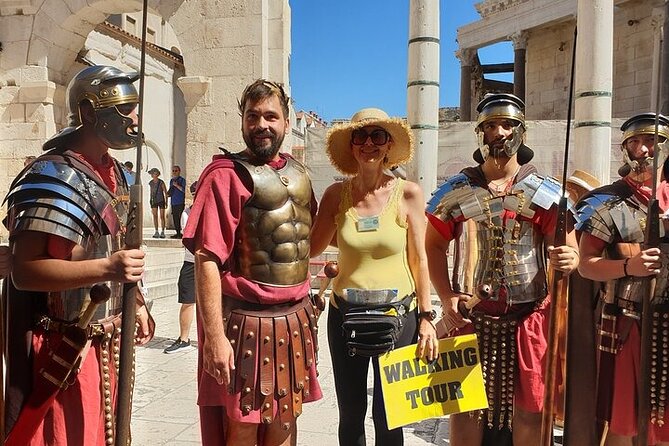
Next, you walk through the Diocletian Palace substructures, focusing on the central hallway and the foundation story. This part is powerful because it turns the palace from an exterior landmark into an engineered machine.
You’ll learn about the construction and the function of these areas over time. There’s one practical note: the tour does not include the museum section inside the substructures, and you can visit that part separately afterward if you’re interested.
Riva Harbor and the South Wall: Where Split Meets Roman Walls
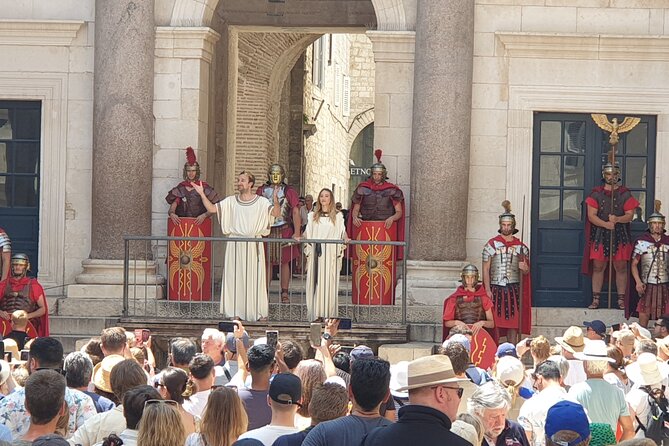
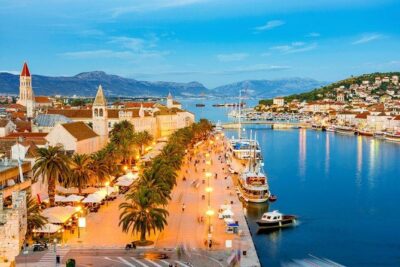
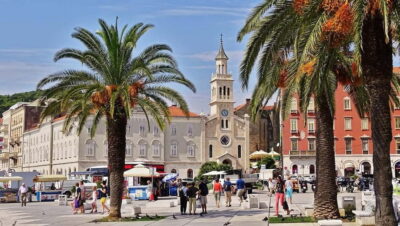
Then you head to Riva Harbor for a viewpoint that links the city’s waterfront to the palace’s south wall. This is where the palace stops feeling like something “over there” and starts feeling like it shaped the city you’re standing in.
You’ll learn about the waterfront and what it meant for Split’s growth. It’s also a photo-friendly stop because you get angles that show how the palace and the promenade relationship works visually.
Inside the palace walls: more Old Town tours around Split


Fruit’s Square (Trg Brace Radic): Marko Marulić and a Venetian Echo
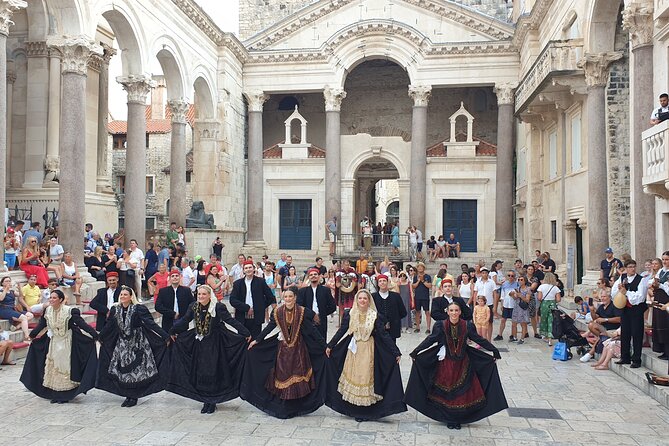
At Trg Brace Radic (Fruit’s Square), you’ll see the older layers of the city play out in the space around you. The highlight here is the sculpture of Marko Marulić, a name tied to Croatian culture and learning.
This stop is short, but it’s useful. A lot of people walk through squares without noticing why they matter. Here, the guide connects the location to the wider story of Split beyond the palace walls.
The Last Remaining Ancient Roman Temple: Small Stop, Big Wow
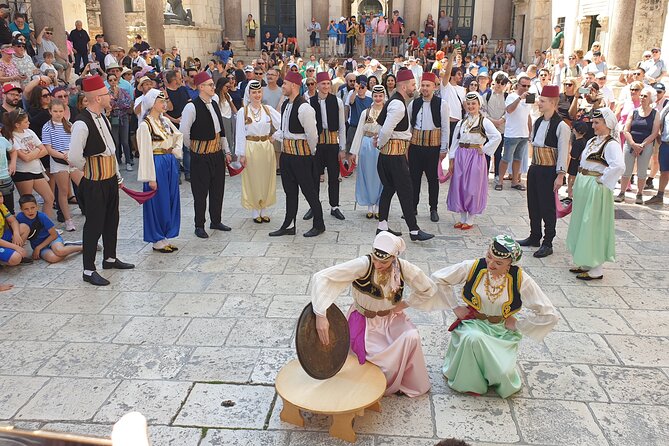
You’ll also stop at the last remaining ancient Roman temple in the palace. The tour doesn’t linger forever, but it gives you that satisfying moment of clarity: this is not only an imperial residence—it’s a place with religious architecture still standing.
If you’re the type who likes to understand what buildings were meant to do, this is the kind of stop that helps you “read” the complex rather than just look at it.
Vestibulum of Diocletian’s Palace: The Emperor’s Entrance Hall
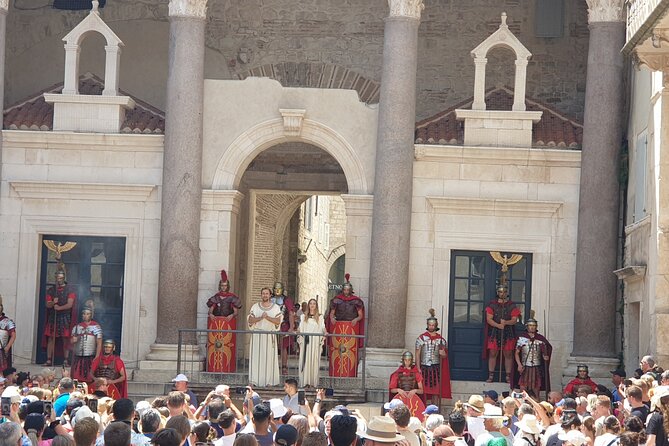
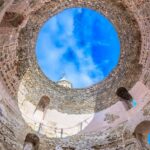
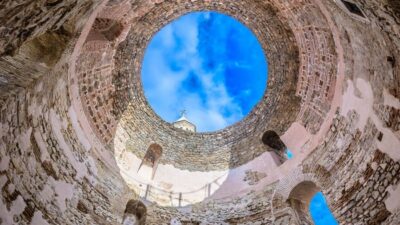
The route continues into the Vestibulum, described as the entrance hall of Diocletian’s personal quarters. This is one of those areas where the guide’s interpretation matters more than the raw visuals, because you’re learning how people moved from public space into private space.
There’s also a fun possibility noted for this stop: you might hear traditional Dalmatian singing. Even if it doesn’t happen, the point is the same—this is where the tour can feel a bit more “alive” instead of purely academic.
Triklinij: The Dining Hall in Roman-Style Ruins
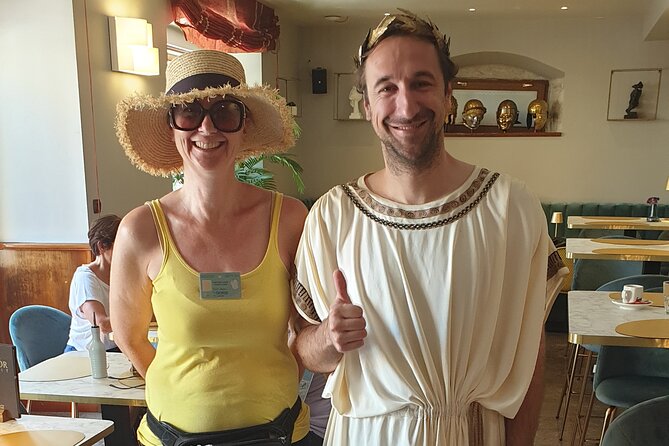
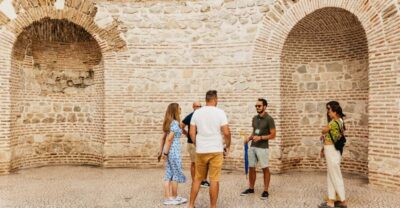
Next comes Triklinij, the remains of Diocletian’s personal walkway and dining hall, with a partial reconstruction. This is where you’ll picture daily life, not just architecture.
Ruins can be hard to understand. A partial reconstruction helps your brain connect the dots: where people would have stood, how the space likely felt, and how the palace supported the emperor’s routines.
Venetian Palace Museum and the Cathedral in Diocletian’s Mausoleum
As the walk moves along, you’ll reach two major “layer” stops: a 15th-century Venetian palace now used as the City Museum, and then the cathedral inside the mausoleum of Emperor Diocletian.
Why these stops matter: Diocletian’s Palace isn’t frozen in time. It kept changing hands and functions, and those changes still show in Split’s layout and its buildings.
If you’re the kind of person who loves religion-as-architecture, the mausoleum cathedral stop is worth your attention. It’s a reminder that a site can be both ancient and actively used.
Grgur Ninski Statue: Language, Identity, and the North Gate
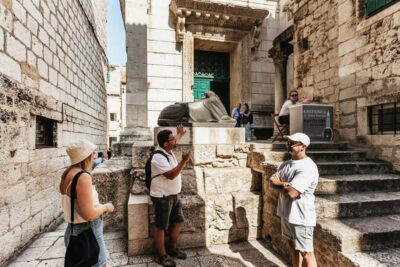
The tour then shifts to one of Split’s cultural symbols: the Grgur Ninski Statue made by Meštrović. It stands in front of the north gate of Diocletian’s Palace.
This isn’t a random monument stop. The guide explains Gregory of NIn’s importance to Croatian language and history—exactly the kind of connection that makes a city feel personal rather than like a checklist.
Golden Gate: Main Entrance and Gregory of Nin’s Presence
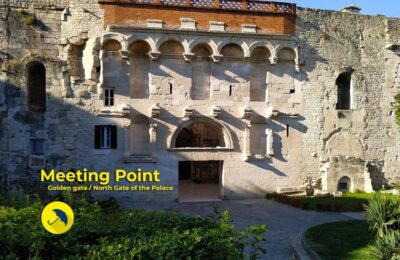
The next big entrance moment is the Golden Gate, the main entrance of Diocletian’s Palace. Alongside the architectural focus, you’ll also learn about the statue of Gregory of Nin and why he matters locally.
One practical consideration: this stop lists admission not included. That doesn’t mean the area itself isn’t worth seeing—just that if you want any interior access tied to the gate, you may need a separate ticket. I’d treat it like a possible extra, not something you should assume is fully covered.
Riva Harbor Again: The Bronze Model Moment
You return to Riva Harbor for a final information-heavy stop: a bronze model of Diocletian’s Palace and what the guide says about the history of the Riva promenade.
This is a smart ending. By the time you’ve walked the palace route, a model helps you “zoom out” and see the whole complex as one system. Like learning a route on foot and then seeing it from above on a map.
Also note: this portion lists admission not included, so if the model area or viewing requires a separate ticket, plan for that possibility.
Price and Value: What $156.17 Really Buys You
At $156.17 per person for about 1.5 hours, this isn’t a cheap impulse purchase. But it also isn’t trying to sell you a long day of basics. This tour is basically a time-saving package: you pay for a guide to connect the palace’s layout, history, and meaning in a short window.
If you’re the kind of traveler who reads signs and maps slowly, you’ll probably feel like the price is justified. The guide helps you get the “why” behind what you’re seeing—why a square connects to so many parts, why substructures existed, and how later layers (Venetian, medieval) didn’t erase the earlier world.
If you’re happy walking alone and you don’t mind getting lost a bit, you might skip a paid tour. But you’d still need to spend real effort figuring out what matters. Here, the guide does that work up front, so you leave knowing what you actually saw.
Group Size, Pace, and Photo Chances
You’ll move at a guided walking pace, with a clear flow between the palace core, substructures, and the waterfront. The small-group option (up to 5) can make a noticeable difference because it’s easier to hear, easier to ask questions, and easier to pause for photos without feeling like you’re holding the group up.
Photos: you’ll get several moments where the palace is close enough for meaningful shots, not only distant skyline views. Still, remember you’re in an active historic area, so be quick and respectful. Capture your angle, then step aside so the next person can do the same.
Morning vs Afternoon: Picking the Right Light
The tour offers morning and afternoon departures, which is a real advantage in Split. Morning light can make stone details pop, while afternoon can be better if you want to take things slower with your day plan.
If you’re sensitive to crowds or noise, consider that the palace and waterfront can get busy. Going earlier can feel calmer, even if you’re walking the same route.
How to Get the Most Out of the Guide (So You Don’t Miss Things)
This is the kind of tour where your position in the group matters. The palace has open spaces and echoes, and the guide may be gesturing toward different corners while you’re trying to follow along. I’d recommend you stay where you can face the guide most of the time rather than drifting toward the back for easier photos.
Also, keep in mind that the tour’s “core story” is mainly walk-and-explain with a focus on what’s already accessible. Some components—like the substructures museum part and a couple of areas marked as not included—may be optional extras. If you care about interiors, you can always decide afterward whether you want to spend extra time and ticket cost.
Who This Tour Best Suits
This tour fits you if:
- You want fast orientation inside Diocletian’s Palace
- You like architecture, but you want the “how it worked” story too
- You’re visiting Split for a short time and want the big landmarks handled efficiently
- You prefer a guide-led route rather than spending hours deciphering a map
It may not be the best fit if:
- You only want museums and paid interiors (this walk emphasizes accessible highlights)
- You’re perfectly fine wandering without a unifying narrative
- You’re very price-sensitive and can confidently self-guide with your own research
Should You Book This Split Walking Tour?
For most people, I think it’s a smart booking—especially if you choose the small group. You get a guided route that hits Split’s most important Diocletian-era stops, adds cultural context around figures like Gregory of Nin and Marko Marulić, and ends with a helpful “big picture” moment at the palace model.
If you do book, go in with two expectations: first, you’re paying for clarity in a short time; second, a few pieces may require separate tickets or are left for you to explore later. If that works for you, this is a strong way to understand why Diocletian’s Palace is still the spine of Split.
FAQ
How long is the Split & Diocletian Palace Historical Walking Tour?
The tour runs about 1 hour 30 minutes.
Where does the tour start and end?
It starts at Peristil ul., 21000, Split, Croatia, and ends back at the meeting point.
Is the tour offered in English?
Yes, the tour is offered in English.
What group size should I expect?
The maximum is 20 travelers. If you choose the small group option, it’s max 5 people.
Does the tour use a mobile ticket?
Yes, it includes a mobile ticket.
Are entrance tickets included for the stops?
Many stops are listed as ticket-free. A couple of stops are marked as admission not included, so you may need separate tickets for those specific areas.
Does the tour visit the museum part of the substructures?
No. The walk goes through the substructures and focuses on foundations and function, but it does not include the museum part.
Is the tour accessible for most travelers?
The information says most travelers can participate.
Are service animals allowed?
Yes, service animals are allowed.
What is the cancellation policy?
You can cancel for a full refund up to 24 hours in advance of the experience start time. Canceling less than 24 hours before won’t be refunded.
More Tour Reviews in Split
- Split: Krka Waterfalls Trip with Boat Cruise and Swimming
★ 4.8 · 10,519 reviews - From Split: Krka Waterfalls, Food & Wine Tasting Tour
★ 5.0 · 9,326 reviews - Blue cave, Mamma Mia and Hvar, 5 islands speedboat tour
★ 5.0 · 7,150 reviews - From Split: Krka Waterfalls, Food & Wine Tasting Tour
★ 4.9 · 6,598 reviews - Split/Trogir: Blue Cave, Mamma Mia, Hvar and 5 Island Tour
★ 4.6 · 6,320 reviews
Deeper Into the Palace, Split
- Split: Old Town and Diocletian Palace Walking Tour
★ 4.9 · 4,727 reviews - Walking Tour of Split and Diocletian’s Palace
★ 5.0 · 2,588 reviews - Split & Diocletian’s Palace Walking Tour
★ 5.0 · 1,125 reviews - Split: Diocletian Palace & Old Town Guided Walking Tour
★ 4.7 · 882 reviews - Split Old Town and Diocletian’s Palace Tour
★ 4.8 · 716 reviews
Walk Split a Different Way
- Split: Old Town and Diocletian Palace Walking Tour
★ 4.9 · 4,727 reviews - Walking Tour of Split and Diocletian’s Palace
★ 5.0 · 2,588 reviews - Krka Waterfalls tour with Trogir Walking tour and Krka panoramic boat cruise
★ 5.0 · 1,659 reviews - Split & Diocletian’s Palace Walking Tour
★ 5.0 · 1,125 reviews - Walking Tour of Split with a ‘Magister’ of History
★ 5.0 · 1,122 reviews
Still deciding? More Split trips we have been out and reviewed




Diocletian's Palace & Old Town, compared.
 ★ 4.9Old Town and Diocletian Palace Walking TourFrom $174,727 reviews
 ★ 5.0Walking Tour of Split and Diocletian’s PalaceFrom $482,588 reviews
 ★ 5.0Split & Diocletian’s Palace Walking TourFrom $211,125 reviews
 ★ 4.7Diocletian Palace & Old Town Guided Walking TourFrom $17882 reviews
 ★ 4.8Split Old Town and Diocletian’s Palace TourFrom $17716 reviews
 ★ 4.8Game of Thrones Tour with Diocletian’s Palace CellarFrom $41545 reviews
 ★ 5.0Diocletian’s Palace and Old Town SMALL GROUP Walking TourFrom $16502 reviews
 ★ 5.0SPLIT-PRIVATE Walking Tour of Diocletian’s Palace & Old TownFrom $240467 reviews
Browse the lists this tour appears in