
Reviewed · DIOCLETIAN'S PALACE & OLD TOWN
Split: 1.5-Hour Walking Tour and Diocletian’s Palace
Split feels like a living museum, and this tour proves it. You’ll walk Diocletian’s Palace like it’s a neighborhood, not a ruin, then drop into Roman-era cellars. The mix of Roman, medieval, and even 20th-century touches keeps your brain awake.
What I like most is how it blends big landmarks with real street-level Split. I love the palace route that connects the South Gate to the cellars and main palace square, instead of only doing a checklist photo stop. And if you’re lucky enough to get a guide like Sandra, Ana, Ivan, or Jelena, the storytelling has personality, not a monotone lecture.
The main thing to consider is simple: it’s a walking tour with uneven old-stone surfaces. If you have mobility limits, or you don’t love long stretches on foot, you may want to skip this one.
In This Review
- Key Things That Make This Tour Worth Your Time
- Why Diocletian’s Palace Feels Like a Neighborhood, Not a Ruin
- Meeting Point and Walk Pace: How This Fits Real Life
- From Golden Gate to the Game of Thrones Museum: Old Town Warm-Up
- People’s Square and Fruit Square: Street Names That Tell You How Split Worked
- Riva Waterfront and Marjan Hill Views: The Break Your Legs Appreciate
- Entering Diocletian’s Palace: South Gate to Squares, With Real Orientation
- Peristyle Details: The Sphinx and That Black Granite Moment
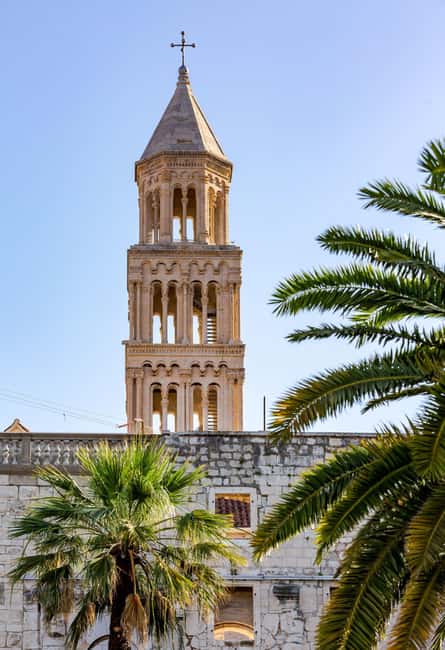
- Cathedral of Saint Domnius: Why This Church Matters
- Going Underground: Roman-Era Cellars Inside the Palace
- Short Stops That Still Pay Off: Vestibul and Photo Moments
- What You’ll Learn From the Guides (And Why It Changes the Whole Trip)
- Price and Value: Is $41 Actually Fair?
- Who This Tour Suits Best (And Who Should Skip It)
- Should You Book This 1.5–2 Hour Walking Tour?
- FAQ
- How long is the tour?
- How much does it cost?
- Where does the tour start?
- What’s included in the price?
- Are entrance fees included?
- Does the tour include food or beverages?
- What languages are offered?
- Is the tour suitable for people with limited mobility?
- What should I wear?
Key Things That Make This Tour Worth Your Time
- Roman cellars in an active old-city setting: you get the drama of underground history without feeling lost
- A smart route through Split’s layout: gates, squares, and the waterfront line up in a way that helps you navigate later
- Peristyle details you’ll miss alone: like the black granite Peristyle and the legendary sphinx
- Saint Domnius Cathedral: the structure formed from an imperial Roman mausoleum
- Old town-to-waterfront perspective: you’ll see the Riva promenade and get a feel for daily life
- Story-led guiding: anecdotes often include local culture and practical tips for what to do next
Prefer to walk it? More guided strolls through Split
- Split: Old Town and Diocletian Palace Walking Tour★ 4.9 · 4,727 reviews
- Walking Tour of Split and Diocletian’s Palace★ 5.0 · 2,588 reviews
- Krka Waterfalls tour with Trogir Walking tour and Krka panoramic boat cruise★ 5.0 · 1,659 reviews
- Split & Diocletian’s Palace Walking Tour★ 5.0 · 1,125 reviews
Why Diocletian’s Palace Feels Like a Neighborhood, Not a Ruin
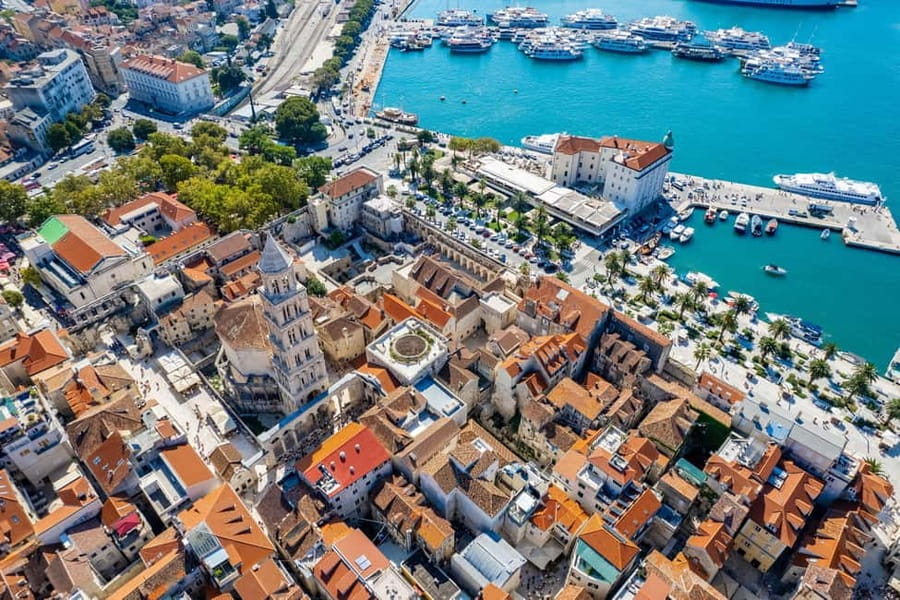
Diocletian’s Palace is one of those places that stops being “ancient history” the moment you see how people live around it. This tour makes that point early. You don’t just stand and stare at stones. You walk the corridors, see the palace squares, and connect the architecture to the city’s flow.
The standout is the sense of layers. The palace begins with Diocletian’s Roman plan around the turn of the 4th century, but Split didn’t stop evolving after the Romans. As you move through the area, you’ll spot transitions from the Roman world to later periods—and then you’ll even notice modern-era buildings threaded into the same tight fabric of streets. That contrast is a big reason this tour works so well in only 90 minutes to 2 hours.
Meeting Point and Walk Pace: How This Fits Real Life
This tour runs about 90 minutes to 2 hours and includes a live English or Spanish guide. The meeting point can vary depending on your booking option, so you’ll want to confirm the exact spot before you go. The route itself is designed as a walk-through of central old town: you’re moving throughout, with short pauses for guidance and photos.
You’ll get the best experience if you’re comfortable walking. The operator doesn’t recommend it for people with limited mobility, and that makes sense: old town means uneven ground, steps, and tight corners. If you’re visiting in heat, plan for it. Reviews often praise specific timing choices (for example, one person loved an evening start around 18:00 because it felt cooler and less crowded), but the core advice stays the same: choose the time slot that matches your comfort.
From Golden Gate to the Game of Thrones Museum: Old Town Warm-Up
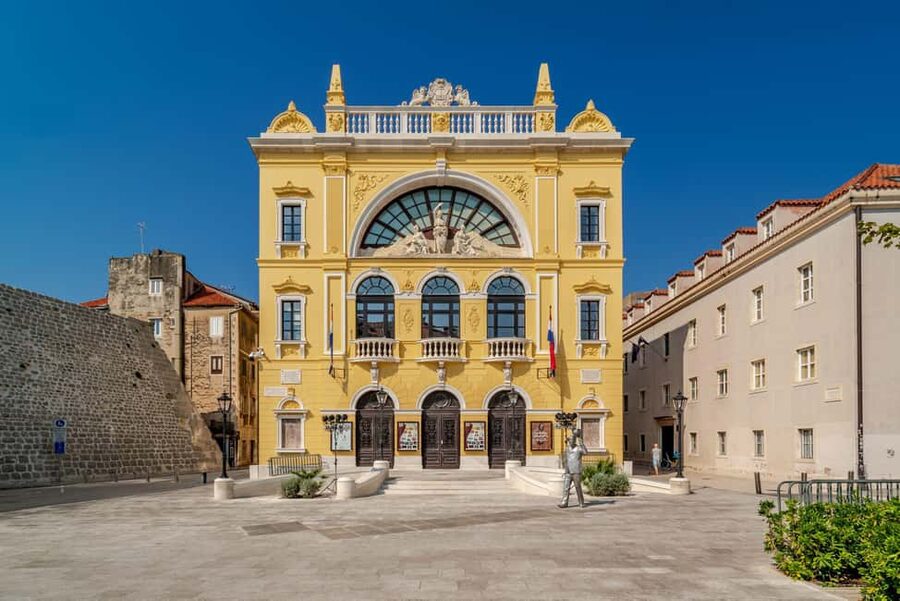
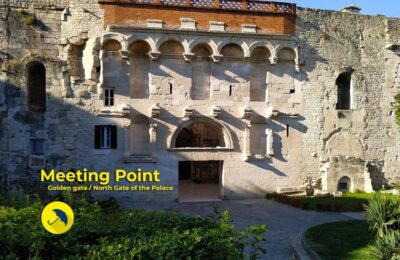
The tour starts with a quick orientation around Split’s old town edges. One common starting spot is the Golden Gate, which gives you a natural “enter and orient” feeling. From there, the route ties history to what you can see right now.
A brief stop at the Game of Thrones Museum shows how Split capitalizes on pop-culture without losing the real story underneath. Even if you’re not a fan of the show, it still serves a purpose: it helps set context for why so many visitors recognize the city. Then your guide brings it back to Split itself—Roman beginnings, later city growth, and how the modern port and daily life shape what you see today.
People’s Square and Fruit Square: Street Names That Tell You How Split Worked
Two stops that often feel small on paper but matter a lot in real life are People’s Square and Fruit Square (Voćni Trg). These aren’t just random points on a map. They help you understand how Split functioned day to day.
Fruit Square is described as the site of the old fruit market. That detail changes how you look at the place. Instead of seeing only a pretty square, you start picturing daily activity—vendors, locals moving through, and a rhythm of trade that has shifted over centuries. That’s the best kind of sightseeing: the kind that makes you see the present differently because you understand the past’s job.
Inside the palace walls: more Old Town tours around Split


Riva Waterfront and Marjan Hill Views: The Break Your Legs Appreciate
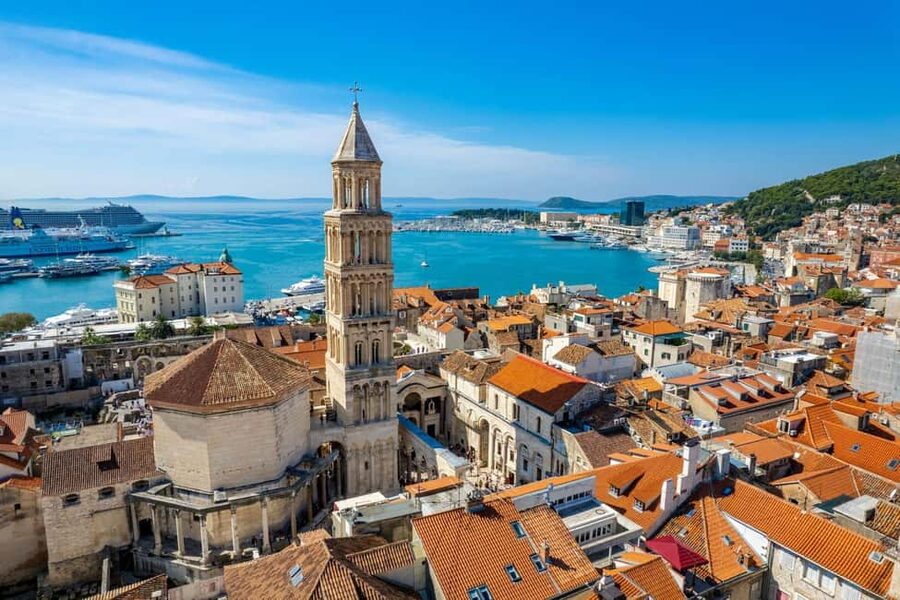
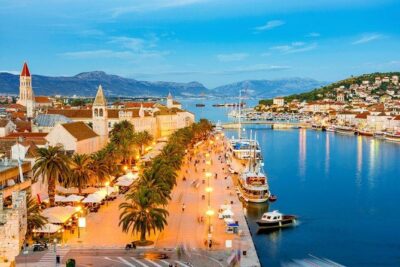
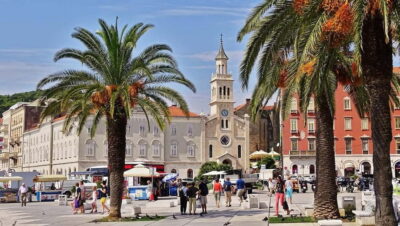
After time inside the palace area, the walk swings toward the Riva waterfront. This is a smart pacing move, and your body will appreciate it. The promenade gives you space, open sightlines, and the feeling that Split is a coastal city, not a rooftop maze.
You’ll also get panoramic views of Marjan Hill from the promenade. Even if you don’t climb Marjan itself, this view helps you place Split in its geography. It also gives you an easy “where to go next” target—because once you’ve seen how the hill sits above town, it becomes obvious what kind of outing would feel good after the tour.
Entering Diocletian’s Palace: South Gate to Squares, With Real Orientation

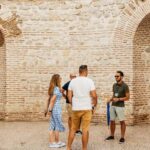
Now we get to the main event: walking through Diocletian’s Palace. The route focuses on key points—gate to gate, space to space—so you build a mental map fast.
The tour highlights a palace walk that moves from the South Gate toward the cellars and central palace spaces. You’ll also see other gates, including the North Gate and West Gate, which is helpful because people often remember the palace as one big square. Gates give it structure.
A practical upside: once you know where the gates are, it’s easier to explore on your own afterward. Several guides described in the tour’s feedback are clearly focused on that exact goal—helping you feel like you can find your way around Split without stress.
Peristyle Details: The Sphinx and That Black Granite Moment
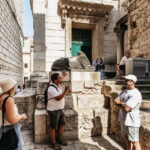
The Peristil (Peristyle) is where the tour’s visual punch lands. You’ll spend time here on the guided portion, and this is also where the palace starts to feel theatrical: huge space, dramatic stone, and that signature “Roman planned it, then time changed everything” effect.
One specific detail worth watching for is the last remaining Egyptian sphinx in black granite that sits in the Peristyle. It’s the kind of object you might glide past alone. With a guide pointing it out, you understand why it’s here and why it’s still such a draw.
This stop also helps connect palace layout to how Roman engineering worked. You don’t need a doctorate. You just need someone to point out what you’re actually looking at.
Cathedral of Saint Domnius: Why This Church Matters
The tour includes the Cathedral of Saint Domnius, often presented as the oldest Catholic cathedral in the world. The key idea you’ll hear is that it was formed from an imperial Roman mausoleum. That line matters because it turns the cathedral from a separate “religious site” into a continuation of Roman space.
In practical terms, you’ll benefit from a guided explanation here because the building’s layers can be hard to read on your own. You’ll likely notice how the architecture reflects that long reuse of the same foundations and spaces—something Split does masterfully.
Even if you’ve seen churches before, this one is different. The tour helps you recognize what’s old and what changed.
Going Underground: Roman-Era Cellars Inside the Palace

One of the strongest reasons to book this tour is the chance to visit the cellars of the Roman-era Diocletian’s Palace. Underground spaces feel like a different world, and that contrast keeps the tour from becoming too top-heavy.
This is also where the guide’s pacing matters. The cellars aren’t just a hallway of stones. You’re guided through the logic of the palace—why this space exists, how it fit into the Roman plan, and what it means that centuries later people still walk through it as part of daily life in Split.
If you love history but don’t want it to feel dry, cellars are often the sweet spot: visual, physical, and memorable.
Short Stops That Still Pay Off: Vestibul and Photo Moments
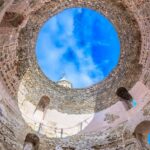
The Vestibul is included as a photo stop with a short visit and guided explanation. Even if you don’t care about photos, this kind of stop is useful because it tightens the story. You’re not just rushing past random doors and corridors. You’re learning what you’re standing in front of.
One small tip: treat those photo stops as your chance to slow down and look closely. Old stone rewards close attention.
What You’ll Learn From the Guides (And Why It Changes the Whole Trip)
The guides attached to this tour get consistent praise for a reason: they don’t only explain facts. They connect those facts to Split as a living place.
Names that show up again and again include Sandra, Ana/Ana, Ivan, and Jelena. The pattern in the feedback is clear: they’re professional, thorough, and willing to share extra context—like how the city works today, or where filming locations show up around town. One person specifically called out help with finding local taverns and a viewpoint on Marjan Hill after the walk.
So if you care about getting your bearings fast, this tour helps. It gives you a mental map plus a few local ideas to keep your next hours from turning into guesswork.
Price and Value: Is $41 Actually Fair?
At $41 per person, you’re paying mainly for three things: a guide for 1.5 to 2 hours, a structured walk that hits the big palace essentials, and time you won’t spend figuring out which gate or square matters.
What’s not included: entrance fees and food and beverages. So you should budget for any paid entries tied to the sites you want to linger at. The good news is that the tour is built to cover the key sights in a tight route. You’re not forced to spend hours hunting for the right locations.
In plain terms: if you’re short on time in Split, this is a solid value. You’re getting organization and context together, which is often what separates a “saw some buildings” day from a “I understand the city now” day.
Who This Tour Suits Best (And Who Should Skip It)
This works best for you if you want:
- A guided first pass through Split old town
- Roman and medieval sites without a full-day commitment
- Help understanding how Diocletian’s Palace connects to modern streets
- A route that helps you come back later and explore confidently
It may not suit you if:
- You have mobility impairments or limited tolerance for uneven surfaces
- You want a long, unhurried cathedral visit or extended museum time (this is time-efficient by design)
- You hate walking and prefer taxis between stops
Should You Book This 1.5–2 Hour Walking Tour?
Book it if you’re arriving in Split and want to feel oriented quickly. The palace cells, the Peristyle details, and the cathedral link Roman foundations to today in a way that’s hard to piece together on your own in such a short window.
Skip it if your day depends on minimal walking, or if you’re already a deep Roman-architecture expert who prefers to self-tour without guidance. Also consider time of day. If you get a choice, pick the slot that keeps heat and crowds manageable for you.
FAQ
How long is the tour?
It lasts about 90 minutes to 2 hours.
How much does it cost?
The price is listed as $41 per person.
Where does the tour start?
There are two starting location options, and the meeting point may vary depending on the option booked.
What’s included in the price?
You get a live guide for the duration of the tour (about 1.5 to 2 hours).
Are entrance fees included?
No. Entrance fees are not included, so you should plan for them.
Does the tour include food or beverages?
No. Food and beverages are not included.
What languages are offered?
The tour is available in English and Spanish.
Is the tour suitable for people with limited mobility?
It is not recommended for people with limited mobility, and it is not suitable for people with mobility impairments.
What should I wear?
Comfortable walking shoes are recommended.
More Tour Reviews in Split
- Split: Krka Waterfalls Trip with Boat Cruise and Swimming
★ 4.8 · 10,519 reviews - From Split: Krka Waterfalls, Food & Wine Tasting Tour
★ 5.0 · 9,326 reviews - Blue cave, Mamma Mia and Hvar, 5 islands speedboat tour
★ 5.0 · 7,150 reviews - From Split: Krka Waterfalls, Food & Wine Tasting Tour
★ 4.9 · 6,598 reviews - Split/Trogir: Blue Cave, Mamma Mia, Hvar and 5 Island Tour
★ 4.6 · 6,320 reviews
Deeper Into the Palace, Split
- Split: Old Town and Diocletian Palace Walking Tour
★ 4.9 · 4,727 reviews - Walking Tour of Split and Diocletian’s Palace
★ 5.0 · 2,588 reviews - Split & Diocletian’s Palace Walking Tour
★ 5.0 · 1,125 reviews - Split: Diocletian Palace & Old Town Guided Walking Tour
★ 4.7 · 882 reviews - Split Old Town and Diocletian’s Palace Tour
★ 4.8 · 716 reviews
Walk Split a Different Way
- Split: Old Town and Diocletian Palace Walking Tour
★ 4.9 · 4,727 reviews - Walking Tour of Split and Diocletian’s Palace
★ 5.0 · 2,588 reviews - Krka Waterfalls tour with Trogir Walking tour and Krka panoramic boat cruise
★ 5.0 · 1,659 reviews - Split & Diocletian’s Palace Walking Tour
★ 5.0 · 1,125 reviews - Walking Tour of Split with a ‘Magister’ of History
★ 5.0 · 1,122 reviews
Still deciding? More Split trips we have been out and reviewed


Diocletian's Palace & Old Town, compared.
 ★ 4.9Old Town and Diocletian Palace Walking TourFrom $174,727 reviews
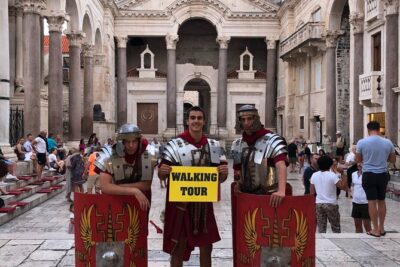 ★ 5.0Walking Tour of Split and Diocletian’s PalaceFrom $482,588 reviews
 ★ 5.0Split & Diocletian’s Palace Walking TourFrom $211,125 reviews
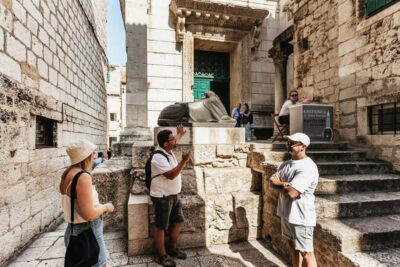 ★ 4.7Diocletian Palace & Old Town Guided Walking TourFrom $17882 reviews
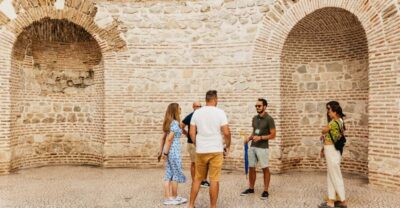 ★ 4.8Split Old Town and Diocletian’s Palace TourFrom $17716 reviews
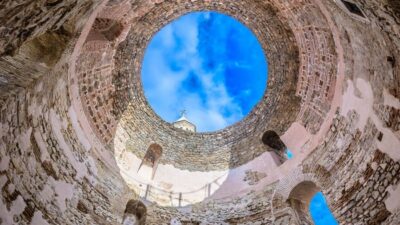 ★ 4.8Game of Thrones Tour with Diocletian’s Palace CellarFrom $41545 reviews
 ★ 5.0Diocletian’s Palace and Old Town SMALL GROUP Walking TourFrom $16502 reviews
 ★ 5.0SPLIT-PRIVATE Walking Tour of Diocletian’s Palace & Old TownFrom $240467 reviews
Browse the lists this tour appears in