
Reviewed · KLIS FORTRESS & SALONA
Salona & Amphitheater – Private guided tour – Admission incl.
Roman ruins, with a guide who makes sense. In the Split-Solin area, this private 2.5-hour walk through Salona and the Amphitheatre shows how Roman and early Christian life layered over each other in one logical route. I really like two things: the way guide Ivan keeps the story clear, and the chance to stand in Amphitheatre Salona, still remarkably intact. The one snag: the Ancient Salona open-air museum entrance fee is about 10 euros for adults and is not included.
This is a private tour, so your group gets the guide’s full attention, and it runs at a calm pace with short stops and time for questions. You’ll get a mobile ticket, and the tour ends right back at the meeting point at Salona Main entrance in Solin.
In This Review
- Key highlights worth knowing
- Salona and the Amphitheatre: why this route feels so smart
- Stop 1: Ancient Salona open-air museum (and what to look for first)
- Manastirine: the cemetery that links Rome to Split’s patron saint
- Tusculum: archaeology with a human setting
- Biskupska palača and the early-Christian shift: foundations over spectacle
- Roman bath social life: the Large urban spa
- Pet mostova, the five bridges: when industry sits at the edge of town
- Porta Caesarea and the forum area: Roman spectacle in smaller pieces
- The road to the amphitheatre: sarcophagi and martyr sites
- Amphitheatre Salona: what you see now, and why it looks like this
- Price and value: what $203.50 buys you on the ground
- Who should book this private Salona walk
- Should you book: yes, with one planning note
- FAQ
- FAQ
- How long is the Salona and Amphitheater private guided tour?
- Is this tour private or group-based?
- What language is the tour offered in?
- Is admission included?
- What time do I spend at the amphitheatre?
- Where is the meeting point?
- Does the tour end at the same place?
- What happens if the weather is bad?
- Is a mobile ticket provided?
- Are service animals allowed?
Key highlights worth knowing
- Ivan’s on-the-ground storytelling: crisp facts tied to what you’re actually looking at
- Amphitheatre Salona as the finish line: well preserved, even after Venice-style stone theft
- Early Christian stops that feel personal: St. Dominius and martyr sites tied to the 3rd–4th centuries
- Roman “infrastructure” viewpoints: baths, town gate ruts, and the five bridges industrial zone
- A route that’s easy to follow: short timed stops, then the amphitheatre at the end
On your own schedule: more private tours in Split
- SPLIT-PRIVATE Walking Tour of Diocletian’s Palace & Old Town★ 5.0 · 467 reviews
- Private Krka Waterfalls tour with 30min Boat Cruse★ 4.0 · 458 reviews
- Split by Private Electric Rickshaw – Palace & Hidden Gems★ 5.0 · 412 reviews
- Private Blue cave, Mamma Mia and Hvar, 5 islands tour from Split★ 5.0 · 387 reviews
Salona and the Amphitheatre: why this route feels so smart
Salona is one of those places where the ruins don’t just sit there. They explain things—politics, religion, daily life, and later reuse—because the locations are close enough to connect in your head.
The tour format helps a lot. You’re not rushing from one random monument to another. Instead, you move through a chain of Roman civic sites, necropolises, and early Christian landmarks until the day’s main payoff: the amphitheatre. It’s built for people who want meaning, not just a photo stop.
One more practical win: most of the stops don’t require extra entry fees. You’ll hit a mix of free viewpoints and small sites that are easier to absorb when you’re walking with an English-speaking guide who can point out what matters.
Stop 1: Ancient Salona open-air museum (and what to look for first)
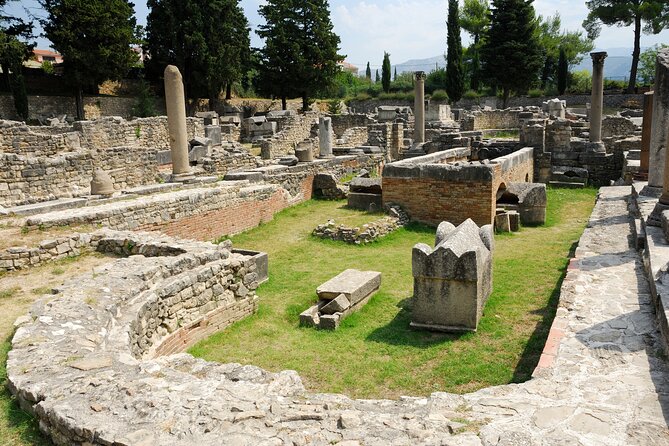
You start at the Salona Main entrance on Ul. don Frane Bulića 58, in Solin. This first stretch sets the tone, because Salona was a major Roman metropolis—reported as having around 60,000 inhabitants—before it was destroyed in the 6th century by the Avars.
Plan for the one potential cost mentioned in the tour info: the open-air museum entrance is about 10 euros for adults, and it’s not included. If you’re trying to keep your budget tight, this is the number to have ready on your card or in euros.
As you walk in, I’d treat this first stop like orientation time. The guide gives general information at the entrance, and that matters because later sites start making sense when you understand what kind of city you’re standing in. You’re not just looking at stones—you’re reading the layout: where a metropolis would have been living, building, and expanding.
Manastirine: the cemetery that links Rome to Split’s patron saint
Manastirine is short in time—about 15 minutes—but it carries heavy meaning. It began as a necropolis in Roman times and later became a Christian cemetery. This is where you visit the burial place connected to St. Dominius, the martyr and patron of the city of Split.
This stop is valuable because it shows the shift in who people believed in, and what they did with sacred space. You can feel the continuity: a burial ground keeps its purpose even as religion changes around it. Even with only a brief look, you get a clear mental timeline if the guide is doing their job right—turning what could be just another cemetery visit into a story about identity.
Because this portion is brief, it’s also a good moment to ask questions. If there’s one stop where you can clarify the overall chronology—Roman era, then Christian reuse—this is it.
Tusculum: archaeology with a human setting
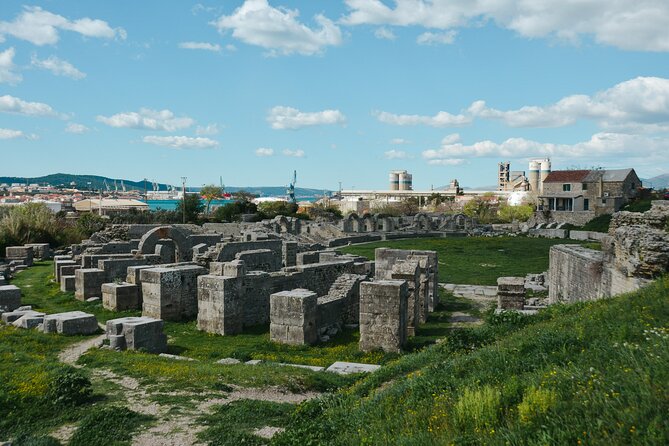
Tusculum is another brief stop (around 15 minutes), and it’s different in mood. This was built by Don Frane Bulić, a famous Split clergyman and archaeologist, and it was used as an office and meeting place.
What I like about including Tusculum is that it brings archaeology out of the abstract. Instead of treating the ruins as something discovered by luck, you see the people who studied and worked on them. It gives you a sense of how modern scholarship connected to the ancient city you’re walking through.
The tour notes that some rooms can be visited. Keep expectations flexible here: you’ll likely get a limited look rather than full access to everything. Still, it’s a worthwhile break from open-outdoor ruins, especially if you like understanding how the site was developed and interpreted.
Up to the fortress and Roman Salona, more from Split


Biskupska palača and the early-Christian shift: foundations over spectacle
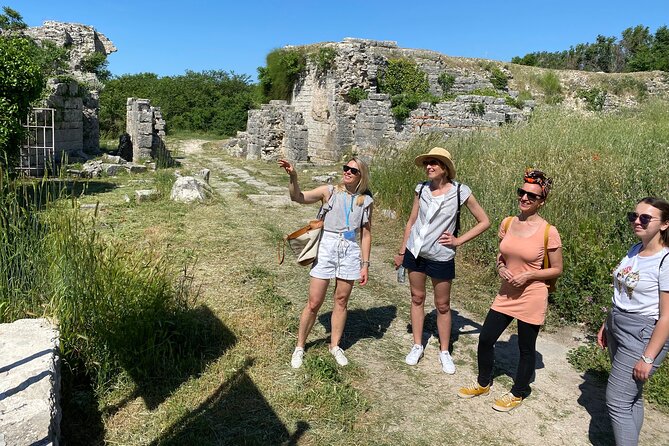
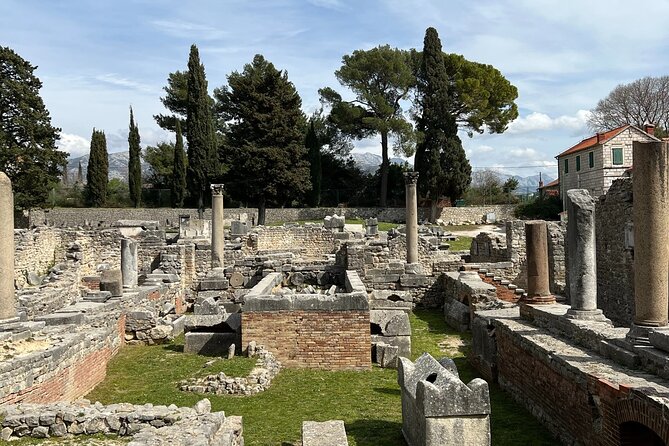
Next comes Biskupska palača, also called Palatium episcopi—the bishop’s palace. Here you see remnants tied to the time when Christians were allowed to practice their religion more openly.
In practical terms, you’re not visiting a fully restored building. Today, only foundation walls can be seen. That might sound less exciting than an intact structure, but it’s exactly why a guided walk helps. Foundations tell you where power sat and how religious authority took shape as society changed.
I’d treat this as a “slow down and read the space” stop. Foundations can be confusing when you’re alone, because you’re unsure what the original shape was. With a guide, you can picture what once stood there, and that’s the point.
Roman bath social life: the Large urban spa
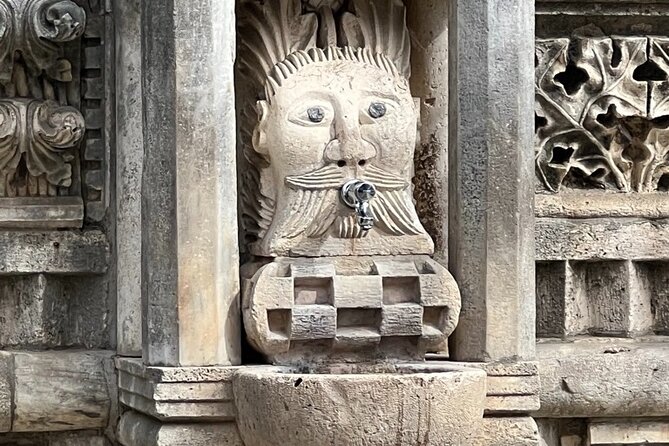
Then you move to the Large urban spa, the Roman baths used for several hundred years. According to the tour description, these baths were the center of social and cultural life in Roman times.
Even if you’re not a big Roman-bath person, this stop is useful because it answers a question ruins often dodge: what did people do all day? A bath complex wasn’t only about hygiene. It was meeting, chatting, and public life—one of the places where a metropolis performed itself.
You’ll spend about 10 minutes here. That’s enough time to connect the idea to the broader city story you’ve heard so far, without turning the tour into a museum marathon.
Pet mostova, the five bridges: when industry sits at the edge of town
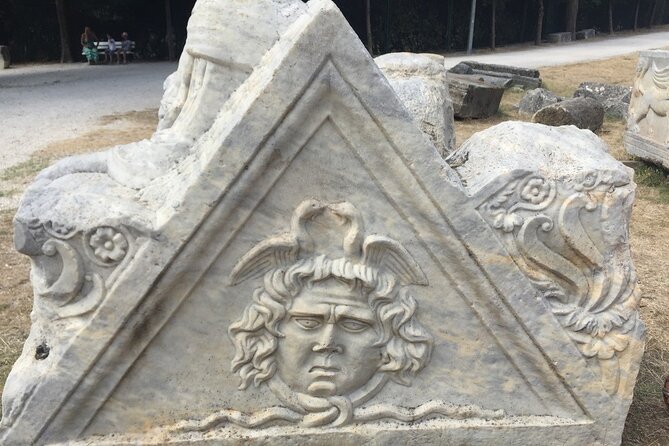
Pet mostova—literally the five bridges—takes about 10 minutes. The tour frames it as belonging to a kind of industrial area outside the old city center.
This stop is a good reminder that cities have borders and zones. The old “center” wasn’t the whole story. Industry, movement, and utility needed space too. Standing here (with the guide’s context), you’ll likely start to see the site less as a collection of monuments and more as a functioning urban system.
Because it’s quick, it can also be a good place to mentally regroup. If the first half felt like a lot of names and eras, this industrial framing helps you reset your understanding of how the city worked.
Porta Caesarea and the forum area: Roman spectacle in smaller pieces
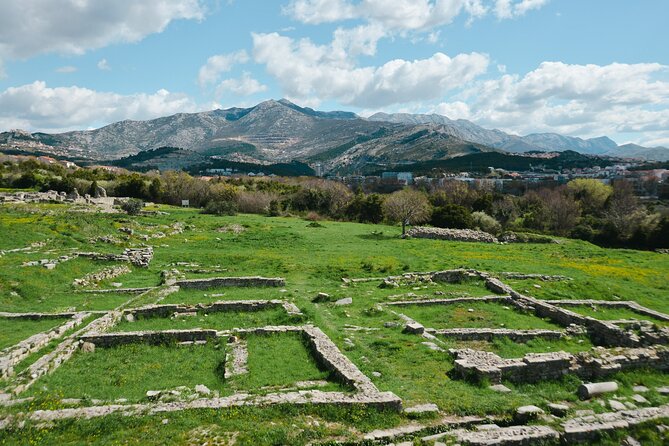
The Town Gate, Porta Caesarea, is another 10-minute stop. This was the capital gate in Roman times, and the ruts of old Roman chariots can still be seen today.
This is the kind of detail you remember. It’s physical evidence of movement, not just a legend about what happened here. It also helps you picture how people and goods moved through the city—again, the tour keeps connecting sites to daily reality.
Then you reach the Hram area (another 10 minutes). In the oldest part of the city, you’ll see remains of the forum, a temple, and an ancient Roman theater. It’s all layered in one place, which makes it easy to understand why Salona mattered. A forum and temple signal civic and religious importance; a theater signals leisure and public culture.
If you like architecture and urban planning, this is one of the more satisfying stops, even if it’s brief.
The road to the amphitheatre: sarcophagi and martyr sites
Before you reach the big finale, the tour includes two necropolis-style stops along the road toward the amphitheatre area.
First is Ul. don Frane Bulića 91, described as the Cemetery of the 16 Sarcophagi. Roman cemeteries were built outside city walls, so this location fits the typical pattern: people living inside the walls, and the dead assigned to the spaces beyond.
Then comes Kapljuc, another basilica and necropolis. Here, the tour mentions the burial of 5 martyrs who died in the amphitheatre of Salona in the early 4th century during persecution of Christians by Diocletian.
I like how this sequence works psychologically. You’re moving toward the amphitheatre while learning about death, burial, and martyrdom connected to it. By the time you arrive, the amphitheatre isn’t just an old structure. It becomes a place with human stakes, not only seating.
Both of these stops are about 10 minutes, so don’t plan on reading every stone by yourself. Instead, use them to absorb the guide’s framing so the final site lands with more meaning.
Amphitheatre Salona: what you see now, and why it looks like this
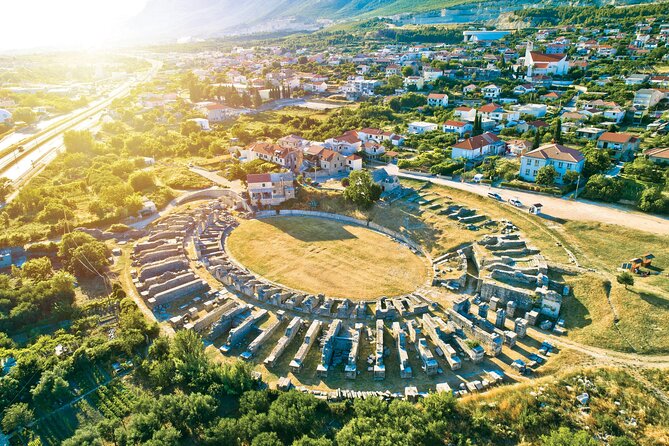
The tour’s highlight is the Amphitheatre Salona, with about 30 minutes here. The information notes it’s relatively well preserved. That’s impressive on its own, but it’s even more interesting given what happened later.
The tour also points out that Venetians removed most of the stones to build churches in Venice. That means what you see today isn’t a perfect snapshot of Roman design—it’s a surviving structure shaped by later reuse.
Still, you’ll be able to appreciate the scale and layout, and you’ll likely understand why amphitheatres were such powerful public stages. With the earlier martyr context from Kapljuc, the amphitheatre visit feels less like a generic ruin and more like the final chapter of the story you’ve been walking through.
This is also a great place to ask your last questions. If there’s one moment you want the guide to slow down and explain how everything connects—Roman city, civic spaces, then Christian meaning—30 minutes is enough to get good answers.
Price and value: what $203.50 buys you on the ground
At $203.50 per person for about 2 hours 30 minutes, this is not a cheap add-on. But it is targeted value.
Here’s what you’re really paying for:
- A private, English-guided route through multiple sites that are otherwise easy to wander past without understanding
- A story arc that connects Roman civic life to early Christian burial and martyr context
- Time in the amphitheatre with a guide who can point out what you’re seeing and why later history affected it
The tour also includes admission for most stops, but the Ancient Salona open-air museum fee for adults is about 10 euros and not included. So budget a little extra if you’re paying as you go.
If your goal is purely photos and you don’t care about context, you could DIY some of this. But if you want the sites to make sense as you walk, the guide component is the value.
Who should book this private Salona walk
This tour suits you if:
- You want a structured route instead of indecisive wandering
- You like archaeology and big city planning, not only one star monument
- You’re interested in early Christian history tied to martyrs and burial sites
- You prefer a private pace with time for questions
It’s also a good match if you’ll be short on time around Split and want a focused day in Solin rather than a full-day itinerary.
If you dislike walking between multiple small stops, you might find the sequence a bit dense. The good news is each stop is short, and the amphitheatre gets the longest look.
Should you book: yes, with one planning note
I’d book this tour if you want Salona to feel coherent. The route is built to connect themes—Roman metropolis life, then the Christian layer that changes the meaning of places like cemeteries and the amphitheatre.
Just plan for the one predictable extra cost at the start: the Ancient Salona open-air museum entrance fee is about 10 euros for adults and not included. If you handle that, you’ll get a strong guided overview in a compact 2.5-hour window, with Ivan’s on-the-ground explanations making the ruins easier to understand.
FAQ
FAQ
How long is the Salona and Amphitheater private guided tour?
It’s approximately 2 hours 30 minutes.
Is this tour private or group-based?
It’s a private tour/activity, with only your group participating.
What language is the tour offered in?
The tour is offered in English.
Is admission included?
The tour information says admission is included, but the Ancient Salona open-air museum entrance fee is about 10 euros for adults and is noted as not included. Other stops are listed as free.
What time do I spend at the amphitheatre?
The amphitheatre stop is listed as about 30 minutes.
Where is the meeting point?
You meet at the Salona Main entrance, Ul. don Frane Bulića 58, 21210 Solin, Croatia.
Does the tour end at the same place?
Yes, the activity ends back at the meeting point.
What happens if the weather is bad?
This experience requires good weather. If it’s canceled due to poor weather, you’ll be offered a different date or a full refund.
Is a mobile ticket provided?
Yes, the tour includes a mobile ticket.
Are service animals allowed?
Yes, service animals are allowed.
More Tour Reviews in Split
- Split: Krka Waterfalls Trip with Boat Cruise and Swimming
★ 4.8 · 10,519 reviews - From Split: Krka Waterfalls, Food & Wine Tasting Tour
★ 5.0 · 9,326 reviews - Blue cave, Mamma Mia and Hvar, 5 islands speedboat tour
★ 5.0 · 7,150 reviews - From Split: Krka Waterfalls, Food & Wine Tasting Tour
★ 4.9 · 6,598 reviews - Split/Trogir: Blue Cave, Mamma Mia, Hvar and 5 Island Tour
★ 4.6 · 6,320 reviews
Fortress and Ruins Near Split
- Split: Sunset at Klis Fortress with Sightseeing Bus
★ 4.5 · 715 reviews - Split: Klis Fortress GOT and Olive Museum Entry Tickets
★ 4.6 · 283 reviews - Split: Blue Line Sightseeing to Trogir, Klis & Olive Museum
★ 4.3 · 197 reviews - Visit Klis fortress GOT & Olive museum Klis
★ 4.5 · 77 reviews - Split: Olive museum Klis with Olive Oil Tasting
★ 4.9 · 51 reviews
Just Your Group in Split
- SPLIT-PRIVATE Walking Tour of Diocletian’s Palace & Old Town
★ 5.0 · 467 reviews - Private Krka Waterfalls tour with 30min Boat Cruse
★ 4.0 · 458 reviews - Split by Private Electric Rickshaw – Palace & Hidden Gems
★ 5.0 · 412 reviews - Private Blue cave, Mamma Mia and Hvar, 5 islands tour from Split
★ 5.0 · 387 reviews - The Best of Split Private Tour
★ 5.0 · 338 reviews
Still deciding? More Split trips we have been out and reviewed
Klis Fortress & Salona, compared.
 ★ 4.5Sunset at Klis Fortress with Sightseeing BusFrom $17715 reviews
 ★ 4.6Klis Fortress GOT and Olive Museum Entry TicketsFrom $14283 reviews
 ★ 4.3Blue Line Sightseeing to Trogir, Klis & Olive MuseumFrom $29197 reviews
 ★ 4.5Visit Klis fortress GOT & Olive museum KlisFrom $1477 reviews
 ★ 4.9Olive museum Klis with Olive Oil TastingFrom $1851 reviews
 ★ 4.5Olive museum Klis with educational olive oil tastingFrom $1750 reviews
 ★ 4.5Sunset Klis Fortress Tour From Split with Sightseeing busFrom $1739 reviews
 ★ 5.0Trogir Old Town & Klis Fortress from SplitFrom $12238 reviews
Browse the lists this tour appears in