
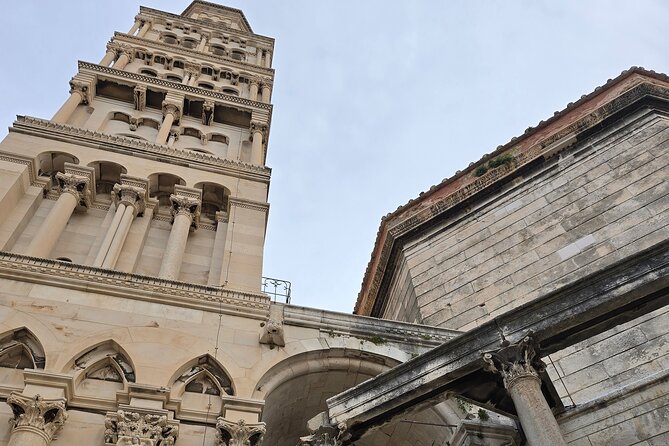
Reviewed · DIOCLETIAN'S PALACE & OLD TOWN
Private Roman Split tour: Diocletian Palace with a Professor
Roman secrets live under Split’s streets. This private tour of Diocletian’s Palace is interesting because you see the emperor’s world from the ground level down into the parts most people race past. I love how the walk through the substructures turns stone corridors into real daily function, not just ruins. I also love that Prof. Nebojša (often called Nebo/Nibo in reviews) gives practical, human-sized context about how different empires shaped the wider region, then adds useful local tips for what to see next.
The main drawback is simple: it’s only about 2 hours, so you’ll learn a lot, but you won’t have long to linger in every corner. Also, it’s offered in English, so if you want more language support, plan accordingly before booking.
In This Review
- Key Highlights You’ll Actually Feel on the Walk
- From Streets to Cellars: Diocletian’s Palace Substructures
- The Peristyle Square: Where Imperial Power Was Performed
- Vestibule: The Private Quarters Entrance With Real Drama
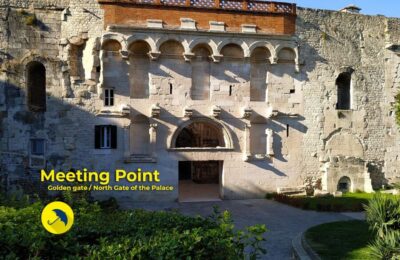
- Golden Gate: Finishing at the North Entrance
- Meeting Point and How to Keep the Flow Smooth
- Prof. Nebojša (Nebo/Nibo) and the Way He Brings Stones to Life
- Price and Value: What $84.29 Buys You Here
- Who This Tour Fits Best (And Who Might Want Something Else)
- My Practical Tips to Make the Most of the 2 Hours
- Should You Book This Private Diocletian’s Palace Tour?
- FAQ
- How long is the private Roman Split tour?
- Is this tour private or shared?
- What language is the tour offered in?
- Are admissions included for all stops?
- Where do we meet and where does the tour end?
- What ticket format do I use?
- Is free cancellation available?
Key Highlights You’ll Actually Feel on the Walk
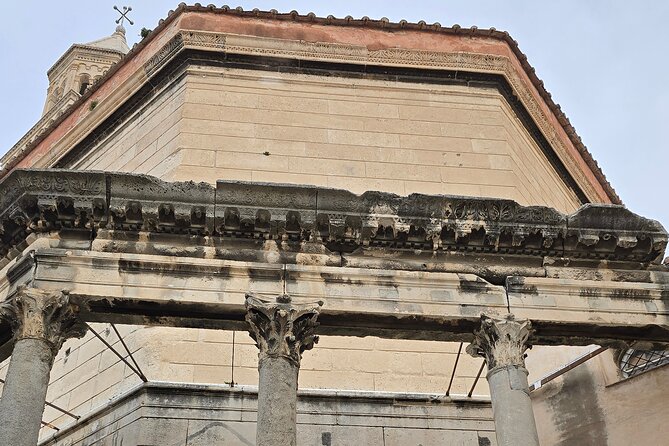
- Diocletian’s cellars in 45 minutes: a long enough underground stop to understand what you’re looking at, with admission included
- Peristyle as the ceremonial center: learn what happened there when the emperor appeared as a living god
- Vestibule’s dramatic entrance: spot the circular form and big dome, plus how the space handles sound
- Golden Gate for a strong ending: finish at the north entrance reserved for the emperor and high-ranking officials
- Private group pace with a professor-style guide: just your group, in English, with lots of room for questions
On your own schedule: more private tours in Split
- SPLIT-PRIVATE Walking Tour of Diocletian’s Palace & Old Town★ 5.0 · 467 reviews
- Private Krka Waterfalls tour with 30min Boat Cruse★ 4.0 · 458 reviews
- Split by Private Electric Rickshaw – Palace & Hidden Gems★ 5.0 · 412 reviews
- Private Blue cave, Mamma Mia and Hvar, 5 islands tour from Split★ 5.0 · 387 reviews
From Streets to Cellars: Diocletian’s Palace Substructures
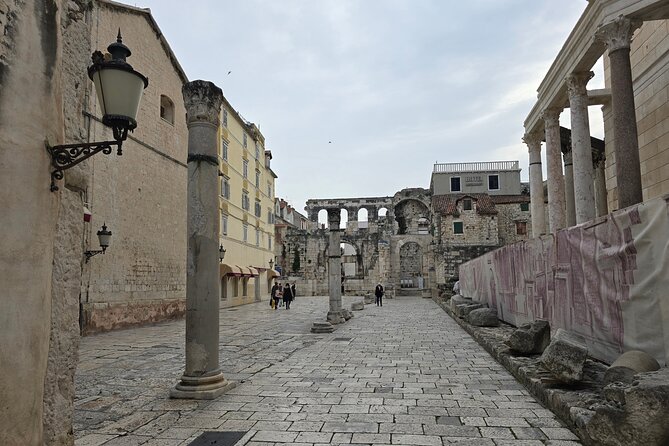
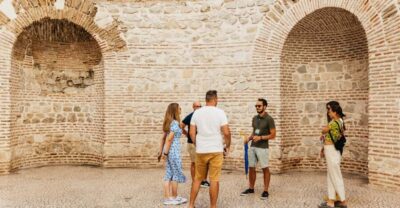
Most people start Diocletian’s Palace at eye level. This tour starts you in the places that made the whole complex work. The first stop is the Diocletian Palace Substructures, known as some of the best-preserved Roman underground spaces. These cellars once supported the emperor’s private quarters above, and they also served storage and everyday palace operations.
What I like about beginning here is the cause-and-effect you get fast. You see the Romans weren’t only building for spectacle. They built for logistics. In a single stretch of underground corridors, the architecture starts explaining itself: why walls sit the way they do, why spaces needed to function beyond ceremonies, and how the palace’s structure literally carried the life of the emperor overhead.
This stop lasts about 45 minutes, and admission is included. That matters because “included” usually means you’re not left juggling ticket lines while your guide is waiting. You can focus on the story and the shapes.
If you’re the type who enjoys photos, this stop also delivers good angles. But the real value is less about images and more about understanding scale. Underground spaces can feel cramped if you don’t have a framework, and this tour gives you that framework early.
The Peristyle Square: Where Imperial Power Was Performed
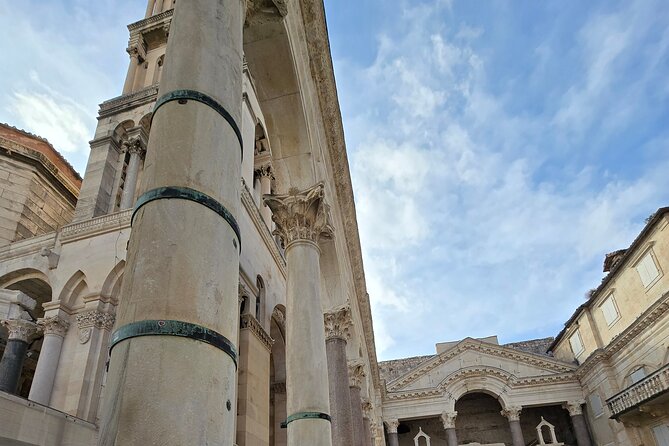
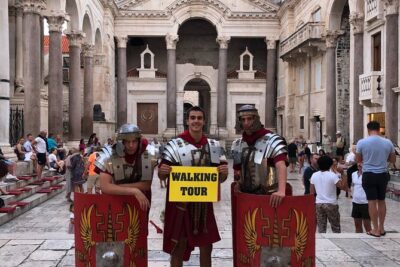
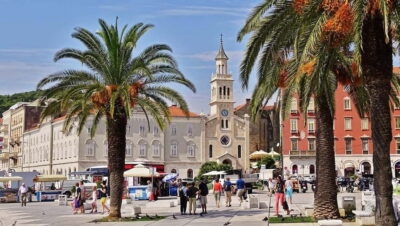
Next you step out to the Peristyle of Diocletian’s Palace, the central square and ceremonial core of the residence. The peristyle is described as the place where the emperor appeared as a living god to be worshipped by citizens. That one detail changes how you look at the colonnades and the open space. You stop seeing it as just a pretty square and start seeing it as a stage built for authority.
This stop is shorter, about 20 minutes, and admission is free here. In practical terms, you get enough time to grasp the layout and the meaning, without turning the tour into a marathon of standing still.
The peristyle also remains a lively gathering place in Split’s historic core. That’s a big plus if you like your history connected to real life. You can glance around and notice how people still use the space, even though the emperor is long gone.
One consideration: because the peristyle is open and public, you may notice more crowds at certain times of day. If you’re sensitive to busy spaces, try to time your visit within the day’s calmer window when possible.
Vestibule: The Private Quarters Entrance With Real Drama
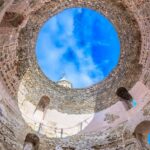
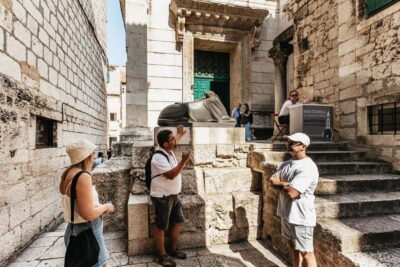
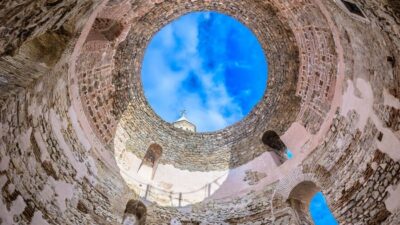
Then comes a change in tone: the Vestibulum of Diocletian’s Palace. This was the grand entrance to the emperor’s private quarters inside the palace. Even without getting too technical, the description gives you a strong mental picture—circular shape, soaring dome, and a transition from the public peristyle to the emperor’s more restricted world.
You’ll spend about 10 minutes here, and admission is free. That might sound brief, but it’s the right kind of stop if the goal is understanding “what happens next” rather than reading every stone like a textbook.
I especially like this stop for the way spaces teach you. A vestibule like this is designed for movement from one role to another. You’re moving from public ceremony to private authority. If you pay attention to the sound and your own footsteps, the tour’s focus on acoustics makes a difference. Roman buildings weren’t built only to look impressive. They were built to work in a physical way that you can feel.
Golden Gate: Finishing at the North Entrance
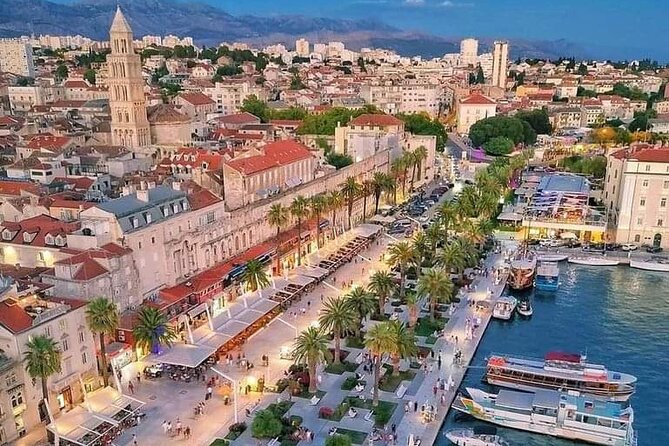
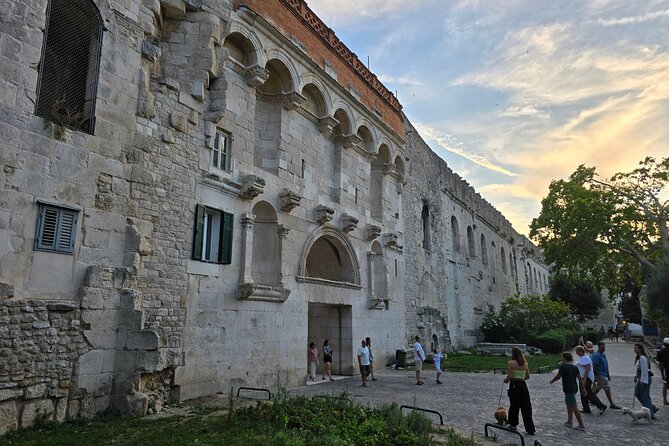
The last stop is the Golden Gate, the main northern entrance to Diocletian’s Palace. It was reserved for the emperor and high-ranking officials and was flanked by guard towers as part of the palace’s defensive system. In other words, this isn’t just an entrance. It’s a statement.
You’ll end at the Golden Gate at Dioklecijanova 7, 21000, Split, which is the north exit from the old town area. That’s useful if you want the tour to help you get your bearings quickly. A clean finishing point gives you a practical mental map for the rest of your day—especially if you’re pairing this with beach time or a longer stroll through Split afterward.
This stop is listed at about 10 minutes, admission free. If you want more time here, treat this as your orientation stop: you’ve learned what the gate represents, and then you can choose whether to linger on your own.
Inside the palace walls: more Old Town tours around Split

Meeting Point and How to Keep the Flow Smooth
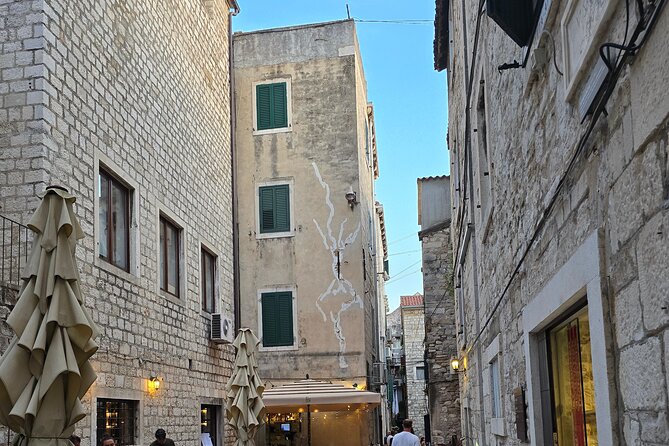
You start at Split sign 21000, Grad, Split, Croatia, and your tour ends at the Golden Gate. The meeting point is near public transportation, which is exactly what you want in a city like Split where walking routes can twist through lanes.
The opening hours given run in daily windows: 9:00 AM–11:00 AM and 5:00 PM–7:00 PM. So plan to arrive a little early and be ready when the guide gathers the group. With a private tour, it’s easier for everyone if you’re not hunting for the exact spot at the last minute.
One more note that helps: the tour uses a mobile ticket. That’s convenient because you’re not fumbling with paper in a windy old town.
Prof. Nebojša (Nebo/Nibo) and the Way He Brings Stones to Life
The real engine of this experience is the guide. In the reviews, Prof. Nebojša is repeatedly praised for turning the palace into something you can actually understand. People describe him as engaging, funny, and focused on explanation rather than dumping facts.
I like that the feedback isn’t just about delivery. It’s about what you walk away with. You get the kind of context that makes Roman architecture feel tied to the larger story of the region. One review highlights learning how modern Croatia was shaped by different empires, including Austrian-Hungarian and Ottoman alongside Roman/Venetian influences. That’s the kind of big-picture bridge that helps you connect what you see today to why the city looks the way it does.
Another pattern in the reviews: he gives local recommendations for restaurants and sights in Split. That is practical value. After you exit the palace, you’re not stuck wondering what to do next. You leave with a short list of ideas you can actually use.
If you’re traveling with someone who doesn’t think they’re into history, that can still work. The tour format is short and story-driven, not a lecture. Reviews even mention keeping a family member engaged enough that they wanted more after the tour.
Price and Value: What $84.29 Buys You Here
At $84.29 per person for a private tour lasting around 2 hours, the price can feel high if you compare it to standard group tours. But private tours are priced for three things: time, focus, and customization.
First, you’re getting admission included for the underground stop (the substructures). Second, the guide’s role matters. Reviews describe a professor-level storytelling approach with a real voice, not just a recitation. When you’re paying for interpretation, you’re paying for meaning.
Third, you get all of this in a tight time window. If your schedule in Split is packed, a 2-hour format is often a better value than committing to something longer that turns into standing in the heat without a plan.
So I’d look at this as a “high return per hour” experience. You pay more, but you spend your time learning how to see what you’re already looking at.
Who This Tour Fits Best (And Who Might Want Something Else)
This private Roman Split tour fits best if you:
- want a guided route through multiple key Diocletian’s Palace areas rather than wandering randomly
- enjoy architecture explanations that connect to daily life and power
- like having local suggestions after the main site visit
- are traveling as a group that wants a shared pace and the chance to ask questions
It may be less ideal if:
- you want a long, slow, photo-heavy crawl of every corner (this is compact by design)
- you need a language other than English
My Practical Tips to Make the Most of the 2 Hours
If you book this, I’d treat it like an orientation plus interpretation combo.
- Wear shoes you trust for uneven old-stone surfaces and indoor steps. You’ll move between underground and open areas.
- Bring a phone camera, but don’t let it replace attention. The vestibule and peristyle make more sense when you listen and look slowly.
- After the Golden Gate, ask your guide what to do next on foot. The local restaurant and sight recommendations are part of the value you’re paying for.
Should You Book This Private Diocletian’s Palace Tour?
If you like history with a voice and you want your time in Split to feel efficient, I think this is a strong yes. The standout benefit is the guide’s ability to make the palace understandable, especially through the contrast between the cellars (function and support), the peristyle (ceremony and power), and the golden gate (authority and defense). That structure makes it easier for you to remember what you saw.
One reason to feel good about booking: you can cancel for free up to 24 hours in advance, so you can lock in a spot while you coordinate the rest of your Split plan.
My only hesitation is the one everyone should consider with short tours: you’ll leave wanting more time in at least one of the areas. If you know you love lingering, plan a bit of extra self-guided time right after the tour so you can return to your favorite corner.
If that sounds like your style, book it and then let the palace guide your next steps through Split.
FAQ
How long is the private Roman Split tour?
The tour is about 2 hours.
Is this tour private or shared?
It’s private. Only your group participates.
What language is the tour offered in?
The tour is offered in English.
Are admissions included for all stops?
Admission is included for the Diocletian Palace Substructures stop. The Peristyle, Vestibulum, and Golden Gate stops are listed as free.
Where do we meet and where does the tour end?
You start at Split sign 21000, Grad, Split, Croatia, and end at the Golden Gate at Dioklecijanova 7, 21000, Split, Croatia.
What ticket format do I use?
You receive a mobile ticket.
Is free cancellation available?
Yes. You can cancel up to 24 hours in advance for a full refund.
More Tour Reviews in Split
- Split: Krka Waterfalls Trip with Boat Cruise and Swimming
★ 4.8 · 10,519 reviews - From Split: Krka Waterfalls, Food & Wine Tasting Tour
★ 5.0 · 9,326 reviews - Blue cave, Mamma Mia and Hvar, 5 islands speedboat tour
★ 5.0 · 7,150 reviews - From Split: Krka Waterfalls, Food & Wine Tasting Tour
★ 4.9 · 6,598 reviews - Split/Trogir: Blue Cave, Mamma Mia, Hvar and 5 Island Tour
★ 4.6 · 6,320 reviews
Deeper Into the Palace, Split
- Split: Old Town and Diocletian Palace Walking Tour
★ 4.9 · 4,727 reviews - Walking Tour of Split and Diocletian’s Palace
★ 5.0 · 2,588 reviews - Split & Diocletian’s Palace Walking Tour
★ 5.0 · 1,125 reviews - Split: Diocletian Palace & Old Town Guided Walking Tour
★ 4.7 · 882 reviews - Split Old Town and Diocletian’s Palace Tour
★ 4.8 · 716 reviews
Just Your Group in Split
- SPLIT-PRIVATE Walking Tour of Diocletian’s Palace & Old Town
★ 5.0 · 467 reviews - Private Krka Waterfalls tour with 30min Boat Cruse
★ 4.0 · 458 reviews - Split by Private Electric Rickshaw – Palace & Hidden Gems
★ 5.0 · 412 reviews - Private Blue cave, Mamma Mia and Hvar, 5 islands tour from Split
★ 5.0 · 387 reviews - The Best of Split Private Tour
★ 5.0 · 338 reviews
Still deciding? More Split trips we have been out and reviewed


Diocletian's Palace & Old Town, compared.
 ★ 4.9Old Town and Diocletian Palace Walking TourFrom $174,727 reviews
 ★ 5.0Walking Tour of Split and Diocletian’s PalaceFrom $482,588 reviews
 ★ 5.0Split & Diocletian’s Palace Walking TourFrom $211,125 reviews
 ★ 4.7Diocletian Palace & Old Town Guided Walking TourFrom $17882 reviews
 ★ 4.8Split Old Town and Diocletian’s Palace TourFrom $17716 reviews
 ★ 4.8Game of Thrones Tour with Diocletian’s Palace CellarFrom $41545 reviews
 ★ 5.0Diocletian’s Palace and Old Town SMALL GROUP Walking TourFrom $16502 reviews
 ★ 5.0SPLIT-PRIVATE Walking Tour of Diocletian’s Palace & Old TownFrom $240467 reviews
Browse the lists this tour appears in