
Reviewed · DIOCLETIAN'S PALACE & OLD TOWN
Split: Diocletian’s Palace Virtual Reality Experience
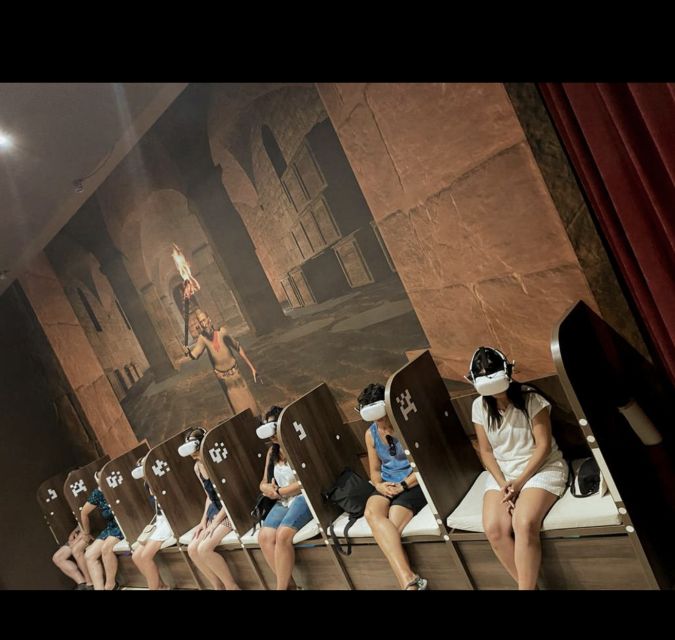
Diocletian’s Palace looks different after VR. You walk through a recreation of the emperor’s world in Diocletian’s Dream, set in 305 A.D., with narration in multiple languages. I like that it gives you a guided sense of the palace layout and daily life without the usual museum fatigue, and it sets the story up for what you’ll see next door.
Two things I especially like: it’s shown from inside a modern, air-conditioned viewing room, and the whole experience is short enough to fit into a busy Split day. One watch-out: it’s brief (about 12–15 minutes), so if you’re hoping for a long virtual walk through every corner, you may wish it lingered more.
In This Review
- Key Highlights Worth Your Time
- Diocletian’s Dream: A Quick VR Reset Before You Walk the Real Palace
- Where to Go: Finding Diocletian’s Dream Fast
- What You’ll Actually Do (and How Long It Takes)
- The VR Tour Itself: 305 A.D. Comes to Life
- Staff Support and Comfort: VR Without the Hassle
- Learning the Palace Story: What the Narration Covers
- Pairing It With Diocletian’s Palace Ruins: Do This Before You Wander
- Price and Value: Is $15 Worth It?
- Rules and Practical Limits You Should Know
- How It Fits Into a Split Day (Without Stealing Your Whole Schedule)
- Should You Book Diocletian’s Dream in Split?
- FAQ
- Where is Diocletian’s Dream located for the start of the experience?
- How much does it cost?
- How long is the VR experience?
- Is entry to Diocletian’s Palace ruins included?
- What languages are available for narration?
- What is the minimum age for children?
- Is food and drink allowed during the experience?
- Can I use the experience if I’m traveling with multiple language needs?
- Can I book now and pay later?
- When can I cancel for a full refund?
Key Highlights Worth Your Time
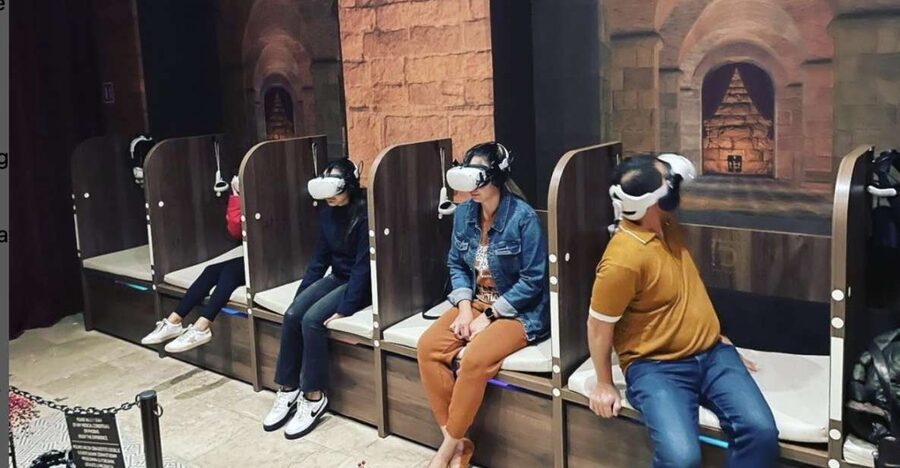
- A VR recreation set in 305 A.D. that helps you picture the palace when it was new
- Narration in multiple languages including English, German, Croatian, Italian, Spanish, and French
- Air-conditioned comfort while you learn (a real win in warmer months)
- A quick, story-focused format that’s great as a pre-ruins warm-up
- Helpful staff and headset support that makes the tech part easy
- A top-view moment that adds scale and perspective
Inside the palace walls: more Old Town tours around Split
- Split: Old Town and Diocletian Palace Walking Tour★ 4.9 · 4,727 reviews
- Walking Tour of Split and Diocletian’s Palace★ 5.0 · 2,588 reviews
- Split & Diocletian’s Palace Walking Tour★ 5.0 · 1,125 reviews
- Split: Diocletian Palace & Old Town Guided Walking Tour★ 4.7 · 882 reviews
Diocletian’s Dream: A Quick VR Reset Before You Walk the Real Palace

If you’ve only seen Diocletian’s Palace from the ground, VR changes the way you think about scale. The big idea here is simple: you get a time-travel view of what the palace likely looked like in 305 A.D., then step back out to see the real stone ruins with fresher eyes.
I like how the experience is built for orientation. The palace in Split can be confusing at first—walls, arches, odd angles, and everyday storefront life all layered on top of a Roman fortress. A short VR story helps you connect the dots fast, so your later walk doesn’t feel like wandering through disconnected leftovers.
Also, this is not a cold, sit-and-read museum experience. You’re guided through scenes, with narration available in several languages. That matters if you’re traveling as a mixed-language group, or if you just want the history in something you can follow easily.
One more practical note: it’s designed as a standalone ticket to the VR museum itself. The ruins entry is a separate thing, so you can treat Diocletian’s Dream like the warm-up chapter before you buy time in the actual palace area.
Where to Go: Finding Diocletian’s Dream Fast
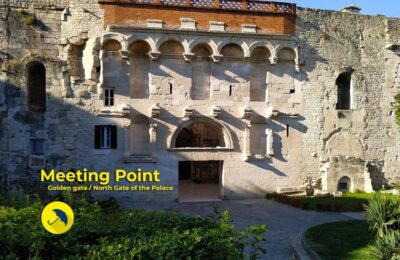
Meeting point is easy once you know the landmarks. Start at Diocletian’s Dream, about 50 meters from the Golden Gate (Golen Gate) entrance to Diocletian’s Palace. It’s also roughly a one-minute walk from the Gregory of Nin statue.
This location is perfect if you plan your day around the palace complex already. You can do the VR first for context, then head out immediately to the surrounding ruins. Or you can do it after, to compare what you saw on the screens with what’s standing in front of you in real life.
If you’re figuring out timing: build in a little buffer. Even though the show is short, you’ll want a smooth walk from the central sights so you’re not stressed about being on time.
What You’ll Actually Do (and How Long It Takes)
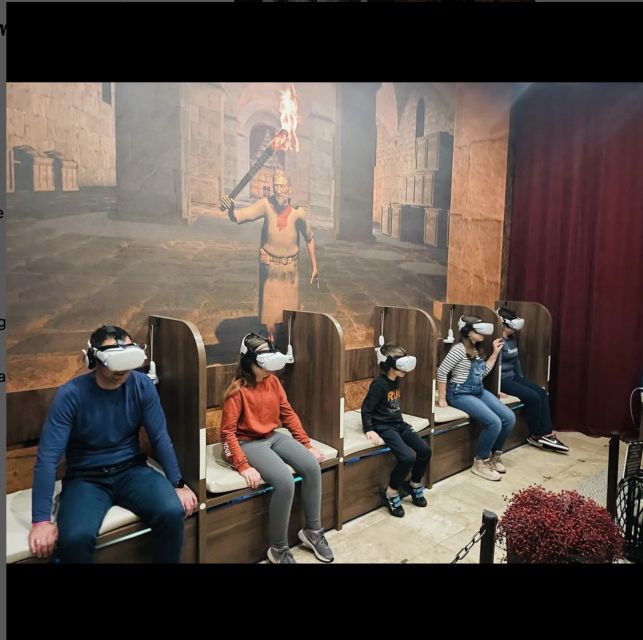
The experience is a VR tour in an air-conditioned viewing room. The show takes you to 305 A.D., and the narration explains Diocletian and the palace, along with key context for the city of Split.
From the reported runtimes, plan on about 12–15 minutes, with many people describing it as around 15 minutes. That short length is both a strength and the main limitation. Strength: you can fit it between walks, meals, and ferry schedules. Limitation: it’s not a deep, hour-long history program.
Think of it like a film with smart wayfinding. You’ll come out with a stronger mental map than you had going in—and that’s often the real value, especially when the real palace is close by.
The VR Tour Itself: 305 A.D. Comes to Life
The centerpiece is the recreation of Diocletian’s Palace in its golden-era form. You’re not just looking at models on a screen. The format is designed to feel like you’re traveling through the palace world.
Here’s what that means for you on the ground later:
- It gives you a sense of how big spaces are when buildings were intact.
- It helps you understand how the palace functioned, not just what’s left behind.
- It turns the ruins from random shapes into something more legible.
The narration availability matters too. Languages listed include English, Croatian, German, Italian, Spanish, and French. So you can match your comfort level, and it makes the story easier to follow even if your Roman history background is basic.
One small detail I’d pay attention to from people’s feedback: there’s a moment where you see the scene from higher up, which is a smart trick for scale. Even if you’re not a VR person, those viewpoint changes often do the heavy lifting for understanding the palace layout.


Staff Support and Comfort: VR Without the Hassle
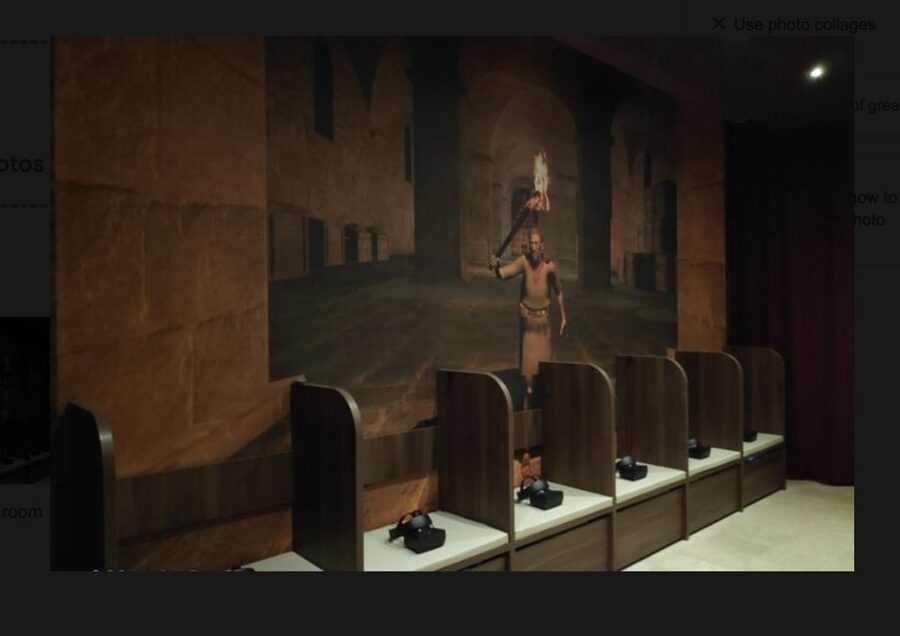
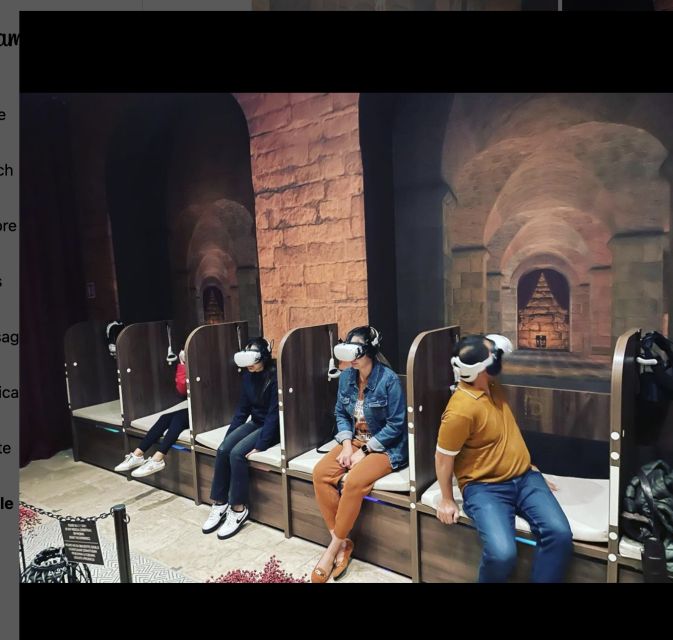
This is one of those activities where comfort and guidance can make or break the experience. The good news is that the staff are described as genuinely helpful—especially when it comes to getting the headset on.
That means you’re not left fighting straps and settings while the story is starting. If you’ve got glasses, you’ll still want to be prepared to deal with a headset, but the human help seems designed to make it smooth.
Also, the viewing room is air-conditioned. In Split’s warmer stretches, that matters more than you’d think. You get to cool off, learn, and keep moving rather than spending your entire day searching for shade.
Learning the Palace Story: What the Narration Covers
You’re there to learn about Diocletian’s life and how that life connects to the palace and to Split’s early Roman history. The narration focuses on the building and the city’s background, with the explicit promise that you’ll see how residents lived in ancient times rather than only reading about architecture.
What this delivers best is context. When you walk the real ruins later, you’ll recognize things more quickly because you’ve already seen how the space was arranged.
Some people found the history portion limited, and that lines up with the short total runtime. If you’re the type who wants a slow, thorough lecture, this VR show may feel like a starter course, not the whole meal. The upside is that it’s easy to pair with other walking tours or museum stops afterward.
Pairing It With Diocletian’s Palace Ruins: Do This Before You Wander
The strongest practical tip is timing. Because the VR recreation is set in the palace’s original era, it works especially well as a pre-ruins experience. You’ll step outside to the real Diocletian’s Palace with a clearer picture of what you’re looking at.
Since the ruins entry isn’t included in the VR ticket, you can handle it like this:
- Do Diocletian’s Dream first for the “what this was” context.
- Then buy or use your separate plan for the real ruins right after.
This approach saves you time. Instead of trying to piece together what you’re seeing from scratch, you already know what the palace is trying to be.
Price and Value: Is $15 Worth It?
At $15 per person, the VR experience is priced for short-form value. You’re not paying for a long guided tour or a full-day museum ticket. You’re paying for a quick translation of the palace from ruins into a functioning, lived-in setting.
In plain terms: you’re buying clarity. If you’re excited about Roman history but also want efficient use of time, the cost makes sense. If you mainly want a long virtual walk with lots of historical detail, you may decide the brief format doesn’t justify your expectations.
For most visitors, the best value comes from combining VR with the real palace visit. VR alone is useful, but the magic is in the before-and-after comparison.
Rules and Practical Limits You Should Know
A few restrictions help the experience run smoothly:
- Food and drinks aren’t allowed during the activity.
- Intoxication isn’t allowed.
- The minimum age is 8 years.
- It’s not suitable for children under 8.
These rules also give you a clue about the environment: it’s meant to be controlled for viewing comfort and safety around headsets.
If you’re traveling with kids old enough for the minimum age, it’s a good option for breaking up classic outdoor sightseeing. Just keep in mind that the show is short, so it’s more of a quick history burst than a full entertainment session.
How It Fits Into a Split Day (Without Stealing Your Whole Schedule)
Because the VR session runs about 12–15 minutes and returns you to the start point, it’s easy to slot into a day built around the palace area. The meeting point is right by the Golden Gate and close to the Gregory of Nin statue, so you’re already near the main Roman-adjacent sights.
A smart rhythm looks like:
1) Do the VR to build your mental map
2) Walk the palace ruins immediately afterward
3) Let what you just saw guide your route and stop choices
If you do the VR later, you’ll still learn, but you’ll get less payoff from the “context first” effect. Either way, it’s one of those activities that turns a complicated site into something easier to recognize.
Should You Book Diocletian’s Dream in Split?
Book it if you want a fast, story-driven way to understand Diocletian’s Palace in its Roman era. The biggest reasons are short runtime, air-conditioned comfort, and narration in several languages—plus the fact that it sets you up to enjoy the real ruins with better perspective.
Skip it (or rethink the timing) if you’re expecting a long virtual tour with lots of detailed history and lots of time to explore. The show is brief, and for some people the depth may feel limited.
If you’re on the fence, my advice is to use it as a pre-ruins tool. For $15, a quick VR “translation” from stones to story is often exactly what helps Split’s Roman layers click.
FAQ
Where is Diocletian’s Dream located for the start of the experience?
The meeting point is at Diocletian’s Dream, about 50 meters from the Golden Gate entrance to Diocletian’s Palace and about a one-minute walk from the Gregory of Nin statue.
How much does it cost?
The price is $15 per person.
How long is the VR experience?
It runs about 12–15 minutes, commonly described as around 15 minutes.
Is entry to Diocletian’s Palace ruins included?
No. The VR ticket includes Diocletian’s Dream entrance fee, but Diocletian’s Palace ruins entry is not included.
What languages are available for narration?
Narration is available in English, Croatian, German, Italian, Spanish, and French.
What is the minimum age for children?
The minimum age is 8 years.
Is food and drink allowed during the experience?
No. Food and drinks are not allowed.
Can I use the experience if I’m traveling with multiple language needs?
Yes. Since narration is offered in six languages, you can choose the one that fits your group best.
Can I book now and pay later?
Yes. The booking option includes Reserve & Pay Later, meaning you can book your spot and pay nothing today.
When can I cancel for a full refund?
You can cancel up to 24 hours in advance for a full refund.
More Tour Reviews in Split
- Split: Krka Waterfalls Trip with Boat Cruise and Swimming
★ 4.8 · 10,519 reviews - From Split: Krka Waterfalls, Food & Wine Tasting Tour
★ 5.0 · 9,326 reviews - Blue cave, Mamma Mia and Hvar, 5 islands speedboat tour
★ 5.0 · 7,150 reviews - From Split: Krka Waterfalls, Food & Wine Tasting Tour
★ 4.9 · 6,598 reviews - Split/Trogir: Blue Cave, Mamma Mia, Hvar and 5 Island Tour
★ 4.6 · 6,320 reviews
Deeper Into the Palace, Split
- Split: Old Town and Diocletian Palace Walking Tour
★ 4.9 · 4,727 reviews - Walking Tour of Split and Diocletian’s Palace
★ 5.0 · 2,588 reviews - Split & Diocletian’s Palace Walking Tour
★ 5.0 · 1,125 reviews - Split: Diocletian Palace & Old Town Guided Walking Tour
★ 4.7 · 882 reviews - Split Old Town and Diocletian’s Palace Tour
★ 4.8 · 716 reviews
Still deciding? More Split trips we have been out and reviewed



Diocletian's Palace & Old Town, compared.
 ★ 4.9Old Town and Diocletian Palace Walking TourFrom $174,727 reviews
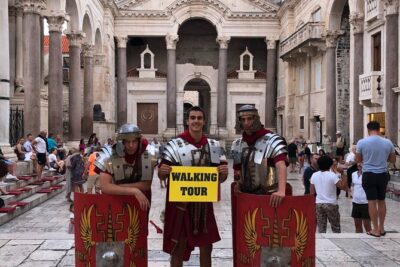 ★ 5.0Walking Tour of Split and Diocletian’s PalaceFrom $482,588 reviews
 ★ 5.0Split & Diocletian’s Palace Walking TourFrom $211,125 reviews
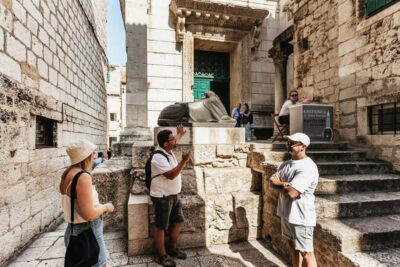 ★ 4.7Diocletian Palace & Old Town Guided Walking TourFrom $17882 reviews
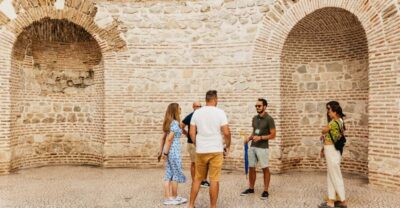 ★ 4.8Split Old Town and Diocletian’s Palace TourFrom $17716 reviews
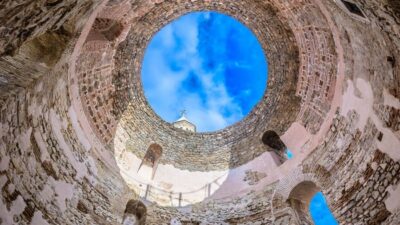 ★ 4.8Game of Thrones Tour with Diocletian’s Palace CellarFrom $41545 reviews
 ★ 5.0Diocletian’s Palace and Old Town SMALL GROUP Walking TourFrom $16502 reviews
 ★ 5.0SPLIT-PRIVATE Walking Tour of Diocletian’s Palace & Old TownFrom $240467 reviews
Browse the lists this tour appears in