
Reviewed · SPLIT PRIVATE TOURS
Split: Private Roman History & Market Tour
Two hours in Split can change your whole perspective. This private Roman history and market walk ties Diocletian’s stone walls to the way Splićana eat, shop, and honor old rituals.
What I really like is the pairing of Diocletian’s Palace and real food at the Green Market—because you don’t just hear dates and facts, you taste what locals treat as everyday treasure. You also get a guide who was born and raised in Split, with the kind of street-level storytelling that makes the town feel personal, not academic.
One consideration: the palace tour is not a full-ticket pass to everything. Some major spots have entrance fees not included, like the cathedral mausoleum underground, bell tower, museums, and the Temple of Jupiter, so your version of the day may cost a bit more if those areas matter to you.
In This Review
- Key Things You’ll Remember From This Split Tour
- Walking Into Split’s Roman “Everyday” Life
- Diocletian’s Palace: Golden Gates, a Private Section, and Stories in the Walls
- The Golden Toe of Gregory of Nin: Wishes, Meaning, and a Local Tradition
- Green Market Stop: Seasonal Food Tastings With Real Local Logic
- Illyrian to Roman: Rituals That Still Matter
- Hajduk and Why Names Show Up Everywhere
- Finish on the Riva Promenade: Food Suggestions for After the Tour
- Price and Value: What $280 Buys You in Two Hours
- Eco-Friendly Touring: Carbon Neutral and B Corp Certified
- Who This Tour Fits Best (and Who Might Want to Skip It)
- Practical Notes That Help Your Day Run Smooth
- Should You Book This Split Private Roman History & Market Tour?
- FAQ
- How long is the Split Private Roman History & Market Tour?
- What does the tour cost?
- Is this a private group tour?
- What’s included in the tour?
- What isn’t included?
- Where do we meet?
- Is the tour carbon neutral, and can I cancel?
Key Things You’ll Remember From This Split Tour
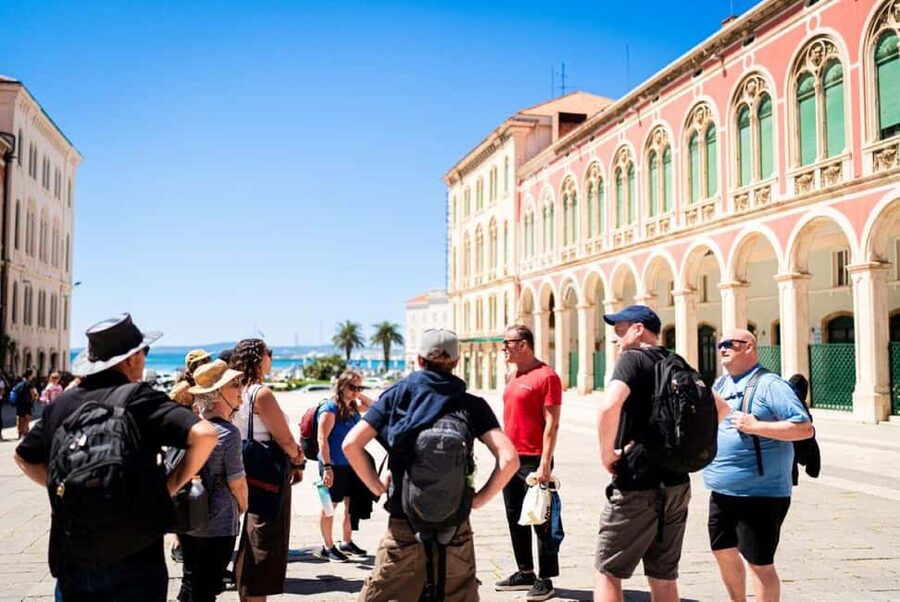
- Diocletian’s Palace walkthrough that includes the main square, private sections, the Vestibule, and the Golden Gates
- Green Market tastings with seasonal bites like olive oil, rakija, cheese, and dry figs
- Illyrian-to-Roman rituals explained through what locals still respect today
- Gregory of Nin’s golden toe and the wish tradition tied to his statue
- Peristil palace area and the stories hidden in the walls, not just on plaques
On your own schedule: more private tours in Split
- SPLIT-PRIVATE Walking Tour of Diocletian’s Palace & Old Town★ 5.0 · 467 reviews
- Private Krka Waterfalls tour with 30min Boat Cruse★ 4.0 · 458 reviews
- Split by Private Electric Rickshaw – Palace & Hidden Gems★ 5.0 · 412 reviews
- Private Blue cave, Mamma Mia and Hvar, 5 islands tour from Split★ 5.0 · 387 reviews
Walking Into Split’s Roman “Everyday” Life
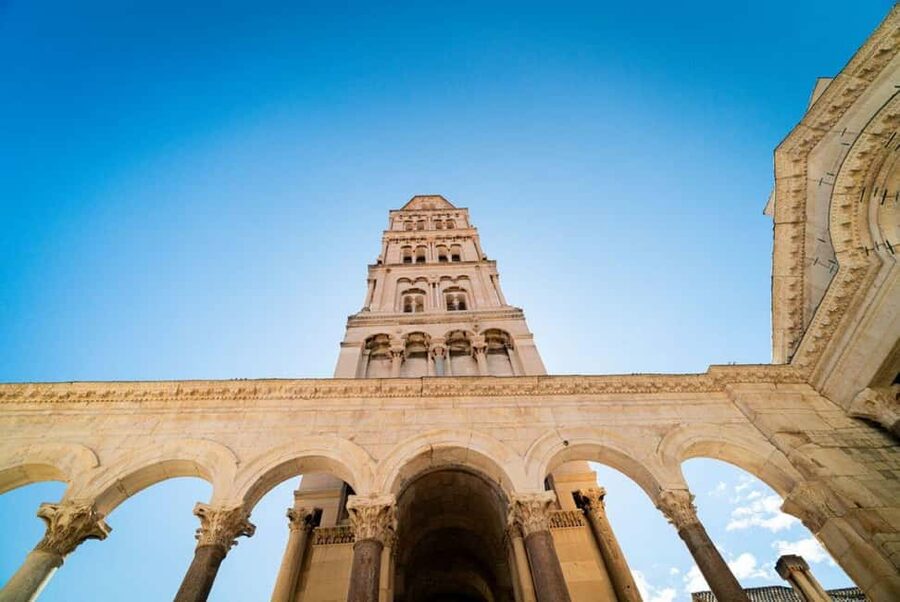
Split isn’t one of those places where history feels like it’s behind glass. You’re walking inside the Diocletian Palace area, where people still live among the ancient structure. That one detail changes how the tour feels: you’re not only sightseeing Roman ruins, you’re watching a living town press up against them.
I also like the cultural attitude the guide brings into the first minutes. Locals take pride in Split, and they can be warm and welcoming when you match that energy. It’s not a formal speech—just a local vibe that makes a private tour work well here. If you show interest, you’ll get answers, and the stories tend to be specific.
Finally, the length matters. Two hours is long enough to cover the palace highlights and do the Green Market stop, but short enough that you won’t feel dragged across every corner of Old Town. For a first time in Split, that’s a very workable rhythm.
Diocletian’s Palace: Golden Gates, a Private Section, and Stories in the Walls
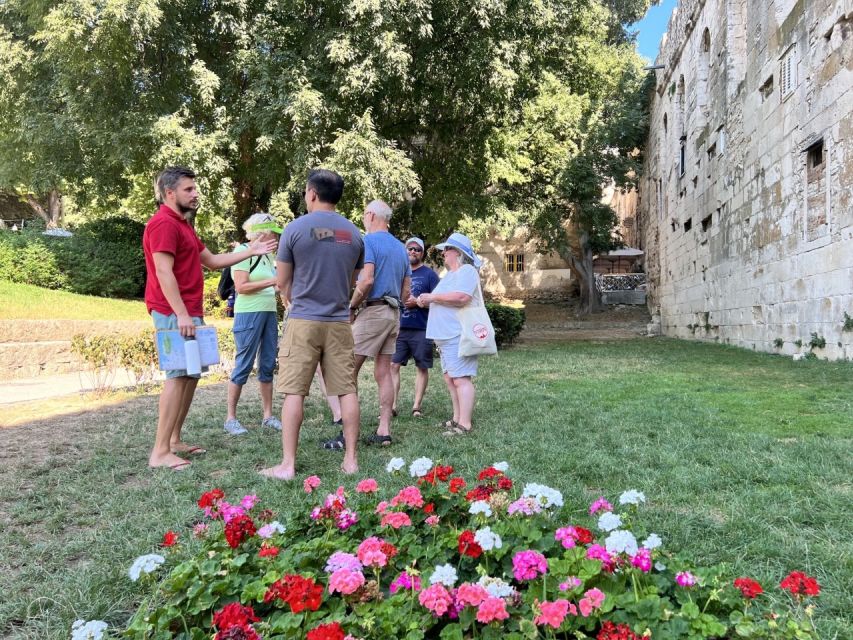
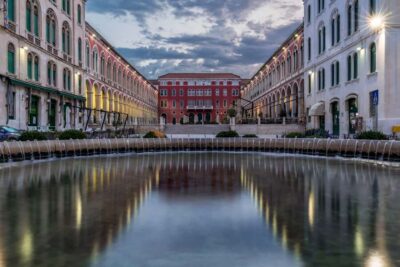
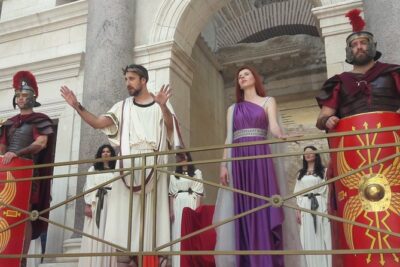
The tour’s backbone is the walk inside Diocletian’s Palace, a UNESCO World Heritage site and still a hub for daily life. This emperor built a palace that wasn’t meant to be a museum, and the tour treats it that way. You’ll move through key areas such as the main square within the palace walls, a private section of the palace, the Vestibule, and the Golden Gates.
One reason this works so well is that you’re not just passing impressive architecture. You’re getting the “why” behind it—especially how Diocletian’s power and personal preferences get woven into what you see. The guide talks about secrets hidden in the palace walls and includes fun, memorable details like why the emperor loved the salad so much, plus the story about a mythical White Stone.
If you’ve watched Game of Thrones, you’ll probably recognize that the palace has been part of the show’s setting. That connection can help you mentally place what you’re seeing, but the tour keeps the focus on the real-world palace experience: space, movement, and how the complex still shapes street life.
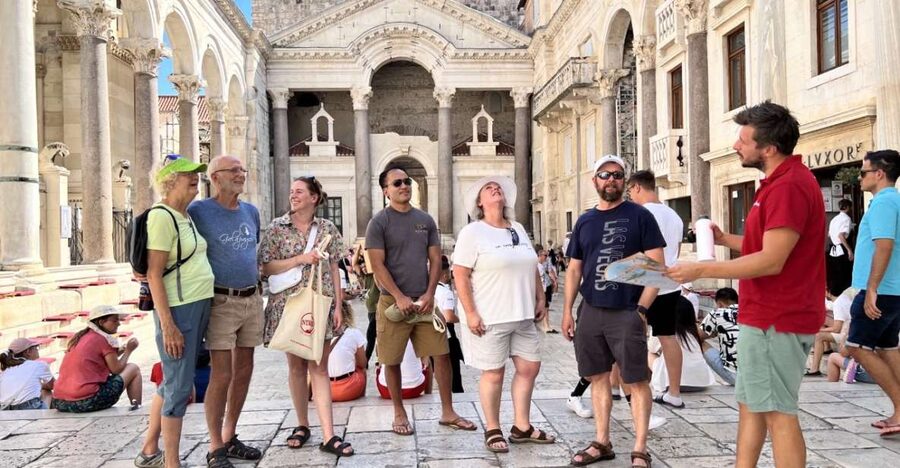
You’ll also spend time in the palace core near Peristil (the tour specifically calls out Peristil), where the scale of Diocletian’s world becomes obvious. This is one of those places where a local guide makes a difference because the architecture isn’t always intuitive at first glance. You see walls and openings, then suddenly you understand what that arrangement meant.
The Golden Toe of Gregory of Nin: Wishes, Meaning, and a Local Tradition
About halfway through your palace time, you’ll get to Gregory of Nin (Grgur Ninski), the famous figure linked to a very specific tradition: you can make a wish at the golden toe of his statue.
This is the kind of stop that sounds small on paper, but it’s exactly the right flavor for a Roman-history-and-market tour. The statue is a bridge between eras. You’re standing in the Roman palace world, but the guide brings you into later local identity, where people keep rituals alive instead of treating them like footnotes.
It’s also a nice way to break the tour’s pacing. You’ve already learned how the palace structure carried Diocletian’s life and power. Now you’re in the older-everyday layer of Split, where religion, public space, and folk tradition all overlap in one spot.
Green Market Stop: Seasonal Food Tastings With Real Local Logic
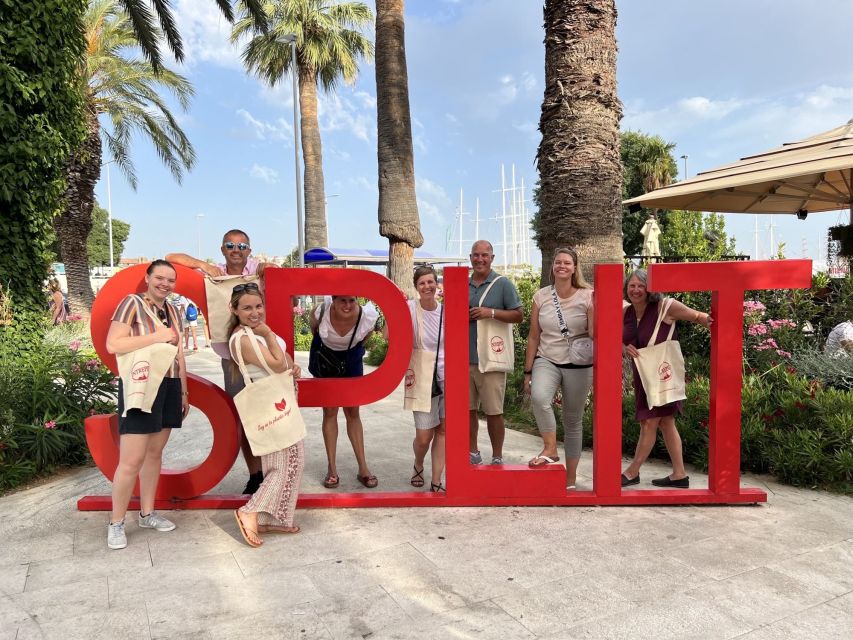
Then comes the other half of the experience: the Green Market of Split. The tour frames it around a simple idea you’ll hear in Dalmatia again and again—the way to a Dalmatian’s heart is through the stomach. That isn’t just marketing. It’s a practical approach to understanding a place.
In the market, you’ll meet local vendors and learn how people actually shop and choose. The tour is built to help you look like you belong: you’ll walk the market with guidance and see the patterns behind what locals buy.
Most important, you get tastings. Included bites can include fruits, vegetables, olive oil, rakija, cheese, and dry figs. Even if your appetite is cautious, these tastings help you connect what you’re learning in the palace to what you’ll taste later in town. You begin to understand the region as a food culture, not just a postcard.
A private guide also helps here because you can ask the questions that normally get skipped in group tours: What’s seasonal right now? What’s worth trying first? What do locals treat as everyday, not tourist food? The market stop is where Split’s rhythm becomes clear.
A few more Split boat days and tours worth a second look


Illyrian to Roman: Rituals That Still Matter
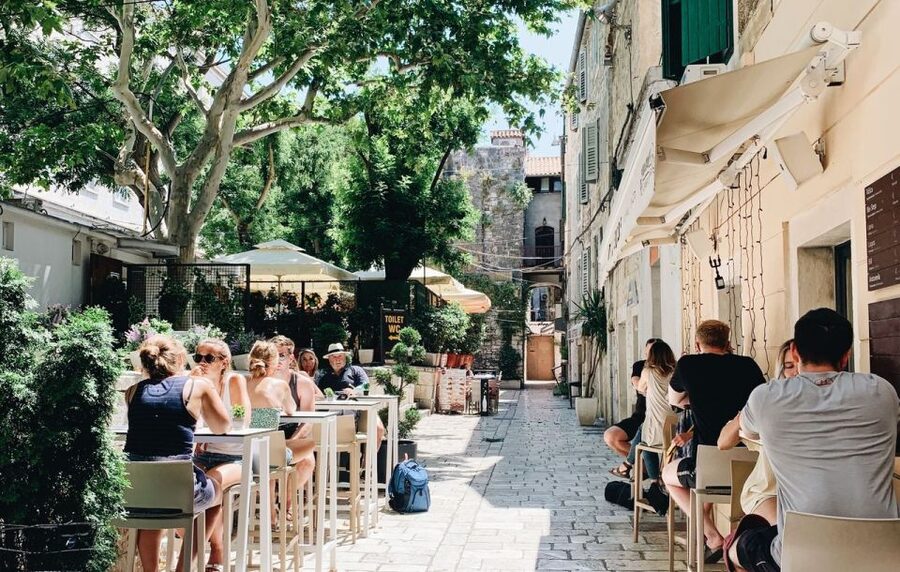
One of the most distinctive promises of this tour is hearing about rituals Dalmatians respect from the Iliryan times. The idea is not to make you memorize a timeline. It’s to show how belief systems can echo forward into what people still consider meaningful today.
You’ll hear these connections while you’re moving through Split’s older spaces—especially as the tour compares layers of architecture and community life. In other words, the rituals aren’t tacked on as a separate lecture. They’re used to interpret what you see and why locals care about certain symbols or places.
This is also where the small-group feel helps. When you’re not competing with a large crowd, the guide can adjust the story to your interests. If you care more about the people side than the emperor side, you can steer the conversation in that direction.
Hajduk and Why Names Show Up Everywhere
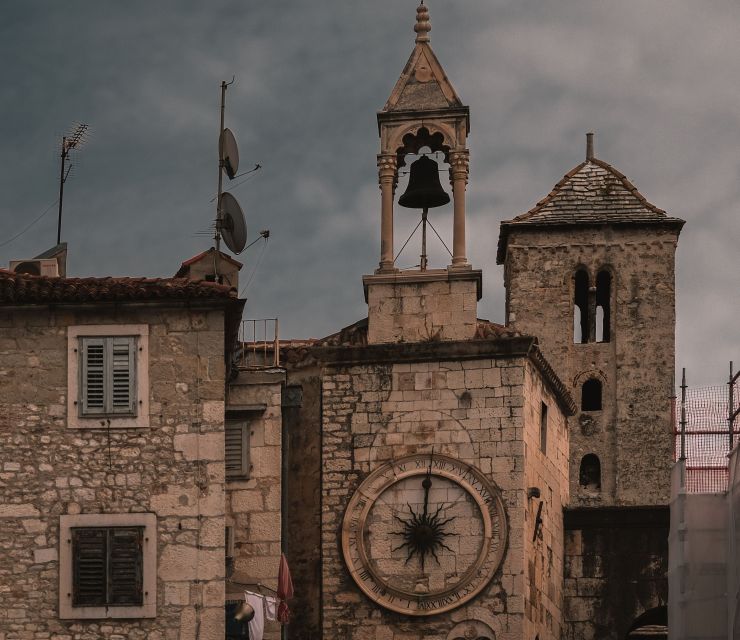
As you continue through the palace and toward key city points, you’ll learn about Hajduk and why the name appears throughout Split—from the suburbs to the old town area.
This isn’t random trivia. It’s one of the ways Split’s identity repeats itself across geography. Names like this tell you what locals attach pride to, and the tour uses that theme to connect spaces. When you understand why a word keeps showing up, you understand the city’s mindset.
I like stops like this because they help you stop viewing Old Town as a set of monuments. Instead, you begin to see it as a place where modern community identity still breathes.
Finish on the Riva Promenade: Food Suggestions for After the Tour
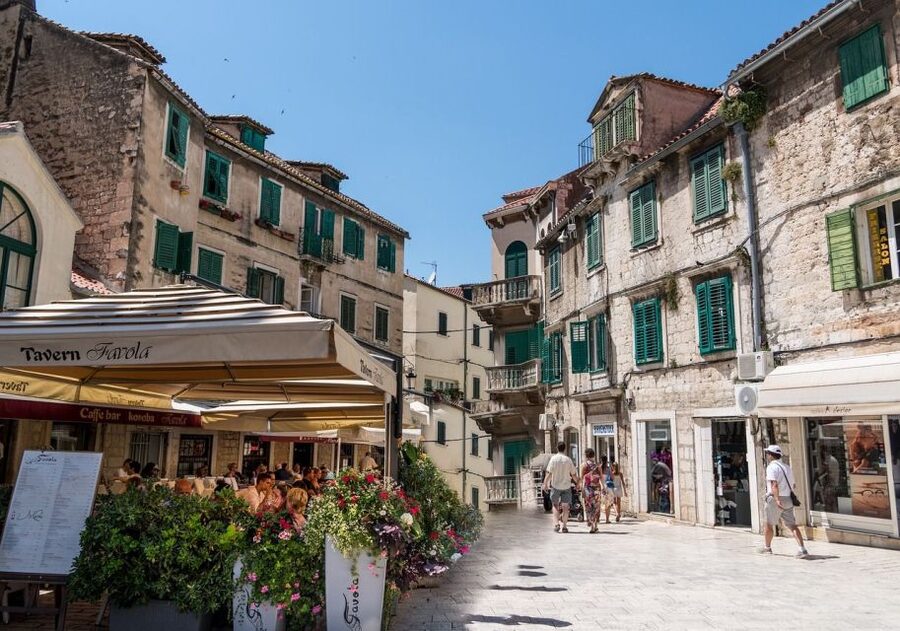
The tour ends on the Riva promenade, leaving you in a good position for the next part of your evening. More than just dropping you off, the guides point out their favorite coffee shops and the best spots for Dalmatian delicacies and entertainment.
This ending matters because it turns your tour from a boxed activity into a starting point. You get directions from locals who understand what you might want next after the palace and market combo—something comfortable, close, and aligned with local tastes.
And since extra food and drinks are not included, this is where you can choose. You can keep it light with a coffee, or you can follow the guide’s suggestions and build a proper meal from the flavor ideas you learned in the market.
Price and Value: What $280 Buys You in Two Hours
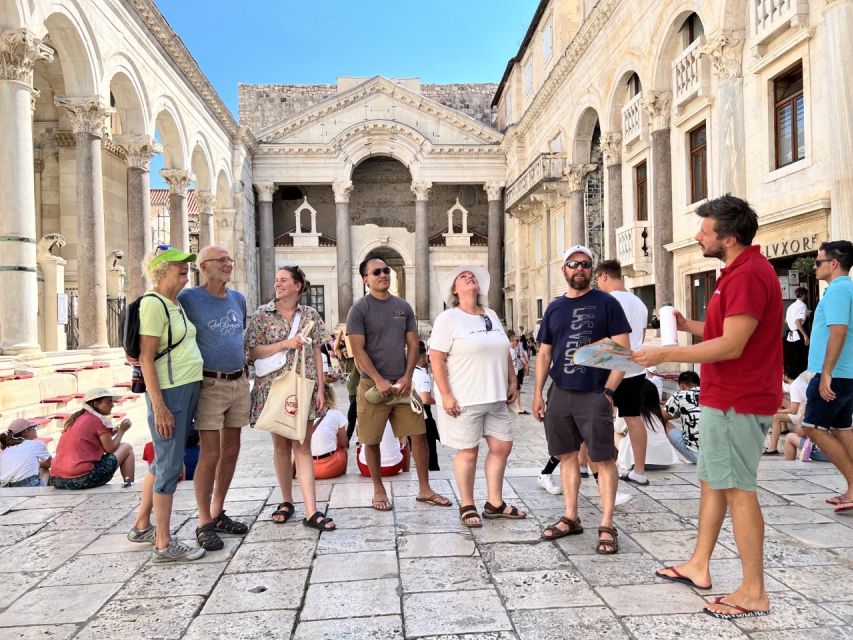
At $280 per person for a 2-hour private tour, you’re paying for three things that budget tours often skip.
First, you’re paying for local guide time. This is a private-group experience led by an English-speaking guide who grew up in Split. That kind of guidance is what turns architecture into stories and market food into something you can actually use later when you’re shopping or ordering.
Second, you’re paying for included access and included tastings. The tour includes a Diocletian Palace visit covering specific areas (main square within the palace walls, private section, Vestibule, and Golden Gates). It also includes Green Market tastings like olive oil, rakija, cheese, and dry figs. That combination is more valuable than it looks, because it links knowledge with sensory experience.
Third, you’re paying for an eco-minded operator. The tour is carbon neutral and run by an eco-certified company that’s B Corp certified. If that matters to you, it’s part of the value calculation—not just a nice badge.
The main value drawback is that the palace coverage is not “everything.” Entrance fees for certain major areas are not included (cathedral, ex-emperor mausoleum underground, bell tower, museums, and the Temple of Jupiter). If those are must-sees for your trip, budget some extra cost so your day matches your expectations.
Eco-Friendly Touring: Carbon Neutral and B Corp Certified
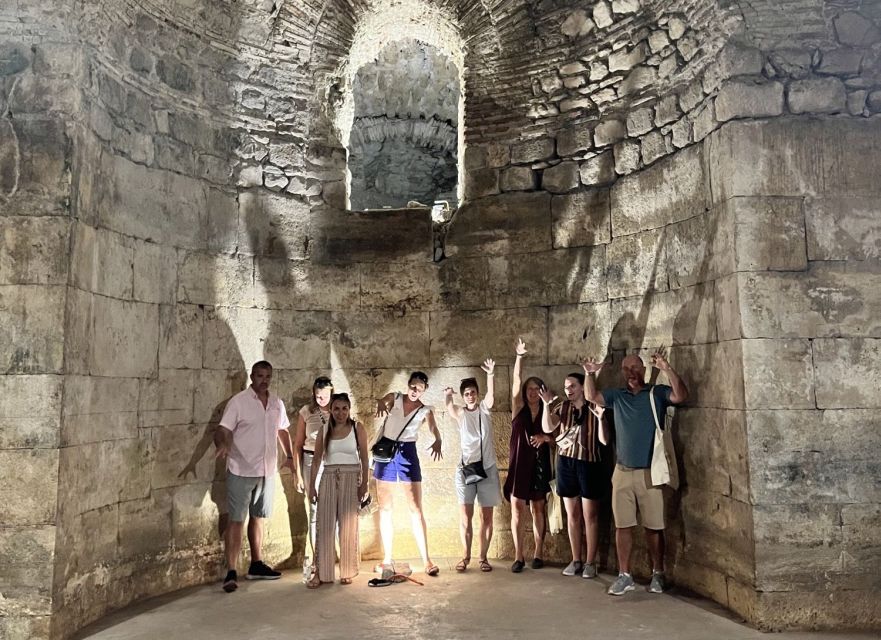
This tour is carbon neutral, operated by a B Corp certified company committed to using travel as a force for good. That’s a real differentiator for readers who care about the impact of tourism and want to choose operators that treat sustainability as part of operations, not an afterthought.
It also fits the tour style. This walk is small-group by nature, focused on walking rather than transport-heavy logistics. When a tour is built around local streets, it tends to keep the footprint smaller. Pair that with the carbon-neutral claim and you get a more coherent approach.
Who This Tour Fits Best (and Who Might Want to Skip It)
This tour makes the most sense if you want two things together: Roman palace context and real food culture. If you enjoy learning how people lived inside historic structures, and you like tastings that help you understand regional flavors, you’ll find this package hits the right targets in just two hours.
It’s also a strong choice for couples, friends, and anyone who wants a private group pace. That private feel supports questions, small detours within reason, and a more personal connection to the stories—especially around traditions like Gregory of Nin’s wish-making moment.
On the other hand, if you’re strictly budget-focused, the $280 price plus possible add-on entrance fees for not-included palace areas may feel heavy. If you already plan to do a separate deep-dive into museums or the underground sections, you might end up paying twice for parts you would rather prioritize elsewhere.
Practical Notes That Help Your Day Run Smooth
Meeting point is the beginning of the Riva promenade, near the mock-up model of the city and by the iron map. Go a few minutes early so you can spot it without stress.
Also keep your expectations aligned with what’s included. You’ll have tastings, a palace visit with specific sections, and guidance in English—but additional food and drinks are not included. Build a plan for what you want after the tour, and you’ll feel in control instead of guessing.
Finally, bring the right mindset. Split locals expect you to be at least somewhat on their side about Split itself. If you’re curious and respectful, the tone of the experience tends to be welcoming, and the guide stories land better.
Should You Book This Split Private Roman History & Market Tour?
Yes—if you want a high-value 2-hour experience that connects Diocletian’s Palace with Green Market food tastings, and you care about getting the story from a local who actually lives that history. The included palace areas plus included tastings make it more than a walk-and-photo session, and the carbon-neutral, B Corp operator angle is a bonus if sustainability matters to you.
Consider skipping or pairing it with other palace tickets if you’re mainly chasing the not-included sites like the underground mausoleum, bell tower, museums, or the Temple of Jupiter. In that case, you may want a different format that includes those paid entrances.
FAQ
How long is the Split Private Roman History & Market Tour?
It lasts 2 hours.
What does the tour cost?
The price is $280 per person.
Is this a private group tour?
Yes, it’s listed as a private group.
What’s included in the tour?
You get a local English-speaking guide, a Green Market food stop with tastings, and a Diocletian Palace visit that includes the main square within the palace walls, a private section of the palace, the Vestibule, and the Golden Gates.
What isn’t included?
Entrance fees are not included for the cathedral of the ex-Emperor mausoleum, the underground of the palace, the Bell Tower, Museums, and the Temple of Jupiter. Additional food and drinks are also not included.
Where do we meet?
You meet at the beginning of the Riva promenade near the mock-up model of the city, by the iron map of the city.
Is the tour carbon neutral, and can I cancel?
The tour is carbon neutral and operated by a B Corp certified company. Free cancellation is available up to 24 hours in advance for a full refund, and you can reserve now and pay later.
More Tours in Split
- From Split: Krka Waterfalls, Food & Wine Tasting Tour
★ 5.0 · 9,326 reviews - Blue cave, Mamma Mia and Hvar, 5 islands speedboat tour
★ 5.0 · 7,150 reviews - From Split: Krka Waterfalls, Food & Wine Tasting Tour
★ 4.9 · 6,598 reviews - Split/Trogir: Blue Cave, Mamma Mia, Hvar and 5 Island Tour
★ 4.6 · 6,320 reviews - Blue Cave and Hvar Tour – 5 Islands Tour from Split and Trogir
★ 5.0 · 4,815 reviews
More Tour Reviews in Split
- Split: Krka Waterfalls Trip with Boat Cruise and Swimming
★ 4.8 · 10,519 reviews - From Split: Krka Waterfalls, Food & Wine Tasting Tour
★ 5.0 · 9,326 reviews - Blue cave, Mamma Mia and Hvar, 5 islands speedboat tour
★ 5.0 · 7,150 reviews - From Split: Krka Waterfalls, Food & Wine Tasting Tour
★ 4.9 · 6,598 reviews - Split/Trogir: Blue Cave, Mamma Mia, Hvar and 5 Island Tour
★ 4.6 · 6,320 reviews
Just Your Group in Split
- SPLIT-PRIVATE Walking Tour of Diocletian’s Palace & Old Town
★ 5.0 · 467 reviews - Private Krka Waterfalls tour with 30min Boat Cruse
★ 4.0 · 458 reviews - Split by Private Electric Rickshaw – Palace & Hidden Gems
★ 5.0 · 412 reviews - Private Blue cave, Mamma Mia and Hvar, 5 islands tour from Split
★ 5.0 · 387 reviews - The Best of Split Private Tour
★ 5.0 · 338 reviews
Still deciding? More Split trips we have been out and reviewed
Split Private Tours, compared.
 ★ 5.0SPLIT-PRIVATE Walking Tour of Diocletian’s Palace & Old TownFrom $240467 reviews
 ★ 4.0Private Krka Waterfalls tour with 30min Boat CruseFrom $301458 reviews
 ★ 5.0Split by Private Electric Rickshaw – Palace & Hidden GemsFrom $48412 reviews
 ★ 5.0Private Blue cave, Mamma Mia and Hvar, 5 islands tour from SplitFrom $1,572387 reviews
 ★ 5.0The Best of Split Private TourFrom $199338 reviews
 ★ 5.0Private Full-Day Krka Waterfalls Tour with Wine TastingFrom $665263 reviews
 ★ 5.0Private Boat Tour by local expert – Create Your ItineraryFrom $483261 reviews
 ★ 5.0Plitvice Lakes – Private tourFrom $786222 reviews
Browse the lists this tour appears in