
Reviewed · SPLIT PRIVATE TOURS
Semi-Private Balkans Tour; Split to Athens or Corfu in 14 Days
Fast borders, slow moments, and big views. This 14-day semi-private route (max 10 travelers) takes you from Split into the Balkans with a 7:30 am pickup and a guide to handle the hard parts. I like how the day-to-day rhythm mixes UNESCO sights with enough free time to wander on your own.
What I also like is the steady logistics: you’re in 3-star hotels with breakfast on most nights, and the plan is built around guided visits plus flexible breaks. One drawback to consider is that the schedule is packed with driving and walking, including uneven terrain in Sarajevo, so you’ll want comfortable shoes and patience for long transit days.
In This Review
- Key things that make this trip work
- Semi-private pace: why the group size matters on a 14-day run
- Split to Mostar: crossing borders, meeting Stari Most, and cooling off at Blagaj
- Sarajevo in a day: Ottoman and Austria-Hungarian layers, plus the Latin Bridge trigger
- Coastal Montenegro to the Albanian border: Kotor’s maze and Budva’s old town contrasts
- Shkodra and Prizren: fort views, big bazaars, and a mosque you can’t miss
- Gjakova, Decan, and Rahovec: bazaar revival, UNESCO frescoes, and wine-country pacing
- Kruja to Tirana: medieval resistance stories, bazaar browsing, and breakfast-that-turns-into-a-lesson
- Struga and Ohrid: UNESCO lake culture and three religious viewpoints in one town
- St Naum, Tushemisht, and Drilon: water stops that reset a travel day
- Berat: 1001 windows, castle living, and Onufri’s signature color
- Gjirokaster’s Stone City: best-preserved houses and a castle with staying power
- Ioannina to Meteora: ending in Greece with castles and a sunset fix
- Athens or Corfu: the end choice that changes your last travel day
- Price and value: is $5,153.85 a good deal for this much ground?
- Practical tips to keep this tour easy on you
- Should you book this Balkan route?
- FAQ
- How many travelers are on this tour?
- When does the tour start, and where?
- Where does the tour end?
- What’s included in the price?
- What is not included?
- Is this tour refundable if I cancel?
Key things that make this trip work
- Semi-private group size (max 10) means less waiting and easier pacing than big tours
- Split pickup + end-to-end transfers take stress out of borders and connections
- Guide-led UNESCO stops give you context without turning every hour into trivia
- Local accommodation with breakfast keeps mornings simple and starts early days on track
- Ferry to Corfu is included if you choose the Corfu ending
- Entry tickets and key-site visits are included for the stops listed on the itinerary
On your own schedule: more private tours in Split
- SPLIT-PRIVATE Walking Tour of Diocletian’s Palace & Old Town★ 5.0 · 467 reviews
- Private Krka Waterfalls tour with 30min Boat Cruse★ 4.0 · 458 reviews
- Split by Private Electric Rickshaw – Palace & Hidden Gems★ 5.0 · 412 reviews
- Private Blue cave, Mamma Mia and Hvar, 5 islands tour from Split★ 5.0 · 387 reviews
Semi-private pace: why the group size matters on a 14-day run
This is not a “jump on a bus and hope” trip. With a maximum of 10 people, the tour leader can actually manage timing, explain what you’re seeing, and regroup without turning the day into herding cats. You’ll still travel a lot—this is a multi-country circuit—but the structure helps it feel controlled.
The day usually starts with purpose. Your first day kicks off at 7:30 am with pickup in Split, then transfers you to the border to meet the tour leader. That early start is a good thing if you like seeing ground covered, but it also means you should plan your hotel nights around an efficient morning.
Transport is private, which matters here. Long distances through several countries add up, and private wheels keep you from losing time to random pickup points. You also get a professional tour leader and entry tickets for the sites listed as included, plus tourist taxes and road and insurance costs handled by the operator.
Split to Mostar: crossing borders, meeting Stari Most, and cooling off at Blagaj
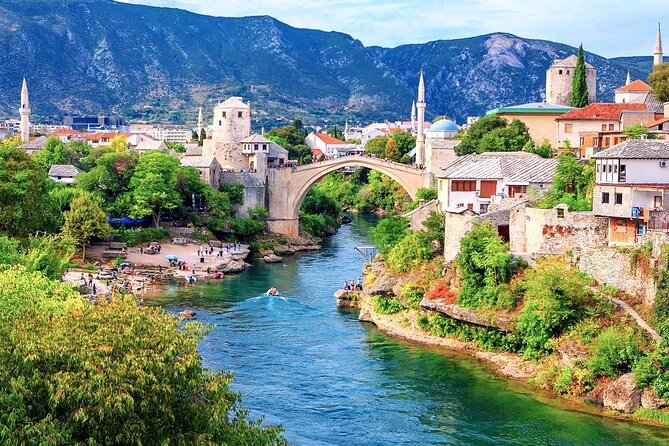
Your first big moment lands in Mostar, and it’s a strong one. After pickup in Split, you shuttle toward the border, then head into Bosnia & Herzegovina and straight to Mostar Old Bridge (Stari Most). This UNESCO-listed landmark is iconic for a reason: it’s built in a distinct Islamic architectural style and connects you to the city’s long, layered past in a single glance.
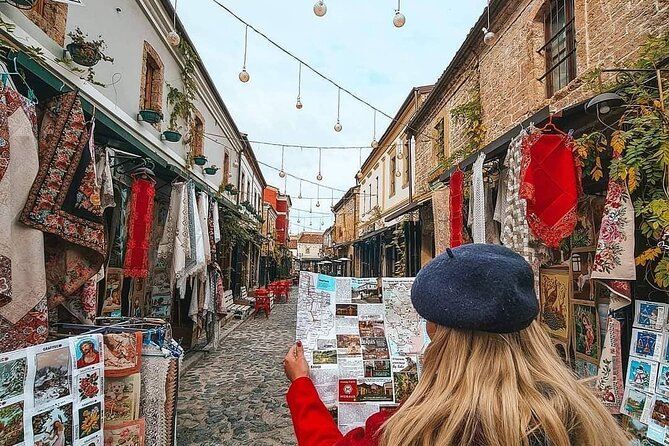
From there, you don’t just “see the bridge and move on.” You get a wander through the Old Bazaar area, where the cobbled lanes and colorful shops sit close to the modern city. This section also helps you understand why Mostar feels both old and lived-in—mosques, Turkish bazaars, and the narrow alley layout all show up together.
Then the day shifts to nature and water. The Blagaj tekija stop puts you at the foot of a cliff with blue water in front of it. It’s an Ottoman-era setting near the spring of the River Buna, and the visual contrast from Mostar’s city lanes is striking. If you like a mix of architecture and scenery, Blagaj is the kind of stop you’ll remember without trying.
Possible drawback on day 1: Mostar is one of those cities where you’ll want time for small detours. The itinerary gives you a short guided portion and then free time, so don’t feel bad if you spend an extra 20 minutes getting lost in the bazaar alleys.
Sarajevo in a day: Ottoman and Austria-Hungarian layers, plus the Latin Bridge trigger
Sarajevo shows up the next morning and wastes no time. You’ll drive from Mostar to Sarajevo, then walk in areas with uneven terrain, including ruins and visible reminders tied to the Yugoslav War. That can feel heavy, but the way the stops are framed helps you connect the physical scars to the broader story of the city.
The guided portion focuses on multiple eras: Ottoman and Austria-Hungarian parts of Sarajevo—markets, bazaars, mosques, churches, and synagogues. It’s presented like a living city that has held many identities at once. The guide’s job here is valuable: without context, it’s easy to reduce Sarajevo to photos. With context, you start seeing patterns.
You also stop at the Latin Bridge, where the WWI trigger story is tied to the location. The bridge’s name comes from how it connected the right bank of the Miljacka with the Catholic quarter (Latinluk). Even if you know the basics, the on-the-ground placement helps it click.
After the guided stops, you get free time in the old town. This is where you can slow down and try local meat dishes and desserts if you want. Since lunches and dinners aren’t included, this is also where you’ll manage your own meal budget—use the free time to choose something simple and local rather than chasing the most photographed plate.
Coastal Montenegro to the Albanian border: Kotor’s maze and Budva’s old town contrasts
Kotor is a UNESCO stop with a very specific feel: narrow streets and a maze-like old town. You’ll wander the cobblestone lanes, and the street layout is explained as intentionally confusing to intruders who came to plunder the town—history written into urban design.
You also visit Saint Luke’s church, which is significant to locals as a symbol of unity. Then you get an afternoon to explore the old town at your own pace. I like this format because it balances guided storytelling with the freedom to take your time where you want it.
Later you head toward the next set of coast-and-castle moments. Budva arrives with a clear split between old and new town areas. The guided part focuses on the historical core, including sights like St. Ivan church and the small church of St. Mary, along with time in the medieval center.
A quick photo stop follows at Sveti Stefan viewpoint. Important note: the island itself isn’t visitable anymore because it’s now part of an exclusive residential resort. Still, the setting is famously scenic, so you’re getting the look without the expectation of getting inside.
Then the itinerary turns inland toward fortress views with Rozafa Castle. The big selling point here is the panorama: you’re looking over the lake and the three rivers as they meet the Adriatic. It’s one of those “stand and look” stops that helps you understand how geography drives everything in the region.
A few more Split boat days and tours worth a second look

Shkodra and Prizren: fort views, big bazaars, and a mosque you can’t miss
Day 4/5 onward is where the itinerary starts stacking different “types” of stops—fortresses, towns, religious sites, and food culture. That variety is the point, and it keeps monotony away on a long trip.
Shkodra is next, with a focus on its deep history and the influence of Venetian-style architecture. You’ll also learn about the oldest wall of the Shkodra castle dating back to the 1st millennium BCE and the city’s Illyrian-era association mentioned by ancient sources. Even if you don’t remember the dates, the fortress frame gives the history physical meaning.
Then you arrive at Mrizi i Zanave (Restorant Agroturizëm), a slow-food agro-tourism stop. It’s not just a meal stop; it’s a guided farm tour where you hear how the operation supports jobs and preserves regional bio products, including adapting old communist buildings as storage. There’s time for lunch on your own and/or to buy local produce.
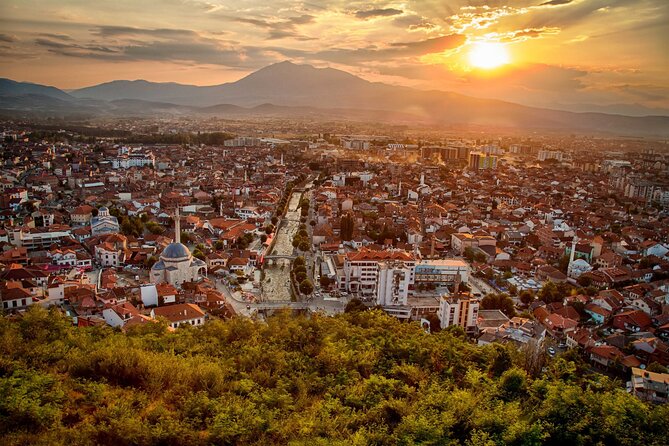
From there, the tour moves into Prizren, often described as a cultural capital with a mix of history, religious tolerance, and nature. You’ll visit the Sinan Pasha Mosque—chosen as the one mosque to pick if you’re only visiting one—known for arabesque color and pattern. You’ll also get fortress views above the town, which helps you see how Prizren’s river and bridges work as the city’s spine.
Practical consideration: this section involves more walking than it might sound like on paper. The streets are old and uneven, and you’ll be on your feet a lot. Build your day with that in mind.
Gjakova, Decan, and Rahovec: bazaar revival, UNESCO frescoes, and wine-country pacing
The route keeps moving north through Kosovo. In Gjakova, you see the oldest and largest bazaar, rebuilt after destruction in conflicts. That detail matters, because it frames the market not as a souvenir stop but as a symbol of resilience and return.
Then the itinerary heads to Monastery of Decan, with UNESCO status tied to frescoes and the fact that Orthodox monks still inhabit the monastery and make organic foods like cheeses. The frescoes portray 14th-century life, plus the Palaeologan renaissance shift in Byzantine painting. If you like religious art and historical continuity, this is one of the most meaningful stops in the whole run.
The final stop of this segment is Rahovec, described as the capital of viticulture in the region, with grapes cultivated since Illyrian times. You’ll hear that vineyards sit on soft hills at 350–520 meters elevation and that a wine festival happens annually in September. Even if you’re not there during the festival, this stop gives you a grounded sense of what local livelihoods revolve around.
Kruja to Tirana: medieval resistance stories, bazaar browsing, and breakfast-that-turns-into-a-lesson
Kruja is a historical symbol of Albanian resistance against Ottoman expansion during the 15th century. The town sits on rocky mountainous terrain, and the day’s atmosphere matches the geography—tight streets and old-world craft.
You’ll visit the Kruja Medieval Old Bazaar and then the castle of Kruja, with guided passage through hidden paths used by locals during enemy sieges. Even if you’re not a history buff, it’s one of those stories that changes how you view the physical place. The castle setting is on a hill designed to resist attacks, and you can see why that mattered.
Next: Tirana. This part is different from the fortress days because it’s food and neighborhood life. You meet with a local companion and start with a local breakfast-style stop at Tregu Çam, trying byrek. Then you head to Çam bazaar, founded by the Çam community, and there’s time to shop and bargain.
The walking tour continues through culinary highlights: an authentic dessert stop at a pastry, street markets with fresh produce, and coffee culture with a tasting of Albanian coffee. You’ll also visit Pazari i Ri, including the Bicycle bazaar for second-hand goods and the New Bazaar for lunch tasting such as Qofte and options like bread with Gjize for vegetarians. Raki tasting is included as well.
Finally, you end Tirana with BUNK’ART 2, a museum inside a nuclear bunker designed for Enver Hoxha and party members. It was closed to the public until 2014, then converted into a museum. If you want more than monuments, this gives you a direct look at how the 20th century was lived.
Struga and Ohrid: UNESCO lake culture and three religious viewpoints in one town
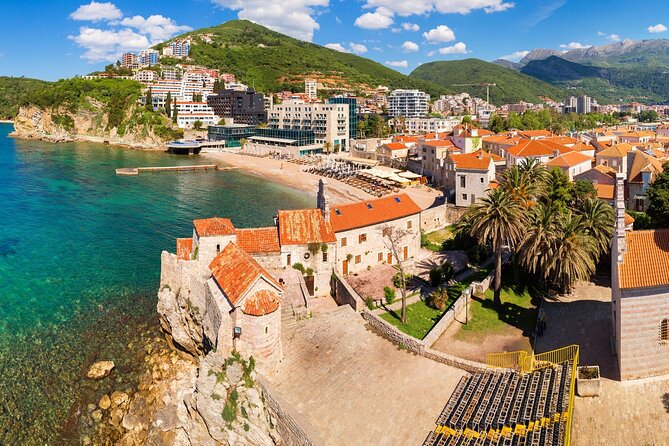
Crossing into North Macedonia is a tonal shift: you’re moving from fortress-heavy days to a slower lake-town feel. In Struga, you stop by the Drini River source area for a quick drink.
Then comes Ohrid, a UNESCO World Heritage site and one of the oldest human settlements in Europe (as presented on this itinerary). You’ll get views from the viewpoint of Church of St. John, visit Church of St. Nicolas, and also the Halveti Hayati Tekke mosque. The point of this mix is clear: Ohrid has been a crossroads for religious life for centuries, and the city still carries that role.
This is also the kind of stop where you can choose your own pace. The guided portion gives you the big highlights, and then you have room to wander and find your own rhythm.
St Naum, Tushemisht, and Drilon: water stops that reset a travel day
Day 10 brings you to Monastery of Saint Naum, at the source of River Crni Drim flowing into Lake Ohrid. The setting is described as crystal clear spring water with greenery and mountain peaks in the background. This is a good “reset” stop after border-and-city days.
Then you stop at Tushemisht, described as a hidden gem with natural beauty and warm hospitality. It’s short, but it breaks the driving pattern and gives you one more water-adjacent moment.
After that, you visit Driloni National Park, where spring-fed waters create a small lake surrounded by greenery. The key detail is the weeping willows along the shoreline, which makes this the most relaxing break in the route’s middle section. You’ll also feel a difference in the schedule here: it’s designed to slow down rather than just add another monument.
Berat: 1001 windows, castle living, and Onufri’s signature color
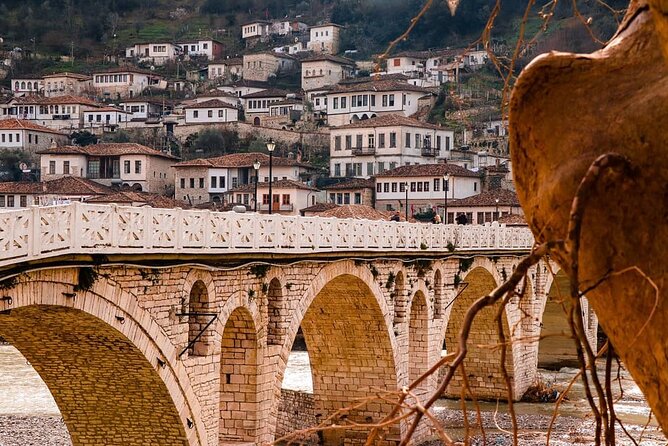
Berat is known as the town of 1001 windows, and this stop lives up to the name in a very practical way. You walk narrow stone streets where you can see the medieval houses stacked up the hillside. One especially interesting part is that residents still live inside the castle walls—so the city is not just staged for visitors.
You’ll also visit Berat Castle, with the itinerary highlighting churches, mosques, museums, and remains from the communist era in the lower town. If you like places where multiple time periods overlap, Berat is a strong match.
The itinerary includes the National Iconographic Museum Onufri, named after Onufri, a painter associated with a specific reddish color still described as difficult to imitate. Even if you’re not an art expert, this is a focused stop that ties local creative history to the religious art tradition.
Gjirokaster’s Stone City: best-preserved houses and a castle with staying power
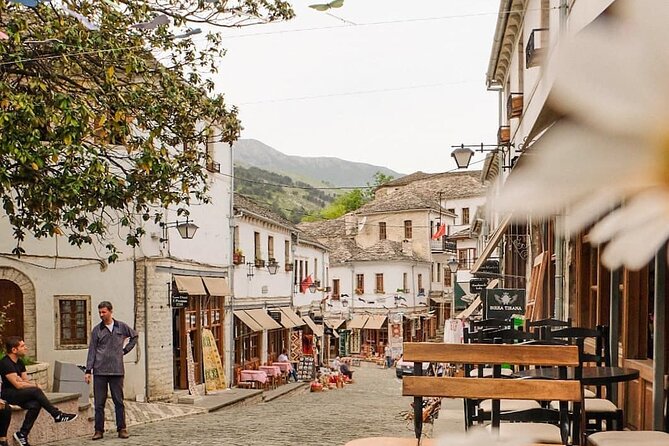
Next comes Gjirokaster, the Stone City, also UNESCO-listed. The key feel here is fortification: the houses resemble small fortresses, and the town layout gives you that “castle town” sense even when you’re walking among ordinary streets.
You’ll visit Gjirokaster Castle, described as one of the best-preserved medieval towns in the Balkans. The day also includes the Gjirokastra Bazaar and a stop at one of the best-preserved houses where everything is original and authentic (as presented on the itinerary). This is a great combination if you like to understand how daily life and architecture reinforced each other.
Ioannina to Meteora: ending in Greece with castles and a sunset fix
For the Greece finale, the itinerary first stops in Ioannina. You’ll wander the cobbled old town streets, then visit Ioannina Castle, with Byzantine-era roots and a labyrinth-like network of narrow streets inside. There’s time to enjoy cafes and traditional Greek cuisine during the wandering portion.
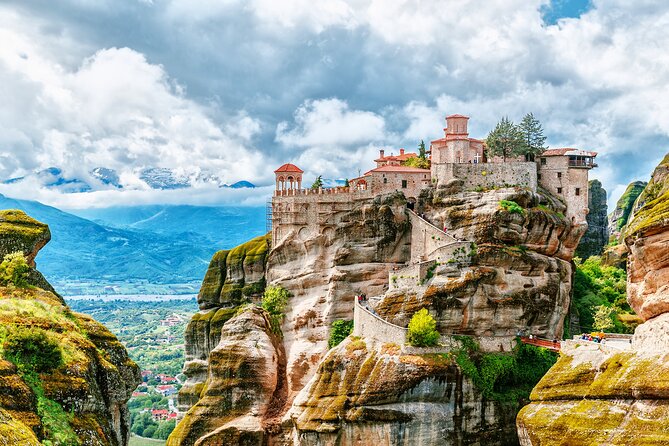
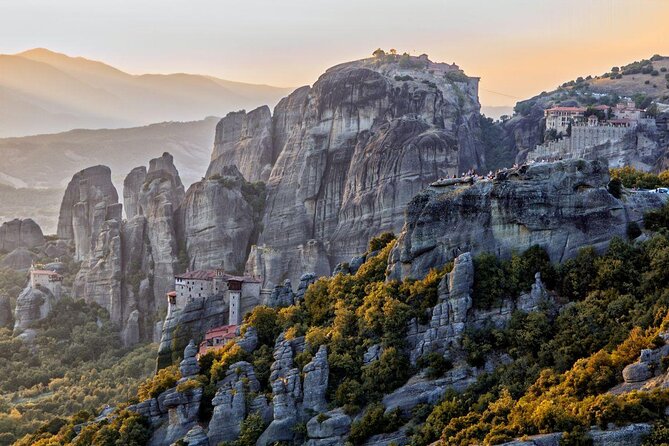
Then you drive to Meteora, also UNESCO-listed, where monasteries sit on spectacular rock formations. The itinerary explicitly frames this as a sunset moment, and it’s hard to imagine a better payoff after so many driving days. You’ll visit during the late-day light when the colors shift and the rock shapes look more dramatic.
If you’re the type who wants your last day to feel like a real finale—not just “more stops”—Meteora is where the trip earns it.
Athens or Corfu: the end choice that changes your last travel day
Day 14 ends with a transfer depending on your selected finish. You can be transferred toward Athens, or you can be transferred to Igoumenitsa Port for the ferry to Corfu port, with ferry tickets included.
This matters because it changes the flavor of your last evening. If you want a big-city feel, choose Athens. If you want island time, choose Corfu and let the ferry carry you into a calmer pace.
Price and value: is $5,153.85 a good deal for this much ground?
The price—$5,153.85 per person—isn’t cheap, so you should evaluate what’s actually covered.
Here’s what you’re getting for the cost:
- Private transportation across multiple countries
- Hotel pickup in Split and drop-off at the end location (Athens or the port for Corfu)
- Professional tour leader and guided visits for the listed stops
- 3-star accommodations with breakfast (breakfast is included for 13 mornings)
- Entry tickets for the sites listed as included
- Tourist taxes plus road taxes, petrol, and international car insurance
- Ferry tickets to Corfu if you finish there
What’s not included: lunches, dinners, drinks, and snacks, plus souvenirs and personal spending. That’s a normal trade-off, but on a 14-day route you should budget for meals and drinks even if you keep them simple.
So is it good value? It tends to be best value if you hate planning borders, rerouting, and juggling tickets. You’re paying for smooth execution. If you’re the DIY type who wants total control, you might feel the price is high. If you want a clear plan with a guide and handoffs taken care of, the package adds up.
Practical tips to keep this tour easy on you
Bring comfortable shoes, especially for Sarajevo’s uneven walking and the old-town cobblestone feel in places like Kotor and Prizren. Pack a light rain layer too—weather can affect the schedule, and the itinerary notes that changes may happen due to external forces like weather or site closures.
Since lunches and dinners aren’t included, decide early how you’ll handle meals: either keep them simple in free time windows or budget for sit-down meals when you find places you like. Also, tips aren’t required, but there’s a recommendation to tip your tour leader/driver as an international practice for good service.
For photos, you’ll get lots of castle-and-bridge viewpoints. In other words: charge your devices and expect hands-on walking days.
Should you book this Balkan route?
I think this tour is a strong choice if you want a guided, multi-country circuit without doing the admin. The semi-private size, the pickup and transfers, and the way UNESCO stops are paired with real food and local neighborhoods make it feel like more than a checklist.
Book it if you:
- Like seeing many countries in a single trip with a guide handling the logistics
- Want breakfast-and-hotel consistency while you explore
- Appreciate fortress views and historical context, not just photos
Skip it if you:
- Want lots of downtime and very light walking
- Prefer designing your own itinerary and meal stops day-by-day
- Are sensitive to long driving days
If you match the sweet spot—curious, comfortable with walking, and open to a fast-but-guided rhythm—this is the kind of trip that leaves you with a map full of places you didn’t have to coordinate yourself.
FAQ
How many travelers are on this tour?
The tour has a maximum of 10 travelers.
When does the tour start, and where?
It starts in Split, Croatia at 7:30 am.
Where does the tour end?
The tour ends in a different location. You are transferred toward Athens, or toward Igoumenitsa Port for the ferry to Corfu port.
What’s included in the price?
Included are 3-star accommodations with breakfast, private transportation, a professional tour leader, hotel pickup in Split, hotel drop-off in Athens or port drop-off in Igoumtinsa (including ferry tickets to Corfu port), entry tickets for the listed sites, and tourist taxes plus road and insurance costs.
What is not included?
Lunches, dinners, drinks, snacks, souvenirs, and personal spending are not included.
Is this tour refundable if I cancel?
This experience is non-refundable and cannot be changed for any reason.
More Tours in Split
- From Split: Krka Waterfalls, Food & Wine Tasting Tour
★ 5.0 · 9,326 reviews - Blue cave, Mamma Mia and Hvar, 5 islands speedboat tour
★ 5.0 · 7,150 reviews - From Split: Krka Waterfalls, Food & Wine Tasting Tour
★ 4.9 · 6,598 reviews - Split/Trogir: Blue Cave, Mamma Mia, Hvar and 5 Island Tour
★ 4.6 · 6,320 reviews - Blue Cave and Hvar Tour – 5 Islands Tour from Split and Trogir
★ 5.0 · 4,815 reviews
More Tour Reviews in Split
- Split: Krka Waterfalls Trip with Boat Cruise and Swimming
★ 4.8 · 10,519 reviews - From Split: Krka Waterfalls, Food & Wine Tasting Tour
★ 5.0 · 9,326 reviews - Blue cave, Mamma Mia and Hvar, 5 islands speedboat tour
★ 5.0 · 7,150 reviews - From Split: Krka Waterfalls, Food & Wine Tasting Tour
★ 4.9 · 6,598 reviews - Split/Trogir: Blue Cave, Mamma Mia, Hvar and 5 Island Tour
★ 4.6 · 6,320 reviews
Just Your Group in Split
- SPLIT-PRIVATE Walking Tour of Diocletian’s Palace & Old Town
★ 5.0 · 467 reviews - Private Krka Waterfalls tour with 30min Boat Cruse
★ 4.0 · 458 reviews - Split by Private Electric Rickshaw – Palace & Hidden Gems
★ 5.0 · 412 reviews - Private Blue cave, Mamma Mia and Hvar, 5 islands tour from Split
★ 5.0 · 387 reviews - The Best of Split Private Tour
★ 5.0 · 338 reviews
Still deciding? More Split trips we have been out and reviewed
Split Private Tours, compared.
 ★ 5.0SPLIT-PRIVATE Walking Tour of Diocletian’s Palace & Old TownFrom $240467 reviews
 ★ 4.0Private Krka Waterfalls tour with 30min Boat CruseFrom $301458 reviews
 ★ 5.0Split by Private Electric Rickshaw – Palace & Hidden GemsFrom $48412 reviews
 ★ 5.0Private Blue cave, Mamma Mia and Hvar, 5 islands tour from SplitFrom $1,572387 reviews
 ★ 5.0The Best of Split Private TourFrom $199338 reviews
 ★ 5.0Private Full-Day Krka Waterfalls Tour with Wine TastingFrom $665263 reviews
 ★ 5.0Private Boat Tour by local expert – Create Your ItineraryFrom $483261 reviews
 ★ 5.0Plitvice Lakes – Private tourFrom $786222 reviews