
Reviewed · SPLIT PRIVATE TOURS
Private Foodie Tour: Wine & Seafood with a Local Chef
Food and Roman ruins, side by side. This private Split tour pairs a chef-led tasting trail (including Ottoman-era burek) with stops inside Diocletian’s Palace, then finishes the meal right where the Temple of Jupiter sits today as a museum. I especially like how you start with everyday street food culture, then build toward a proper white fish or fish stew lunch in a very atmospheric setting.
One thing to plan for: it’s a walking route through major landmarks, and the experience requires good weather, so rain or heat can change how comfortable it feels.
Since it’s private, your guide can answer questions at your pace, and the language is English. The guide behind the experience is Tomislav (a former chef), so the food talk isn’t generic.
In This Review
- Key highlights you’ll actually feel on the walk
- Why this Split foodie tour works so well
- Starting at Prerada bakery: burek and the Ottoman-to-Dalmatian link
- Green Market tasting: soparnik, prosciutto, cheese, olive oil, and bread
- Riva Harbor and fjaka: history you can feel, not just read
- Diocletian’s Palace substructures: cellars, the emperor’s world, and GOT scenery
- The Peristyle and Temple of Jupiter: columns, cathedral views, and Let Me Pass
- Lunch at the smallest streets: white fish or fish stew, served near Jupiter
- Pjaca (Narodni Trg) and gelato from Gelateria aMare
- Wine & seafood pricing: is $216.74 per person good value?
- Timing, walking comfort, and what to bring
- Who this tour suits best (and who should skip it)
- Should you book Black Apple Tours for this Split foodie walk?
- FAQ
- How long is the private foodie tour?
- What is the price per person?
- Is pickup available?
- Where does the tour start and end?
- What language is the tour offered in?
- Is it a private tour?
- What food stops are included?
- Do we visit Diocletian’s Palace during the tour?
- Is the tour dependent on weather?
- What’s the cancellation policy?
- Are service animals allowed?
Key highlights you’ll actually feel on the walk
- Burek at Prerada bakery, tying Ottoman influence to modern Split
- Green Market tasting with soparnik plus prosciutto, cheese, olive oil, and bread
- Fjaka at Riva Harbor, the local art of doing nothing along the waterfront
- Diocletian’s Palace stops from cellars to the Peristyle and Golden Gate
- Lunch near the Temple of Jupiter with Dalmatian white fish or fish stew
- Gelato break at Gelateria aMare in People’s Square (Pjaca)
On your own schedule: more private tours in Split
- SPLIT-PRIVATE Walking Tour of Diocletian’s Palace & Old Town★ 5.0 · 467 reviews
- Private Krka Waterfalls tour with 30min Boat Cruse★ 4.0 · 458 reviews
- Split by Private Electric Rickshaw – Palace & Hidden Gems★ 5.0 · 412 reviews
- Private Blue cave, Mamma Mia and Hvar, 5 islands tour from Split★ 5.0 · 387 reviews
Why this Split foodie tour works so well
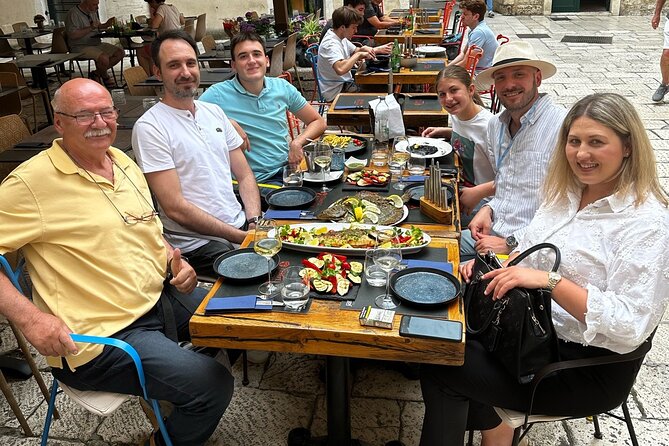
This isn’t a sit-and-smile tour. It’s built like a neighborhood day: food first, then the meaning behind the food, then the stones that shaped Split’s cuisine and customs. You’ll move through Prerada, the Green Market, and the Diocletian complex without feeling like you’re cramming a museum list.
The value is in the pairing. You taste staples like bread, cheese, olive oil, and soparnik while the guide connects them to the long history of the city—from Ottoman-era dishes to Roman-era references. Then you get a lunch that feels like the payoff, not an afterthought.
It’s also the right length. At roughly 3 hours, you get a full arc (snack, market sampling, history walk, and lunch) without burning the entire day.
Starting at Prerada bakery: burek and the Ottoman-to-Dalmatian link
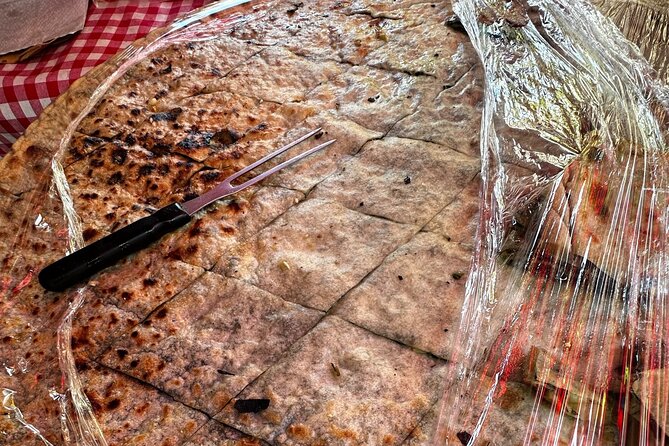
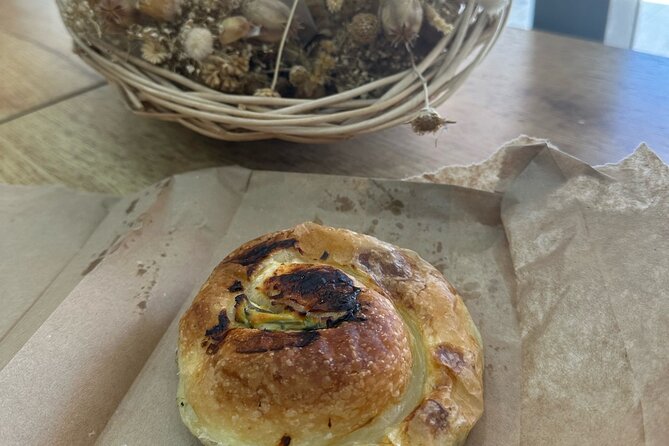
You begin at the Brass Gate (Porta Aenea), the natural portal into Split’s old core. The first stop is Prerada bakery, where the focus is burek, a medieval dish from the Ottoman Empire that still lives in modern Split.
What I like about this opening is the mindset it sets. You’re not just eating; you’re learning why certain flavors and words stuck around. The tour notes that Split still uses Ottoman words and customs, and that kind of detail makes the rest of the walk click.
Burek is also a good first taste because it’s portable and snackable. You’ll get the rhythm of the tour right away, then you’ll walk off the first bites toward the market.
Green Market tasting: soparnik, prosciutto, cheese, olive oil, and bread
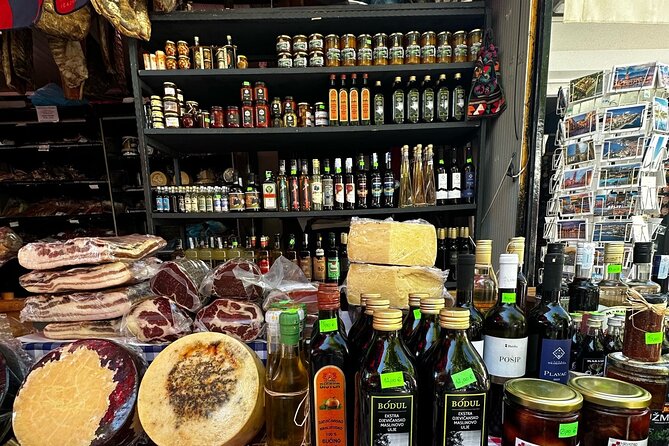
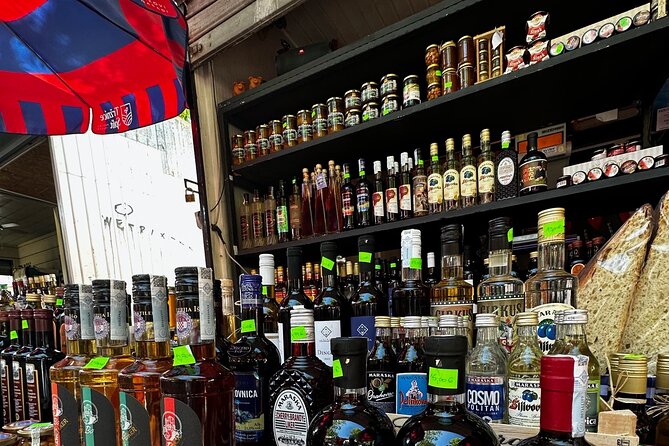
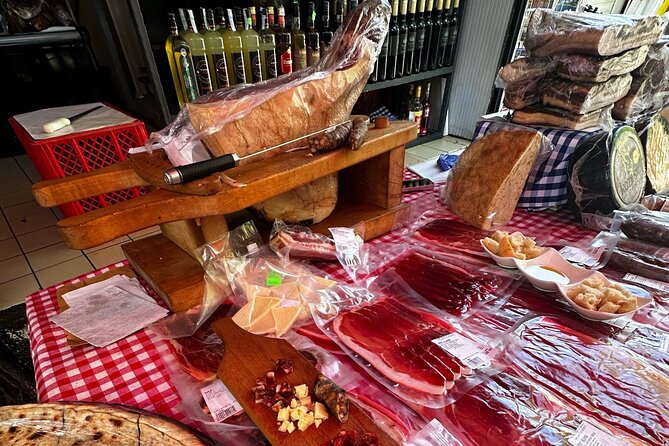
Next you head to the Green Market, which the guide frames like a daily pantry for locals. This is where you try some of the area’s most famous products: prosciutto, cheese, olive oil, bread, and soparnik.
Soparnik matters because it’s humble, and that’s exactly why it’s memorable. It’s the kind of dish that tells you a lot about regional cooking—simple ingredients done well, and a real everyday connection to what people eat at lunch or dinner.
The tour also threads in a Roman reference here, including mention of a Roman feast. Even if you’re not a Roman-history superfan, it’s useful, because it explains why the city’s food culture feels layered instead of random.
A practical note: markets can be warm and busy, so come with room in your stomach for more than one bite. This portion is short, around 30 minutes, so you’re sampling, not attempting a full meal.
Riva Harbor and fjaka: history you can feel, not just read
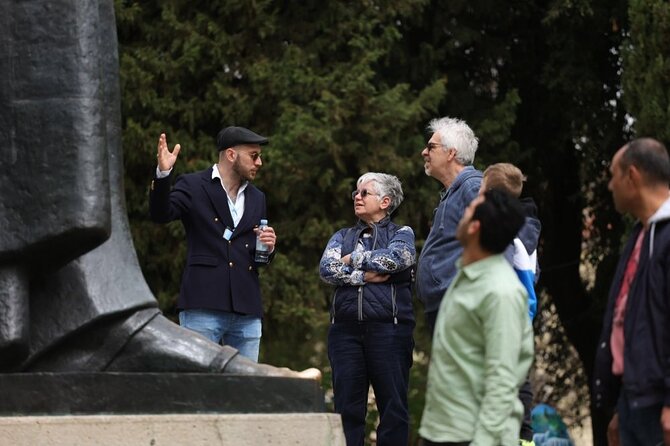
From the market, you move toward Riva Harbor, the waterfront “heart” of the city. The guide uses a local concept called fjaka, described as the art of doing nothing—more like a mental pause than a vacation slogan.
This stop is only about 15 minutes, but it works as a breather. You get waterfront views, you reset your pace, and you hear how this spot connects to major eras of Split, including Roman Empire history and Diocletian’s Palace.
Why I think this matters: food tours can get one-note if every stop is strictly eating or strictly sightseeing. Fjaka gives you a third element—local rhythm. It helps you understand why people linger over coffee even in a place famous for monuments.
A few more Split boat days and tours worth a second look


Diocletian’s Palace substructures: cellars, the emperor’s world, and GOT scenery
Now you shift into the heavy hitters: the Diocletian Palace substructures. You enter Diocletian’s Cellars, explore the main section, and walk through palace areas where the emperor lived with his family.
The tour calls out the people who built it—hardworking men, women, and enslaved people. That detail is important because it turns “cool ruins” into a lived workplace story. You start to see why the architecture feels purposeful, not decorative.
There’s also a pop-culture bridge: the route includes mention of Game of Thrones filming, describing it as the dungeon area fans associate with the show. Even if you don’t care about the TV connection, it helps you orient yourself inside a large complex.
This stop is brief, around 10 minutes, so treat it like a fast, guided orientation. You’ll get the why behind key spaces, not a slow stroll through every corridor.
The Peristyle and Temple of Jupiter: columns, cathedral views, and Let Me Pass
Next comes the Peristyle of Diocletian’s Palace. Here you’ll see the Temple of Jupiter, now the Catholic Cathedral of Saint Domnius, plus Egyptian columns that frame the ancient square.
You then move toward the Golden Gate. The tour notes it was the main entrance to the palace, marked by four statues that once stood there. Nearby you’ll also see the statue of Gregory of Nin, created by local sculptor Ivan Meštrović.
After that, the focus shifts to the Temple of Jupiter itself, now a museum. The tour includes a few specific details: an Egyptian sphinx displayed as a war trophy and one of the smallest streets in the city called Let Me Pass.
This is where the walking route starts to feel like a story in chapters. You’ll notice how each landmark points to a different function—temple, entrance, square, and daily movement through narrow urban space.
Lunch at the smallest streets: white fish or fish stew, served near Jupiter
Lunch is one of the best moments in this whole experience. The itinerary positions it inside the palace area, near the Temple of Jupiter, which is already an atmospheric payoff.
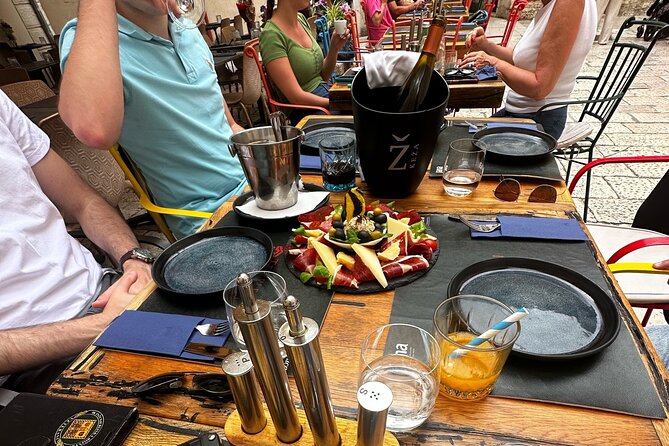
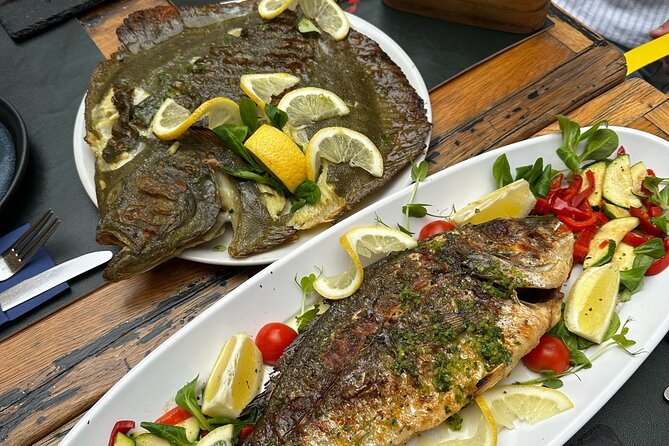
The lunch options listed are fresh local white fish or fish stew. That’s a smart choice for a walking tour because it keeps the menu focused on regional flavors instead of trying to please every palate with a generic buffet.
I also like that the guide’s background as a former chef shows up in how food is explained. Based on the experience format, you can ask about fish prep and local cooking approaches, and you’ll get answers that sound like actual kitchen thinking rather than trivia.
Plan to slow down for the meal. In a tour that moves quickly, lunch is your chance to catch your breath and really absorb the setting—the kind of place where you can eat while looking toward ancient stone you just walked through.
Pjaca (Narodni Trg) and gelato from Gelateria aMare
After lunch, you head to Narodni Trg, also called People’s Square or Pjaca. The tour highlights it as Split’s medieval city hall area, now a museum, and explains locals use the space as a heat refuge away from the waterfront.
This stop is short, about 10 minutes, but it’s a perfect way to end. You get one last landmark view and a local treat: ice cream from Gelateria aMare, which the tour describes as among the best in town.
Ending at Pjaca also makes sense logistically. Your tour finishes at this square, and it’s easy to continue your day nearby.
Wine & seafood pricing: is $216.74 per person good value?
Let’s talk price honestly. At $216.74 per person for roughly 3 hours on a private tour, you’re paying for three things: a one-group pace (not shared with strangers), a food-and-history guide, and included tastings plus a lunch moment.
You also get practical inclusions that affect value:
- Pickup is offered (and you can arrange an easy meeting point by phone).
- You receive a mobile ticket.
- Admission tickets are listed as free for the major paid-entry stops on the route.
- You get specific tasting components at the bakery and market, plus lunch and an ice cream stop.
This kind of experience is usually worth it when you want quality attention. If you like asking questions about cooking and you want history explained in food terms, the private format helps. If you’re happy roaming on your own with a guidebook, you might find cheaper options—but you lose the tight food-to-stones connection.
In short: this price isn’t a bargain for the budget traveler. It is a good deal for a guided, private, food-focused day that also covers major Split sites without you having to plan stops.
Timing, walking comfort, and what to bring
The tour operates within opening hours from 10:30 AM to 10:00 PM (with the listed date range). That wide window helps, but the experience specifically notes it requires good weather, so rainy forecasts can trigger a change.
Because the route includes a waterfront stop, markets, and the palace complex, comfortable shoes matter. You’ll also want water and sun protection, especially if you’re doing this midday when Pjaca and Riva Harbor can feel exposed.
If you’re the type who hates rushing, aim for early rather than late. The itinerary is compact, and you’ll enjoy it more if you’re not already exhausted from a long day of sightseeing.
Who this tour suits best (and who should skip it)
This tour fits you if:
- You want seafood-forward food in Split rather than a generic tasting set.
- You like history, but you prefer it tied to daily life and local food choices.
- You’re traveling as a small group or family and want a guide to adapt to your pace.
It might not fit you as well if:
- You only have an hour and want a quick highlight.
- You dislike walking in heat or weather shifts, since the operator flags good-weather needs.
- You’re mainly after restaurant-style dining and don’t care about roaming through historic sites.
Should you book Black Apple Tours for this Split foodie walk?
I’d book it if you’re craving a food day that actually explains itself. The standout strength is the structure: Ottoman-influenced burek and market staples first, then the Diocletian landmarks that give the whole city a physical backdrop, then lunch with white fish or fish stew near the Temple of Jupiter, capped with ice cream at Pjaca.
Two quick checks before you commit:
1) Think about your tolerance for walking and sun exposure in a 3-hour route.
2) Make sure you’re the type who enjoys both tasting and stories, not just one or the other.
If that sounds like you, this is a smart, satisfying way to experience Split without turning your day into a frantic scavenger hunt.
FAQ
How long is the private foodie tour?
It lasts about 3 hours.
What is the price per person?
The price is $216.74 per person.
Is pickup available?
Yes, pickup is offered. You can also arrange to speak by phone beforehand to set an easy meeting point.
Where does the tour start and end?
It starts at the Brass Gate (Porta Aenea) and ends at Narodni trg (People’s Square, Pjaca).
What language is the tour offered in?
It’s offered in English.
Is it a private tour?
Yes. It’s private, and only your group participates.
What food stops are included?
You’ll stop at Prerada bakery for burek, the Green Market for tastings like prosciutto, cheese, olive oil, bread, and soparnik, and you’ll have lunch with fresh local white fish or fish stew. You’ll also get ice cream from Gelateria aMare at Narodni trg.
Do we visit Diocletian’s Palace during the tour?
Yes. You’ll enter Diocletian’s Cellars and walk through parts of Diocletian’s Palace, including the Peristyle and the Temple of Jupiter museum area, plus the Golden Gate area.
Is the tour dependent on weather?
Yes. The experience requires good weather, and if it’s canceled due to poor weather you’ll be offered a different date or a full refund.
What’s the cancellation policy?
You can cancel for a full refund up to 24 hours in advance. If you cancel less than 24 hours before the experience start time, the amount paid won’t be refunded.
Are service animals allowed?
Yes, service animals are allowed.
More Tours in Split
- From Split: Krka Waterfalls, Food & Wine Tasting Tour
★ 5.0 · 9,326 reviews - Blue cave, Mamma Mia and Hvar, 5 islands speedboat tour
★ 5.0 · 7,150 reviews - From Split: Krka Waterfalls, Food & Wine Tasting Tour
★ 4.9 · 6,598 reviews - Split/Trogir: Blue Cave, Mamma Mia, Hvar and 5 Island Tour
★ 4.6 · 6,320 reviews - Blue Cave and Hvar Tour – 5 Islands Tour from Split and Trogir
★ 5.0 · 4,815 reviews
More Tour Reviews in Split
- Split: Krka Waterfalls Trip with Boat Cruise and Swimming
★ 4.8 · 10,519 reviews - From Split: Krka Waterfalls, Food & Wine Tasting Tour
★ 5.0 · 9,326 reviews - Blue cave, Mamma Mia and Hvar, 5 islands speedboat tour
★ 5.0 · 7,150 reviews - From Split: Krka Waterfalls, Food & Wine Tasting Tour
★ 4.9 · 6,598 reviews - Split/Trogir: Blue Cave, Mamma Mia, Hvar and 5 Island Tour
★ 4.6 · 6,320 reviews
Just Your Group in Split
- SPLIT-PRIVATE Walking Tour of Diocletian’s Palace & Old Town
★ 5.0 · 467 reviews - Private Krka Waterfalls tour with 30min Boat Cruse
★ 4.0 · 458 reviews - Split by Private Electric Rickshaw – Palace & Hidden Gems
★ 5.0 · 412 reviews - Private Blue cave, Mamma Mia and Hvar, 5 islands tour from Split
★ 5.0 · 387 reviews - The Best of Split Private Tour
★ 5.0 · 338 reviews
Still deciding? More Split trips we have been out and reviewed
Split Private Tours, compared.
 ★ 5.0SPLIT-PRIVATE Walking Tour of Diocletian’s Palace & Old TownFrom $240467 reviews
 ★ 4.0Private Krka Waterfalls tour with 30min Boat CruseFrom $301458 reviews
 ★ 5.0Split by Private Electric Rickshaw – Palace & Hidden GemsFrom $48412 reviews
 ★ 5.0Private Blue cave, Mamma Mia and Hvar, 5 islands tour from SplitFrom $1,572387 reviews
 ★ 5.0The Best of Split Private TourFrom $199338 reviews
 ★ 5.0Private Full-Day Krka Waterfalls Tour with Wine TastingFrom $665263 reviews
 ★ 5.0Private Boat Tour by local expert – Create Your ItineraryFrom $483261 reviews
 ★ 5.0Plitvice Lakes – Private tourFrom $786222 reviews
Browse the lists this tour appears in