
Reviewed · GUIDED
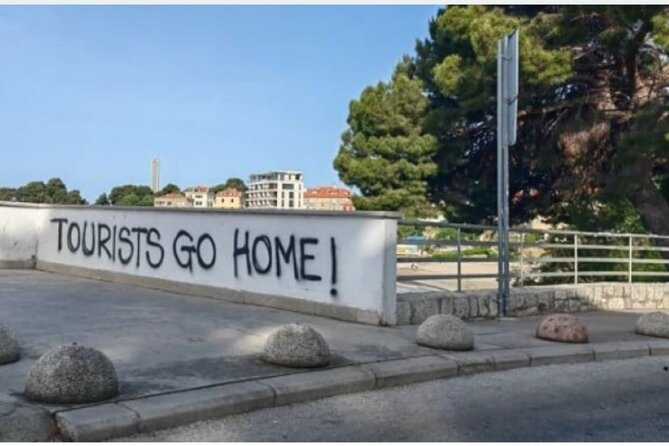
Controversies behind Split and Croatia-Anthropologist guide
Split feels different after this anthropology-style walk. I love how it turns everyday streets into stories about power, memory, and identity, and Marin’s setup makes the city feel easy to understand. I also like the small-group format, with time for questions rather than a rush-through lecture.
One thing to plan for: you’ll be standing in busy squares and uneven old-stone areas, so bring solid shoes and expect a bit of sun if the weather is right.
In This Review
- Key points I’d highlight before you go
- Price and timing: $35 for 2 hours that actually focus
- Tour logistics that make or break a short walking experience
- Stop-by-stop: how Split’s arguments become a map in your head
- Stop 1: Palazzo di Diocleziano (35 minutes, admission included)
- Stop 2: Obala Hrvatskog narodnog preporoda (15 minutes, free)
- Stop 3: Trg Braće Radić (15 minutes, free)
- Stop 4: Narodni trg (15 minutes, free)
- Stop 5: Šperun ulica (15 minutes, free)
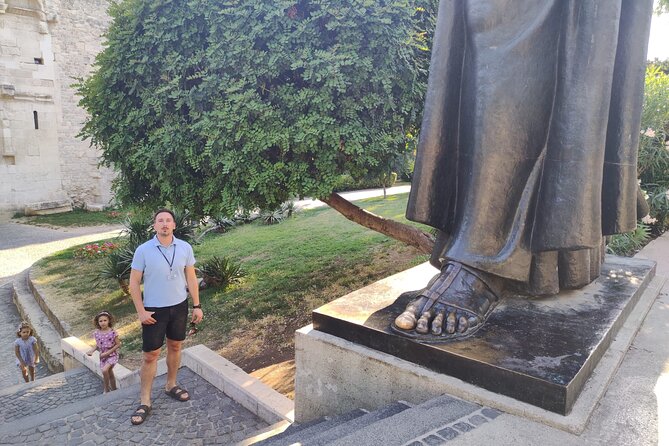
- Stop 6: Trg Franje Tuđmana (15 minutes, free)
- Stop 7: Matejuška (10 minutes, admission included)
- What makes the guide style work: Marin and the “question-friendly” pace
- So what does the anthropology angle give you?
- Who should book this Split walking tour?
- Should you book this tour of Split’s controversies?
- FAQ
- FAQ
- How long is the tour in Split?
- What is the price per person?
- Is the tour offered in English?
- How many people are in the group?
- Is there a mobile ticket?
- What is included vs not included for admission tickets?
- Where do I meet the guide?
- Where does the tour end?
- What if weather is bad?
- Can I cancel and get a full refund?
Key points I’d highlight before you go
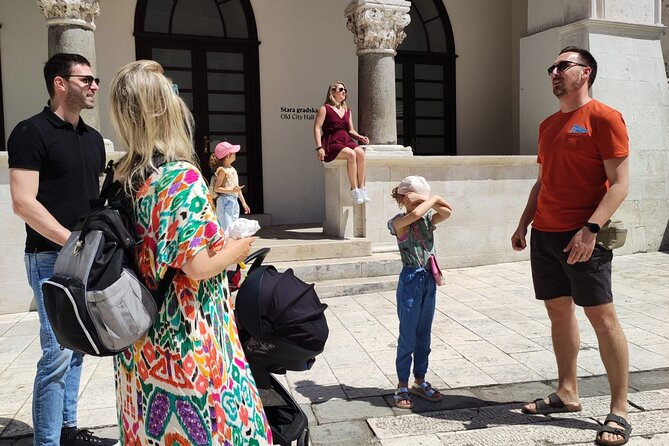
- Controversy-first storytelling around Diocletian’s Palace and what locals have argued about for centuries
- A guide named Marin who uses maps and visuals to keep the big picture clear
- A small group capped at 12 people, which usually means more back-and-forth
- Stop-to-stop city meaning, from promenades and Venetian-era squares to modern political names and debates
- Two admission-included stops (Palazzo di Diocleziano and Matejuška) while the rest are free to enter
- A finishing point with views at Matejuška, paired with a look at modern Split
A few more Split boat days and tours worth a second look
- From Split: Plitvice Lakes National Park Guided Tour★ 5.0 · 3,002 reviews
- From Split: Plitvice Lakes Guided Tour with Entry Tickets★ 4.9 · 2,468 reviews
- From Split: Plitvice Lakes National Park Guided Tour★ 5.0 · 2,355 reviews
- Plitvice Lakes National Park Guided Day Tour from Split★ 5.0 · 1,948 reviews
Price and timing: $35 for 2 hours that actually focus
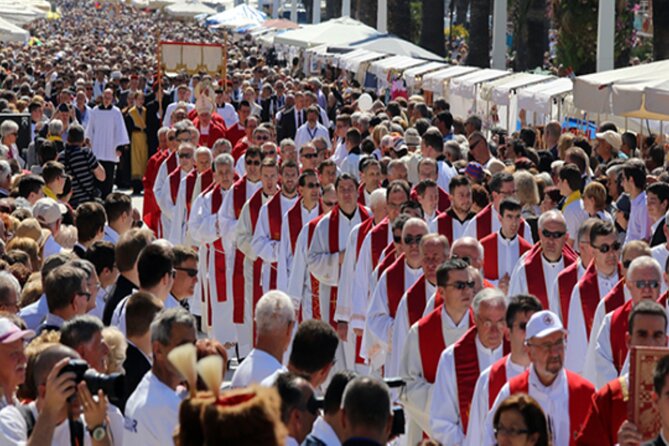
At $35 per person for about 2 hours, this is priced like a “serious” city walk: not just scenic, not just historical trivia. The value comes from two places where admission is included, plus the fact you get an expert guide handling context you’d otherwise miss from plaques.
What also helps is the scheduling style. You can pick from multiple tour times, so you’re less likely to force it onto a day when your energy is low. The tour is typically booked about 12 days in advance on average, which tells me this one fills up when people want an English option that isn’t cookie-cutter.
The tour uses a mobile ticket, which is convenient when you’re moving between stops and don’t want to hunt for paper. And because the group stays under 12 people, you’re not just listening from the back row.
Tour logistics that make or break a short walking experience
This is a compact, city-center route. You’ll meet at Ul. kralja Tomislava 12 and end near Trumbićeva obala 2. That matters if you’re lining up dinner plans right after, since you’ll finish at a waterside area rather than back at the start.
The tour is offered in English, and service animals are allowed. Most people can participate, but it’s still a walking tour through older parts of Split with public-life squares and narrow streets. The pace is described as well balanced, not too fast, which is exactly what you want on a short timeline.
One practical note: the tour requires good weather. If weather turns, you’ll be offered another date or a refund, so it’s smart to keep an open window in your schedule rather than booking it as your only plan for that day.
Stop-by-stop: how Split’s arguments become a map in your head

Instead of treating Split like a set of landmarks, this tour treats it like a living argument. You’ll keep getting the same theme in different forms: whoever controls space also controls the story, and people still react to those inherited stories today.
Stop 1: Palazzo di Diocleziano (35 minutes, admission included)
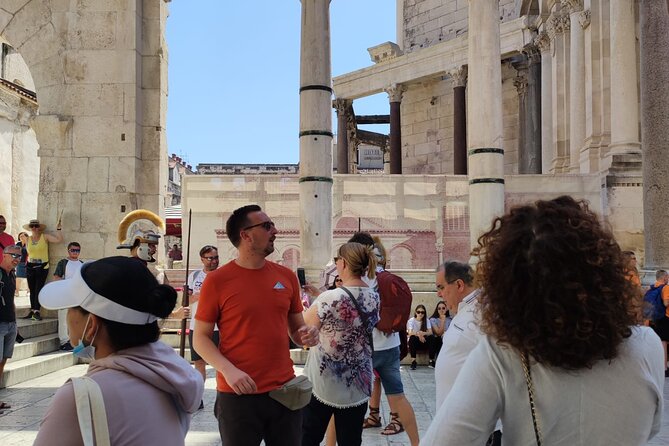
This is the anchor. You spend the longest time here, and the message is clear: Diocletian’s Palace isn’t just fascinating architecture. It’s a site that locals have questioned and reshaped across multiple historical periods.
You’ll be led through the major parts of the city center, with the story told from the angle of controversial historical and modern issues. That’s the key difference from a standard palace talk. You’re not just seeing stones; you’re learning how the same place can be interpreted in different eras, and why those interpretations still echo.
If you’re the type who enjoys the “why does this matter today” layer, this stop is the one that sets the tone for the rest of the walk.
Possible drawback here: because the palace area is the main focus, the first part can feel dense if you’re expecting only light, scenic commentary. If you want quick photos and minimal talking, you may need to pace yourself mentally.

Stop 2: Obala Hrvatskog narodnog preporoda (15 minutes, free)
This promenade stop is about public life. The waterfront promenade is where daily rhythms happen in Mediterranean towns, and this one is framed as a place connected to important events.
Think of it as your breathing space. After the heavy palace context, the tour shifts to how people occupy space—where they meet, walk, gather, and remember. Even if you just want a break from the tight streets, you’ll still be learning why this waterfront matters.
Stop 3: Trg Braće Radić (15 minutes, free)
Now you’re in a square tied to older European layers, described as a Venetian square in the story. The emphasis here is the turbulent period when Split was portrayed as a frontier resisting the Ottomans, and then the tour asks how that period is perceived now.
This is where the anthropological approach clicks. You’re not just getting “this happened.” You’re getting “how people think about what happened,” and why that shapes local identity and politics.
If you like political history but hate dry timelines, this stop is built for you.
Stop 4: Narodni trg (15 minutes, free)
This stop adds a serious physical twist. You’ll walk over an area where human remains lie underneath, because the location was once an ancient graveyard.
From there, the tour connects later events at the same site with the way places accumulate meaning. It’s a reminder that cities aren’t clean layers of museum space. They’re stacked experiences—some respectful, some infamous—and people have to live with what’s under their feet.
Practical note: keep your attention up here. It’s easy to mentally drift when you’re standing in a square looking around at architecture and views.
Stop 5: Šperun ulica (15 minutes, free)
This is a neighborhood moment. Šperun ulica is described as one of Split’s best-known neighborhood areas where tourists often stay, yet the story behind it isn’t obvious at street level.
This stop is a good example of what makes the tour feel like anthropology instead of tourism. You’re asking different questions: Who lived here? How did the neighborhood get shaped? How does popularity change what we notice?
Even if you already walked this area on your own, you’re likely to leave with a clearer mental map.
Stop 6: Trg Franje Tuđmana (15 minutes, free)
The square is named after the first president of Croatia, and the discussion moves to the turbulent end of the 20th century—described as the hardest history lesson for many people in Croatia, with issues that still divide society.
This stop can feel heavier than the earlier ones, but it’s also a useful reality check. Names on signs and monuments aren’t neutral. They’re part of today’s identity debate, and the tour keeps bringing you back to that.
If you want a tour that lightly skims the surface, you’ll feel the difference. If you want context, this is one of the most relevant stops.
Stop 7: Matejuška (10 minutes, admission included)
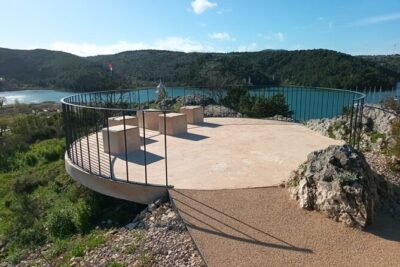
The tour ends at Matejuška, chosen for the view of Split. You’ll get a final perspective on the city, tied to modern life and how the earlier layers connect to what you see now.
This is a smart wrap-up. When you’re standing in the right spot looking over the city, the earlier stories stop feeling like separate chapters and start feeling like one continuous system.
Also, this final stage is a good moment to ask any lingering questions. A small group helps here, since you’re more likely to get direct answers.
What makes the guide style work: Marin and the “question-friendly” pace
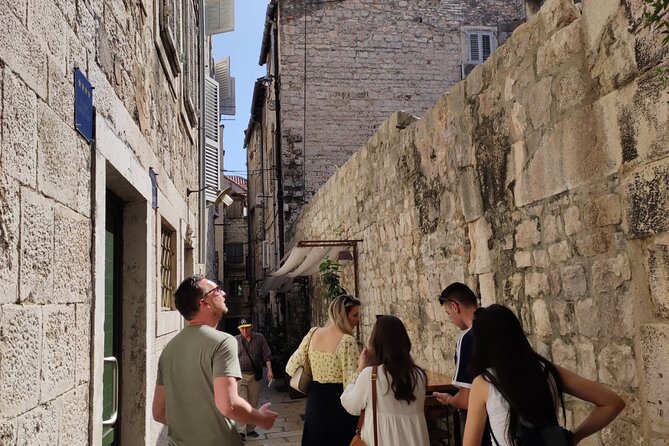
The guide for this experience is Marin, and his approach comes through in the way the tour is described: he’s warm, open to questions, and clearly prepared. You’ll often see him using maps and visuals on an iPad, which helps when you’re listening to something political or geographic that can’t be understood from one street view.
Marin’s teaching vibe matters. The best moments aren’t just facts. It’s how he frames contradictions, explains why people interpret the same place differently, and keeps the tour from becoming a rigid script.
The pace also seems tuned to real bodies. People didn’t report feeling rushed or bored. At the same time, a portion of the group found standing tiring, which is fair for a walking history tour in old squares. If you’re prone to fatigue, plan to take short posture breaks when you can, and don’t wait until you’re already uncomfortable.
So what does the anthropology angle give you?
A regular sightseeing walk can tell you what something is. This one tries to show you how and why people keep arguing about it.
You get lessons in how a place becomes a memory container. Diocletian’s Palace is treated not only as heritage, but as a contested space with different meanings across historical periods. Squares and promenades are treated not only as views, but as stages where identity and politics show up in everyday life.
Even the less-famous-feeling stops do this work. Šperun ulica and waterfront areas aren’t just “nice to pass through.” They’re presented as parts of the social system that shaped Split, and parts of the system people still react to.
If you like tours that help you interpret a city you’re already walking through—rather than just collecting photos—this one fits that goal.
Who should book this Split walking tour?
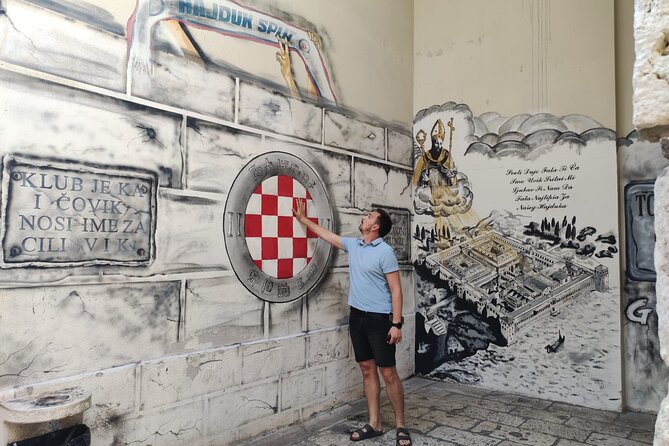
This is a strong choice if you:
- Want more meaning than a standard palace tour gives you
- Like context about how history turns into today’s identity and politics
- Prefer a small-group format and a guide who stays open to questions
- Enjoy visual help, since maps and iPad visuals are part of how Marin teaches
You might skip it if you:
- Want mostly scenic stops with minimal interpretation
- Have limited tolerance for standing in public squares
- Are looking for a classic museum-style route with mostly quiet time
Should you book this tour of Split’s controversies?
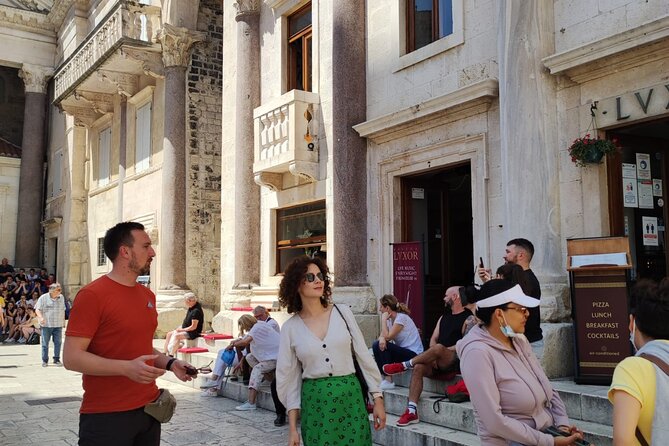
Yes, if your idea of a good trip includes understanding how people think. For $35 and about 2 hours, you’re not just seeing Split—you’re learning the city’s logic: where disputes live, why certain stories still matter, and how physical spaces carry political weight.
Book it especially if you’ll spend multiple days in Split. The stories you pick up here make it easier to connect the dots when you wander on your own later. If you’re short on time and want only the simplest highlights, then choose wisely. But for anyone who enjoys real context, this is a smart use of a morning or afternoon.
FAQ
FAQ
How long is the tour in Split?
It’s about 2 hours.
What is the price per person?
The price is $35.00 per person.
Is the tour offered in English?
Yes, it’s offered in English.
How many people are in the group?
The tour has a maximum of 12 travelers.
Is there a mobile ticket?
Yes, the tour uses a mobile ticket.
What is included vs not included for admission tickets?
Admission tickets are included at Palazzo di Diocleziano and Matejuška. The other stops listed are free.
Where do I meet the guide?
You meet at Ul. kralja Tomislava 12, 21000 Split.
Where does the tour end?
The tour ends at Trumbićeva obala 2, 21000 Split.
What if weather is bad?
This experience requires good weather. If it’s canceled due to poor weather, you’ll be offered a different date or a full refund.
Can I cancel and get a full refund?
Yes. You can cancel up to 24 hours in advance for a full refund.
More Guided in Split
- From Split: Plitvice Lakes National Park Guided Tour
★ 5.0 · 3,002 reviews - From Split: Plitvice Lakes Guided Tour with Entry Tickets
★ 4.9 · 2,468 reviews - From Split: Plitvice Lakes National Park Guided Tour
★ 5.0 · 2,355 reviews - Plitvice Lakes National Park Guided Day Tour from Split
★ 5.0 · 1,948 reviews - Krka National Park Tour with tour Guide & Wine tasting from Split & Trogir
★ 5.0 · 1,625 reviews
More Tour Reviews in Split
- Split: Krka Waterfalls Trip with Boat Cruise and Swimming
★ 4.8 · 10,519 reviews - From Split: Krka Waterfalls, Food & Wine Tasting Tour
★ 5.0 · 9,326 reviews - Blue cave, Mamma Mia and Hvar, 5 islands speedboat tour
★ 5.0 · 7,150 reviews - From Split: Krka Waterfalls, Food & Wine Tasting Tour
★ 4.9 · 6,598 reviews - Split/Trogir: Blue Cave, Mamma Mia, Hvar and 5 Island Tour
★ 4.6 · 6,320 reviews
Still deciding? More Split trips we have been out and reviewed

Guided, compared.
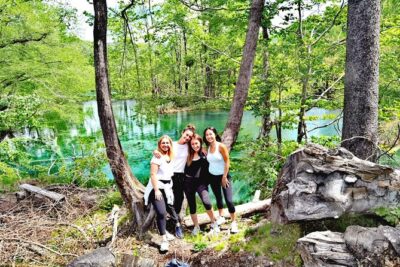 ★ 5.0Plitvice Lakes National Park Guided TourFrom $783,002 reviews
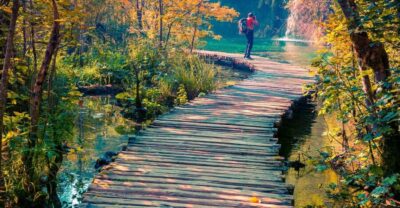 ★ 4.9Plitvice Lakes Guided Tour with Entry TicketsFrom $1162,468 reviews
★ 5.0Plitvice Lakes National Park Guided TourFrom $782,355 reviews
★ 4.9Plitvice Lakes Guided Tour with Entry TicketsFrom $1162,468 reviews
★ 5.0Plitvice Lakes National Park Guided TourFrom $782,355 reviews
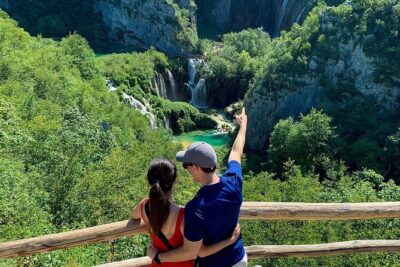 ★ 5.0Plitvice Lakes National Park Guided Day Tour from SplitFrom $781,948 reviews
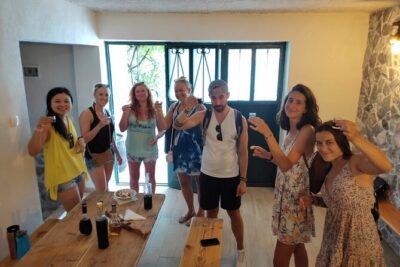 ★ 5.0Krka National Park Tour with tour Guide & Wine tasting from Split & TrogirFrom $501,625 reviews
 ★ 4.8Illuminated Evening Guided Kayaking TourFrom $561,622 reviews
 ★ 4.9Self-Guided Plitvice Lakes Day Tour with Boat RideFrom $581,519 reviews
 ★ 4.7Diocletian Palace & Old Town Guided Walking TourFrom $17882 reviews