
Reviewed · TOURS
Storytelling World War II in Split Tour
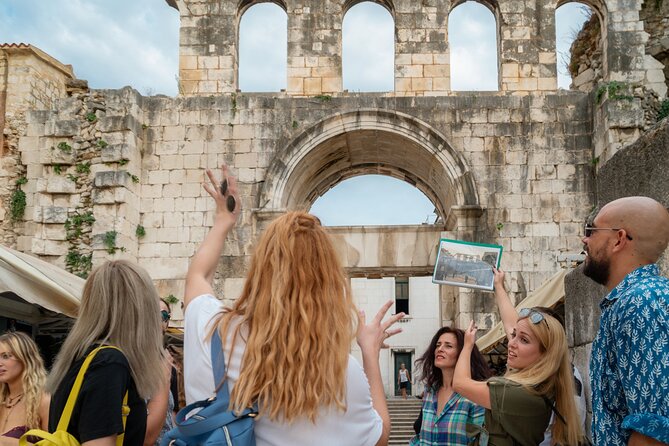
World War II left scars in Split that still show up. This tour turns Split’s street corners into a clear timeline, using real archival material and calm, human storytelling. I especially like the way Ina Nikolic links each bombing event to the actual spot you’re standing on, and I love the use of WWII photographs that connect then-and-now in a way facts alone never do.
There’s one trade-off: this is not a long-distance marching tour. You’ll spend time listening and often standing, which some people find slower than a typical walk. If you want nonstop sightseeing, plan to settle in—bring a little patience and you’ll get the payoff.
In This Review
- Key takeaways before you go
- WWII Stories Walk in Split’s Old Core
- Meet at the Split Riva: where the story starts
- Green Market bombing briefing in a familiar square
- Eastern (Silver) Gate: Roman entry, wartime attention
- The Peristyle of Diocletian’s Palace: what got attacked
- Narodni Trg: the main square as a stage of tragedy
- Marmontova Ulica: the main street that remembers
- Prokurative: prisons and executions where the tour ends
- What you actually get for $60.01 (and why it’s more than a “walk”)
- Who this tour suits best (and who should think twice)
- Practical details that affect your comfort
- A local guide who connects the personal to the historical
- Should you book this WWII storytelling tour?
- FAQ
- How long is the World War II in Split tour?
- What’s included in the tour?
- Where does the tour start and end?
- Is pickup available?
- What language is the tour offered in?
- How big is the group?
- What is the cancellation policy?
Key takeaways before you go
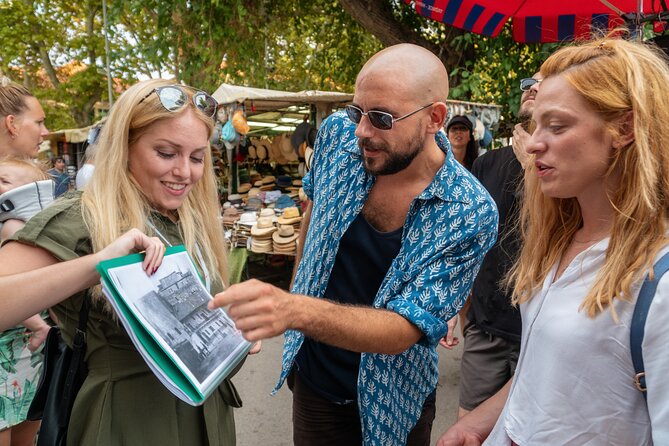
- Archival WWII photos are part of the story, not just handed-out facts
- Ina Nikolic’s storytelling keeps local events tied to the bigger war picture
- Roman and WWII layers in one route, from Diocletian’s Palace to later sites
- Small group size (max 15) makes it easier to ask questions
- Central meeting point options keep logistics simple in the old town
- English-language tour with a licensed local guide
Weighing up your options around Split? These are the trips we rated highest.
- Split: Krka Waterfalls Trip with Boat Cruise and Swimming★ 4.8 · 10,519 reviews
- From Split: Krka Waterfalls, Food & Wine Tasting Tour★ 5.0 · 9,326 reviews
- Blue cave, Mamma Mia and Hvar, 5 islands speedboat tour★ 5.0 · 7,150 reviews
- From Split: Krka Waterfalls, Food & Wine Tasting Tour★ 4.9 · 6,598 reviews
WWII Stories Walk in Split’s Old Core
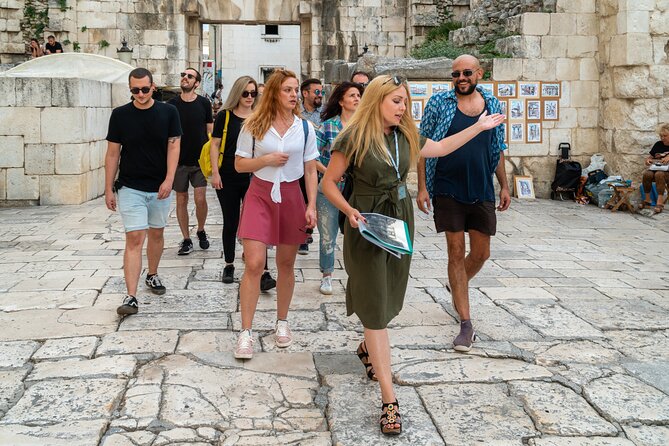
Split has a talent for stacking eras. One street can feel Roman in the morning and wartime in the afternoon. That’s the magic of this WWII storytelling format: it doesn’t just point at sights. It explains what happened there, and why that particular place mattered during the war.
This tour runs about 2 hours and stays in the historic center. You’ll move between seven stops around the Riva and the palace area, then finish near Prokurative. The pacing is designed for listening—short segments, frequent context, and enough time to look at details you’d normally miss while walking fast for dinner.
The biggest value is that it’s not abstract. You’re standing in the same urban space where the bombing and its consequences played out. That makes the events feel close to home, even if you came to Croatia for beaches and Diocletian’s Palace first.
Meet at the Split Riva: where the story starts
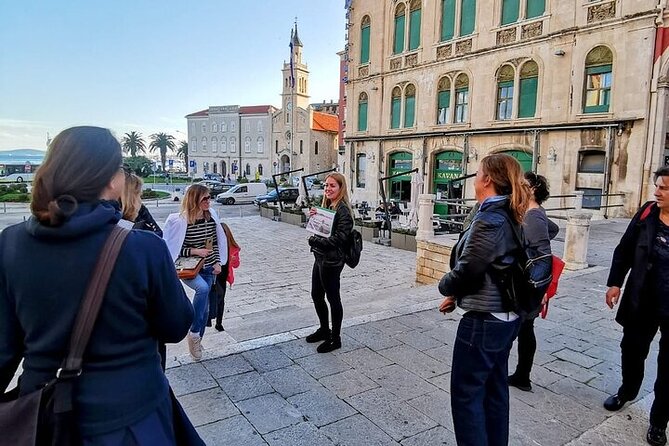
You begin at Obala Hrvatskog narodnog preporoda 27 on the Riva. This is an easy starting area to orient yourself—flat, central, and right near the promenade.
From the first moments, you’ll hear where and why the war in Split started. That matters, because it gives you a baseline before the tour moves inward. Without that first framing, later stops can feel like unrelated tragedies. With it, you start seeing a pattern: where military pressure met a dense city, and how that changed daily life.
Stop time here is about 15 minutes, and you’ll get a sense of the route logic—why the tour uses certain streets and entrances instead of random points of interest.
Green Market bombing briefing in a familiar square
Next up is the Green Market (about 15 minutes). Even if you’ve walked past the market area on another day, the tour gives it a completely different meaning.
Here, you learn about the most horrific bombing in Split. The guide’s approach is grounded: you connect the event to the public life that normally happens in a market space—people, trade, noise, movement—then contrast it with what bombing does to a civilian city. It’s one of the clearest examples of how “ordinary places” become historical evidence.
If you like your history specific—dates and locations tied to real places—this stop is a strong one. If you prefer your tours with minimal emotional weight, you’ll still likely find it respectful and informative, but it’s definitely heavy.
Eastern (Silver) Gate: Roman entry, wartime attention
After the market, you move to the Eastern (Silver) Gate—about 5 minutes. This is the entrance to Diocletian’s Palace from the east.
At first glance, it’s a quick architectural stop. The way the guide uses it makes it more than a photo break. You learn how this Roman threshold connects to later conflict, and why war didn’t ignore a palace complex known for its walls and structure.
This is a short stop, so don’t expect long lectures here. It works best for people who like short, sharp context that sets up the next, longer moment inside the palace.

The Peristyle of Diocletian’s Palace: what got attacked
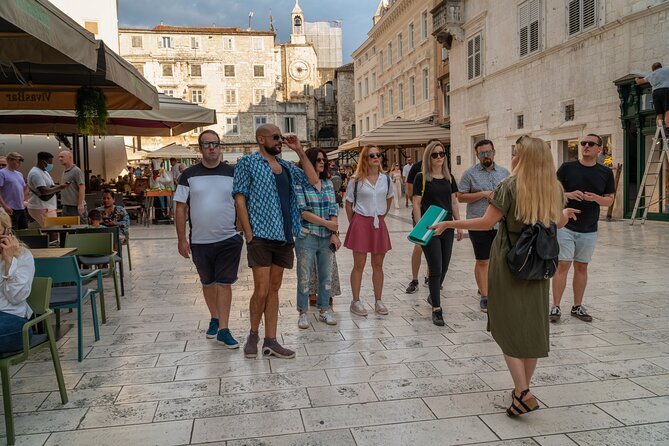
The tour then settles into one of Split’s most iconic zones: the Peristyle of Diocletian’s Palace (about 15 minutes). You’re in the ancient palace space of Roman emperor Diocletian, and you learn which parts were attacked during the war.
This is where the tour becomes truly dual-layered. You’re seeing the Roman plan and architecture, then overlaying the wartime impact on the same physical geometry. That comparison helps you understand why a palace complex, even centuries old, could become part of a modern conflict map.
If you’ve visited Diocletian’s Palace before, you’ll probably recognize the setting but not the wartime interpretation. This stop gives you a reason to look harder—at the structure, the entrances, and how the layout could shape damage and visibility during attacks.
Narodni Trg: the main square as a stage of tragedy
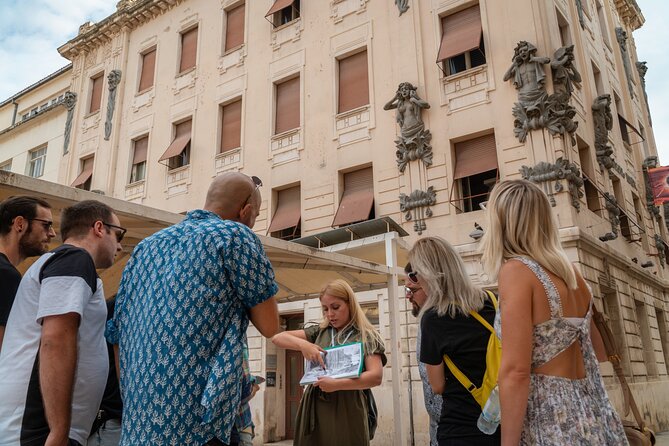
Next is Narodni Trg, the main square of the city (about 15 minutes). This is one of the most important “civic space” stops on the route.
You’ll learn what terrible events took place there during the war. The key value here is the focus on civilian space: a main square is where people gather, wait, buy, talk, and return to normal life. War disrupts all of that, and squares amplify the effect because so many daily activities converge in one spot.
This is also a stop that tends to feel vivid in the mind because squares are hard to forget. If you like history that sticks, this is the place where it does.
Marmontova Ulica: the main street that remembers
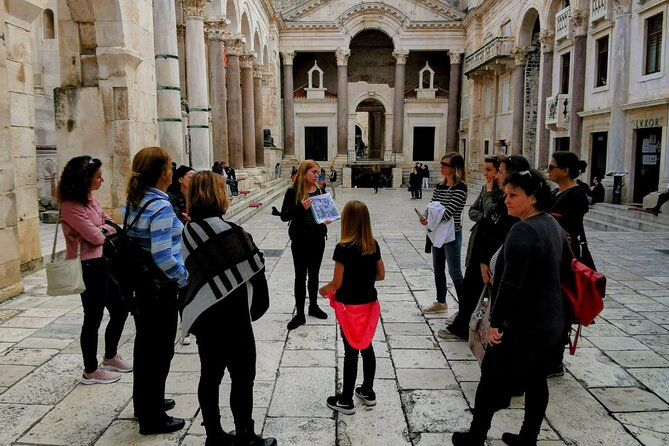
Then you head to Marmontova Ulica, the town’s main street (about 5 minutes). This is brief by design. The guide uses the short time to make a specific point: main streets are often the pathways of both movement and danger in wartime.
Even in a short stop, you get a sense of how the city’s flow—where people naturally travel—can end up intersecting with attacks. It’s less about a single building and more about the city’s rhythm and the way conflict tracks real-world movement.
If you want long photo time, don’t plan on it here. Think of it as a quick, targeted context stop.
Prokurative: prisons and executions where the tour ends
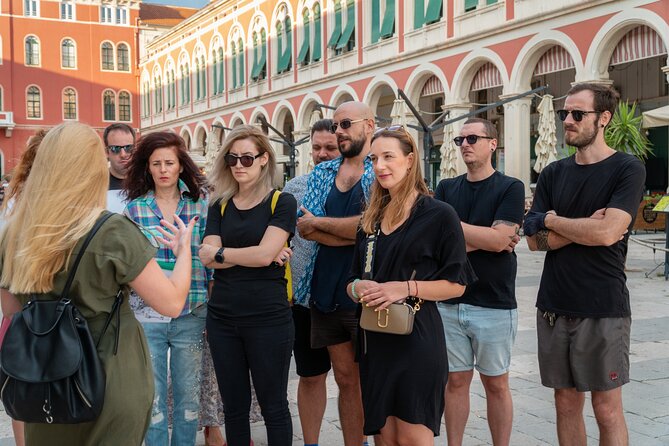
The final stop is Prokurative (about 15 minutes). This is where the tour ends, at/near Trg Republike – Prokurative square.
This last segment brings the focus to prisons and executions during the war. That’s the emotional endpoint of the route, and it gives the earlier bombing stories a grim follow-through: violence doesn’t stop at explosions. It continues in institutions, detentions, and punishments.
It’s a heavy topic, but the benefit is clarity. You understand the arc—from why Split was hit, to how public spaces were affected, to what the consequences meant for people afterward. If you’re the kind of person who prefers your history to have an ending (not a vague “and then things got worse”), you’ll appreciate how this wraps.
What you actually get for $60.01 (and why it’s more than a “walk”)
At $60.01 per person for roughly 2 hours, the price might look midrange for a city tour. The value here isn’t just the route. It’s the combination of a licensed local guide and archival WWII material.
You’re not only hearing a narrative. You’re seeing original WWII-era photographs kept in the Museum of the City of Split archive (they aren’t on permanent display). The tour includes permission to use those images, which is a big deal: it prevents the experience from becoming generic storytelling.
Also, small group size—up to 15 travelers—keeps the tour from feeling crowded or rushed. And because it’s offered in English, you get full access to the nuance without relying on summaries or captions.
If you’ve already visited museums in Split and want context for what you saw, this tour is a smart pairing. If you haven’t, it’s still strong—because it helps you read the city with wartime eyes.
Who this tour suits best (and who should think twice)
This is a great match if you:
- want WWII history grounded in real locations in Split
- enjoy guides who tell stories in a way that connects places to the war timeline
- like comparing then-and-now visuals, especially the archived photos
- appreciate modern context too (Ina Nikolic also updates history to the 90s wars)
It can be less ideal if you:
- want a high-effort “see everything” walking tour with constant movement
- dislike standing while listening for longer chunks
The best strategy is simple: plan your day so you’re not rushing. Give yourself time before or after to walk the promenade and let the new context sink in.
Practical details that affect your comfort
This experience stays near public transport and keeps you in the old center, close to the promenade. Pickup is offered with an option listed at Trajektna luka Split, Obala kneza Domagoja, and the meeting point is also clearly set at Obala Hrvatskog narodnog preporoda 27.
Times vary a bit by day, but expect a tight, curated walk where each stop gets its meaning. It’s also good to know that service animals are allowed.
Since the group cap is 15, you should still arrive with a few minutes to spare so you’re not late to the first “where/why it started” framing.
A local guide who connects the personal to the historical
Ina Nikolic is the reason this tour feels cohesive. The storytelling style isn’t just name-drops and dates. It’s the sense that a local city shaped by many identities has its own wartime narrative.
You’ll also hear about Jewish history within the broader WWII context. That’s a meaningful detail because it expands the scope beyond military events, and helps explain how different communities experienced the period.
If you like history that explains human impacts—not just strategy—this is the right guide for the job.
Should you book this WWII storytelling tour?
Yes, book it if your ideal Split day includes more than landmarks. This is the kind of tour that turns your walking route into a memory. The mix of archival photos, a licensed local guide (Ina Nikolic), and a small group format makes it feel worth the price—not just “another tour.”
Skip it only if you strongly prefer nonstop walking or lighthearted themes. The subject matter is serious, and the pacing is built for listening more than speed.
If you want history that you can see, on the same streets you’ll keep walking after the tour, this is a strong choice.
FAQ
How long is the World War II in Split tour?
It lasts about 2 hours.
What’s included in the tour?
You get a local licensed guide and WWII-era photographs from the Museum of the City of Split archive (not permanently displayed).
Where does the tour start and end?
The tour starts at Obala Hrvatskog narodnog preporoda 27, Split. It ends at Trg Republike – Prokurative square.
Is pickup available?
Pickup is offered, including an option at Trajektna luka Split, Obala kneza Domagoja.
What language is the tour offered in?
The tour is offered in English.
How big is the group?
The maximum group size is 15 travelers.
What is the cancellation policy?
You can cancel for a full refund up to 24 hours before the experience starts. Free cancellation is available, and changes within 24 hours aren’t accepted.
More Tours in Split
- From Split: Krka Waterfalls, Food & Wine Tasting Tour
★ 5.0 · 9,326 reviews - Blue cave, Mamma Mia and Hvar, 5 islands speedboat tour
★ 5.0 · 7,150 reviews - From Split: Krka Waterfalls, Food & Wine Tasting Tour
★ 4.9 · 6,598 reviews - Split/Trogir: Blue Cave, Mamma Mia, Hvar and 5 Island Tour
★ 4.6 · 6,320 reviews - Blue Cave and Hvar Tour – 5 Islands Tour from Split and Trogir
★ 5.0 · 4,815 reviews
More Tour Reviews in Split
- Split: Krka Waterfalls Trip with Boat Cruise and Swimming
★ 4.8 · 10,519 reviews - From Split: Krka Waterfalls, Food & Wine Tasting Tour
★ 5.0 · 9,326 reviews - Blue cave, Mamma Mia and Hvar, 5 islands speedboat tour
★ 5.0 · 7,150 reviews - From Split: Krka Waterfalls, Food & Wine Tasting Tour
★ 4.9 · 6,598 reviews - Split/Trogir: Blue Cave, Mamma Mia, Hvar and 5 Island Tour
★ 4.6 · 6,320 reviews
Still deciding? More Split trips we have been out and reviewed

Tours, compared.
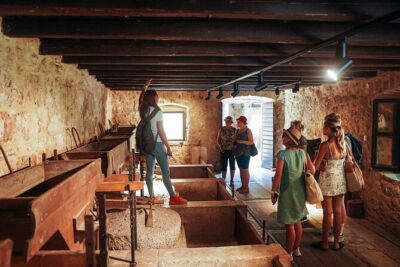 ★ 5.0Krka Waterfalls, Food & Wine Tasting TourFrom $459,326 reviews
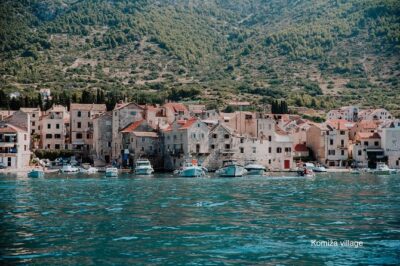 ★ 5.0Blue cave, Mamma Mia and Hvar, 5 islands speedboat tourFrom $1117,150 reviews
★ 4.9Krka Waterfalls, Food & Wine Tasting TourFrom $446,598 reviews
★ 5.0Blue cave, Mamma Mia and Hvar, 5 islands speedboat tourFrom $1117,150 reviews
★ 4.9Krka Waterfalls, Food & Wine Tasting TourFrom $446,598 reviews
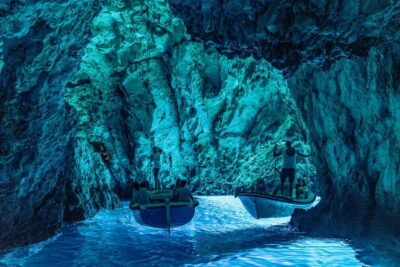 ★ 4.6Blue Cave, Mamma Mia, Hvar and 5 Island TourFrom $1096,320 reviews
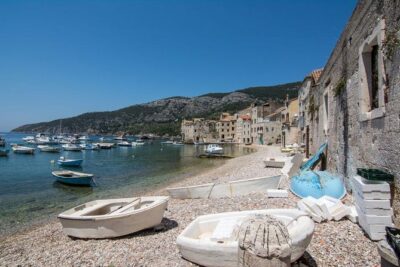 ★ 5.0Blue Cave and Hvar Tour – 5 Islands Tour from Split and TrogirFrom $1204,815 reviews
 ★ 4.9Old Town and Diocletian Palace Walking TourFrom $174,727 reviews
 ★ 5.0Krka Waterfalls Tour, Boat Cruise & SwimmingFrom $324,489 reviews
 ★ 4.8Krka Waterfalls Tour with Boat Cruise & SwimmingFrom $313,913 reviews