
Split rewards you for moving around.
What makes this ticket work is the combo of a hop-on hop-off Red Line for your own pace and two guided panoramic days that take you out to the places most people only see in photos. I especially love the big-deal photo stops like Marjan Hill and the easy way the Red Line drops you near the action along the Riva Promenade. The one drawback to plan around is timing: the Red Line runs on a fixed schedule (and you may wait up to about an hour between buses at your stop), so it’s not ideal if you expect instant jump-ons all day.
You’ll spend 1 to 2 days piecing together Split and the wider area without stress. Just bring comfortable shoes and a sun hat, and expect that some top attractions have entrance fees that are not included.
In This Review
- Key things to know before you ride (Split’s Red, Blue, and Green)
- How this City Sightseeing ticket plays in 1–2 days
- The Red Line: where Riva, Marjan, and the museum meet
- A small but real timing consideration
- Marjan Hill and the Archaeological Museum: two very different kinds of payoff
- Blue Line: Trogir, Salona, and Klis views in a full day
- Green Line: olive oil learning and Secret Dalmatia nature vibes
- Diocletian’s Palace walking tour: the part that makes history feel real
- Audio guide in 10 languages: how to use it without zoning out
- Practical tips: what to bring and how to make the day smoother
- Price and value: where the $31 makes sense and where it doesn’t
- Who this tour suits best in Split
- Should you book Split: City Sightseeing Hop-On Hop-Off with Blue and Green extras?
- FAQ
- What is the duration of the Red Line hop-on hop-off tour?
- How often does the Red Line bus run?
- Is the Blue Line hop-on hop-off?
- When do the Blue Line and Green Line start and end?
- Where do I meet for all tours and the walking tour?
- Which parts of the trip include a guide?
- Are entrance fees included for Klis Fortress, Salona, or Hidden Dalmatia?
- Does the ticket include an audio guide?
- Is hotel pickup included?
Key things to know before you ride (Split’s Red, Blue, and Green)
- Red Line hop-on hop-off lets you repeat the same route in a 24 or 48-hour window and get off at your priority stops.
- Marjan Hill + the Archaeological Museum give you two very different Split vibes: pine-scented viewpoints and ancient-world artifacts.
- Blue Line is not hop-on hop-off, but it’s a smart full day from Trogir to Salona and up to the views from Klis area.
- Green Line is nature + food culture, with olive oil learning and a visit tied to the Klis area (entry fees extra).
- Diocletian’s Palace walk is included, and a great guide can make the palace feel oddly personal—plan to ask questions.
- Audio guide in 10 languages means you can keep walking while still getting the facts, not just the scenery.
Hop aboard: more sightseeing bus loops in Split
- Split: Sunset at Klis Fortress with Sightseeing Bus★ 4.5 · 715 reviews
- 2 Day Pass with Sightseeing Bus★ 4.5 · 137 reviews
- Split: Dalmatia for Nature Lovers Green Line Sightseeing Bus★ 4.1 · 115 reviews
- Red Line: Split Panoramic Tour with Sightseeing Bus★ 4.5 · 54 reviews
How this City Sightseeing ticket plays in 1–2 days
This is a “choose-your-own” ticket for the city center, plus two guided panoramic bus experiences that cover the wider Dalmatian story. Your core tool is the Red Line, a hop-on hop-off loop you can use for 24 or 48 hours. Then you add the Blue Line (history day) and Green Line (nature and olive oil day), both with fixed departure times and no hop-on hop-off flexibility.
All tours start at the same meeting point: Obala Lazareta 3, 21000 Split. You’ll also get headphones and an audio guide with commentary in English, Spanish, Italian, German, Croatian, French, Portuguese, Dutch, Swedish, and Russian. That matters because it turns the bus ride into something you can actually learn from, not just endure.
One practical point: the Red Line runs 10:30am to 5pm, frequency about every 60 minutes, and the full circuit takes about 75 minutes. So for a smooth day, I’d treat the Red Line as your “backbone,” then fill the gaps with short walks between stops.
The Red Line: where Riva, Marjan, and the museum meet
The Red Line is where you’ll feel Split most. It’s open-top, with commentary via audio, and it’s designed so you can hop off at specific stops and take your time. If you’re arriving and want to orient fast, this is the fastest win on the ticket.
Here are the key Red Line stops and what they’re best for:
- Bacvice Beach (sandy beach)
If you want a classic Split moment—easy promenade energy and a beach that feels like part of the city—this is a good hop-off. It also works well as a “reset” stop between sightseeing blocks.
- Riva Promenade area (scenic seaside hub)
The ticket highlights Riva as a prime off-and-on zone with bars and restaurants. I like this area because it’s where you naturally drift back to when you want a meal, people-watching, and a gentle sea breeze.
- Archaeological Museum
This is your “slow down” stop. Instead of just chasing viewpoints, you get a chance to anchor Split in what came before. If you’re the kind of person who enjoys artifacts more than photo spots, this stop earns its place.
- Football Stadium Poljud
This is more of a “see it from the outside” stop unless you already plan to visit something else nearby. Still, it’s a recognizable slice of modern Split culture.
- Gallery Mestrovic
If art museums are your thing, this is a strong option. Even if you don’t go in, it helps you connect dots between neighborhoods.
- St. Francis Church and Monastery and National Theatre
These are good for architecture lovers and for building a tidy walking route after you hop off. The stops help you stitch together city blocks without needing a map every 5 minutes.
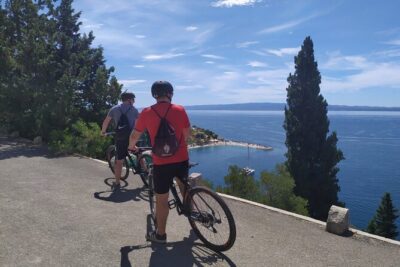
- Marjan Hill (pine forest viewpoints)
This is one of the big draws. You get a pine-forest walk feel up through the hill area, and the payoff is sweeping views back over Split and nearby islands. If your camera is ready, this is where you’ll use it.
Operating hours mean you should time your hop-offs with daylight. In late afternoon, you’ll still get views, but you’ll have fewer choices to jump on again after 5pm.
A small but real timing consideration
One of the things to watch is the schedule. Even though it’s hop-on hop-off, buses run on a set loop about once an hour. If you hop off at a stop and then linger too long, you can end up waiting. The fix is simple: plan short visits at first, then lengthen later if you’re near the next stop.
Marjan Hill and the Archaeological Museum: two very different kinds of payoff
If you only pick two Red Line stops, I’d pick these as your pair. They give you a contrast that feels like Split in one day.
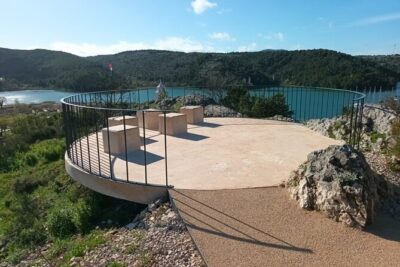
Marjan Hill is the viewpoint and the air. The experience here is practical: you’ll walk among pines and then reach a high point where the city opens up below you. It’s also a good place to slow down and actually look out, not just take photos.
The Archaeological Museum is the “why this place matters” stop. You’re not just looking at buildings and beaches; you’re seeing the material evidence of what happened here over time. Even if you keep it brief, this stop gives context to the sights you’ll see later on the Blue Line.
If you want the best flow: hop off early for Marjan views, then use the bus to reposition toward the museum and other inner-city landmarks.
A few more Split boat days and tours worth a second look


Blue Line: Trogir, Salona, and Klis views in a full day
The Blue Line is a full-day panoramic outing with a fixed schedule. It’s not hop-on hop-off, so you’re committing to the whole arc. The benefit is that you don’t have to coordinate buses or transfers across the region.
Departure is 9:00am and return is 4:00pm. That timeframe is long enough to feel like a real day trip, but not so long that you’ll lose the rest of Split at night.
This is the Blue Line route:
- Apodos Bus Station
- Trogir
- Salona
- Olive Museum
- Secret Dalmatia
- Klis
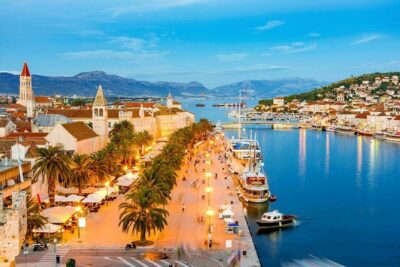
What Trogir adds is a change of scenery fast. I like these stops because they break the “just Split” feeling and connect you to Dalmatia’s bigger map. Trogir is often praised for how it feels like a postcard town, and this route puts it in your day without extra logistics.
Then comes Salona, tied to the ancient Roman world. This is where you’ll get a stronger sense of the ancient setting behind modern cities. Entrance fees for Salona Archaeological Park are not included, so if you want to go in fully, budget for those entries.
The Blue Line also includes stops tied to olive products and regional culture—Olive Museum and Secret Dalmatia. The ticket notes entry fees are not included for the Hidden Dalmatia Visitors Centre (listed as Hidden Dalmatia on the plan). So expect a mix of guided storytelling and optional paid access depending on which stop you want to enter.
Finally, Klis brings the viewpoint angle back. The Klis area is tied to major lookout moments, and entrance to Klis Fortress is not included, so plan on paying extra if you want to go all the way up.
Green Line: olive oil learning and Secret Dalmatia nature vibes
The Green Line is the “slow down and smell the place” day. It also has a fixed schedule and isn’t hop-on hop-off. Departure is 12:45pm and arrival is 4:00pm, which makes it a good follow-up after your morning activities in Split.
This is the Green Line route:
- Apodos Bus Station
- Olive Museum
- Secret Dalmatia
- Klis
What you gain here is a cultural lesson tied to something specific to the region: olives and olive oil. The tour description points out learning how olive oil and essential oils are made, plus a sustainable heritage angle. Even if you’re not a deep foodie, this is a memorable way to understand how Dalmatia produces and protects something tangible.
Secret Dalmatia is positioned as part of the nature and heritage experience. The tour data doesn’t spell out every detail at the stop, but it does make clear it’s a guided panoramic component meant to be eco-friendly.
If you want to go up to the Klis Fortress, know that entry fees to Klis Fortress are not included for the Green and Blue lines. That’s a common pattern across this ticket: your sightseeing time is included, but some of the “pay at the door” attractions are extra.
Diocletian’s Palace walking tour: the part that makes history feel real
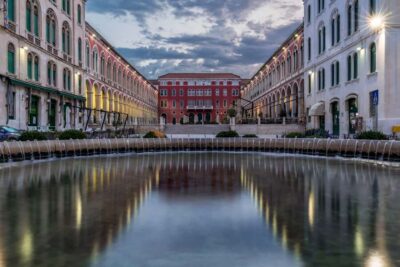
Your ticket also includes a free guided walking tour around Diocletian’s Palace. The departures run at 9:30am, 11:30am, 1:30pm, 4:30pm, and 6pm, with a 1-hour duration. This is a big deal because it’s not just bus commentary. You’re on foot, in the spaces, with a guide who can point out relationships between structures.
The most useful part of a palace walk is that you stop treating the walls as “pretty ruins” and start understanding the function. The tour info even hints at the kind of cross-over questions you can ask—like how Emperor Diocletian built the palace as a retirement home. It also notes that you can ask about pop-culture references, such as where Daenerys’ dragons were kept in Game of Thrones.
In practical terms, I’d plan to bring curiosity. Ask how the palace worked day-to-day, not just when it was built. And if you’re choosing between time slots, pick one that keeps you from rushing right before the bus tours.
Guides can vary by day, but you may hear very strong guiding styles from names like Miron, Ina, or Natasha, depending on your departure.
Audio guide in 10 languages: how to use it without zoning out
The audio system is included and comes with headphones. It’s offered in 10 languages, including English, Spanish, Italian, German, Croatian, French, Portuguese, Dutch, Swedish, and Russian. That coverage matters when you’re sharing a bus with people who can actually follow the same story.
Here’s the trick: use audio at the moment you can see the landmark. If you listen while staring straight ahead, you’ll remember fewer details. Instead, glance up when the bus approaches a stop, then let the audio fill in the “why.”
Also note the open-top buses can mean sun and wind exposure. The tour notes recommend sun protection, and that open-top accessibility can be limited depending on your wheelchair setup. If you’re bringing a mobility device, plan to ask staff onsite about boarding and seating before assuming anything will work like a standard coach.
Practical tips: what to bring and how to make the day smoother
This is one of those tickets that rewards simple preparation. You’re doing hills, walking, and a lot of getting on and off vehicles.
Bring:
- Comfortable shoes (this isn’t a slick flip-flop day)
- Sun hat and sunscreen
- Camera
- Comfortable clothes you can layer
Also keep in mind:
- The Red Line is 10:30am–5pm, with about 60-minute gaps in frequency.
- The Blue Line is 9:00am–4:00pm and not hop-on hop-off.
- The Green Line is 12:45pm–4:00pm and not hop-on hop-off.
- The walking tour does not include entrance fees to attractions, so it’s more about learning the layout than paying for museum time.
Price and value: where the $31 makes sense and where it doesn’t
At about $31 per person, this package can be a strong value for a first-time Split visit, especially because it bundles a lot of movement into one buy: a Red Line hop-on hop-off loop plus two panoramic bus tours and a free guided walk.
Where the value is strongest:
- If you want to see Split’s highlights without planning every bus connection yourself.
- If you like getting views in a structured way—Marjan Hill is a key example.
- If you enjoy context, not just sightseeing, since you get both guided walking and audio commentary.
Where you might spend extra:
- Food and drink are not included.
- Hotel pickup/drop-off is not included.
- Entrance fees are not included for Klis Fortress (Blue and Green), Salona Archaeological Park (Blue), and the Hidden Dalmatia Visitors Centre (Blue). That means you should expect to pay at least some admission if you choose to go inside those sites.
Bottom line: the ticket is priced like a “transport + storytelling” offer with selected paid entries as add-ons. If you’re willing to pay a few entrances to get the full experience at the top stops, the overall cost tends to feel reasonable.
Who this tour suits best in Split
This set fits you best if:
- You’re visiting for 1–2 days and want your time packed but not chaotic.
- You like a mix of sea views, city landmarks, and real-world history.
- You’d rather rely on scheduled routes than figure out transit day by day.
- You want a guided explanation at Diocletian’s Palace without paying separately for the walk.
It may be less ideal if:
- You hate waiting. The Red Line’s hop-on flexibility is real, but buses run around once an hour.
- You only want museums and paid attractions, because several major stops have entrance fees excluded.
- You’re planning to maximize every minute after the Red Line ends at 5pm.
Should you book Split: City Sightseeing Hop-On Hop-Off with Blue and Green extras?
I’d book it if you want an efficient, low-planning way to cover Split’s core sights and the wider Dalmatian highlights in a short visit. The strongest selling points are the Red Line’s mix of seaside and hill views, the Blue Line day-trip route through Trogir and ancient Salona, and the fact that you get a guided Diocletian’s Palace walk as part of the package.
If you’re the type who plans tightly around crowds and exact time windows, just remember that the Red Line runs on a schedule and you may wait between buses. Still, with a little pacing, this ticket gives you a smart overview of Split and enough variety to keep it from feeling repetitive.
FAQ
What is the duration of the Red Line hop-on hop-off tour?
The Red Line tour duration is about 75 minutes per loop.
How often does the Red Line bus run?
The Red Line buses run about every 60 minutes, operating from 10:30am to 5pm.
Is the Blue Line hop-on hop-off?
No. The Blue Line is a panoramic bus tour with a set route and times.
When do the Blue Line and Green Line start and end?
The Blue Line departs at 9:00am and returns at 4:00pm. The Green Line departs at 12:45pm and arrives at 4:00pm.
Where do I meet for all tours and the walking tour?
The meeting point for the bus tours and the walking tour is Obala Lazareta 3, 21000 Split.
Which parts of the trip include a guide?
You get a guided walking tour around Diocletian’s Palace included with your ticket. The Blue and Green lines also include an expert guide on board as part of the panoramic experience.
Are entrance fees included for Klis Fortress, Salona, or Hidden Dalmatia?
No. Entry fees are not included for Klis Fortress (Blue and Green lines), Salona Archaeological Park (Blue Line), and the Hidden Dalmatia Visitors Centre (Blue Line).
Does the ticket include an audio guide?
Yes. You get audio guide commentary in 10 languages along with headphones.
Is hotel pickup included?
No. Hotel pickup and drop-off are not included.
More Tours in Split
- From Split: Krka Waterfalls, Food & Wine Tasting Tour
★ 5.0 · 9,326 reviews - Blue cave, Mamma Mia and Hvar, 5 islands speedboat tour
★ 5.0 · 7,150 reviews - From Split: Krka Waterfalls, Food & Wine Tasting Tour
★ 4.9 · 6,598 reviews - Split/Trogir: Blue Cave, Mamma Mia, Hvar and 5 Island Tour
★ 4.6 · 6,320 reviews - Blue Cave and Hvar Tour – 5 Islands Tour from Split and Trogir
★ 5.0 · 4,815 reviews
More Tour Reviews in Split
- Split: Krka Waterfalls Trip with Boat Cruise and Swimming
★ 4.8 · 10,519 reviews - From Split: Krka Waterfalls, Food & Wine Tasting Tour
★ 5.0 · 9,326 reviews - Blue cave, Mamma Mia and Hvar, 5 islands speedboat tour
★ 5.0 · 7,150 reviews - From Split: Krka Waterfalls, Food & Wine Tasting Tour
★ 4.9 · 6,598 reviews - Split/Trogir: Blue Cave, Mamma Mia, Hvar and 5 Island Tour
★ 4.6 · 6,320 reviews
Sightseeing Loops of Split
- Split: Sunset at Klis Fortress with Sightseeing Bus
★ 4.5 · 715 reviews - Split: Hop-On Hop-Off Sightseeing Red Line City Tour
★ 4.2 · 319 reviews - 2 Day Pass with Sightseeing Bus
★ 4.5 · 137 reviews - Split: Dalmatia for Nature Lovers Green Line Sightseeing Bus
★ 4.1 · 115 reviews - Red Line: Split Panoramic Tour with Sightseeing Bus
★ 4.5 · 54 reviews
Still deciding? More Split trips we have been out and reviewed
Split Sightseeing Bus Tours, compared.
 ★ 4.5Sunset at Klis Fortress with Sightseeing BusFrom $17715 reviews
 ★ 4.2Hop-On Hop-Off Sightseeing Red Line City TourFrom $29319 reviews
 ★ 4.52 Day Pass with Sightseeing BusFrom $38137 reviews
 ★ 4.1Dalmatia for Nature Lovers Green Line Sightseeing BusFrom $25115 reviews
 ★ 4.5Red Line: Split Panoramic Tour with Sightseeing BusFrom $2654 reviews
 ★ 4.5Sunset Klis Fortress Tour From Split with Sightseeing busFrom $1739 reviews
 ★ 4.5Green Line Hop-On Hop-Off – Dalmatia Nature TourFrom $2413 reviews
 ★ 4.8Open Panoramic Bus Tour +Guided Walking Tour in 10 languagesFrom $389 reviews
Browse the lists this tour appears in