
Reviewed · TROGIR OLD TOWN TRIPS
Split and Trogir SMALL GROUP Tour with Cruise Ship Drop Off
One palace, two towns, one tight schedule. This Split and Trogir small-group tour turns a short port day into a clear, walkable history lesson. You start at Split’s Golden Gate, then head to Trogir for Little Venice streets, a fortress viewpoint, and some breathing room to explore on your own.
What I like most is the way the guide connects the sights: Roman spaces in Split still feel physical, not just described. I also love the Trogir pacing, because you get a real guided walk through the UNESCO Old Town plus a full 1 hour of free time to wander without rushing.
The main drawback to consider is practical: it’s mostly on foot, and you’ll need comfortable shoes. Also, entrance tickets aren’t included, so plan on exterior viewing unless you decide to buy tickets separately.
In This Review
- Key Things to Know Before You Go
- Why Split and Trogir Works So Well in 5 Hours
- Price and Logistics: What You’re Actually Paying For at $58
- Finding the Group: Golden Gate and the Blue Umbrella
- Walking Split’s Diocletian’s Palace: Roman Power You Can Feel
- A note on interiors and tickets
- The Cathedral Stop: Saint Domnius and the Roman-to-Christian Story
- The Van Transfer: Don’t Rush It, Use It to Reset
- Trogir Old Town: Little Venice and UNESCO Streets
- St. Lawrence Portal: When One Doorway Steals the Show
- City Loggia and Kamerlengo Fortress: Views and Civic Power
- The 1-Hour Free Time in Trogir: How to Spend It Smart
- Guide Quality and the Small-Group Advantage
- Comfort Rules You Should Actually Plan Around
- Who This Tour Suits Best (And Who Might Feel Frustrated)
- Should You Book This Split and Trogir Small Group Tour?
- FAQ
- How long is the Split and Trogir small group tour?
- Where do we meet for the tour?
- Is pickup available?
- Are entry tickets included?
- How much free time do I get in Trogir?
- Where is the drop-off in Split?
- Is the tour wheelchair accessible?
- What is the cancellation policy?
Key Things to Know Before You Go
- Golden Gate meeting spot: Meet at Diocletian’s Palace northern entrance, below the Gregory of Nin statue, look for the blue umbrella.
- Short, guided Split walkthrough: You’ll see major palace highlights, including Peristil Square and the Cathedral of Saint Domnius area.
- Easy transfer built in: Van ride between towns is included (about 40–45 minutes each way), so you’re not coordinating transport.
- UNESCO Old Town in Trogir: The walk focuses on preserved planning and the old-stone street grid people still recognize today.
- Trogir free time is real time: You get about 1 hour to explore independently after the guided portion.
- No entrance tickets included: Expect exterior access; if you want interiors, you may need separate tickets.
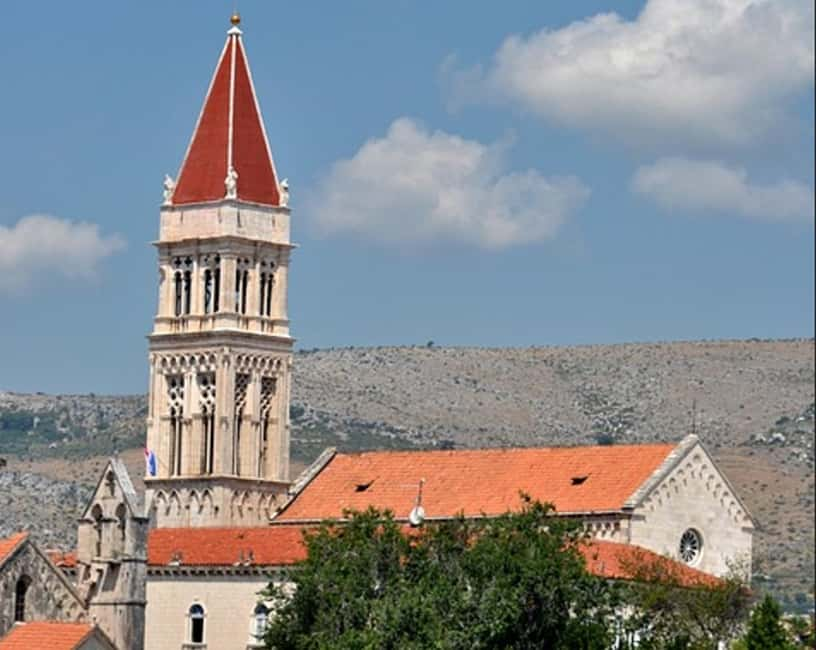
Stone streets of Trogir, more trips from Split
- Split/Trogir: Blue Cave, Mamma Mia, Hvar and 5 Island Tour★ 4.6 · 6,320 reviews
- Blue Cave and Hvar Tour – 5 Islands Tour from Split and Trogir★ 5.0 · 4,815 reviews
- Krka Waterfalls Day Tour with Boat Ride from Split and Trogir★ 5.0 · 2,134 reviews
- Krka Waterfalls tour with Trogir Walking tour and Krka panoramic boat cruise★ 5.0 · 1,659 reviews
Why Split and Trogir Works So Well in 5 Hours
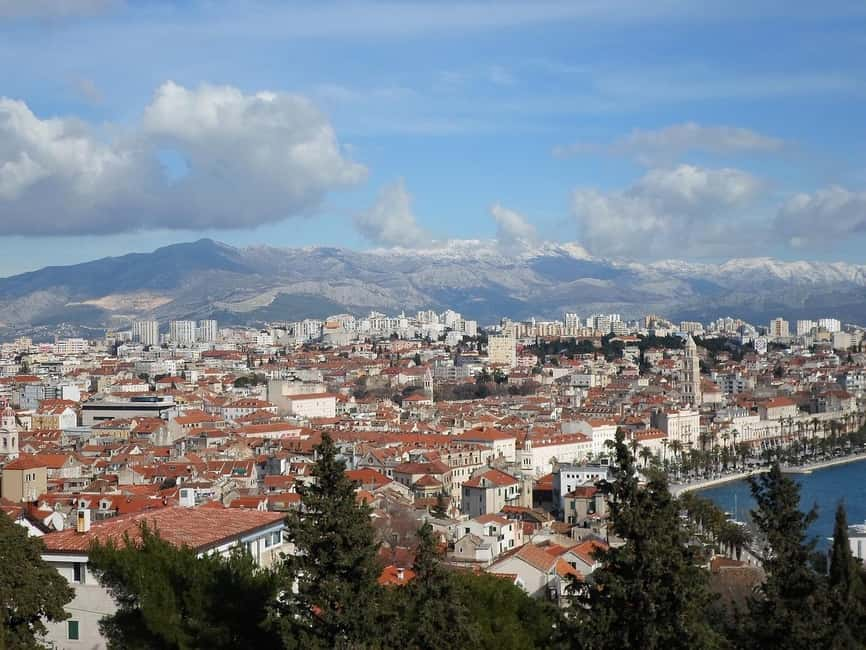
If you’ve ever faced the problem of one cruise day and too many must-sees, this itinerary is the antidote. Split gives you the big, iconic core—Roman scale and layout you can walk through—then Trogir adds a compact UNESCO Old Town that feels preserved rather than rebuilt.
The value here is time management. Instead of scattering you across a dozen stops, the route clusters sites by geography: palace spaces in Split, then a concentrated medieval/UNESCO loop in Trogir. You end with enough unstructured time to actually enjoy the place, not just collect photos.
You’ll also appreciate that the experience is designed around a guide-led pace. The best parts of both towns are the details: doorways, courtyards, street plans, and what changed over centuries.
Price and Logistics: What You’re Actually Paying For at $58
At $58 per person for about 5 hours, you’re paying for three things: guided walking, local licensing, and the included van transfer. That matters because you’re not just buying sightseeing—you’re buying interpretation and a smooth connection between two distant old towns.
If you tried to DIY this with limited time, your costs would likely creep up fast: last-minute transport, taxi coordination, and paying for guided explanation separately. Here, the guide does the linking work—explaining why a doorway matters, what a courtyard suggests, and how the Roman-to-Christian story plays out in the same buildings.
One small trade-off: the itinerary leans on walking and exterior viewing. If you’re the type who needs to go inside every site, you may feel you’re “stopping short.” But if you want the lay of the land and the story behind it, this price-to-time ratio is strong.
Finding the Group: Golden Gate and the Blue Umbrella
Your tour meeting point is easy to miss if you don’t know what you’re looking for. Meet in front of Diocletian’s Palace Golden Gate, the grand northern entrance, and the meeting point is just below the Gregory of Nin statue. Look for the blue umbrella.
This matters in Split because the palace complex is visually busy—streets, arches, and crowds blend together. Starting at the Golden Gate is a smart way to get oriented fast. You’ll know exactly where you are before you start walking deeper into the palace world.
If you have a pickup option, it depends on the selected option, but the default meeting point is fixed. So if you’re arriving on foot from a port area, build in a few minutes to confirm the correct spot.
Walking Split’s Diocletian’s Palace: Roman Power You Can Feel
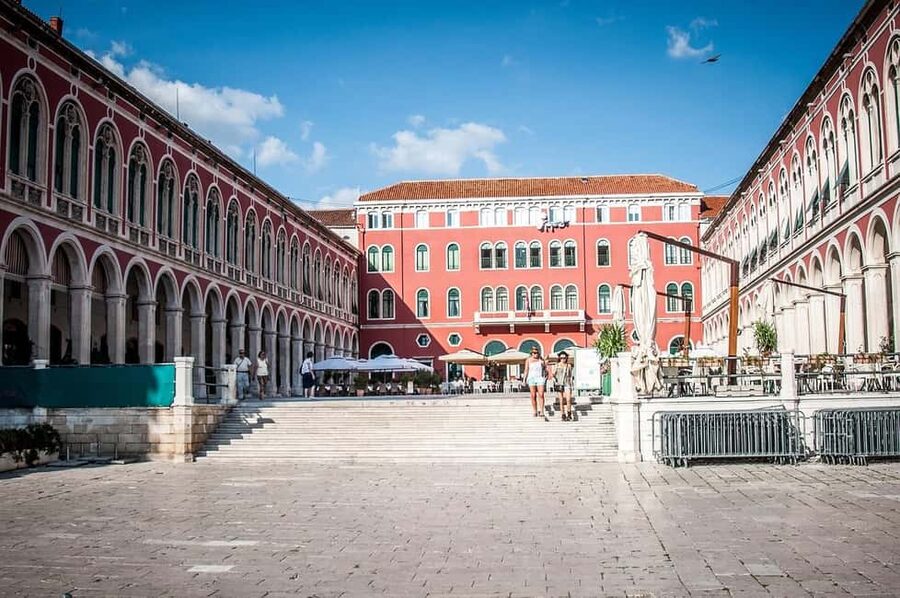
The heart of the Split portion is a guided walk through Diocletian’s Palace. You start at the Golden Gate, then move through the core palace spaces where the Roman emperor’s presence is still readable in stone.
One stop that helps everything click is Peristil Square, the main courtyard. Even if you’ve seen photos, standing there is different—you understand scale by seeing the open space and how the architecture frames movement.
From there, you step into the Vestibul, described as striking with an open dome and excellent acoustics. That acoustics detail isn’t just a trivia note. It’s the kind of feature a guide can explain in a way that makes you notice how Romans engineered public space for human experience.
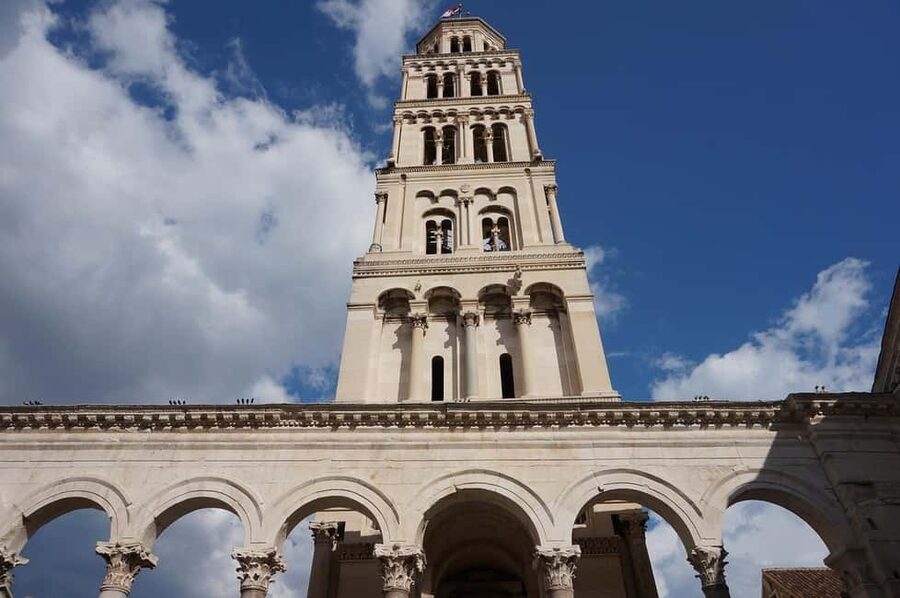
Next, you’ll learn about the Cathedral of Saint Domnius. It’s a preserved Roman mausoleum that became a cathedral—one of those “layers of history” situations where the building’s original purpose still shapes how it feels today.
And then there are the Basement halls, noted as one of the best preserved Roman sites in the world. Even without full-on “tourist museum” vibes, underground spaces change your sense of time. You get a different feel for how a palace functioned beyond the open courtyard.
A few more Split boat days and tours worth a second look


A note on interiors and tickets
Entry tickets aren’t included. That means your access is likely focused on guided exterior viewing and areas that don’t require paid entry. If you strongly prefer interiors, it’s worth planning to buy tickets separately when possible.
The Cathedral Stop: Saint Domnius and the Roman-to-Christian Story
The Cathedral of Saint Domnius isn’t just another church stop. It’s a shortcut to understanding why Split’s old center survived and adapted.
The key idea you’ll hear from the guide is continuity: a Roman mausoleum reused as a cathedral. That’s an important difference from a “new church built on cleared land.” Here, you’re reading history inside the same structure.
For you, that means the guide’s job becomes less about listing names and more about pointing out how the building’s original Roman logic still shows up in how people move and gather. If you like architecture that tells a story, this is one of the better uses of your time.
The Van Transfer: Don’t Rush It, Use It to Reset
After your first half in Split, you’ll switch modes and ride in a comfortable transfer to Trogir. The timing is built for a port-day rhythm—around 40 to 45 minutes.
This segment is valuable even if you’re eager to start walking right away. You get a reset between crowds and cobblestones. It also gives the guide time to keep the narrative flowing, so you arrive in Trogir already knowing what to look for.
One practical reminder: you can’t bring luggage or large bags. If you’re on a cruise, that’s especially relevant. Travel light so you’re not managing bulky stuff while walking.
Trogir Old Town: Little Venice and UNESCO Streets
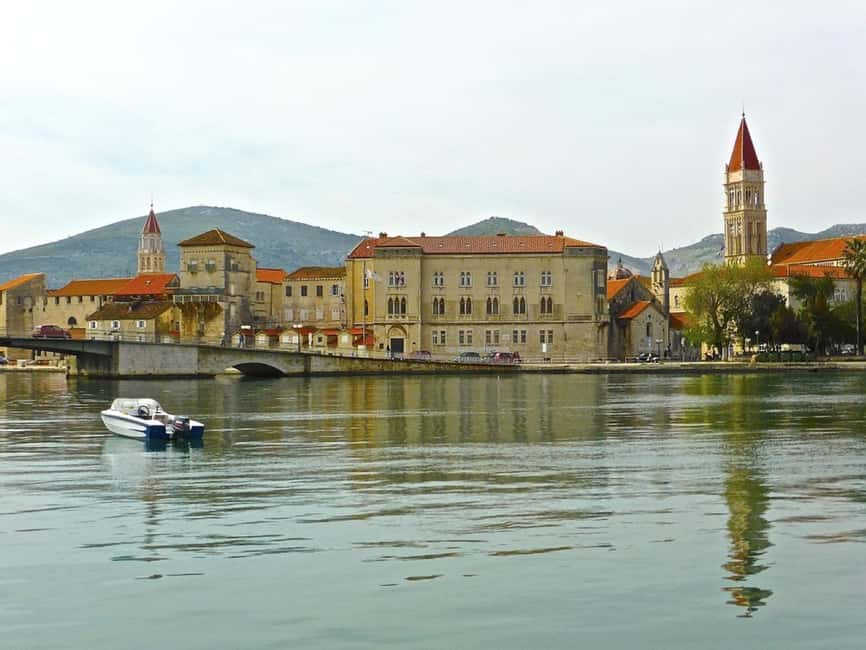
Once you arrive, Trogir is a different kind of experience. If Split feels big and monumental, Trogir feels compact and precise.
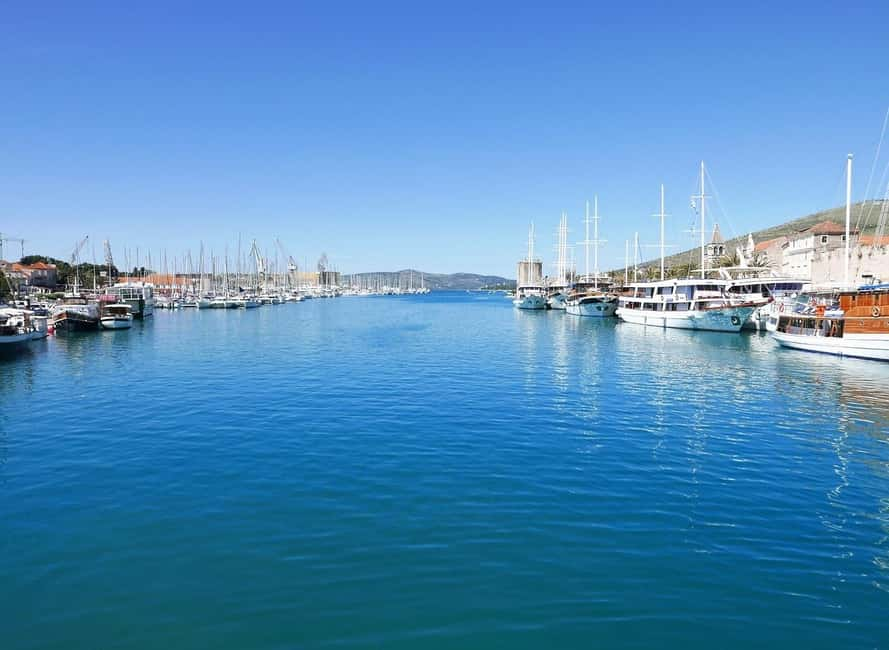
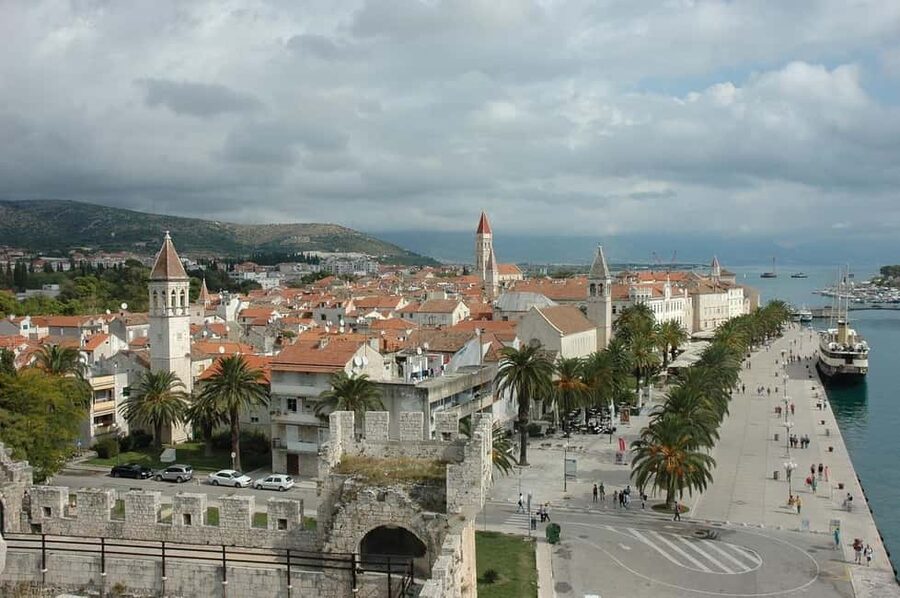
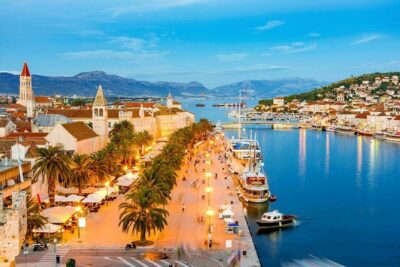
You’ll get a guided walk through UNESCO-listed Old Town, often described as Little Venice. The label makes sense once you start moving through narrow stone-paved streets and see how the waterfront presence shapes daily life and movement.
A standout idea you’ll learn is Greek urban planning that has remained unchanged for centuries. That doesn’t sound exciting on paper, but on your feet it becomes obvious. Street lines, corners, and block layout help you understand why the old town looks the way it does—and why it still feels coherent.
St. Lawrence Portal: When One Doorway Steals the Show
In Trogir, one of the best-known highlights is the Cathedral of St. Lawrence, especially its famous Romanesque portal. A Romanesque portal is the kind of detail that rewards close looking.
This is where a good guide earns their pay. You’re not just told what it is—you’re taught what to notice. The shapes, the carving, and how the portal fits into the larger cathedral setting.
Because tickets aren’t included, you may mostly experience these features from the outside, but portals are exterior-focused anyway. That makes this tour format a good match.
City Loggia and Kamerlengo Fortress: Views and Civic Power
After the cathedral area, your walk continues to City Loggia Trogir. A loggia is civic architecture: a place tied to community, not just worship. With a guide’s storytelling, it helps you read the town beyond churches.
Then you head to Kamerlengo Fortress, where you get sweeping views of the Adriatic Sea. This is your “stop and look” moment—useful for two reasons. First, the views are worth it. Second, you can see how Trogir fits into the coast, which makes the old-town planning feel even more real.
This part can also help you pace your energy. If you’re traveling with limited time, a fortress viewpoint gives payoff with less time on your feet than additional deep street wandering might.
The 1-Hour Free Time in Trogir: How to Spend It Smart
After the guided loop, you’ll have about 1 hour of free time in Trogir. That hour is plenty for a focused wander if you don’t try to do everything.
Here’s how I’d use it:
- Re-walk your favorite streets slowly and take photos from slightly different angles.
- If you want a cafe break, pick a spot near where you’re already standing so you don’t lose time crossing the town.
- If there’s a shop or square your guide mentioned, this is when you go for it while the town still feels familiar.
One practical thought: since exterior visits are the baseline, your free time is ideal for atmosphere—people watching, window shopping, and just letting the place soak in.
Guide Quality and the Small-Group Advantage
This is where the reviews really line up: the guides bring stories, not just facts. I’ve seen strong examples like Ivana (with informative delivery and a side of humor), Mia (known for being knowledgeable and witty), and Slavko (praised for history knowledge and helpful, courteous explanations).
In practice, that kind of guide style changes how fast you absorb the town. You don’t need to be an architecture expert to enjoy the details. If the guide explains what you’re seeing in plain language, you start recognizing patterns on the next street corner.
Also, this tour is offered as small-group, and private group availability exists. If you’re the type who likes questions and slower pacing, a private option can be a good fit.
Comfort Rules You Should Actually Plan Around
A few “make or break” details are worth respecting:
- Bring comfortable shoes. Both towns rely on walking.
- Plan comfortable clothes for Mediterranean weather.
- No luggage or large bags.
- It’s not suitable for wheelchair users.
Also, because drop-off options include Trajektna Luka Split and Split, you’ll want to be ready to continue your day immediately after the tour ends—especially if you’re catching a ship later.
Who This Tour Suits Best (And Who Might Feel Frustrated)
This tour is a great match if you:
- Want a focused history walk without planning every step
- Prefer a guided interpretation of major monuments
- Have limited time in port and want Trogir without DIY stress
- Like architecture and want to “read” buildings with a guide
It might feel frustrating if you:
- Want long free time in either town
- Expect fully ticketed interior access everywhere
- Need wheelchair accessibility
For most people, the mix of guided walking plus Trogir downtime hits a sweet spot.
Should You Book This Split and Trogir Small Group Tour?
If your priority is high-impact sightseeing in a short window, I’d book it. The itinerary is efficient: Split’s palace core gives you Roman context, then Trogir’s UNESCO old-town streets add a contrasting feel without forcing you to travel far or figure out logistics.
The best reason to choose this specific format is the combination of licensed guiding + included transfers. You’re not just moving between two places; you’re learning how to see them.
Before you hit confirm, ask yourself one question: do you mainly want the stories and the big visual moments, or do you need nonstop interior access with paid entry? If you’re okay with exterior-focused viewing and you enjoy a guided pace, this $58, 5-hour setup is good value.
FAQ
How long is the Split and Trogir small group tour?
The tour duration is 5 hours.
Where do we meet for the tour?
You meet in front of Diocletian’s Palace northern entrance called the Golden Gate, just below the Gregory of Nin statue. Look for the blue umbrella.
Is pickup available?
Pickup is optional. It depends on the selected option.
Are entry tickets included?
No. Entry tickets are not included, and the tour is listed as exterior visit only.
How much free time do I get in Trogir?
You get free time in Trogir for 1 hour.
Where is the drop-off in Split?
The drop-off includes Trajektna Luka Split and Split, and drop-off can be anywhere you want.
Is the tour wheelchair accessible?
No. It’s not suitable for wheelchair users.
What is the cancellation policy?
You can cancel up to 24 hours in advance for a full refund.
More Tours in Split
- From Split: Krka Waterfalls, Food & Wine Tasting Tour
★ 5.0 · 9,326 reviews - Blue cave, Mamma Mia and Hvar, 5 islands speedboat tour
★ 5.0 · 7,150 reviews - From Split: Krka Waterfalls, Food & Wine Tasting Tour
★ 4.9 · 6,598 reviews - Split/Trogir: Blue Cave, Mamma Mia, Hvar and 5 Island Tour
★ 4.6 · 6,320 reviews - Blue Cave and Hvar Tour – 5 Islands Tour from Split and Trogir
★ 5.0 · 4,815 reviews
More Tour Reviews in Split
- Split: Krka Waterfalls Trip with Boat Cruise and Swimming
★ 4.8 · 10,519 reviews - From Split: Krka Waterfalls, Food & Wine Tasting Tour
★ 5.0 · 9,326 reviews - Blue cave, Mamma Mia and Hvar, 5 islands speedboat tour
★ 5.0 · 7,150 reviews - From Split: Krka Waterfalls, Food & Wine Tasting Tour
★ 4.9 · 6,598 reviews - Split/Trogir: Blue Cave, Mamma Mia, Hvar and 5 Island Tour
★ 4.6 · 6,320 reviews
Trogir, Stone by Stone
- Split/Trogir: Blue Cave, Mamma Mia, Hvar and 5 Island Tour
★ 4.6 · 6,320 reviews - Blue Cave and Hvar Tour – 5 Islands Tour from Split and Trogir
★ 5.0 · 4,815 reviews - Krka Waterfalls Day Tour with Boat Ride from Split and Trogir
★ 5.0 · 2,134 reviews - Krka Waterfalls tour with Trogir Walking tour and Krka panoramic boat cruise
★ 5.0 · 1,659 reviews - Krka National Park Tour with tour Guide & Wine tasting from Split & Trogir
★ 5.0 · 1,625 reviews
Still deciding? More Split trips we have been out and reviewed
Trogir Old Town Trips, compared.
 ★ 4.6Blue Cave, Mamma Mia, Hvar and 5 Island TourFrom $1096,320 reviews
 ★ 5.0Blue Cave and Hvar Tour – 5 Islands Tour from Split and TrogirFrom $1204,815 reviews
 ★ 5.0Blue cave, Mama Mia and Hvar, 5 island speedboat tour from TrogirFrom $1112,861 reviews
 ★ 5.0Krka Waterfalls Day Tour with Boat Ride from Split and TrogirFrom $322,134 reviews
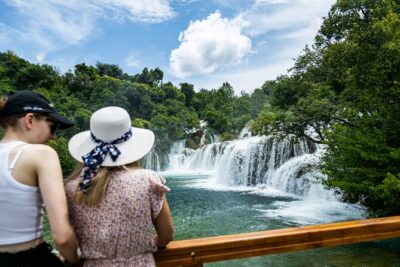 ★ 5.0Krka Waterfalls tour with Trogir Walking tour and Krka panoramic boat cruiseFrom $481,659 reviews
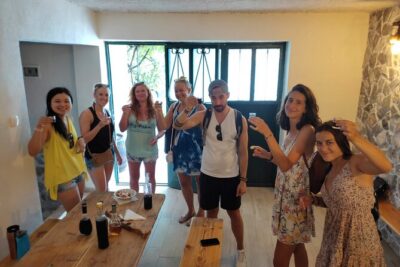 ★ 5.0Krka National Park Tour with tour Guide & Wine tasting from Split & TrogirFrom $501,625 reviews
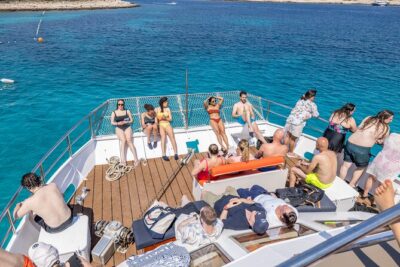 ★ 4.5Hvar, Brač & Pakleni islands cruise with lunch & drinks from Split & TrogirFrom $951,452 reviews
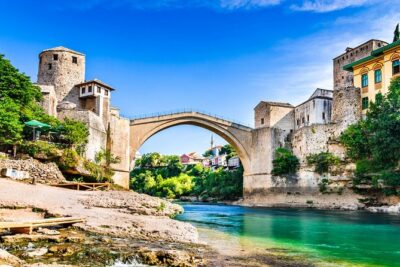 ★ 5.0Mostar and Herzegovina Tour with Kravica Waterfall from Split & TrogirFrom $841,217 reviews
Browse the lists this tour appears in