
Reviewed · TOURS
Small-Group Communist Tour of Split – Boutique group tour
Split has a quieter past.
This small-group Communist tour of Split focuses on the city’s Yugoslav era through WWII context, Tito-era planning, and the architecture that still shapes daily life. I especially like how you get private transportation so you can cover scattered sites without burning your day, and how the guide brings the subject down to earth with local, classroom-style explanations from historian/teacher Boris. The main drawback is simple: the theme is political and historically heavy, so it may not be your best match if you’re only chasing beach-and-palace Split.
If you want more than the usual old-town highlights, this tour gives you a structured route through places most visitors skip. You also get one small comfort perk (a cold soft drink) and a handy mobile ticket, which makes the logistics feel easy.
In This Review
- Why This Communist Tour Works Better Than You’d Expect
- Key Highlights You’ll Actually Feel During the Tour
- Meeting Point and Timing: Start at Trg Franje Tuđmana
- Stop 1: Trg Franje Tuđmana and the WWII Setup
- Stop 2: Poljud Stadium and the Yugoslav Socialist Touch
- Stop 3: Koteks and the Idea of a Communist Shopping Mall
- Stop 4: Split 3 Neighborhood Planning and Tito-Era Ideals
- Final Stop: Split Predgrađe and the Armored Train Symbol
- The Private Vehicle Advantage (and Why It Changes the Experience)
- Included Perks That Keep It Feeling Smooth
- Who This Tour Is Best For
- Price and Value: $108.14 for a Themed, Guided, and Transported Day Segment
- Quick Practical Tips Before You Go
- Should You Book This Communist Tour of Split?
- FAQ
- How long is the Communist tour of Split?
- What time does the tour start?
- Where does the tour meet, and where does it end?
- Is the tour in English?
- How many people are in the group?
- Are there admission tickets for the stops?
- What’s included in the price?
- What if the weather is poor?
- What about cancellation?
Why This Communist Tour Works Better Than You’d Expect
This is not a vague “history walk.” It’s a 3 hours 30 minutes, English-language tour built around specific stops that show how communist Yugoslavia tried to shape life in Split—homes, sports culture, shopping habits, education/health ideals, and the political story behind them.
The biggest value is the pairing: a solid historical setup (WWII and the formation of the communist state) plus tangible, easy-to-see places (stadium, housing blocks, a shopping-center concept, and even a symbolic armored train). If you like understanding how politics turns into everyday buildings and routines, you’ll feel right at home here.
One more practical plus: the group tops out at 8 people. That keeps the pace human and the Q&A possible, even with a tour topic that can get complicated quickly.
Weighing up your options around Split? These are the trips we rated highest.
- Split: Krka Waterfalls Trip with Boat Cruise and Swimming★ 4.8 · 10,519 reviews
- From Split: Krka Waterfalls, Food & Wine Tasting Tour★ 5.0 · 9,326 reviews
- Blue cave, Mamma Mia and Hvar, 5 islands speedboat tour★ 5.0 · 7,150 reviews
- From Split: Krka Waterfalls, Food & Wine Tasting Tour★ 4.9 · 6,598 reviews
Key Highlights You’ll Actually Feel During the Tour
- A local historian/teacher guide (Boris) who explains Yugoslavia with clarity, not slogans
- Private vehicle to reach dispersed sites without long waits or multiple transfers
- Architecture you can read: Poljud Stadium and Yugoslav socialist design in plain sight
- Split 3 neighborhood planning tied to housing, work, education, health, social life, and Tito’s dictatorship
- A WWII-to-1990s thread that ends with the armored train symbol at Kopilica railway station
- Free stops and a cold soda/pop that keep the experience comfortable and low-cost in between
Meeting Point and Timing: Start at Trg Franje Tuđmana
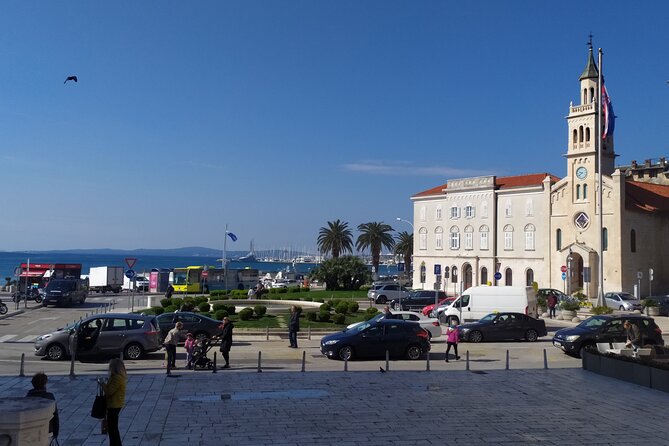
The tour starts at 9:00 am at the bus stop area near Autobusno stajalište Sv. Frane, Trg Franje Tuđmana (21000 Split). It’s a good meetup spot if you’re already oriented in central Split, and it’s noted as near public transportation.
From the start, you’re guided into the theme: you’ll get an introduction to Split’s communist story with emphasis on the WWII events in Split and Yugoslavia that led to the birth of the new communist state. You’ll even see images of damage done in Split during the war. That sets expectations early: this tour is about cause-and-effect, not just aesthetics.
Logistics are straightforward. Your ticket is mobile, you’ll be in a small group, and you’ll return back to the meeting point at the end.
Stop 1: Trg Franje Tuđmana and the WWII Setup
This first stop is about giving you the timeline fast. The guide introduces major WWII happenings in Split and Yugoslavia and explains how those events fed into the formation of the communist state that followed.
I like this approach because it prevents the rest of the tour from feeling like random architecture trivia. When you later look at Yugoslav-era stadium design or Split 3’s planned neighborhood layout, you’ll understand the ideology behind what you see.
The “watch and listen” format works well here because you’re getting context before moving to outdoor stops. You also get a visual sense of what wartime damage meant for the city. Even if you’ve read a little about Balkan WWII history before, this kind of local framing makes the story feel specific to Split.
Stop 2: Poljud Stadium and the Yugoslav Socialist Touch
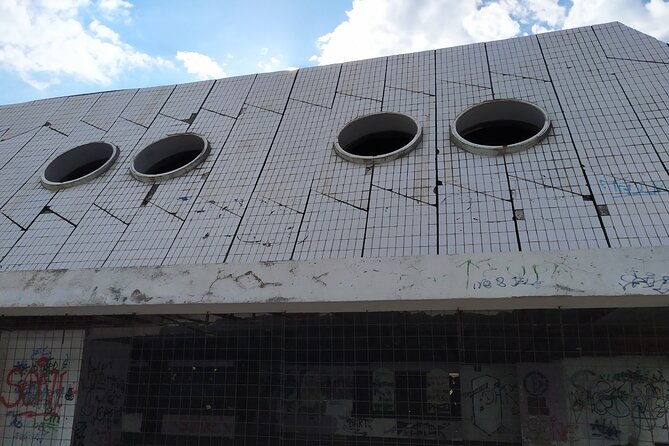
You’ll do a short panoramic stop focused on Poljud Stadium, described as one of Split’s symbols. The timing is tight here (about 10 minutes), but the explanation is the point: the stadium was built to host the biggest sport happening in Yugoslavia at that time, the Mediterranean Games.
What I found useful is how the guide connects the stadium to global architectural recognition. Poljud Stadium is mentioned as having been featured as part of a Yugoslavia architecture exhibition at MoMA in New York. That matters because it reframes the stadium: you’re not just seeing a local sports venue, you’re seeing an example of Yugoslavia’s self-presentation through architecture.
Next to that, you’ll also be shown the China Wall, described as the widest existing building in Split and connected to Yugoslav socialist architecture. This is the kind of detail you’d probably miss on your own, even if you knew the broader name Poljud.
Possible consideration: this is a quick stop. If stadiums are your main interest, you may want extra time elsewhere afterward to re-see the area on your own.

Stop 3: Koteks and the Idea of a Communist Shopping Mall
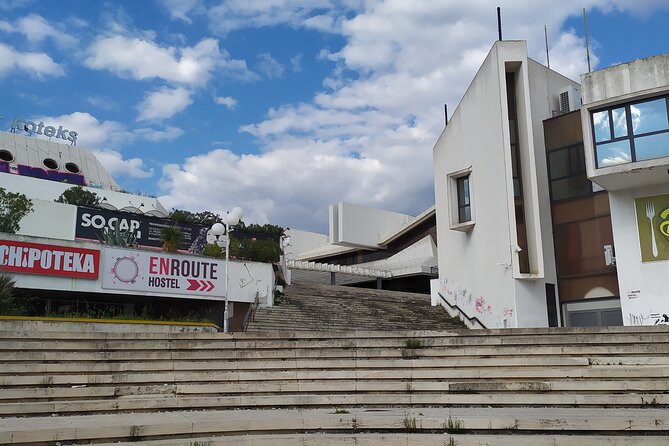
At the Koteks shopping center area, you’ll walk around what’s described as the first shopping mall in Yugoslavia. The guide explains what “modern” shopping meant in a communist state—and why that model had a limited shelf life.
You’ll also hear about consumer life in Yugoslavia, with goods described as often sitting between an open-to-the-West feel and a more closed Eastern supply system. The story here isn’t just about what people could buy; it’s about the daily creativity required to find items anyway.
This stop is one of the reasons I think the tour feels more human than a pure monument tour. Architecture is still there, but so are the practical realities: what people could get, what they struggled with, and how life adapted inside a system.
Time-wise, plan on about 30 minutes here. You’ll walk, listen, and get that sense that everyday routines were being shaped by political/economic design.
Stop 4: Split 3 Neighborhood Planning and Tito-Era Ideals
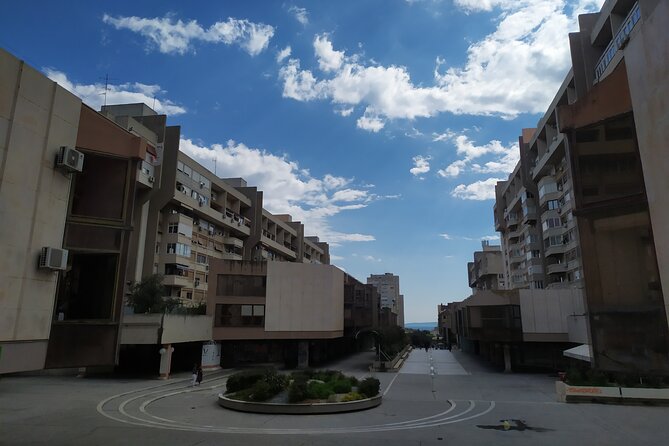
This is the long stop of the day—about 1 hour 10 minutes—and it’s the heart of the tour’s political-architecture blend.
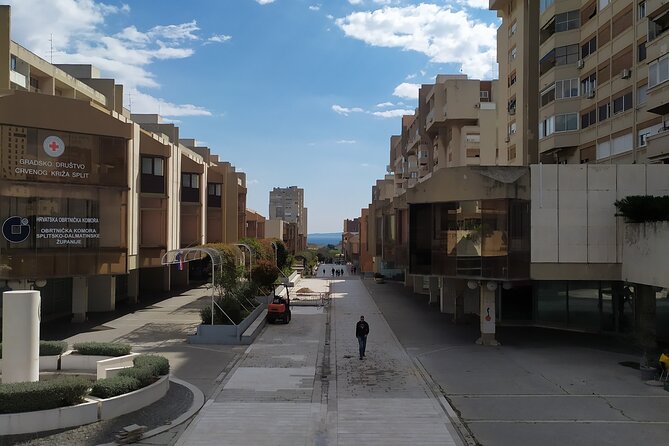
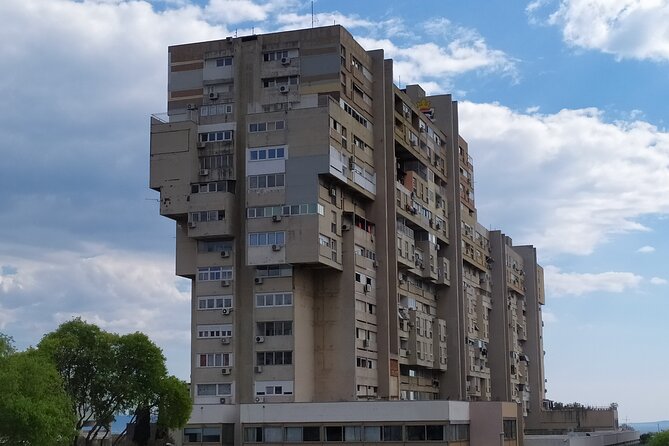
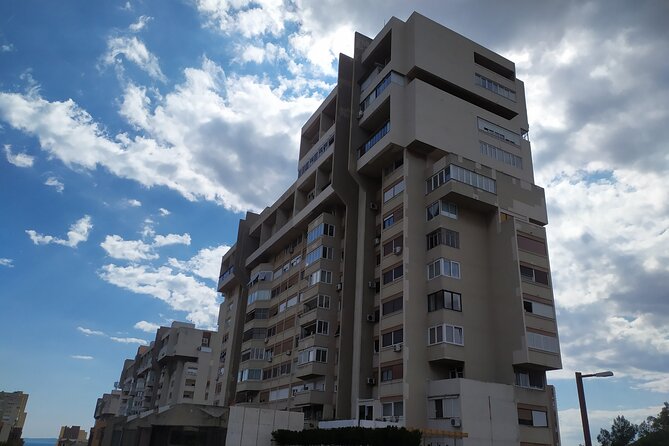
Split 3 is described as a modern communist Yugoslavia neighborhood built with the idea of providing a quality place for living, working, and resting. As you walk around, the guide points out architectural styles connected to local architects and highlights signature building types, including a building called Cruiser.
What makes this stop valuable is the way the guide turns a neighborhood into a case study. You’ll hear about housing policy, educational system, health system, economy, social life, and politics. And there’s an emphasis on the dictatorship of Yugoslav communist leader Tito, explained through examples in the Split area.
Here’s why that works for you as a visitor: Split 3 isn’t “a museum neighborhood.” It’s where people live. So you get to see what ideology looked like on the ground—how planning choices shaped daily life, not only grand speeches.
You’ll also have free time during this stop, which is key. It gives you a chance to step back, look at building details at your own pace, and maybe grab water or a quick snack.
Final Stop: Split Predgrađe and the Armored Train Symbol
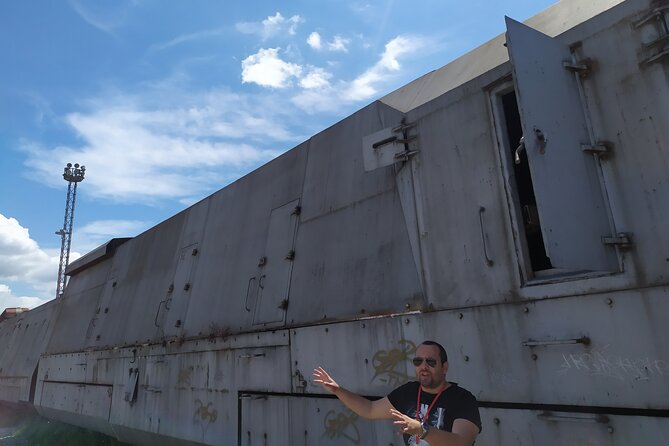
Your last segment focuses on why Yugoslavia didn’t survive and why the end in the 1990s turned violent, ending in bloody war. The mood shifts here, and the tour uses a physical symbol to end the storyline.
At Kopilica railway station, you’ll look at an armored train on display. The guide frames it as a symbol for the beginning of the bloody end of Yugoslavia, with consequences that changed relations among nations and religions across Southeast Europe again.
This ending stop does something important: it connects the earlier “how things were built” theme to what happened when the system collapsed. That long arc—WWII aftermath to socialist planning to violent disintegration—helps you make sense of why these sites still matter.
The duration for this final stop is about 30 minutes. It’s not rushed, but it’s also not long enough to feel like a lecture-only finale. You finish with imagery that’s hard to forget.
The Private Vehicle Advantage (and Why It Changes the Experience)
One of the most practical reasons this tour feels like good value is the way it uses a private, air-conditioned vehicle. The sites are spread out enough that hopping between them on your own would eat time and energy.
Instead, you get a steady rhythm: brief context, then a visible site, then another short ride, then more explanation. That helps you keep your attention on the ideas the guide is connecting—especially because the theme is dense.
Also, with a maximum group size of 8, the vehicle ride stays comfortable. You’re not squeezed into a large coach where questions get lost.
Included Perks That Keep It Feeling Smooth
This tour includes a few small but real comforts:
- A typical soft local drink (soda/pop) that was popular in communist Yugoslavia and is still around today
- Air-conditioned vehicle
- Private transportation
Admission tickets are noted as free for the stops. That’s a smart cost-control detail if you’re comparing tours that add museum or site fees on top.
Who This Tour Is Best For
This experience is ideal if you:
- Like architecture with a political story, not just pretty facades
- Want WWII and Yugoslav history explained through Split-specific examples
- Prefer small-group tours where the guide can explain concepts clearly
- Enjoy walking in urban neighborhoods and noticing how planning shows up in real life
It may be less ideal if you want a light, relaxed tour focused only on medieval sights or seaside views. The topic involves dictatorship, conflict, and the violent end of Yugoslavia, even though the pacing is built to keep it understandable.
Price and Value: $108.14 for a Themed, Guided, and Transported Day Segment
At $108.14 per person (about 3 hours 30 minutes), the price can feel steep compared to a basic walking tour. But it holds up when you consider what’s included.
You’re paying for:
- A specialized, themed tour with in-depth guide expertise
- Private transportation that saves time and makes dispersed stops workable
- A small group limit (8 travelers max), which usually means more personal attention
If your goal is to see multiple “less obvious” sites in one morning—without juggling buses or taxis—this price starts to look fair. It’s also priced in a way that doesn’t depend on you paying extra admissions at every stop.
Quick Practical Tips Before You Go
- Bring comfortable shoes for walking, especially around the neighborhood stop where you’ll have more time on foot.
- Expect a blend of visuals (including WWII damage images) and listening, so it’s worth showing up ready to focus.
- If you’re sensitive to heavy historical topics, mentally prepare for the ending discussion about the violent break-up in the 1990s.
Should You Book This Communist Tour of Split?
Book it if you want Split with a second lens. This tour gives you the communist-era frame that turns certain buildings, stadiums, and city planning choices into a readable story—one that ends with the real consequences of Yugoslavia’s collapse.
Skip it if your ideal Split day is purely scenic or if you’d rather avoid political history. No problem—Split can do that well too. But if you like structured history, architecture you can actually point to, and a guide who can explain how ideology shaped everyday life, this is one of the more distinctive ways to spend your time.
FAQ
How long is the Communist tour of Split?
The tour lasts about 3 hours 30 minutes.
What time does the tour start?
It starts at 9:00 am.
Where does the tour meet, and where does it end?
You meet at the bus stop area near Autobusno stajalište Sv. Frane, Trg Franje Tuđmana in Split, and the tour ends back at the same meeting point.
Is the tour in English?
Yes, the tour is offered in English.
How many people are in the group?
The tour has a maximum of 8 travelers.
Are there admission tickets for the stops?
Admission tickets are listed as free at the stops described in the itinerary.
What’s included in the price?
Included items are a typical soft local drink (soda/pop), an air-conditioned vehicle, and private transportation.
What if the weather is poor?
The experience requires good weather. If it’s canceled due to poor weather, you’ll be offered a different date or a full refund.
What about cancellation?
You can cancel for a full refund up to 24 hours in advance of the experience’s start time. If you cancel less than 24 hours before, the amount paid is not refunded.
More Tours in Split
- From Split: Krka Waterfalls, Food & Wine Tasting Tour
★ 5.0 · 9,326 reviews - Blue cave, Mamma Mia and Hvar, 5 islands speedboat tour
★ 5.0 · 7,150 reviews - From Split: Krka Waterfalls, Food & Wine Tasting Tour
★ 4.9 · 6,598 reviews - Split/Trogir: Blue Cave, Mamma Mia, Hvar and 5 Island Tour
★ 4.6 · 6,320 reviews - Blue Cave and Hvar Tour – 5 Islands Tour from Split and Trogir
★ 5.0 · 4,815 reviews
More Tour Reviews in Split
- Split: Krka Waterfalls Trip with Boat Cruise and Swimming
★ 4.8 · 10,519 reviews - From Split: Krka Waterfalls, Food & Wine Tasting Tour
★ 5.0 · 9,326 reviews - Blue cave, Mamma Mia and Hvar, 5 islands speedboat tour
★ 5.0 · 7,150 reviews - From Split: Krka Waterfalls, Food & Wine Tasting Tour
★ 4.9 · 6,598 reviews - Split/Trogir: Blue Cave, Mamma Mia, Hvar and 5 Island Tour
★ 4.6 · 6,320 reviews
Still deciding? More Split trips we have been out and reviewed
Tours, compared.
 ★ 5.0Krka Waterfalls, Food & Wine Tasting TourFrom $459,326 reviews
 ★ 5.0Blue cave, Mamma Mia and Hvar, 5 islands speedboat tourFrom $1117,150 reviews
★ 4.9Krka Waterfalls, Food & Wine Tasting TourFrom $446,598 reviews
 ★ 4.6Blue Cave, Mamma Mia, Hvar and 5 Island TourFrom $1096,320 reviews
 ★ 5.0Blue Cave and Hvar Tour – 5 Islands Tour from Split and TrogirFrom $1204,815 reviews
 ★ 4.9Old Town and Diocletian Palace Walking TourFrom $174,727 reviews
 ★ 5.0Krka Waterfalls Tour, Boat Cruise & SwimmingFrom $324,489 reviews
 ★ 4.8Krka Waterfalls Tour with Boat Cruise & SwimmingFrom $313,913 reviews