
Reviewed · TROGIR OLD TOWN TRIPS
Private Trogir walking tour with LOCAL guide
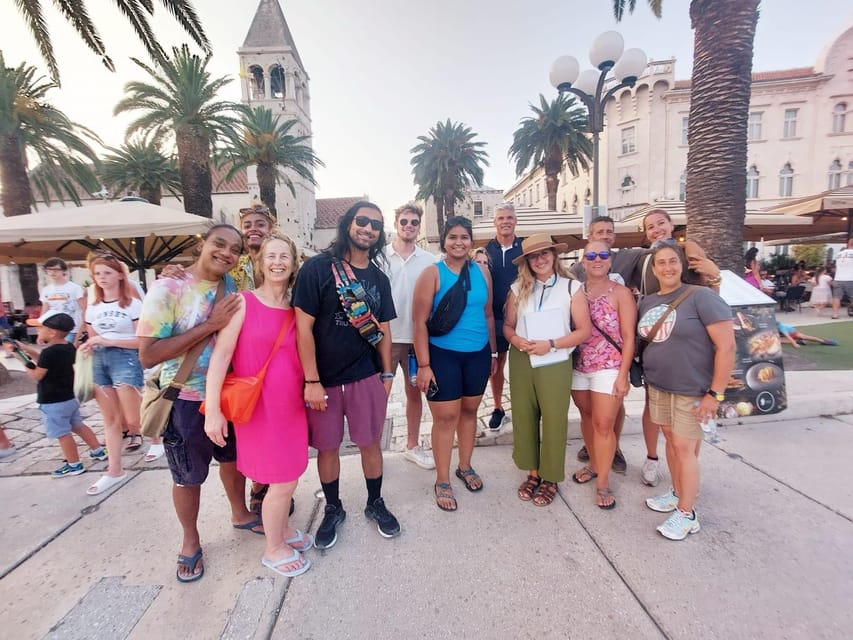
Trogir is small, but it tells a big story. This private walking tour is a simple, human way to experience Trogir Old Town through local eyes—snaking through small medieval streets, picking up local context as you go, and even stopping for a traditional cookie. I especially like how the guide’s storytelling makes the town feel lived-in, not just postcard pretty. One possible drawback: if you prefer brand-new facts every minute, you may notice a bit of overlap in the pace and phrasing compared to how some people like tours to feel.
You’ll spend about two hours walking at an easy rhythm with a local guide, with time to look closely and ask questions. The tour also aims for a “locals first” feel with a stroll toward the farmers market area, plus those little moments—like cookie time—that make it more than a history lecture. If you’re very chatty yourself, great. If you’re quiet, the guide should still keep things moving.
In This Review
- Key things that make this tour worth your time
- Why Trogir Feels Like a Living Museum
- Finding the Old Town Gate Fast (Meeting Point Tips)
- Two Hours of Walking That Don’t Feel Rushed
- Medieval Architecture You Can Actually Read
- The Farmers Market Stroll (and Why Locals Matter)
- The Cookie Stop That Turns Sightseeing Into a Memory
- Private Group Value: How $141 Works for Your Size
- Languages, Comfort, and the Real-Life Logistics That Matter
- Who This Walking Tour Suits Best
- Should You Book This Trogir Walking Tour?
- FAQ
- Where is the meeting point for the Trogir Old Town tour?
- How long is the tour in Trogir?
- Is the tour private, and how big can the group be?
- What languages are the live guides available in?
- What’s included during the tour?
- Is wheelchair accessibility available?
- What are the cancellation and payment options?
Key things that make this tour worth your time
- Local guide stories that turn stone streets into real context
- Medieval architecture viewing with explanations you can actually connect to what you see
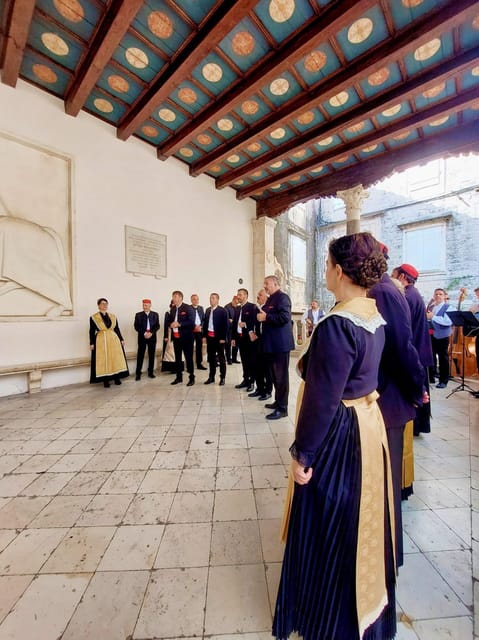
- Traditional cookie stop in a local shop (small break, big payoff)
- Farmers market walk so you see how locals move through the town
- English or German live guiding for easier back-and-forth questions
- Private group format with a max group size of 16
On your own schedule: more private tours in Trogir
- Private Blue cave, Mamma Mia and Hvar, 5 islands tour from Trogir★ 5.0 · 192 reviews
- Private Blue Cave and Hvar – 5 Islands Tour★ 5.0 · 103 reviews
- Bespoke private boat tour from Split & Trogir with a local expert★ 4.5 · 75 reviews
- Private transfer Split airport to Split (any location) up to 8 passengers★ 5.0 · 57 reviews
Why Trogir Feels Like a Living Museum
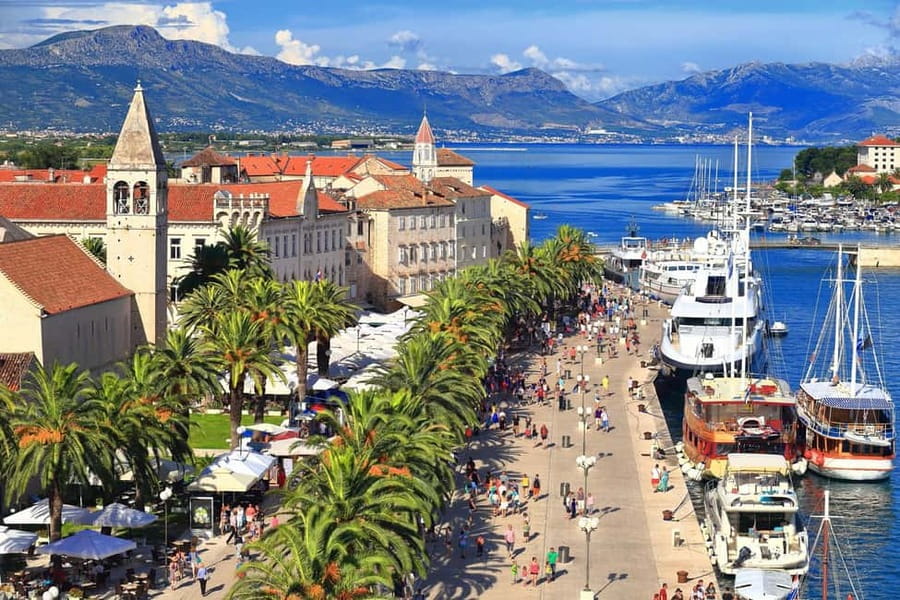
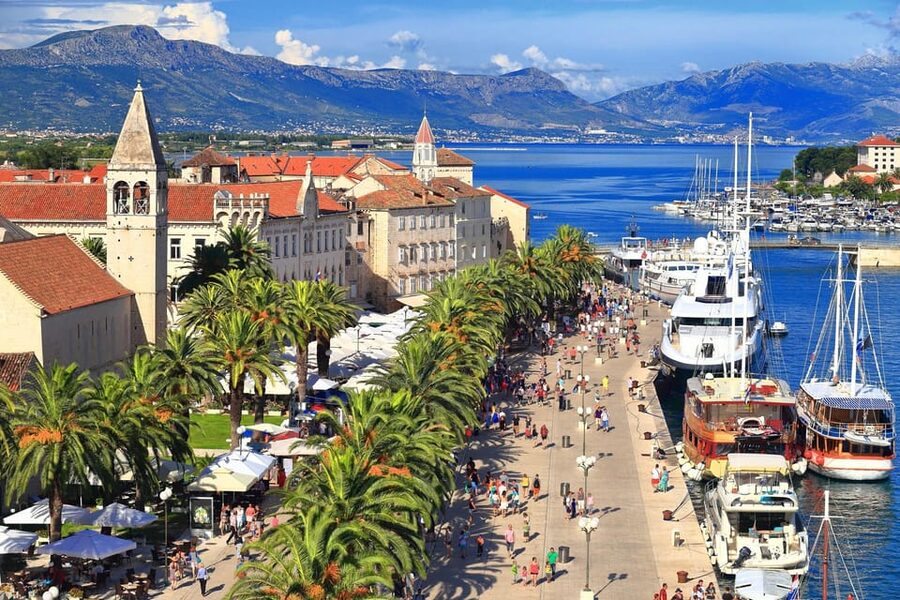
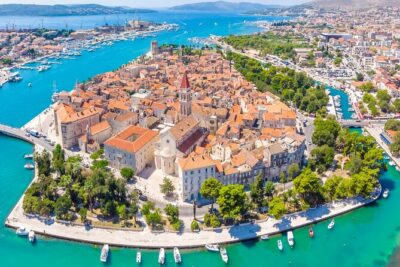
Trogir, in Dalmatia, Croatia, has that rare quality where you don’t have to “try” to learn. You just start walking, and the place keeps offering details. Doors, arches, stonework, alley turns—each one seems to come with a reason, and that reason is easier to catch when it’s told by someone who actually calls the town home.
What I like about this style of tour is that it doesn’t treat the town like a checklist. It treats it like a neighborhood. The guiding approach centers on how people lived here, how the town changed, and how locals interpret their own identity today. That’s why you’ll hear both past-and-present angles as you move through the old streets.
And yes, there’s a theme. The tour frames Trogir as a place of good moments—the sort of place you can feel in the way people occupy the space. You’ll be told the reason behind that idea as part of the walk, not as an abstract slogan.
Finding the Old Town Gate Fast (Meeting Point Tips)
You’ll meet at Obala bana Berislavića 11, then head for the Old Town entrance. The key detail: the Old Town entry is at the end of the bridge coming from the mainland. From there, you walk through the gate to enter the historic area.
This matters because Trogir’s charm can also make it easy to wander in the wrong direction. Starting right at the main entrance helps you get your bearings quickly. You’ll also reduce the “where are we?” stress that often eats the first 15 minutes of a walking tour.
If you’re arriving from the mainland by foot, give yourself a little extra time to cross the bridge calmly. The tour is only about two hours, so those first minutes count.
Two Hours of Walking That Don’t Feel Rushed
The pacing is built for a focused walk: sightseeing on foot, with storytelling layered in as you pass key corners. Since this is a private group format (up to 16 people), the guide can generally manage the flow without turning it into a rigid script.
Here’s the practical way to think about it. Two hours isn’t enough to “cover everything.” But it’s enough time to do two valuable things:
- see the town’s main visual rhythms (street patterns, architecture clues, how the old core is structured)
- connect those visuals to human stories, so you remember what you saw and why it matters
You’ll also have time to ask questions. The tour is offered in English and German, and at least one guide experience I read included very strong German explanations plus the willingness to respond to questions. That kind of back-and-forth is often the difference between a tour you forget and one you keep thinking about later.
Medieval Architecture You Can Actually Read
Trogir’s old center is often described like an open-air museum, and it really does feel that way. But the trick is learning how to “read” the architecture instead of just admiring it from a distance.
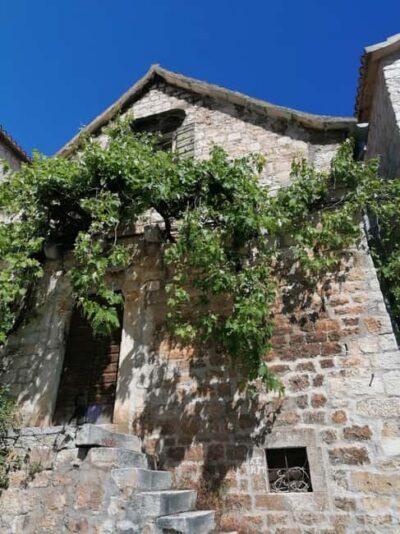
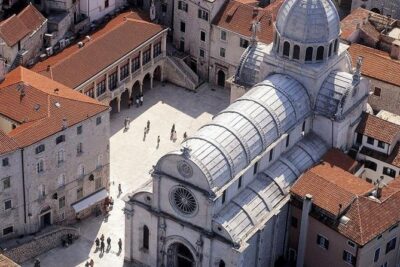
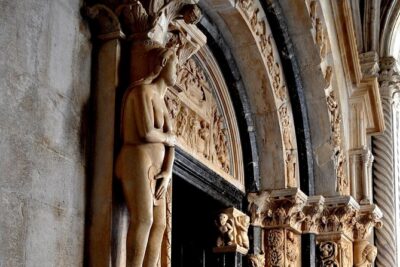
During your walk, you’ll be guided through the small street system that frames medieval buildings. Expect to spend time looking at details—stone shapes, architectural forms, and the way buildings sit in relation to the street. The guide’s job is to translate those details into stories: who used the spaces, what kinds of influences show up in the structures, and how the town’s past is reflected in what you see today.
One reason this tour works well is that the guide isn’t trying to overwhelm you with dates. Instead, you get anecdotes tied to what’s in front of you. It’s the kind of explanation that helps you notice more on your own later—after the tour ends.
Is there any downside? With a shorter tour, the guide may keep returning to a few core themes so the story stays coherent. One experience noted a bit of repetition in content and language. If you’re the type who loves nonstop novelty, just go in with an eye for asking targeted questions—like which building detail matters most and what people in town talk about when they point it out.
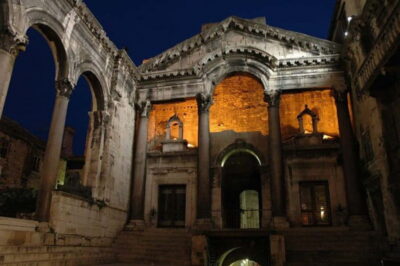
Stone streets of Trogir, more trips from Trogir


The Farmers Market Stroll (and Why Locals Matter)
A big highlight here is that you don’t just look at Trogir—you also see it through how locals move around it. Part of the tour includes a walk to the farmers market area.
What you’ll get from that isn’t a cooking class or a full food crawl. It’s something more subtle: context. Seeing a market space as locals use it helps you understand the daily rhythm of the town. You start to notice the practical side of heritage—how people shop, pause, chat, and carry on right inside a historic setting.
If you like “everyday travel,” this is one of the best uses of your time. Instead of separating culture from life, you connect them. You also get a change of tempo. The street-walk rhythm slows slightly when you’re near market activity, and that helps the architecture sections land better too.
The Cookie Stop That Turns Sightseeing Into a Memory
Yes, there’s a traditional cookie included, and no, it’s not just a token snack. It’s a small cultural anchor. You’ll try a local cookie in a local shop, which gives you a simple way to participate instead of only observe.
This kind of stop often becomes the moment people remember most because it breaks up the walk with something sensory. It also reinforces the tour’s local angle: you’re not being sent to a generic attraction. You’re getting a taste from a local place, which fits the overall theme of being part of the town rather than passing through it.
If you have dietary restrictions, you’ll want to ask the guide in advance or at the shop. The tour data only promises a traditional cookie, not specific ingredients.
Private Group Value: How $141 Works for Your Size
Price is listed as $141 per group up to 16 for a 2-hour private tour. That’s the key to the value story.
If your group is anywhere near full size, the cost per person becomes quite reasonable for a private guide—especially in a place where “private” can easily mean much higher prices. If you’re traveling as a smaller group, it will cost more per person, but you still get the benefit of a local guide who can shape the pacing around your interests.
In other words:
- Large group (closer to 16): strong value for money.
- Small group (2–6 people): you’re paying for privacy and flexibility, not budget touring.
Also, because the duration is only two hours, you’re not spending half a day on logistics. You get a compact experience that’s easy to fit into a Croatia itinerary without sacrificing your other plans.
Languages, Comfort, and the Real-Life Logistics That Matter
The guide speaks English and German, so you can choose the language that fits your comfort level. That’s important for walking tours in old towns, where you’ll want to ask follow-up questions like:
- What am I looking at right now?
- How does this building connect to the town’s story?
- Why does this street layout matter?
This tour is also wheelchair accessible. That matters because cobblestones and tight medieval streets can quickly become an issue on other walks. The tour offering specifically states wheelchair accessibility, which makes it a better bet if you need an option designed with that in mind.
One more practical point: since this is a private group, the guide can often keep things organized without losing people. With up to 16, you’re not stuck with the chaos of a large bus tour.
Who This Walking Tour Suits Best
I think this tour is a great fit if you want:
- a short, high-signal introduction to Trogir Old Town
- a local voice, not just dates
- architecture explanations tied to what you’re seeing
- a light food moment (the cookie) and a local-life moment (the market walk)
It’s also ideal for couples, friends, and small groups who want to keep control of their pace and questions. The private group format helps a lot if you have different interests in the group—someone can focus on architecture details while someone else leans into the local-market angle.
If you’re the type who wants a full-day deep dive with lots of stops and lots of museum time, this may feel short. But if your goal is to see the heart of Trogir and leave with a clear story in your head, two hours is actually a smart length.
Should You Book This Trogir Walking Tour?
If you’re choosing between a self-guided stroll and a guided walk, I’d lean toward booking—especially because the tour’s value comes from the way the stories are told. Trogir rewards close attention, and a local guide helps you notice more than you’d pick up alone.
I’d book this tour if:
- you like walking tours that feel personal
- you want medieval architecture explained in human terms
- you enjoy small “local life” touches like the farmers market walk and the cookie stop
- you’re traveling with enough people to make the group price meaningful
Skip it (or consider a longer alternative) if:
- you hate any repetition in storytelling
- you want a heavy, site-by-site deep academic tour rather than a guided walk with anecdotes
FAQ
Where is the meeting point for the Trogir Old Town tour?
You meet at Obala bana Berislavića 11. The tour is accessed by heading to the main entrance to Trogir Old Town, which is at the end of the bridge from the mainland. Walk through the gate to enter.
How long is the tour in Trogir?
The tour lasts 2 hours.
Is the tour private, and how big can the group be?
Yes, it’s a private group tour. The group size is up to 16 people.
What languages are the live guides available in?
The live tour guide is available in English and German.
What’s included during the tour?
A local guide and a traditional cookie in a local shop are included.
Is wheelchair accessibility available?
The tour is listed as wheelchair accessible.
What are the cancellation and payment options?
Free cancellation is available up to 24 hours in advance for a full refund. You can also reserve now and pay later.
Walk Trogir a Different Way
- Trogir: City Highlights Guided Walking Tour
★ 4.9 · 199 reviews - Trogir walking tour with a local guide
★ 5.0 · 129 reviews - Shipwreck – Blue Lagoon All Inclusive + Trogir Walking Tour
★ 4.4 · 110 reviews - Trogir: Old Town Guided Walking Tour
★ 4.6 · 76 reviews - Trogir Highlights Walking Tour with Local Guide
★ 5.0 · 32 reviews
Trogir, Stone by Stone
- Blue cave, Mama Mia and Hvar, 5 island speedboat tour from Trogir
★ 5.0 · 2,861 reviews - From Trogir: Three Islands Half-Day Speedboat Tour
★ 4.8 · 804 reviews - Trogir, Žedno: Čiovo Island 100% Off-Road Quad ATV Tour
★ 4.9 · 554 reviews - From Trogir or Split: Full-Day Blue Cave & Hvar Island Tour
★ 4.7 · 475 reviews - Half Day Speedboat Tour to Three Islands from Trogir
★ 5.0 · 401 reviews
Just Your Group in Trogir
- Split airport to Split Private transfer to 8 pax (Door to Door any location)
★ 5.0 · 213 reviews - Private Blue cave, Mamma Mia and Hvar, 5 islands tour from Trogir
★ 5.0 · 192 reviews - Private Blue Cave and Hvar – 5 Islands Tour
★ 5.0 · 103 reviews - Bespoke private boat tour from Split & Trogir with a local expert
★ 4.5 · 75 reviews - Private transfer Split airport to Split (any location) up to 8 passengers
★ 5.0 · 57 reviews
Still deciding? More Trogir trips we have been out and reviewed
Trogir Old Town Trips, compared.
 ★ 4.6Blue Cave, Mamma Mia, Hvar and 5 Island TourFrom $1096,320 reviews
 ★ 5.0Blue Cave and Hvar Tour – 5 Islands Tour from Split and TrogirFrom $1204,815 reviews
 ★ 5.0Blue cave, Mama Mia and Hvar, 5 island speedboat tour from TrogirFrom $1112,861 reviews
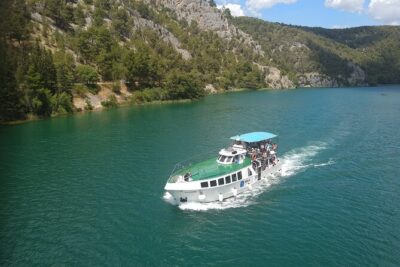 ★ 5.0Krka Waterfalls Day Tour with Boat Ride from Split and TrogirFrom $322,134 reviews
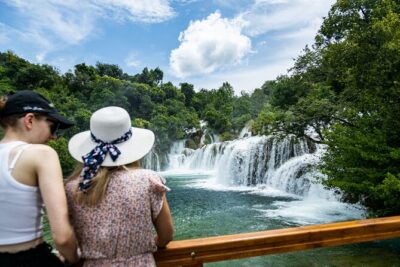 ★ 5.0Krka Waterfalls tour with Trogir Walking tour and Krka panoramic boat cruiseFrom $481,659 reviews
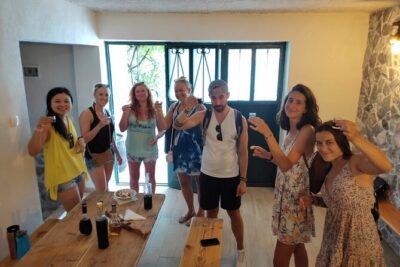 ★ 5.0Krka National Park Tour with tour Guide & Wine tasting from Split & TrogirFrom $501,625 reviews
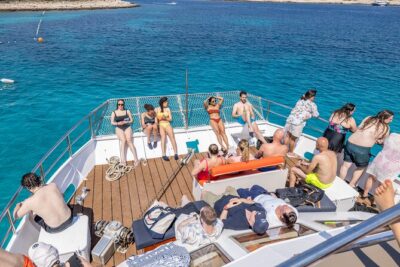 ★ 4.5Hvar, Brač & Pakleni islands cruise with lunch & drinks from Split & TrogirFrom $951,452 reviews
 ★ 5.0Mostar and Herzegovina Tour with Kravica Waterfall from Split & TrogirFrom $841,217 reviews
Browse the lists this tour appears in