
Reviewed · TROGIR OLD TOWN TRIPS
Experience Trogir with a Local Guide
Trogir clicks fast when you’re led by someone who knows the people behind the stones. This tour is a compact, English-speaking loop through the medieval core, with stops that connect daily life, legends, and big-picture history in about 1 hour 20 minutes to 2 hours. I love how it mixes famous landmarks with small, story-heavy details (like why bells mattered), so the town feels lived-in, not just photographed.
My second favorite part is the guide effect—Sandra’s approach is personal and balanced. In the reviews, you can see how locals actually greet her and how she brings the place to life beyond facts. One thing to consider: several stops are quick photo moments, and the Cathedral entrance is optional and costs extra (6€/person), so build in time if you want the full interior and belltower views.
In This Review
- Key highlights to look for on this route
- Why Trogir works so well with a local guide (even if you’re short on time)
- Meeting point, timing, and the flow of a private tour
- North Gate: fortified entry and why Trogir wasn’t always open
- The birth house of Petar Berislavić and what noble connections change
- Noble palace vibes: the museum that used to be where power lived
- Kula Karmelengo: chains, Ottoman fears, and summer concerts
- Igralište Batarija: the UNESCO football field and St Mark tower views
- Trogir Promenade: where locals actually spend time
- South Gate and the Benedictine monastery area
- Central Square: power buildings, Venetian lions, and trials
- Saint Lawrence’s Cathedral: Radovan’s portal and optional big moments
- Price and value: is $82.80 a fair deal for Trogir?
- What I’d wear, bring, and plan around this walk
- Should you book this Trogir with a local guide?
- FAQ
- How long is the Experience Trogir with a Local Guide?
- What does the tour cost?
- What’s included in the price?
- Do we pay extra to enter Saint Lawrence’s Cathedral?
- Is Kula Karmelengo entrance included?
- Is the tour offered in English?
- Where do we meet, and when is it running?
- Is the tour pushchair accessible?
- Can I cancel and get a full refund?
Key highlights to look for on this route

- North Gate walls and fortified entry: You’ll understand why you didn’t just wander in whenever you wanted.
- Petar Berislavić and noble-house stories: Trogir’s past connects to important Croatian figures, not only distant empires.
- Kula Karmelengo’s chains and concert setting: You mostly see it from the outside, with entrance optional.
- UNESCO-protected Igralište Batarija: Even the football field is part of the story—plus nearby sights like the tower of St Mark.
- Central Square power center: Court, Rector’s Palace, noble palaces, and the cathedral all concentrate here.
- Saint Lawrence Cathedral options: Portal, chapels, baptistery, and a belltower climb if you want more.
Stone streets of Trogir, more trips from Trogir
- Blue cave, Mama Mia and Hvar, 5 island speedboat tour from Trogir★ 5.0 · 2,861 reviews
- From Trogir: Three Islands Half-Day Speedboat Tour★ 4.8 · 804 reviews
- Trogir, Žedno: Čiovo Island 100% Off-Road Quad ATV Tour★ 4.9 · 554 reviews
- From Trogir or Split: Full-Day Blue Cave & Hvar Island Tour★ 4.7 · 475 reviews
Why Trogir works so well with a local guide (even if you’re short on time)
Trogir isn’t a huge city, but it can feel like a maze if you’re only hunting for the main sights. With a local guide, you get the “map in your head” effect quickly. You start seeing patterns: gates where life funnelled in, squares where power showed up, and waterfront-style promenades where people actually linger.
I also like that this tour feels built for real pacing. The schedule is mostly short stops—just long enough to learn something and then keep moving. That’s a good match for people who want history without spending the whole day reading plaques.
Meeting point, timing, and the flow of a private tour
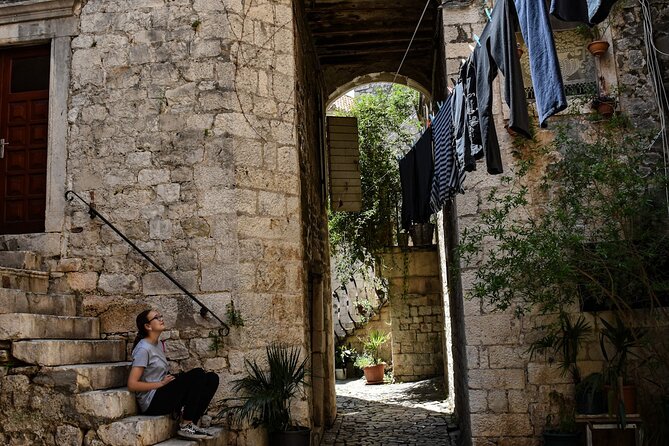
You meet at Ul. Gradska vrata 6, 21220, Trogir, and the experience ends back at the same point. It runs Monday through Saturday, typically 9:00 AM to 7:00 PM. It’s offered in English, and it’s a private experience, meaning it’s just your group.
The tour length is listed as about 1 hour 20 minutes to 2 hours. That matters because Trogir’s old town rewards focus—if you try to do everything alone, you can burn time zigzagging. Here, you get a guided route that keeps your stops meaningful and your walking manageable.
North Gate: fortified entry and why Trogir wasn’t always open
The tour begins at the North Gate, the main entrance in medieval times. The big idea here is simple: the town was fortified, and you didn’t just enter wherever you liked. That one context shift makes the rest of the old town easier to read.
From that gate, you’ll hear how Trogir got its name and who the first settlers were. Then you’ll wander through narrow streets that connect modern life to ancient foundations reaching back to the 3rd century BC.
A detail I really like: you’ll learn about the patron saint and why they’ve mattered locally for generations. You also get a fascinating bit about bells—how they played a significant role in everyday life in the past. It’s the kind of lesson that turns a church tower into something more than scenery.
The birth house of Petar Berislavić and what noble connections change
One of the stops is outside the birth house of Croatian nobleman Petar Berislavić. That matters because it anchors Trogir’s story inside Croatia’s own history, not only Venetian or Ottoman shadow-boxing.
You also get a chance to notice how noble families shaped the built environment. Even when you’re standing outside, the guide’s explanation helps you “see” what social life might have looked like—who had influence, where people gathered, and how the town’s layout supported it.
A few more Trogir boat days and tours worth a second look


Noble palace vibes: the museum that used to be where power lived
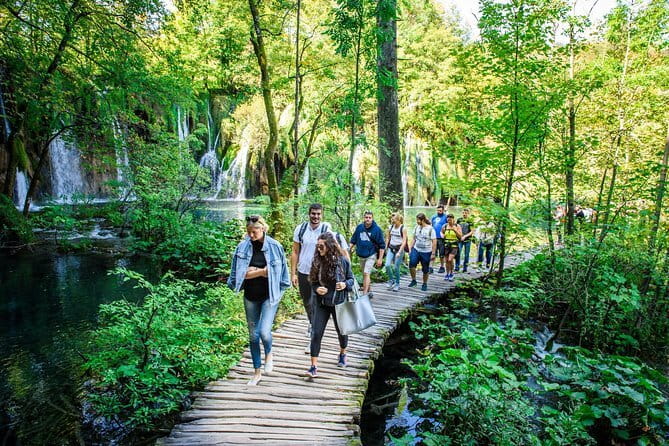
There’s a stop where you’ll hear about a museum that was once a noble palace. Even if you don’t go inside, the point is that buildings change roles over time. Past wealth and status often become today’s public storytelling spaces.
This is one of those moments where a good guide is worth real money. Instead of listing dates, you get the social meaning: how a palace became a place people could visit and learn from later. That’s exactly the kind of context that prevents old towns from feeling like a set of isolated monuments.
Kula Karmelengo: chains, Ottoman fears, and summer concerts
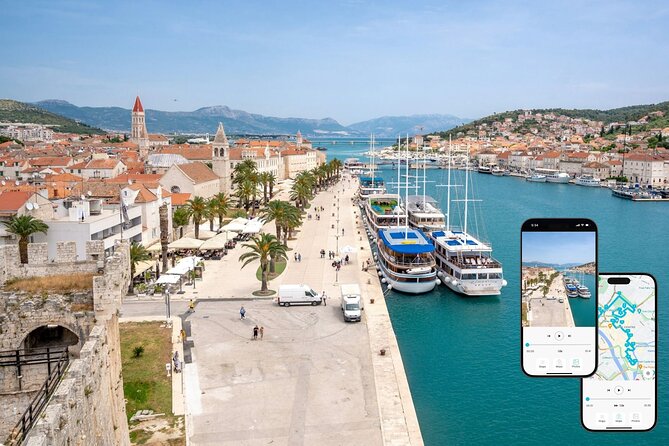
Next up is Kula Karmelengo, a fortress tied to Trogir’s defensive past. You’ll hear that it was meant as shelter for the town’s rector during the Ottoman invasions. So yes, this is “fortress” history—but you’re also seeing how the structure fits into modern life now.
Today, it’s a spot for summer concerts in a spectacular setting. The tour notes that the visit is from the outside and that the entrance is optional. That’s a smart setup for most people: you get the context without being forced to add more time if you’d rather keep the walking rhythm.
Igralište Batarija: the UNESCO football field and St Mark tower views
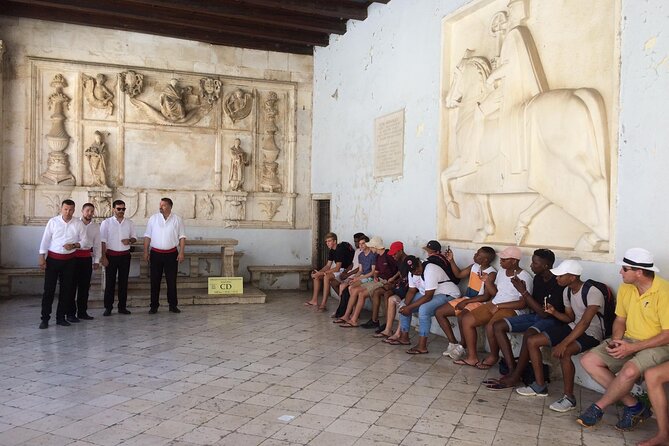
One of the most surprising stops is Igralište Batarija. This is a football field area protected by UNESCO, and that alone sparks curiosity because it reframes what we usually think of as heritage.
From here, you’ll also see a gloriette dedicated to the French rule and the tower of St Mark. These visual links help you understand how different powers and eras shaped Trogir’s look. You don’t need a textbook—just a guide pointing out what to notice.
Quick heads-up: this part is timed for a short visit. If you’re the type who wants to linger over every viewpoint, you might want to leave a little extra buffer for this area after the tour.
Trogir Promenade: where locals actually spend time
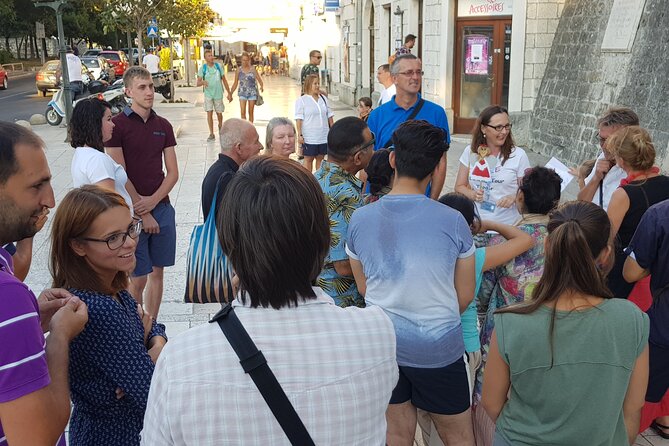
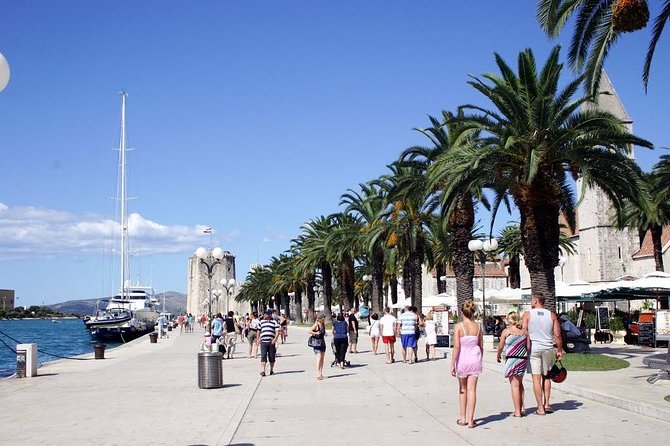
The Trogir Promenade is described as the center of everyday life, where both tourists and locals pause for coffee and a slow moment. This is an important balance point in the itinerary: after the medieval gates and fortifications, you switch to “how the town feels today.”
I like this stop because it helps you reset. Walking old stones all morning can make everything feel heavy. The promenade gives you breathing space and gives you context for what you’ll see later in the evening if you return on your own.
South Gate and the Benedictine monastery area
Then you head toward the South Gate (Juzna gradska vrata). The interesting thing here is the detail: the original doors still exist, and they would be closed in the evening. That one detail makes the gate feel less like a decorative arch and more like a daily routine.
Next to the gate you’ll find a Small lodge—another little structure that supports the idea of who sheltered where and when. If you care about photos, the gate works as a picture frame, and the colors change depending on the part of the day.
Behind the gate, you’ll hear about the church and the Benedictine Monastery of St Nicholas, including a story about Trogir as the town of the happy moment. This is the sort of local narrative that makes medieval towns feel like they still have a heartbeat.
Central Square: power buildings, Venetian lions, and trials
The tour then lands at the Central Square, where most of the most important buildings cluster together. You’ll hear about the court, Rector’s Palace, noble palaces, and the cathedral—so you get the big “who held power here” picture in one place.
The guide also points out details like Venetian lions, stories about trials, and the theatre that was once in the heart of Trogir. You’ll also hear about the rich people of the past. Even if you don’t care about legal history, the explanation makes sense of the architecture and why certain buildings feel “official.”
This stop is a strong example of what you pay for with a local guide: the same square can look flat if you’re only scanning for icons. With a guide, you get the human angle.
Saint Lawrence’s Cathedral: Radovan’s portal and optional big moments
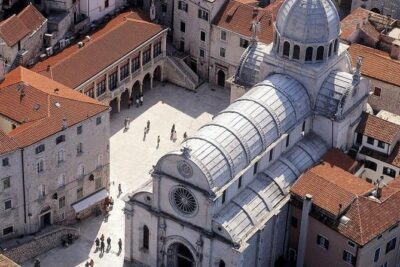
The highlight for many people is Saint Lawrence’s Cathedral. The cathedral is described as the main attraction in the town, historically the most important building and still a major focal point today.
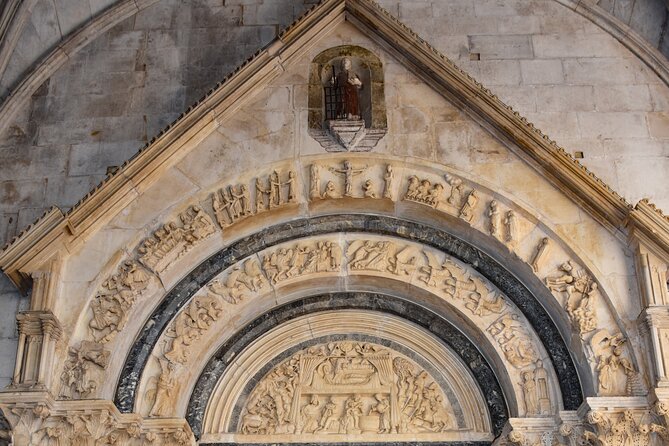
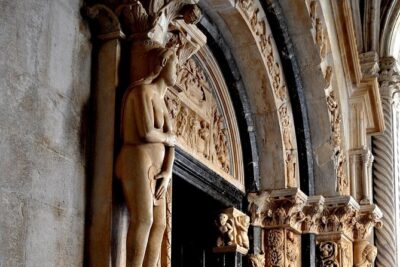
You’ll learn about Radovan’s portal and the magnificent belltower. There’s also a famous wall drawing inside the cathedral complex that still amazes people even now (your guide will point you toward what to look for).
The key detail for planning: cathedral entrance is optional and is 6€/person. If you choose to go in, you can visit the chapel of St John, the baptistery, and climb the belltower for views over the town. If you’re short on time or you’d rather prioritize walking outside, you can still enjoy the exterior and move on.
My practical advice: if you care about views, plan to do the belltower. If you just want the biggest hits, you might skip the climb and spend that time in the squares and promenades where the town feels most normal.
Price and value: is $82.80 a fair deal for Trogir?
The price is listed as $82.80 per person and the tour lasts about 1 hour 20 minutes to 2 hours. On paper, that’s not “cheap.” But when you break it down, it’s often good value for Trogir.
Here’s why: you’re paying for a licensed, English-speaking guide and a route that helps you avoid wandering. Several stops are free in terms of admissions, so you’re not constantly paying extra just to move through the old town. The only clear extra is the Cathedral entrance if you want it inside.
Also, this is a private tour. That changes the math compared with a big group where you mostly listen from a distance. In the reviews, the big praise is how Sandra makes the town feel personal—there’s a difference between hearing facts and feeling like you’re walking with someone who knows how people live here.
If you’re visiting with kids, couples, or friends who want more than a quick audio-guide scan, the price starts to feel more sensible.
What I’d wear, bring, and plan around this walk
This is a walking-focused old-town experience, so comfortable shoes are a must. If you’re visiting in warm weather, plan for shade where you can—Trogir’s lanes can be sunny depending on the time of day.
If you’re bringing a pushchair, the tour is listed as pushchair accessible, and service animals are allowed. It’s also described as suitable for most travelers.
Finally, decide early on the Cathedral plan. Since the interior and belltower climb are optional, you’ll get a smoother finish if you mentally commit to whether you want that extra time and cost.
Should you book this Trogir with a local guide?
If you want Trogir to feel understandable fast—why the gates mattered, how the square functioned, and what all the small details mean—this is a strong choice. I’d book it if it’s your first time in Trogir or if you hate the feeling of standing in front of a monument without knowing what you’re looking at.
Skip it only if your ideal vacation is maximum time in museums and maximum time in interiors. This tour is built for guided walking plus a few optional entrances, so it’s not trying to replace a full deep museum day. For most people, though, it’s a very efficient way to get your bearings and leave with a real sense of the town.
FAQ
How long is the Experience Trogir with a Local Guide?
It lasts about 1 hour 20 minutes to 2 hours.
What does the tour cost?
The price is $82.80 per person.
What’s included in the price?
A licensed guide is included. The tour also uses a mobile ticket.
Do we pay extra to enter Saint Lawrence’s Cathedral?
Yes. Entrance to the Cathedral is paid by the client at 6€/person. Entrance is optional.
Is Kula Karmelengo entrance included?
No, you visit Kula Karmelengo from the outside. Entrance is optional.
Is the tour offered in English?
Yes, it’s offered in English.
Where do we meet, and when is it running?
You meet at Ul. Gradska vrata 6, 21220, Trogir, Croatia, and it ends back at the meeting point. The experience runs Monday through Saturday from 9:00 AM to 7:00 PM.
Is the tour pushchair accessible?
Yes, it is listed as pushchair accessible.
Can I cancel and get a full refund?
Yes. You can cancel up to 24 hours in advance for a full refund.
More Guided in Trogir
- Zagreb to Split Group Transfer with Plitvice Lakes guided Tour
★ 4.5 · 242 reviews - Trogir: City Highlights Guided Walking Tour
★ 4.9 · 199 reviews - Trogir walking tour with a local guide
★ 5.0 · 129 reviews - Split to Zagreb Group Transfer with Plitvice Lakes guided tour
★ 4.5 · 119 reviews - From Trogir: Guided Panoramic Boat Tour with Drinks
★ 4.1 · 115 reviews
More Tour Reviews in Trogir
- Blue cave, Mama Mia and Hvar, 5 island speedboat tour from Trogir
★ 5.0 · 2,861 reviews - From Trogir: Three Islands Half-Day Speedboat Tour
★ 4.8 · 804 reviews - Trogir, Žedno: Čiovo Island 100% Off-Road Quad ATV Tour
★ 4.9 · 554 reviews - From Trogir or Split: Full-Day Blue Cave & Hvar Island Tour
★ 4.7 · 475 reviews - Half Day Speedboat Tour to Three Islands from Trogir
★ 5.0 · 401 reviews
Trogir, Stone by Stone
- Blue cave, Mama Mia and Hvar, 5 island speedboat tour from Trogir
★ 5.0 · 2,861 reviews - From Trogir: Three Islands Half-Day Speedboat Tour
★ 4.8 · 804 reviews - Trogir, Žedno: Čiovo Island 100% Off-Road Quad ATV Tour
★ 4.9 · 554 reviews - From Trogir or Split: Full-Day Blue Cave & Hvar Island Tour
★ 4.7 · 475 reviews - Half Day Speedboat Tour to Three Islands from Trogir
★ 5.0 · 401 reviews
Still deciding? More Trogir trips we have been out and reviewed

Trogir Old Town Trips, compared.
 ★ 4.6Blue Cave, Mamma Mia, Hvar and 5 Island TourFrom $1096,320 reviews
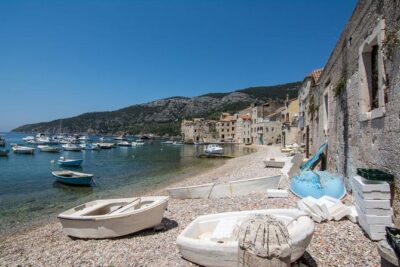 ★ 5.0Blue Cave and Hvar Tour – 5 Islands Tour from Split and TrogirFrom $1204,815 reviews
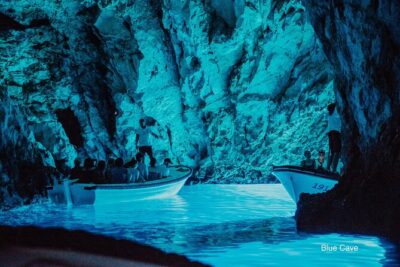 ★ 5.0Blue cave, Mama Mia and Hvar, 5 island speedboat tour from TrogirFrom $1112,861 reviews
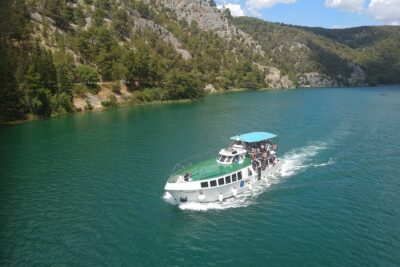 ★ 5.0Krka Waterfalls Day Tour with Boat Ride from Split and TrogirFrom $322,134 reviews
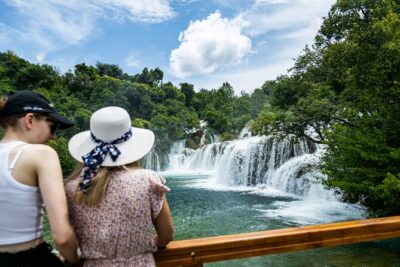 ★ 5.0Krka Waterfalls tour with Trogir Walking tour and Krka panoramic boat cruiseFrom $481,659 reviews
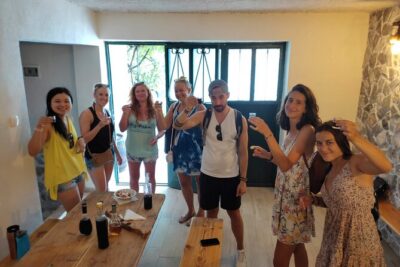 ★ 5.0Krka National Park Tour with tour Guide & Wine tasting from Split & TrogirFrom $501,625 reviews
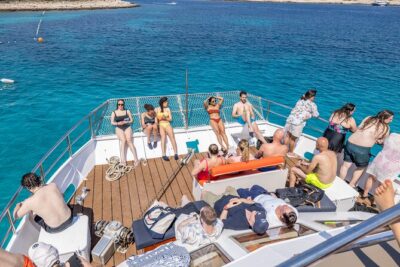 ★ 4.5Hvar, Brač & Pakleni islands cruise with lunch & drinks from Split & TrogirFrom $951,452 reviews
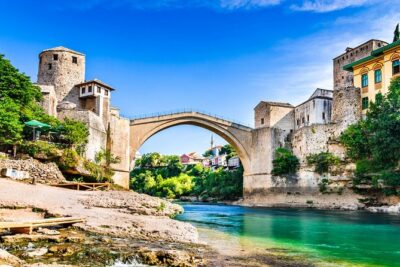 ★ 5.0Mostar and Herzegovina Tour with Kravica Waterfall from Split & TrogirFrom $841,217 reviews
Browse the lists this tour appears in