
Reviewed · TROGIR OLD TOWN TRIPS
Nocturnal Tours Trogir & Split – Myths and Legends of Old Trogir Tour
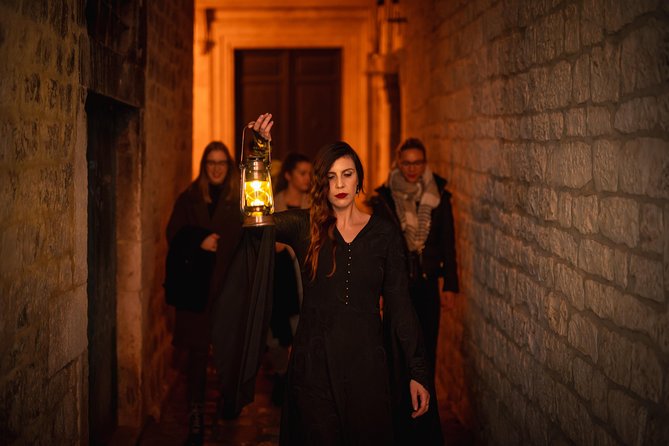
Lanterns turn Trogir into a storybook.
This 1-hour night walk turns familiar stone streets into a living timeline, with lantern-led storytelling that jumps from Greek colonists to medieval fear and superstition. I also like how the small group setup keeps the pace human, so the guide can actually connect the legends to the exact corners you’re standing in. You’ll hear chilling themes like plague, witchcraft, and public punishment, so it’s not a sleepy stroll.
One possible drawback: it’s weather-dependent, and the mood is intentionally dark. If you’re hoping for a light, daytime history tour, this may feel too spooky and too short.
Still, if you enjoy place-based stories and a guide who can act the part (Jelena and Doris are specifically mentioned by name in past experiences), this is a smart way to see old Trogir when most people have left.
In This Review
- Key takeaways
- Why a lantern tour works in Trogir’s old stones
- Meet-up, timing, and group size you’ll feel comfortable with
- Stop-by-stop: Historic City of Trogir by lantern light
- North Gate: crossing from normal town into medieval fear
- Kula Karmelengo: fortress stories of love and despair
- Kairos Collection at Saint Nikola: monks, nuns, and a 3rd-century relief
- Central Square and the plague story of Marin Kjudis
- Loggia doorway and the Pillar of Shame for medieval justice
- The guides: acting talent that keeps the group focused
- Price and value: $28.83 for a short, high-effort night
- Who should book this night legends walk
- Should you book this lantern-lit legends walk?
- FAQ
- Is the tour in English?
- How long does the tour take?
- Where do I meet and where does it end?
- How many people are in the group?
- Are there extra admission tickets for the stops?
- Do I need good weather?
- Can I bring a service animal?
Key takeaways
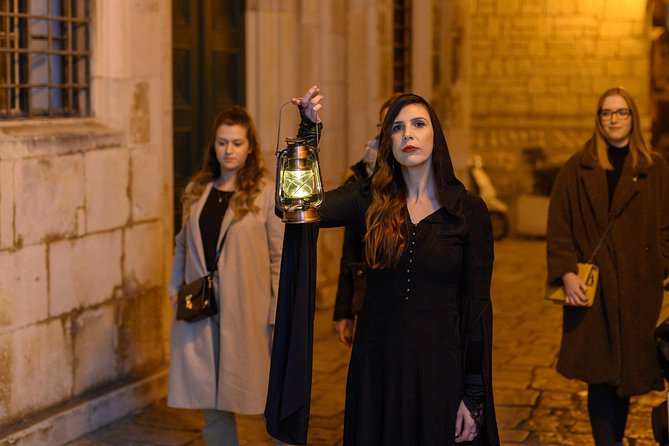
- Lantern-led pacing through Trogir at night, built for easy wayfinding even in tight streets
- Small group size capped low, which helps the guide keep everyone with the story
- Real locations, real details tied to events and relics you can still see
- Dark-but-interesting themes: plague, witchcraft beliefs, and medieval justice
- Stop variety in one walk: gates, fortress views, monastery reliefs, and a famous square
- English tour with mobile ticket for straightforward planning
Stone streets of Trogir, more trips from Trogir
- Blue cave, Mama Mia and Hvar, 5 island speedboat tour from Trogir★ 5.0 · 2,861 reviews
- From Trogir: Three Islands Half-Day Speedboat Tour★ 4.8 · 804 reviews
- Trogir, Žedno: Čiovo Island 100% Off-Road Quad ATV Tour★ 4.9 · 554 reviews
- From Trogir or Split: Full-Day Blue Cave & Hvar Island Tour★ 4.7 · 475 reviews
Why a lantern tour works in Trogir’s old stones
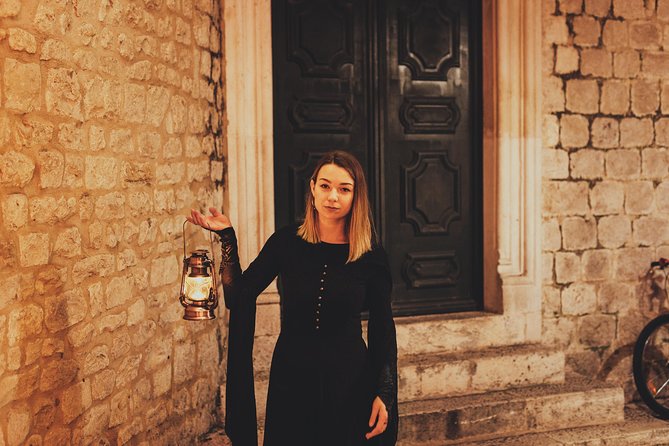
Trogir looks great in daylight, sure. But night changes how you read the place. The streets get narrower. Shadows get longer. And suddenly, all those hints of power—gates, towers, monastery walls—feel less like sightseeing props and more like the stage for the stories people once told to explain the world.
This tour leans hard into that effect. You’re not just looking at buildings. You’re being guided through what the locals remembered: myths, legends, and superstitions said to echo through the stone itself. The result is a tour that feels like walking inside a chapter of Trogir’s past.
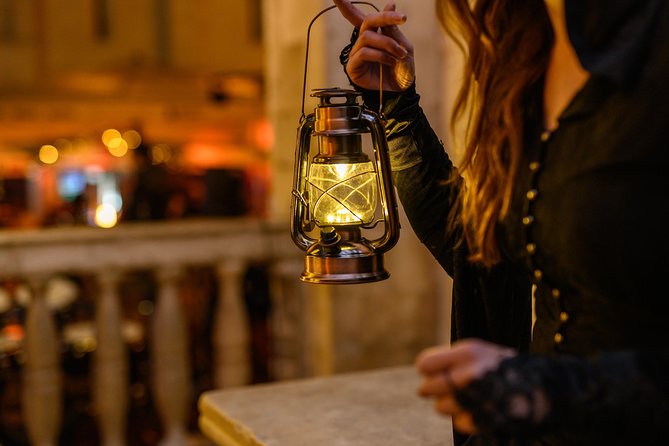
And because the guiding uses lantern light as part of the flow, you spend less effort figuring out where to go next. You still get to enjoy the city’s details; you just don’t have to fight the dark to connect the dots.
Meet-up, timing, and group size you’ll feel comfortable with
This is an evening walking tour starting at Ul. Gradska vrata 6, 21220, Trogir and ending at/near St. Lawrence’s Cathedral, Trg Ivana Pavla II, 21220. Plan for about 1 hour (approx.), though some experiences describe it as closer to about 1.25 hours depending on the night and how the group moves.
The tour is sold as a small-group experience, with a stated maximum of 8 travelers in the highlights, while the broader cap is listed as up to 10 in the booking details. Either way, it stays under a dozen people. That matters because the guide’s style is story-first, not lecture-first. In a bigger group, this kind of theatrical night walk usually turns chaotic.
You’ll have an English option and a mobile ticket. Service animals are allowed, and the meeting area is near public transportation, which helps if you’re coming in from elsewhere around Split or the coast.
Stop-by-stop: Historic City of Trogir by lantern light
The tour begins in the Historic City of Trogir, where you’ll hear stories tied to the city’s long timeline. The guide frames Trogir as a Hellenistic and Roman city, with streets and paths connected to Greek colonists in the 3rd century BC. That’s a big sweep of time for an hour, but the lantern format helps it feel manageable.
Expect the first stretch to set the mood. The stories include noblemen, intrigue, broken hearts, murders, and revenge—basically the medieval equivalent of a crime drama, delivered as something locals might whisper on a cold night. It’s also where the guide builds the thread that you’ll keep following at the other stops.
Time at this main opening area is about 20 minutes, and there’s no admission ticket required at this part. If you want a fast sense of the city’s layers, this first stop is where you get it.
Practical tip: wear comfortable shoes. The streets are old and close together, and night means you’ll want steady footing more than fancy camera angles.
North Gate: crossing from normal town into medieval fear
Next you pass through the North Gate, a threshold into the medieval city. This short stop is about 5 minutes, but it does a lot. The guide uses it as a moment of narrative switching—like stepping from one film scene to the next.
Here the stories lean into medieval anxieties: the Black Death, beliefs around witchcraft and superstitions, and the idea of women seen as dangerous for reasons that reflect the era’s thinking. It’s not presented as modern scare tactics; it’s presented as how people tried to explain fear and illness with the tools they had.
The North Gate stop is also where the lantern cues are most practical. You’ll get guidance on how not to lose your way while the city is dark.
Because the stop is brief, if you miss a line you won’t feel left behind. The guide’s pacing is designed for short attention windows at night.



Kula Karmelengo: fortress stories of love and despair
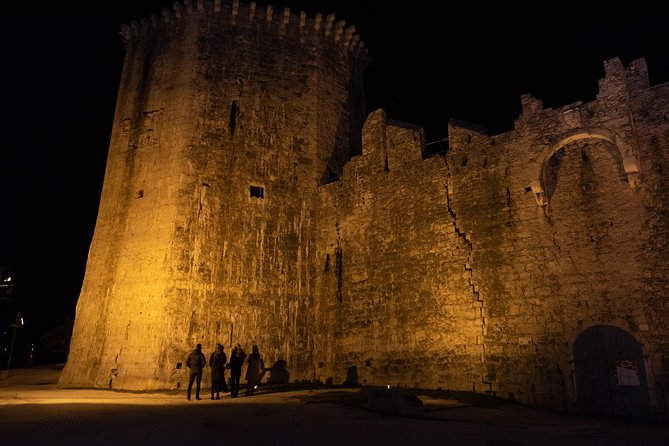
Then comes Kula Karmelengo, a medieval fortress area where the tone turns emotional. Time here is about 10 minutes, and the focus is on love and despair—paired with the dramatic setting of stone and height.
This is a good breather from the plague-and-justice-heavy themes that come later. It gives your brain a different kind of story shape: not just fear, but longing. In a night tour like this, variety helps. It keeps you listening instead of just reacting.
Also, fortress stops are great for perspective. Even without a long explanation, you can often feel the logic of the place: why this spot mattered, why people would defend it, and why it made a good stage for legend.
Kairos Collection at Saint Nikola: monks, nuns, and a 3rd-century relief
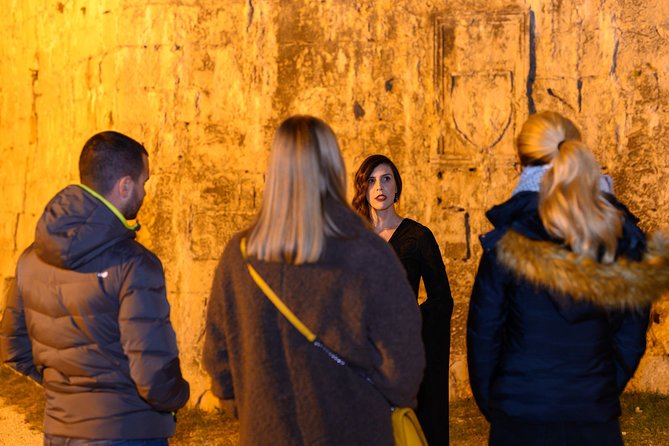
One of the most interesting stops is Kairos Collection, connected to the Benedictine Monastery of Saint Nikola. This is described as the oldest monastery of that kind still active, and the tour highlights the lives of the so-called Koludrice of Trogir, nuns who live behind the monastery walls.
Time here is about 10 minutes. The star detail is a sculptural relief called Kairos, dated to the 3rd century BC and said to be the most important symbol of Trogir. You’re essentially hearing about how the city values a physical artifact from its earliest roots—then watching that value sit inside a living religious space.
This stop is valuable even if you’re not usually into art history. The tour doesn’t treat Kairos as a museum object. It treats it as meaning—something carried forward across centuries.
Central Square and the plague story of Marin Kjudis
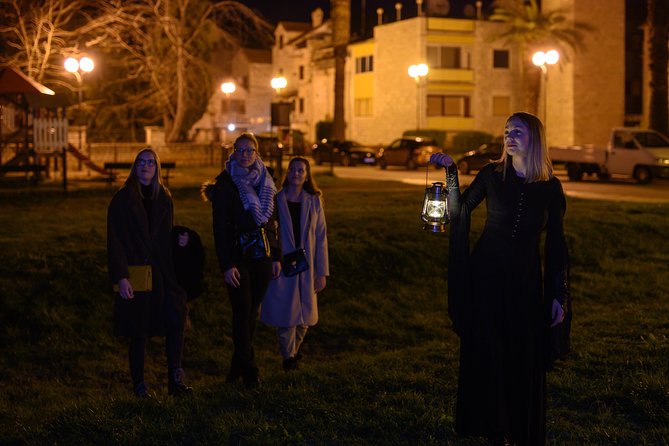
In Central Square in Trogir, you hear the tale of Marin Kjudis, described as a hero who is also said to have unintentionally caused a plague outbreak in Trogir.
Time at this stop is about 10 minutes. This is a turning point because it takes the general fear themes—Black Death, superstition—and gives them a named storyline. That kind of specificity is what makes a walking tour memorable. You leave with one person’s story tied to one place, instead of a vague mood of danger.
If your interest is in how communities assign blame, craft narratives, and remember consequences, this stop will click. It’s also a reminder that these legends aren’t just entertainment; they’re part of how a town remembered hardship.
Loggia doorway and the Pillar of Shame for medieval justice
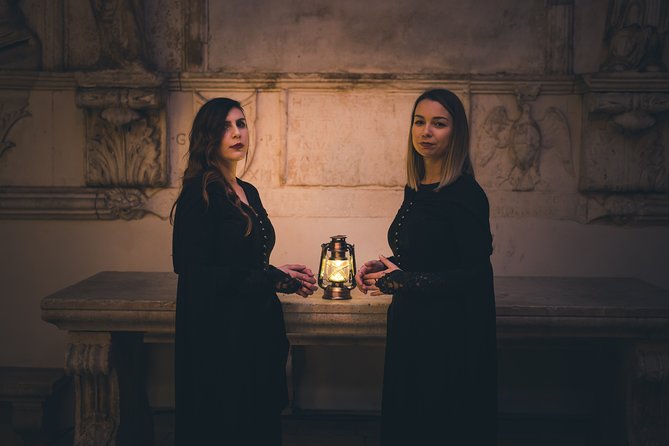
The final major story stop is the Loggia – Doorway, where the theme shifts to punishment. This is about 15 minutes, making it one of the longer segments.
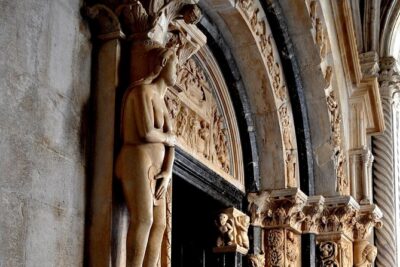
You’ll hear about the medieval idea that crimes like being a felon, thief, pyromancer, killer, or traitor could lead to public humiliation. One punishment mentioned is the Pillar of Shame, where the convicted person was publicly displayed.
This is the point where you can feel the tour’s “old Trogir by night” intent. It’s not only spooky tales in the abstract. It’s an account of how society handled fear and disorder—and how public spaces were used for moral control.
The Loggia time length also suggests the guide wants you to absorb the setting, not just pass through it. It’s a good stop to slow down, look around, and let the story land.
The guides: acting talent that keeps the group focused
This experience is driven by performance. The best versions are the ones where the guide can be friendly while flipping into a darker character voice when the story demands it. That’s exactly what you’ll get here, with guides like Jelena and Doris specifically called out for blending an approachable personality with spooky character acting.
What I like about this approach is that it doesn’t treat theater as a distraction. The stories are attached to specific corners, gates, and landmarks. When the guide shifts persona, you usually don’t lose the route—you just get a sharper story moment.
In practice, that’s what makes a night tour work. The city is dark. People get tired. If the guide only gives facts, it can drag. If the guide only performs, it can wander. This one aims for the middle: story plus direction.
Price and value: $28.83 for a short, high-effort night
At $28.83 per person, you’re paying for a guided nighttime walk that’s designed for storytelling impact. For a tour of about an hour, the price only feels fair if you’re getting two things: a strong guide and no extra hassle.
Here, you do get both. The stops listed are marked as admission ticket free, so you’re not stacking museum costs on top of the price. You’re also getting an English-speaking guide and a small-group cap that keeps the experience from feeling like a conveyor belt.
One more value point: the tour is planned for night viewing. Many city tours waste the best lighting time by doing the same walking script in daylight. This one uses the darkness as a feature, which can make a familiar city feel new.
Who should book this night legends walk
This is a strong fit if you like:
- Stories tied to exact spots rather than general history
- Theatrical guides who can switch tone and keep attention
- A short evening activity that doesn’t eat your whole day
It’s also a good choice for families with older kids and teens, since the content is engaging and the pacing is controlled.
Skip it if you:
- Dislike darker themes like plague references, witchcraft beliefs, and medieval punishment
- Want a quiet, gentle stroll with minimal intensity
- Are worried about walking on older streets at night (the tour is “most travelers can participate,” but it still requires comfortable movement)
Also note: the tour requires good weather. If weather is bad, it may be rescheduled or refunded, so check the forecast if you’re booking for a specific evening.
Should you book this lantern-lit legends walk?
I’d book it if you want Trogir to feel like a story you can walk through, not just a list of sights. The combination of a small group, lantern-led wayfinding, and guides known for acting the legends makes this a memorable use of limited evening time.
Choose something else if your priority is museums, big-ticket architecture explanations, or a light mood. This tour is intentionally spooky and brief, so it works best as your night chapter, not your entire itinerary.
If you’re staying in Trogir (or nearby) and you want one activity that brings the city’s myths and medieval fears into sharp focus, this is a solid bet.
FAQ
Is the tour in English?
Yes, this experience is offered in English.
How long does the tour take?
It lasts about 1 hour (approx.), though some descriptions point to a slightly longer feel (around 1.25 hours).
Where do I meet and where does it end?
Meet at Ul. Gradska vrata 6, 21220, Trogir, Croatia. The tour ends at/near St. Lawrence’s Cathedral, Trg Ivana Pavla II, 21220, Trogir.
How many people are in the group?
The highlights mention a maximum of 8 travelers, and the booking info lists a maximum of 10 travelers. Either way, it’s a small group.
Are there extra admission tickets for the stops?
The listed stops are marked as admission ticket free, meaning you should not need separate paid entry for these parts.
Do I need good weather?
Yes. The tour requires good weather. If it’s canceled due to poor weather, you’ll be offered a different date or a full refund.
Can I bring a service animal?
Yes. Service animals are allowed.
More Tours in Trogir
- Blue cave, Mama Mia and Hvar, 5 island speedboat tour from Trogir
★ 5.0 · 2,861 reviews - From Trogir: Three Islands Half-Day Speedboat Tour
★ 4.8 · 804 reviews - Trogir, Žedno: Čiovo Island 100% Off-Road Quad ATV Tour
★ 4.9 · 554 reviews - From Trogir or Split: Full-Day Blue Cave & Hvar Island Tour
★ 4.7 · 475 reviews - Half Day Speedboat Tour to Three Islands from Trogir
★ 5.0 · 401 reviews
More Tour Reviews in Trogir
- Blue cave, Mama Mia and Hvar, 5 island speedboat tour from Trogir
★ 5.0 · 2,861 reviews - From Trogir: Three Islands Half-Day Speedboat Tour
★ 4.8 · 804 reviews - Trogir, Žedno: Čiovo Island 100% Off-Road Quad ATV Tour
★ 4.9 · 554 reviews - From Trogir or Split: Full-Day Blue Cave & Hvar Island Tour
★ 4.7 · 475 reviews - Half Day Speedboat Tour to Three Islands from Trogir
★ 5.0 · 401 reviews
Trogir, Stone by Stone
- Blue cave, Mama Mia and Hvar, 5 island speedboat tour from Trogir
★ 5.0 · 2,861 reviews - From Trogir: Three Islands Half-Day Speedboat Tour
★ 4.8 · 804 reviews - Trogir, Žedno: Čiovo Island 100% Off-Road Quad ATV Tour
★ 4.9 · 554 reviews - From Trogir or Split: Full-Day Blue Cave & Hvar Island Tour
★ 4.7 · 475 reviews - Half Day Speedboat Tour to Three Islands from Trogir
★ 5.0 · 401 reviews
Still deciding? More Trogir trips we have been out and reviewed

Trogir Old Town Trips, compared.
 ★ 4.6Blue Cave, Mamma Mia, Hvar and 5 Island TourFrom $1096,320 reviews
 ★ 5.0Blue Cave and Hvar Tour – 5 Islands Tour from Split and TrogirFrom $1204,815 reviews
 ★ 5.0Blue cave, Mama Mia and Hvar, 5 island speedboat tour from TrogirFrom $1112,861 reviews
 ★ 5.0Krka Waterfalls Day Tour with Boat Ride from Split and TrogirFrom $322,134 reviews
 ★ 5.0Krka Waterfalls tour with Trogir Walking tour and Krka panoramic boat cruiseFrom $481,659 reviews
 ★ 5.0Krka National Park Tour with tour Guide & Wine tasting from Split & TrogirFrom $501,625 reviews
 ★ 4.5Hvar, Brač & Pakleni islands cruise with lunch & drinks from Split & TrogirFrom $951,452 reviews
 ★ 5.0Mostar and Herzegovina Tour with Kravica Waterfall from Split & TrogirFrom $841,217 reviews
Browse the lists this tour appears in